Uwe Tellkamp - The Tower
Здесь есть возможность читать онлайн «Uwe Tellkamp - The Tower» весь текст электронной книги совершенно бесплатно (целиком полную версию без сокращений). В некоторых случаях можно слушать аудио, скачать через торрент в формате fb2 и присутствует краткое содержание. Год выпуска: 2014, Издательство: Penguin, Жанр: Современная проза, на английском языке. Описание произведения, (предисловие) а так же отзывы посетителей доступны на портале библиотеки ЛибКат.
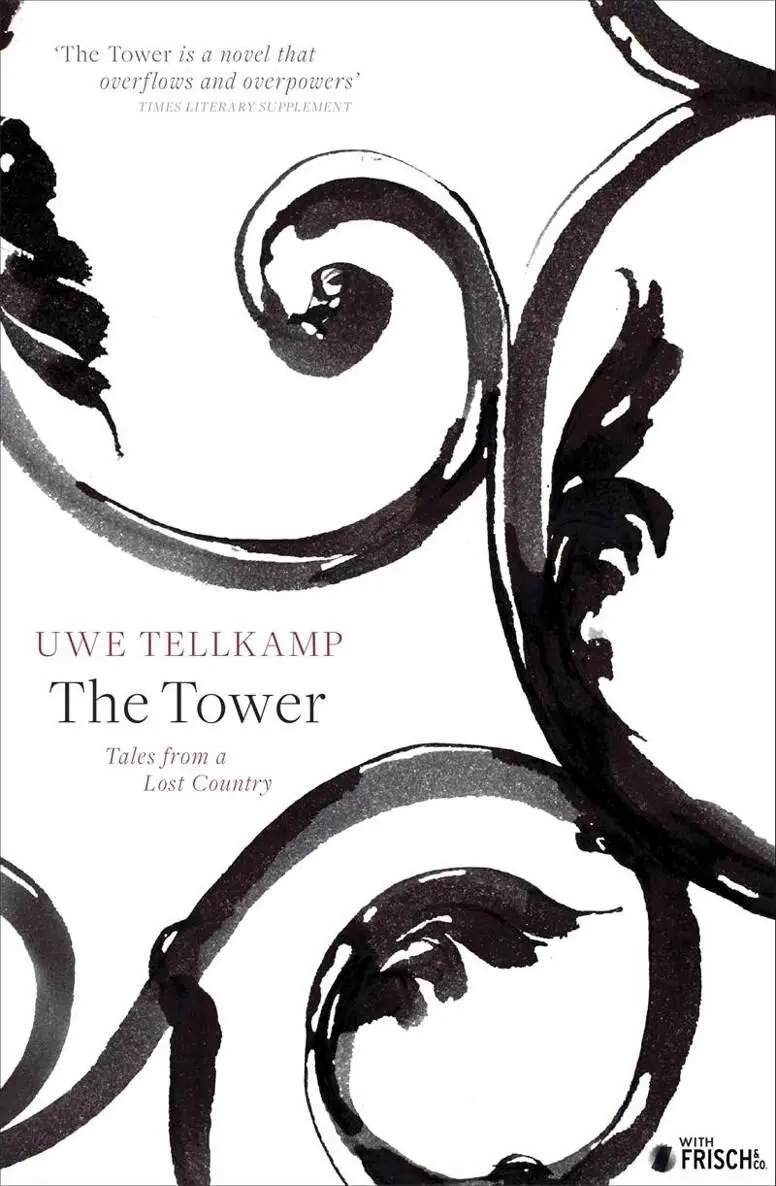
- Название:The Tower
- Автор:
- Издательство:Penguin
- Жанр:
- Год:2014
- ISBN:нет данных
- Рейтинг книги:5 / 5. Голосов: 1
-
Избранное:Добавить в избранное
- Отзывы:
-
Ваша оценка:
The Tower: краткое содержание, описание и аннотация
Предлагаем к чтению аннотацию, описание, краткое содержание или предисловие (зависит от того, что написал сам автор книги «The Tower»). Если вы не нашли необходимую информацию о книге — напишите в комментариях, мы постараемся отыскать её.
The Tower — читать онлайн бесплатно полную книгу (весь текст) целиком
Ниже представлен текст книги, разбитый по страницам. Система сохранения места последней прочитанной страницы, позволяет с удобством читать онлайн бесплатно книгу «The Tower», без необходимости каждый раз заново искать на чём Вы остановились. Поставьте закладку, и сможете в любой момент перейти на страницу, на которой закончили чтение.
Интервал:
Закладка:
‘It’s the first time you’ve said that to me.’ Schevola turned away.
‘I’m not trying to cheer you up. It’s going to be hard work getting your book published. You’ve got enemies.’
‘Why?’
Meno accepted the naive astonishment he saw in her expression as genuine. ‘Why? You’re lively. You’re vivacious and passionate. You understand people, you express yourself in language that is worthy of the name. Put together, all this means that when people read you they have the feeling they’re reading something true. Not intended as propaganda.’
‘Something true, my editor says! That won’t buy me anything. I have the impression that that’s not what the reading public wants at all. They want entertainment, something to take their minds off things, otherwise stuff like Hermann Kant’s Aula wouldn’t have had such a success.’
‘You want to write best-sellers? You won’t. And in my opinion that’s not something for you.’
‘But the others are praised and courted, I’ll have to bow and scrape, suck up to VIPs …’
‘Listen,’ Meno broke in, ‘none of them is capable of writing a scene like the one in which your heroine says farewell to her father. You complain about your lack of success. Lack of success makes one sensitive. Sensitivity, along with background, is a writer’s great asset. Don’t let yourself be corrupted.’
‘Said the man with the steady income. It’s easy for you to talk of lack of success. True, I’ve got talent, as you say, but no one will know.’ He sensed she was tired and didn’t reply. They turned into Karl-Marx-Weg. At the gate to Schneckenstein they were stopped by soldiers who checked their identity cards and Meno’s briefcase. A sergeant phoned the castle, Meno and Schevola waited, there was no point in getting worked up about the process and pointing out that the check and phone call had already been carried out by the sentry posts when they’d gone onto and left the bridge. The gate, a steel wall several metres high on rails, opened like a theatre backdrop and closed again behind them.
The drive was tarmacked, in earlier times carriages would have driven up the serpentine road, lit by spherical lamps, to the castle building. It was in the shadow of tall trees and noticeably cooler; Schevola was shivering and Meno gave her his jacket. ‘Do you know Barsano?’ he asked to prevent her from refusing it.
‘Only from a distance. And you?’
‘I’ve been up here a few times.’
‘You were born in Moscow, weren’t you?’
Meno looked at her in surprise. ‘How do you know that?’ She winked at him. ‘I like to know about people I have to deal with. — Did you know that Barsano’s father was one of the founders of the Comintern?’
‘And of the German Communist Party, together with Rosa Luxemburg and Karl Liebknecht. The family emigrated to Moscow in thirty-three, they lived in the Hotel Lux, Barsano attended the Liebknecht School. His father died during the purges.’
‘I didn’t know that,’ said Schevola.
‘And never mention it. His mother and his brothers and sisters were arrested and he, as the son of an enemy of the people, was expelled from school and banished to Siberia. He slaved away in the mines and lost his left index finger. When we get there, behave as if you haven’t seen it.’
‘How long were you in Moscow?’
‘I don’t know exactly, I only have hazy memories. Sometimes I remember fragments of children’s songs. My brother was born in thirty-eight, he knows more. My sister was still in kindergarten when we came back. — Can you speak Russian?’
‘Only what I learnt at school, Nina, Nina tam kartina … and a little that has stuck in my mind from travels. — Why?’
‘Because up there’ — he pointed to the castle — ‘they sometimes only speak Russian. Almost all of Barsano’s people are ex-Muscovites, and they send their children to school and university in Moscow.’
‘The Red aristocracy,’ said Schevola. ‘The ones in the West go to Paris and London and New York, here they go to Moscow. Paris … That’s the city where all the women wear gloves and white dresses with black spots. Oh well. Mustn’t it be great to be cured of your clichés. I’d still like to go there one day.’
‘You might perhaps be disappointed.’
‘Yes. The grapes will surely be sour. There’s one single reason I’d like to go there. In his novel The Man Who Watched the Trains Go By Simenon has his central character, Kees Popinga, write a letter to the police chief: “… he deliberately used paper with the letterhead of the bar”. So there are bars there that have their own writing paper! I think that’s wonderful. It sounds so matter-of-course … As if it often happened that people wrote letters in bars.’
‘You’re a dreamer and pretty trusting,’ Meno warned her with a smile. ‘You don’t know where I belong.’
‘No, I don’t know that,’ Schevola said after a while.
The castle was a neo-classical fort, the main building flanked by two octagonal towers, the Soviet flag flying on the left-hand tower, on the right-hand one the flag of the Workers’ and Peasants’ Republic. Meno and Judith Schevola crossed the gravel of the square outside the entrance; a head of Lenin in reddish stone was like a meteorite lying on the ground, the Tartar face staring with a faint smile at the trees in the park; Schevola couldn’t resist tapping it with her knuckles. ‘Solid,’ she said in surprise.
‘What did you think?’ Meno said, even more surprised. ‘Just imagine if it sounded hollow.’
They waited in the foyer. The dusty brass hands on the clock clicked onto seven. Max Barsano could be heard laughing from some way away, immediately the group of people waiting relaxed, the faces of the Comrade General Secretaries in the two window-sized portraits on the walls either side of the entrance assumed encouraging expressions. Barsano stopped at the foot of the stairs, surveyed the assembled guests with a swift glance and, with an ‘Excuse me, comrades’, went up to Judith Schevola and clasped her right hand in both of his. ‘You’ve had your feathers ruffled, so I hear,’ he said to her in a sonorous bass voice that didn’t seem to go with his delicate figure, ‘doesn’t matter! That means it’s some good. Keep writing, tall oaks from little acorns grow and you’re someone who’s got what it takes to follow on from our great writers of the older generation.’ With that, he went past Meno to the author Paul Schade, who was proudly wearing his anti-fascist-resistance medal on his chest, and to Eschschloraque, who gave a thin smile and elegantly sketched a bow of the head as they shook hands; Schiffner, whom Barsano greeted next, looked embarrassed after the praise that had echoed round the foyer, Josef Redlich glowed with pleasure. ‘Just don’t get carried away,’ growled Paul Schade, the author of the revolutionary poem ‘Roar, Russia’, lengthy extracts from which were in the school readers of all their fellow socialist nations with the exception of the USSR, ‘we’ll deal with you later.’ Schade, who held an important position in the Writers’ Association, gave first Schevola then Meno a threatening look. Barsano turned to the two Londoners, father and son; Philipp in an elegant cream summer suit, still wearing his hat over his hair done up in a ponytail, something probably only he could get away with there. ‘Well, Herr Professor,’ Barsano cried cheerily, ‘I’ll send my barber round to you tomorrow. In the war those splendid locks would have been full of lice! — That’s young people for you,’ he said to his deputy, Karlheinz Schubert, who, at least a head taller than anyone else there, was doing the honours after Barsano in the cautious, slightly bent posture of people who are too tall. Barsano patted the Old Man of the Mountain on the shoulder, a gesture that would have seemed too hail-fellow-well-met and falsely jovial had it not been for the moment of hesitation that seemed to beg his complicity, to ask whether the restrained pat on the shoulder was acceptable; not everyone saw it as a mark of honour, for some it was crudely chummy familiarity, others perhaps even felt it marked them out. Barsano greeted Meno; he put his left hand in the pocket of his poorly cut jacket — how much more elegantly dressed were the Londoners, Eschschloraque and Schiffner! — then took it out again as if he realized that things one hid attracted interest, tried to smile but broke off immediately when the conversations of the others, conventional as they were, just filling in time, died away. ‘How’s your father? Haven’t seen him for ages. Making preparations for a journey, is he?’
Читать дальшеИнтервал:
Закладка:
Похожие книги на «The Tower»
Представляем Вашему вниманию похожие книги на «The Tower» списком для выбора. Мы отобрали схожую по названию и смыслу литературу в надежде предоставить читателям больше вариантов отыскать новые, интересные, ещё непрочитанные произведения.

Обсуждение, отзывы о книге «The Tower» и просто собственные мнения читателей. Оставьте ваши комментарии, напишите, что Вы думаете о произведении, его смысле или главных героях. Укажите что конкретно понравилось, а что нет, и почему Вы так считаете.