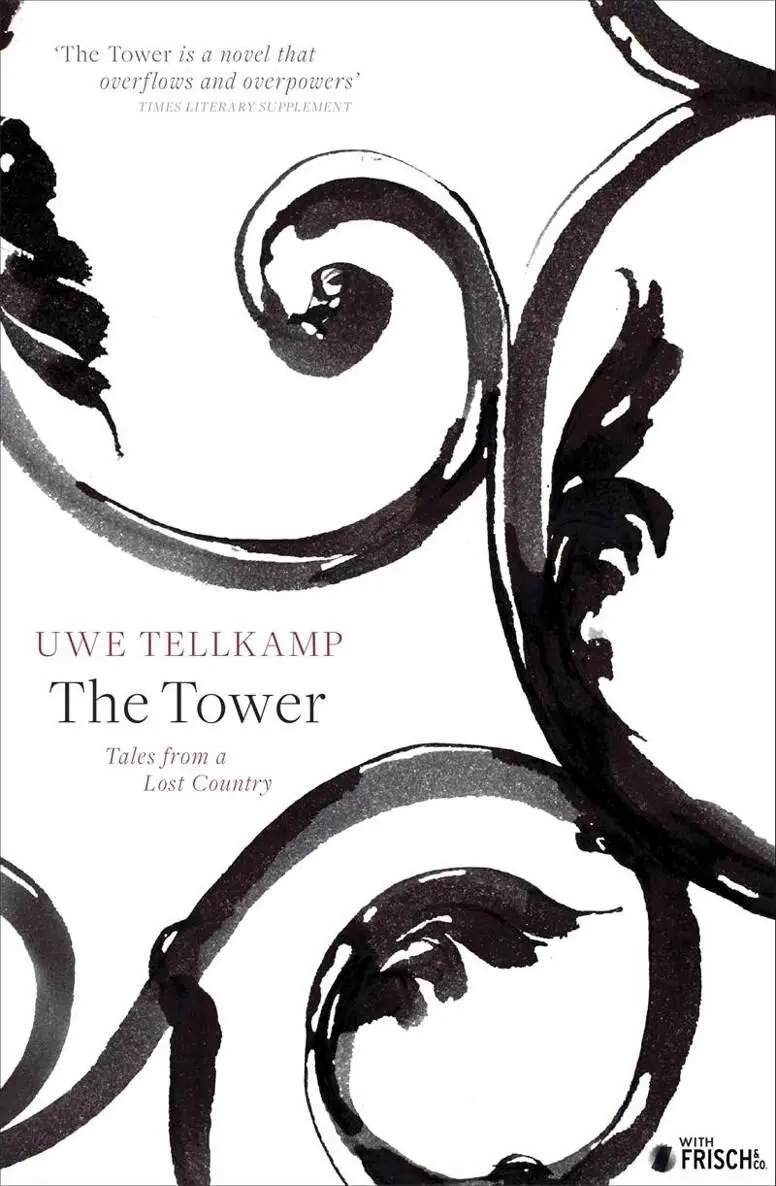
Uwe Tellkamp - The Tower
Здесь есть возможность читать онлайн «Uwe Tellkamp - The Tower» весь текст электронной книги совершенно бесплатно (целиком полную версию без сокращений). В некоторых случаях можно слушать аудио, скачать через торрент в формате fb2 и присутствует краткое содержание. Год выпуска: 2014, Издательство: Penguin, Жанр: Современная проза, на английском языке. Описание произведения, (предисловие) а так же отзывы посетителей доступны на портале библиотеки ЛибКат.
- Название:The Tower
- Автор:
- Издательство:Penguin
- Жанр:
- Год:2014
- ISBN:нет данных
- Рейтинг книги:5 / 5. Голосов: 1
-
Избранное:Добавить в избранное
- Отзывы:
-
Ваша оценка:
The Tower: краткое содержание, описание и аннотация
Предлагаем к чтению аннотацию, описание, краткое содержание или предисловие (зависит от того, что написал сам автор книги «The Tower»). Если вы не нашли необходимую информацию о книге — напишите в комментариях, мы постараемся отыскать её.
The Tower — читать онлайн бесплатно полную книгу (весь текст) целиком
Ниже представлен текст книги, разбитый по страницам. Система сохранения места последней прочитанной страницы, позволяет с удобством читать онлайн бесплатно книгу «The Tower», без необходимости каждый раз заново искать на чём Вы остановились. Поставьте закладку, и сможете в любой момент перейти на страницу, на которой закончили чтение.
Интервал:
Закладка:
Christian emptied his glass. It was some cocktail for young people, tasting vanilla-ish and excited at its own alcohol content; it made his tongue sticky. Verena and Siegbert were jumping about, waving their arms as if they had a fit of the shivers. Silly! Christian thought. What was the point of looking like that? Verena’s feverish eyes; a flush creeping over Reina’s usually pale face, like red wine spilt on a tablecloth. It fascinated him. It disgusted him. The hooch tasted revolting, but what could he do except drink it. Heike was observing him, he could see her out of the corner of his eye, he couldn’t bear being observed, gave her a glinting stare but she wasn’t bothered by it, compared him with her drawing, stared back, unmoved, dissecting. He thought the music was terrible, but it was just loud, not bad, it was good. That was the stupid thing about it: it was good. Not a twist now, a take on the state-approved Lipsi dance, the cellar was filled with roars of laughter. Guitar riffs with eyes closed and rapt open mouths. That was as filthy as a dustbin, not the music they taught you at school. Music that bared its teeth, a thermometer bursts in your arse. Yes, right there, in your arse, in your arse! Christian greedily repeated the word. The lads on their instruments knew what they were doing, even if they weren’t playing the cello or piano. Five lads, at a guess just a few years older than he was. At a guess, Christian thought, perhaps I should simply take the drawing pad away from Heike? ‘You OK, Heike? You’re drawing the whole time,’ he said boorishly, grabbing her cocktail. She didn’t object, simply nodded. So he just downed it. His skin was burning. The cigarette smoke was like a smouldering shroud hanging from the ceiling. Christian imagined the drummer, with his violent up-and-down gesticulations, as a wind machine that would suddenly blow away the smoke, the voices and the laughter bubbling up over the tables, above all the laughter, it sounded like paper tearing. He checked whether anyone could see him. Heike had found other subjects. The soldiers were interested in skirts and female bottoms in jeans, he moved deeper into his shady corner, under the foggy light of a circular neon lamp from the sixties, nothing had changed, he couldn’t loosen up. He imagined playing his cello in a cathedral, the congregation frozen in devotion, Bach forcing them to their knees, these very people here, with a nervously trembling hand Libussa would change the hymn numbers on the board, the ship’s doctor, head bowed in contrition, would do penance on a hard bench, the laughter on Siegbert and Verena’s lips would die away. Silence, church-cool eternity, Bach’s harmonies, not this home-slaughtered howling with its cheap texts … Falk threw his head back joyfully and gasped for air like a carp. In his mind’s eye Christian could see him walking away after his interview with Fahner, comb in his back pocket, the dripping quiet on the stairwell, and he’d felt no pity as he watched Falk leave, his angular shoulder blades and his arms that, as Reina had said, were really too skinny for a boy. Now he was dancing like crazy and a week after the interview in the hostel room he’d still had difficulty concealing his fear: ‘He ranted and raved a bit, not actually very loudly, but … You know him. Nothing’s happened … so far. Perhaps the worst is still to come, you never know with them, and he’ll chuck me out of the school.’ That was what Falk had said, his words merged with the voices in the bar, the music. Rock ballads now. Good, good, good. Yes. He ought to get out. Perhaps go to the toilet. No, better stay here, otherwise his place might get taken. Christian observed Judith Schevola, who appeared to be having an agitated discussion with the woman but during the pauses in the conversation peered over at the tables. Make sure you don’t get under her magnifying glass, he thought. The band leader had an Armenian cap on his cropped head, a leather coat with shoulder straps and belt, and a ‘Swords into Ploughshares’ badge sewn on. Theatrical, honest gestures, so allergically sweeping that those playing guitar kept at arm’s length from him. The drummer in a Russian shirt streaked with sweat; hovering like a misty halo above his wildly jerking head was the tail of a bird of paradise made from pieces of coloured glass and illuminated from behind.
‘So, what d’you say?’ Ina flopped down beside Christian.
‘What’s the guy waving his arms around called?’
‘The front man? André Pschorke. Hey, wouldn’t you like a dance?’
‘Pschorke,’ Christian said meditatively. ‘International careers start with names like that.’
‘You can be pretty arrogant at times, has anyone ever told you that?’
‘Her over there,’ Christian said with a weary nod in Verena’s direction. ‘I don’t care. Never-ending boom-boom-boom —’
Ina made a dismissive gesture. ‘Oh, you are a wet blanket, Cousin. You really are going to come a cropper one of these days. Your classical music is something for the old fogies. You can stick it up your arse. Uptight aesthetes, huh, to hell with ’em.’ She lit a cigarette.
‘Hey, Cousin, lighten up.’
A guitar chord cut off Ina’s reply, she shook her head and, as those on the dance floor separated, went over to Siegbert. Now Muriel was dancing with Falk, Verena with Fabian, the soldiers were skipping round Reina, who was dancing alone with her eyes closed. Neustadt sang about cobblestones, about mail inspector Alfred going to his night shift along dark dreary stree — heets with his briefcase and sandwiches, about the bit of sky above the back yard as blue as Milka chocolate — the dance floor bawled along — they sang the ‘Ash Song’. ‘No, it’s not what you think,’ André Pschorke shouted to the soldiers, ‘it’s about … Ash lies over the streets / People have it in their hair / Ash that’s the colour of sleep / Ash of the things that were … // Tell me, where has the dream gone / Everyone had at dawn / Did they all get rid of it / Like a baby that never gets born …’ Christian was impressed by the words, he scribbled them on a beer mat, making it obvious so that no one would get the wrong idea about him. They sang ‘Your Eyes’, a slow number with a lot of keyboard.
Schevola came, behind her the woman in the sari. ‘We’ve seen you’ve been drawing away industriously, may I have a look?’ she said to Heike. She opened the drawing pad, examined the drawing with brief glances, like a craftsman checking the contents of a tool chest, turned over the pages. ‘You’re still at school?’
Heike jutted out her chin and twined a lock of hair round a finger, the woman in the sari presumably took it as a yes. ‘What do you want to do, after school?’
‘Paint,’ Heike said. The woman in the sari nodded. ‘If you want, you can come and see me. My name’s Nina Schmücke, during the day I sell fish, on Friday evenings we look at each other’s pictures and discuss them.’
‘You had the red picture in the art exhibition,’ Heike said.
‘For one day.’ Nina Schmücke handed back the pad. ‘Then someone with influence didn’t like it and it was taken down.’
‘It was very powerful,’ Heike said. ‘May I really come and see you?’
‘Have you something to write on?’
Heike turned the block over, Nina Schmücke wrote her address on it. Then the two of them sank into their own universe of painters’ names and pictures and painting techniques.
Schevola sat down beside Christian. ‘Shall we have a chat,’ she said to him in amused tones. She pointed vaguely in the direction of the steps. Neustadt were strumming furious protests.
‘What about?’ was the only thing that occurred to Christian. He said it no louder than normally, Schevola couldn’t have heard.
Читать дальшеИнтервал:
Закладка:
Похожие книги на «The Tower»
Представляем Вашему вниманию похожие книги на «The Tower» списком для выбора. Мы отобрали схожую по названию и смыслу литературу в надежде предоставить читателям больше вариантов отыскать новые, интересные, ещё непрочитанные произведения.


Обсуждение, отзывы о книге «The Tower» и просто собственные мнения читателей. Оставьте ваши комментарии, напишите, что Вы думаете о произведении, его смысле или главных героях. Укажите что конкретно понравилось, а что нет, и почему Вы так считаете.