Uwe Tellkamp - The Tower
Здесь есть возможность читать онлайн «Uwe Tellkamp - The Tower» весь текст электронной книги совершенно бесплатно (целиком полную версию без сокращений). В некоторых случаях можно слушать аудио, скачать через торрент в формате fb2 и присутствует краткое содержание. Год выпуска: 2014, Издательство: Penguin, Жанр: Современная проза, на английском языке. Описание произведения, (предисловие) а так же отзывы посетителей доступны на портале библиотеки ЛибКат.
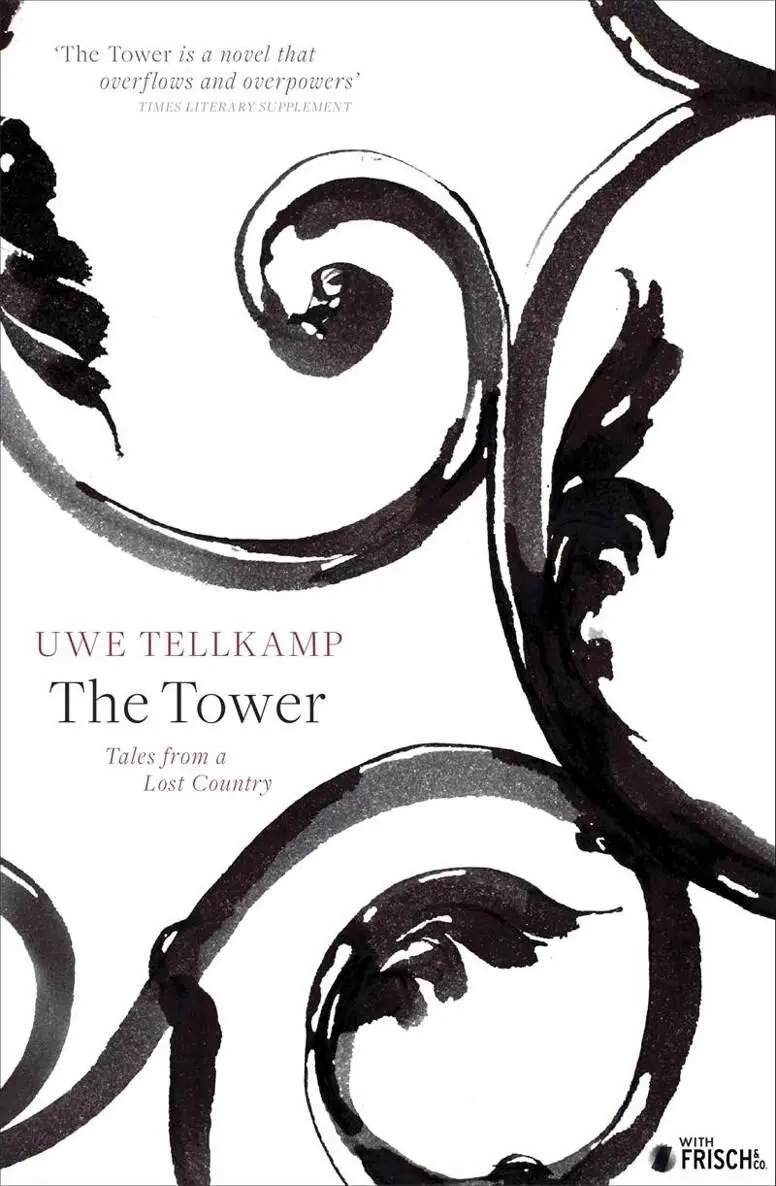
- Название:The Tower
- Автор:
- Издательство:Penguin
- Жанр:
- Год:2014
- ISBN:нет данных
- Рейтинг книги:5 / 5. Голосов: 1
-
Избранное:Добавить в избранное
- Отзывы:
-
Ваша оценка:
The Tower: краткое содержание, описание и аннотация
Предлагаем к чтению аннотацию, описание, краткое содержание или предисловие (зависит от того, что написал сам автор книги «The Tower»). Если вы не нашли необходимую информацию о книге — напишите в комментариях, мы постараемся отыскать её.
The Tower — читать онлайн бесплатно полную книгу (весь текст) целиком
Ниже представлен текст книги, разбитый по страницам. Система сохранения места последней прочитанной страницы, позволяет с удобством читать онлайн бесплатно книгу «The Tower», без необходимости каждый раз заново искать на чём Вы остановились. Поставьте закладку, и сможете в любой момент перейти на страницу, на которой закончили чтение.
Интервал:
Закладка:
‘This is where I usually live.’ Christian pointed over the arched gateway to number 11.
‘You mustn’t be annoyed with me for telling you this.’
‘No.’
‘I don’t know if you realize yourself, but you have a way … We’re dancing, you sit in the corner. We’re enjoying ourselves, you’re pulling a face.’
‘Of course. My arrogance —’
‘You don’t need to be cynical. Please, you must understand, I don’t have to tell you all this —’
‘Well don’t do it then.’
‘Actually you’re pretty immature,’ Verena retorted softly. ‘Pity.’
‘But Siegbert, he’s mature.’
‘Let’s go back. You’ve gone into a huff just like a peacock. Won’t you listen to me for once! Or can’t you stand being criticized?’
They walked back in silence, not by Wolfsleite, where Muriel and Fabian lived; he didn’t know whether they’d given Verena their address or not.
He couldn’t leave it at that. ‘Out with it, then. What was it you wanted to say to me?’ he said when they reached Mondleite again.
‘Yes, that is arrogance,’ she said reflectively. ‘You call us into question, for to you everything we do’s too stupid … All the fun of a dance, how common; then the look on your face, like, Oh God, how I must suffer, no one loves me, I’m all alone in this world full of cheap rock music and stupid jigging about, no one understands me, I’m so misunderstood, in such a bad way!’
‘It’s certainly not Bach those guys are strumming —’ Christian was shivering with rage.
‘Yes, that’s what I’m talking about. This disparagement. And the arrogant twist of your lips when you express it, I don’t need a lamp to see it. But I like what they do ten times better than your spoilt —’
He broke in. ‘Oh, leave off.’
‘I think you’re a coward,’ Verena called after him.
32. East Rome II. Barsano
‘I’m not interested in what Fräulein Schevola thinks!’ Schiffner stood up and began to walk agitatedly back and forth. ‘I would like — no, I demand that that scene goes. We’re both just back from the congress, you heard the directives just as well as I did and now you present me with this!’ Schiffner threw the pages up in the air, they floated down slowly to the floor.
‘We’ll destroy the book if we insist on cutting that kind of scene,’ Meno replied quietly.
‘So what! Then she’ll just have to rewrite the stuff. Why else did she become a writer? Do you know how many drafts Tolstoy made for his books? Tolstoy! And Fräulein Schevola and you rabbit on about “destroying the book” …’ There was a knock at the door. ‘Come in,’ Schiffner roared. Frau Zäpter appeared in the doorway, small and apprehensive. ‘Barsano’s office have rung to say it starts at seven tonight.’ Schiffner nodded and waved Frau Zäpter out with a rough gesture. ‘What do you have to say about this, Josef?’
Josef Redlich lowered his head and nervously played with a ballpoint pen. ‘But it’s true, Heinz. Such … incidents did actually happen, we all know that, and our friends better than anyone —’ Schiffner cut him short. ‘Truth! As if literature had anything to do with truth! Novels aren’t philosophy seminars. Novels always lie.’
‘I don’t share your view on that,’ Josef Redlich ventured to object. ‘You know my opinion: literature that capitulates in the face of reality is not literature but propaganda. We’re not making propaganda, Heinz. Rohde let me have the manuscript, I agree with him. If we take that passage out we’ll be castrating the book. And it’s not the days of the Eleventh Plenary Session any more.’
‘That’s clearly your opinion too?’ Schiffner leant over to Stefanie Wrobel, who avoided his eye. ‘I only know that passage, not the context —’
‘But I gave you the manuscript,’ said Meno, astonished.
‘I didn’t get round to it. Herr Eschschloraque has priority.’
‘All right, then, let’s try it,’ Schiffner said in conciliatory tones. ‘But on your head be it, Josef. I will make my objections known if Central Office rings up and there are difficulties. I bow to the will of the majority of my editors. But I can tell you both right now’ — Schiffner leant forward with his hands on the table and fixed his gaze on Josef Redlich and Meno in turn — ‘it’s your necks that are on the block. Of course the event Fräulein Schevola thinks she has to write about did occur. But the question is, to whose advantage is it if she does write about it? Our country has problems enough as it is, our friends as well, and she comes along with this old stuff. My God, who was it who started the war! That’s just the counterclaim, and she’s moaning and wailing just because a few Nazi women —’
‘They weren’t just Nazi women,’ Meno said even more quietly. ‘She portrays quite ordinary people.’
‘Do shut up, Rohde. It was these very people you describe as “quite ordinary” who elected the Nazis in 1933! They sowed the whirlwind and were surprised to reap a hurricane. The scene ought to be cut precisely because your objection is possible, but have it your own way, and don’t say I didn’t warn you. — I want three external reports, then it must go to the Ministry first of all; I want a translation for our friends and that has to go off before anything’s decided. This evening is the report on the congress; you’ll write it again please, Herr Rohde, and show it to me.’ He went over to his desk and handed his paper back to Meno. The pages were covered with corrections in red ink.
Meno looked back from the middle of the bridge to East Rome: a yellowish haze hung over the town, fed by the smoke from the factory chimneys; the outlines of Vogelstrom’s house and the funicular creeping up the rise shimmered in the air; the slope above the Elbe drifted into the falling twilight like an island hedged round with a proliferation of roses. A smell of decay wafted over, perhaps the wind came from Arbogast’s Chemical Institute. Judith Schevola was waiting on the Oberer Plan. She told Meno about the evening in the House with a Thousand Eyes and the Bird of Paradise and he let her talk; his thoughts were already at Barsano’s reception that was being held in Block D, on Karl-Marx-Weg; it was the headquarters of the Party, the Schneckenstein, the former castle of an expropriated prince of the Wettin dynasty. Judith Schevola fell silent and surveyed Meno with furtive glances, Josef Redlich and Schiffner would have made the most of the situation and kept her on tenterhooks a while longer; Meno didn’t like these little games they played with authors, the revenge of those whose hard work in the background went unheeded and drew little thanks; he told her about the editorial discussion.
‘Three external reports,’ Schevola said quietly after a while, ‘and a translation for the Russians … That’ll take for ever. That means the book is dead, it won’t get through.’
‘I promise I’ll do everything I can.’
‘And what can you do?’ Schevola retorted in irritation. ‘You know just as well as I do how things work here. It’ll end up with you paying me an advance of ten thousand but the book won’t be published.’ That was common practice, Meno didn’t dispute the fact: the publishers would pay a so-called difficult author for a bogus edition of, say, ten thousand copies, but in reality only a few hundred were printed, to be locked away in the collections of non-approved books in a few libraries — and the author, although cheated, couldn’t even complain.
‘I’m prepared to go a long way,’ Meno said. ‘You’re very talented and I … I’m grateful that you trust me as your editor. Your writing is unusual. Very French. Elegant, light, roving, not ponderous like that of many German authors, especially those over here.’
Читать дальшеИнтервал:
Закладка:
Похожие книги на «The Tower»
Представляем Вашему вниманию похожие книги на «The Tower» списком для выбора. Мы отобрали схожую по названию и смыслу литературу в надежде предоставить читателям больше вариантов отыскать новые, интересные, ещё непрочитанные произведения.


Обсуждение, отзывы о книге «The Tower» и просто собственные мнения читателей. Оставьте ваши комментарии, напишите, что Вы думаете о произведении, его смысле или главных героях. Укажите что конкретно понравилось, а что нет, и почему Вы так считаете.