Uwe Tellkamp - The Tower
Здесь есть возможность читать онлайн «Uwe Tellkamp - The Tower» весь текст электронной книги совершенно бесплатно (целиком полную версию без сокращений). В некоторых случаях можно слушать аудио, скачать через торрент в формате fb2 и присутствует краткое содержание. Год выпуска: 2014, Издательство: Penguin, Жанр: Современная проза, на английском языке. Описание произведения, (предисловие) а так же отзывы посетителей доступны на портале библиотеки ЛибКат.
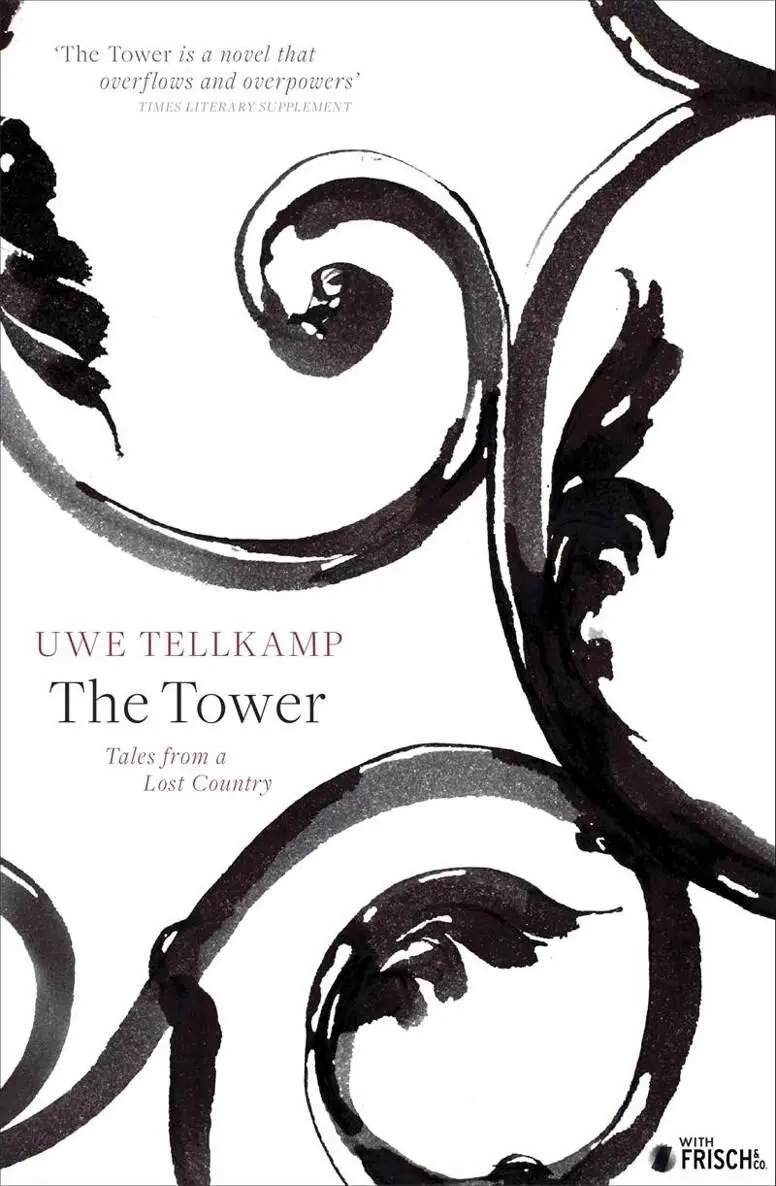
- Название:The Tower
- Автор:
- Издательство:Penguin
- Жанр:
- Год:2014
- ISBN:нет данных
- Рейтинг книги:5 / 5. Голосов: 1
-
Избранное:Добавить в избранное
- Отзывы:
-
Ваша оценка:
The Tower: краткое содержание, описание и аннотация
Предлагаем к чтению аннотацию, описание, краткое содержание или предисловие (зависит от того, что написал сам автор книги «The Tower»). Если вы не нашли необходимую информацию о книге — напишите в комментариях, мы постараемся отыскать её.
The Tower — читать онлайн бесплатно полную книгу (весь текст) целиком
Ниже представлен текст книги, разбитый по страницам. Система сохранения места последней прочитанной страницы, позволяет с удобством читать онлайн бесплатно книгу «The Tower», без необходимости каждый раз заново искать на чём Вы остановились. Поставьте закладку, и сможете в любой момент перейти на страницу, на которой закончили чтение.
Интервал:
Закладка:
‘Science, Father. The gentlemen wanted a report.’
‘Science! That is a deity to whom I will gladly make a sacrifice.’ Eschschloraque picked up a net and took out the two fish that had been stuck together. ‘I’ll show you, Albin.’ He waved over his son, who adjusted his monocle suspiciously. ‘You’re going to do me ill, sir. Even Vogelstrom has noticed and is covering the caricature, which is not me, in tinder and fungus.’
‘Oh, just come here.’
With one bound Eschschloraque was with Albin, who had stepped towards him, grabbed him by the cheeks and tried to stuff the fish in his mouth. Albin didn’t spit them out but bit into them and chewed, stretching the second fish like a rubber toy animal and tearing it off. He threw it back into the aquarium, where the fish, injured and with only half a tail-fin, swam behind a stone. ‘I need something to help me digest it. Are there no bitters there?’ Albin rummaged round in the cart. ‘Typical, they always forget them.’
‘You misbegotten son of mine.’ Eschschloraque calmly lit a cigarette. ‘If you want to be a dramatist and outshine me, you’ll have to think up better things than that. Although I do admit —’
‘— that I’m making progress? Have you any idea, dearest Father, what it cost me to acquire that special glue. I had to make serious sacrifices.’ In a pretence of indignation Albin let his monocle fall out. Judith Schevola leant over to Meno — while all this was going on they’d sat down on the sofa beside Vogelstrom, without his either uttering a word of greeting or looking up from his sheets of paper — ‘Albin resembles a castrated seal, don’t you think? The apples on his tie are so … tasteful. Should I get you a bowl of peanut puffs?’ she whispered. Meno looked at her out of the corner of his eye, she seemed determined to enjoy the scene to the full. ‘How do you know what castrated seals look like?’
‘Do you mind if I smoke, Herr Eschschloraque? — I have inclinations of which you know nothing,’ she said to Meno, letting the first smoke dribble out of her nose.
‘Would it perhaps not be better if we left?’ Philipp asked; the expression on his face had become cold.
‘Why the hurry, my dear guests? Are you not enjoying yourselves?’ Eschschloraque gave a mocking smile. ‘So what did it cost you, sonny? By the way, I suggest you check your gestures in the mirror. I know that it’s a cliché that pooftas make poofish movements, but you’re doing it like the worst possible actor.’
‘I must get it from you.’ Albin slurped his coffee with relish. ‘Always Goethe, Goethe, Goethe and nothing else … And then the most you get is amusement, a bite with your false teeth. A couple of jokes snatching at the Holy Grail when in fact it was just a cake tin floating past. Raspberry sauce instead of blood … The fate of the clown.’
‘Do you know what it is that he holds against me?’ Eschschloraque flicked cigarette ash into the aquarium. ‘The fact that I’ve seen through him, right through to the aqueous humour of his expressionless eyes. He’s so desperate, deep down inside he loves me, that’s the problem, but he would rather the floor swallowed him up than descend to sentimentality …’
‘It was you who called me Albin! Albin! Only ducks or penguins are called Albin. How can one be taken seriously with a name like that!’
‘Yes, that’s it. Can you imagine that a dramatist who’s called Albin can be really good? Talented fathers almost never have talented children, they say. But does that mean that talented fathers should deny themselves the joy! of having children? That was what occurred to me at the moment when I … hmm, let’s say: set you off on your journey. I should have acted in a more responsible way.’ Eschschloraque scrutinized his son’s face, which he held in the harsh light under the bonsai shelf, to see what effect his words had, innocently opening wide his long lashes, silky like a woman’s. ‘The pleasure was at best moderate, anyway.’
‘Even wearily fired cannons can hit the mark.’ Albin was white as a sheet, though his movements were calm and measured, not even the flame of his lighter trembled as he lit himself a cigarillo.
‘That’s enough, the pair of you.’ Philipp stood up, waving his position paper. ‘We’ve more important things to talk about.’
‘If you think so,’ Eschschloraque replied.
‘Damn it all, no one’s listening to me. Here you are, indulging in your private quarrels, which, I have to say, I find in pretty bad taste, especially in front of —’
‘— your guests?’ Albin broke in, unimpressed. ‘So what? Let them learn how far admiration can go. Guests? They don’t bother me,’ he went on with a smug pout.
‘I think the way the pair of you are behaving is not only in bad taste but immature. Surely in a family it must be possible to treat each other normally, naturally —’
‘Normally! Naturally!’ Eschschloraque sounded amused. ‘Two pathologists are discussing their clientele. “He was an artist. He died a natural death,” one says. “So he killed himself?” says the other. My dear Philipp —’
‘Eddi —’
Albin burst out in a fit of squealing laughter that Eschschloraque cut off with the remark that it sounded silly rather than genuine, that people who had imaginary complaints often laughed in that way. — Complaints! Albin laughed even louder. Then he suggested they should listen to Philipp at last, for what would become of revolutions without position papers. Passing over the comment in silence, Philipp, head bowed and hands clasped behind his back, raising his fingers to emphasize his succinct exposition, started to explain the ideas his planning staff had come up with. They concerned the reform of economic policy, a topic that clearly bored Judith Schevola, for she started peeking over Vogelstrom’s shoulder. The artist was sketching Philipp’s face in various stages between indignation and fervour until Philipp concluded, ‘You’re no more interested than Barsano was’, and dropped his arms in resignation. ‘If not even you, for whom socialist ideals still mean something, will listen to me …’
‘For which of those here do socialist ideals mean something?’ Eschschloraque asked, jutting out his chin imperiously. ‘Rohde’s a mere opportunist, inscrutable and taciturn, a mole perhaps; Fräulein Schevola’s interested in anecdotes and striking episodes for her sassy novel; Vogelstrom in his doodles; and that one over there —’ he pointed at Albin sprawled out in a free corner of the sofa with a grin on his face, sucking like an addict at his cigarillo — ‘is no socialist. He’s an enemy, a counter-revolutionary, worse still, a Romantic. Perhaps he’s even a Wagnerian, that would be worst of all. He desires our collapse, Philipp, one ought to —’
‘Yes, yes, I know what “one” ought to do. “One” ought to inform on him, that’s what you were going to say, wasn’t it? As was the accepted thing in the era you think of as golden. You’d have handed me over without hesitation, a father his own son. Come on now, how many did you grass on?’
‘What a way to speak, you young whippersnapper!’ Philipp broke in angrily. ‘After all he is your father.’
‘That’s all right,’ Eschschloraque said with a wave of the hand, ‘I’m not afraid to answer that. I reported — to use a term I consider more appropriate — those who were against the system —’
‘Really against or only apparently? Or did you “report” them to save your own skin? By the way’ — Albin turned to Philipp — ‘I can’t remember having suggested you call me “ du ”. I’m not a child, you know, and we’re not poets or underground musicians, among whom it’s customary. For my part, I prefer the distance of the formal “ Sie ” since it opens up unknown territory. Anyone who uses the formal mode of address sees poetry and underground music as a country of vast, uncharted landscapes rather than a provincial place where everyone knows everyone else and no one can see any farther than the walls of their own back yard. A person who uses the formal mode of address is insisting on the dignity of his own specialism because he is thus saying that it is by no means exhausted, and anyone who cannot see that is simply demonstrating that he is on a lower level, a lower level of thinking, of understanding others.’
Читать дальшеИнтервал:
Закладка:
Похожие книги на «The Tower»
Представляем Вашему вниманию похожие книги на «The Tower» списком для выбора. Мы отобрали схожую по названию и смыслу литературу в надежде предоставить читателям больше вариантов отыскать новые, интересные, ещё непрочитанные произведения.


Обсуждение, отзывы о книге «The Tower» и просто собственные мнения читателей. Оставьте ваши комментарии, напишите, что Вы думаете о произведении, его смысле или главных героях. Укажите что конкретно понравилось, а что нет, и почему Вы так считаете.