Uwe Tellkamp - The Tower
Здесь есть возможность читать онлайн «Uwe Tellkamp - The Tower» весь текст электронной книги совершенно бесплатно (целиком полную версию без сокращений). В некоторых случаях можно слушать аудио, скачать через торрент в формате fb2 и присутствует краткое содержание. Год выпуска: 2014, Издательство: Penguin, Жанр: Современная проза, на английском языке. Описание произведения, (предисловие) а так же отзывы посетителей доступны на портале библиотеки ЛибКат.
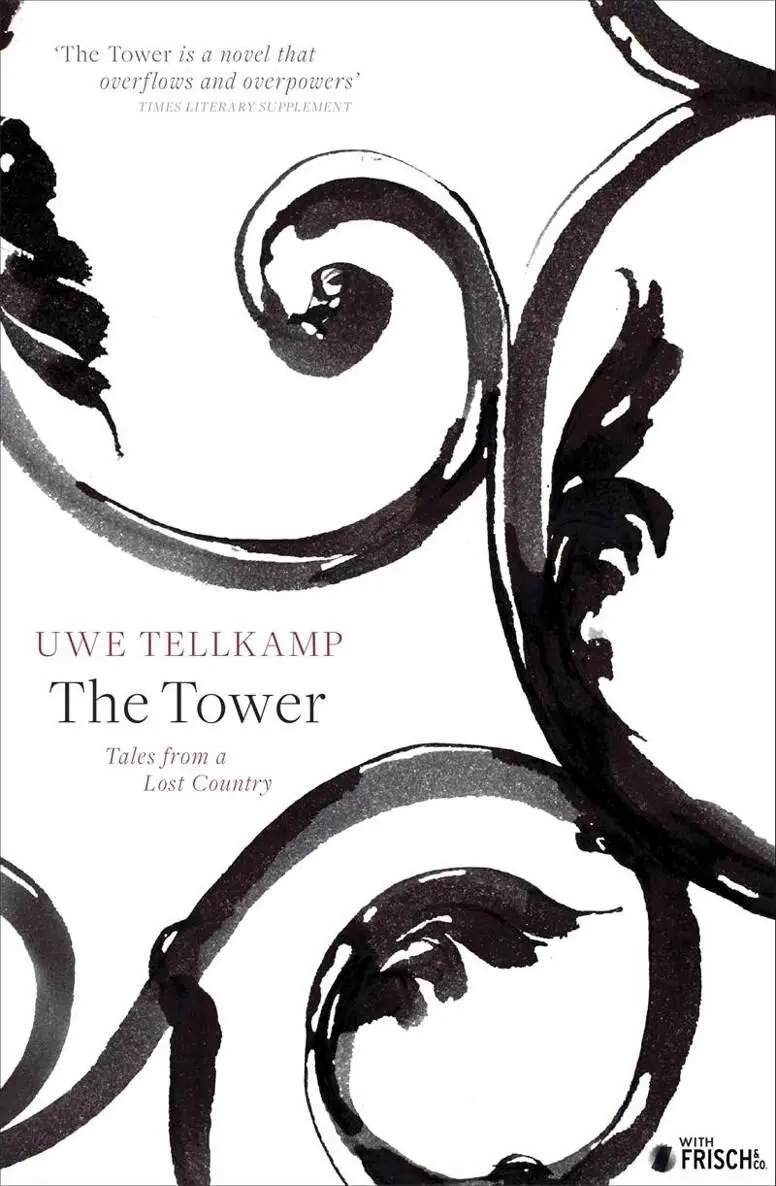
- Название:The Tower
- Автор:
- Издательство:Penguin
- Жанр:
- Год:2014
- ISBN:нет данных
- Рейтинг книги:5 / 5. Голосов: 1
-
Избранное:Добавить в избранное
- Отзывы:
-
Ваша оценка:
The Tower: краткое содержание, описание и аннотация
Предлагаем к чтению аннотацию, описание, краткое содержание или предисловие (зависит от того, что написал сам автор книги «The Tower»). Если вы не нашли необходимую информацию о книге — напишите в комментариях, мы постараемся отыскать её.
The Tower — читать онлайн бесплатно полную книгу (весь текст) целиком
Ниже представлен текст книги, разбитый по страницам. Система сохранения места последней прочитанной страницы, позволяет с удобством читать онлайн бесплатно книгу «The Tower», без необходимости каждый раз заново искать на чём Вы остановились. Поставьте закладку, и сможете в любой момент перейти на страницу, на которой закончили чтение.
Интервал:
Закладка:
Regine waited. Under the ricepaper lamp in the living room that Jürgen had made and decorated with pictures of flying fish, in the garden of the house in the street in Blasewitz that was named after a resolute woman who fought for socialism, by the woodland park where the children tobogganed and skated in winter and in summer the ice cream and lemonade vendors sold colourful refreshment — in the garden, surrounded by the statues Jürgen had carved out of the sandstone from the Lohmen quarry: a frieze of cubes with children beneath fruits, a female torso, two boys based on their children, Hans and Philipp, she sat and waited. She waited beside the telephone when Richard and Anne left the living room in Caravel to leave her alone with Jürgen’s voice, which, from the hubbub of the great light-spattered city of Munich far away at the other end of the crackling, hissing line, would say, accompanied by a further crackle, ‘Hi’; when they went for a walk so as not to hear Regine sobbing, not to witness the silence that could arise after four years of separation and that everyday matters could never quite cover over: How are the kids? Are they doing OK at school? Is there anything you want, what should I send you? — And you? Have you found a job yet? An apartment? My God, all that’s incredibly expensive. Regine waited when the lamplighter took his metre-long pole with the hook on the end off his black bicycle, inserted the hook in an eye in the grubby glass hexagon of a gas lamp, blew up a ball of light, one after the other in the streets of the district; she waited on the Thursdays when the ice cart came, drawn by two apathetic Haflinger horses, when the iceman’s attention-demanding loud bell rang out, as if hurt, through closed windows and undrawn curtains along the summer-quiet street, to announce with its shrill ‘Here I am!’ the delivery of fresh blocks of ice that the iceman took down from the cart with a cramp-iron — shimmering like fish, glassily smooth, the hunks were put into the kitchen icebox, where, within a few days, they melted onto bowls hung underneath them; pre-electric chilling for butter and meat, milk and jam.
It is the month of the workers’ celebrations. ‘Everyone out for the first of May’ was the wish expressed on a placard on the wall of the Dresden-Tolkewitz city graveyard.
It is the time when every Wednesday at 1 p.m. the wail of a siren can be heard over the city, practising for the real thing, when at night the rattle of machine-gun fire from the Soviet training grounds all around the city penetrates their sleep, when by day the vapour trails of fighter-bombers circle round the blue sky, followed a few seconds later by the roar of jet engines. And what point is there in ignoring the fact that the coconut, well-known for its ability to migrate across oceans, is able to find its way up the Elbe and seems to exist in reality and all its fibrous hairiness, the size of a cannonball, on some of the fruit racks in Frau Zschunke’s shop one cold afternoon in May? The widowed Frau Fiebig first looks at Frau Zschunke, who lowers her eyes and nods. Then she looks at the other customers: long-suffering housewives, pensioners kept supple by all the running around, Herr Sandhaus, an ally. Ignoring the fact that they don’t stand a chance not to be, they decide to be fair: first of all the widow Fiebig secures two of the phenomena of existent reality for her basket and impresses on Herr Sandhaus that he’s not to take his eyes off it. Then she runs out into Rissleite, right in front of Binneberg’s café, where Dresden ladies indulging in nostalgia along with their cream cakes have already registered her hurried behaviour, makes a megaphone of her hands round her mouth and shouts three times ‘COCONUTS!’ out into the depths of the life of a socialist district that has no choice but to be the mode of existence of protoplasm (as Friedrich Engels wrote), which consists essentially in the constant renewal of the chemical constituents of that substance. The widow Fiebig’s cry does not go unheard and, since consciousness is a developmental product of matter, it is followed by the realization of the necessity of transferring one of the fibrous, tropical, travelling cadres in Frau Zschunke’s ‘dump’ from property of the people to private property. Meno, happening to be in the right place at the right time for once, has already secured one for the Hoffmanns in Heinrichstrasse and one for himself (that is, for the Stahls and their few-months-old baby) when Frau Zschunke, with an insistent, ‘One nut per nut, no more’, asks him to replace the excess specimen. As Meno bears the Hoffmanns’ coconut in the direction of Heinrichstrasse past a hundred-metre queue, from which dark looks speak of layers of consciousness that have supposedly been long since overcome, he has, for the first time for years, the feeling of having performed a solid, truly useful, unqualifiedly good deed deserving of praise — Judith Schevola’s book is subject to delay at Dresdner Edition, assessments cause ideological stomach ache; Meno is powerless to do anything about it. That evening the coconut, cleaned, defibred (Barbara: ‘Don’t throw the stuff away, Anne, who knows what we might be able to use it for?’) and scrubbed, is standing upright on the kitchen table before the disbelieving looks of the whole family. It’s a small kitchen, they’re crowded together, it’s stuffy. There are candles burning all round the coconut, another of Barbara’s over-the-top ideas, Meno thinks as he quietly enjoys his triumph.
‘Come on, Richard, crack the nut,’ Ulrich says teasingly. Robert is holding the Kon-Tiki book by the Norwegian ethnologist and adventurer Thor Heyerdahl, in case anyone should have any doubts that coconuts have eyes, which have to be bored out if delicious milk is to flow. Anne has put out bowls. A sip for each one of them. Richard picks up the corkscrew and digs it into one of the darker spots that could be one of the ‘eyes’ Heyerdahl talks about. Richard manages a few twists, pulls with all his might, the nut between his feet, and retrieves a fibrous plug and a bent corkscrew. The milk refuses to flow. Hesitantly Robert points out that Heyerdahl was talking about green nuts when he described himself and his men drinking coconut milk on the Marquesas. Barbara shakes the nut; it is as it was: round, compact and mute. The nutcracker from Seiffen beside the samovar, a carved wooden figure of a miner with a hinged lower jaw, is too small and breakable; more brute force is required, but Anne’s steak hammer is no use either, it just chips a few splinters of Sprelacart laminate off the work surface and Ina puts her hands over her ears because Ulrich is hammering away at it in blind fury. Richard goes out with Ulrich onto the balcony, where he keeps some tools and, using an anvil as a firm base for the nut, raises a claw hammer, the nut slips off to one side and hits Ulrich on the shin. Hasn’t Richard got a sledgehammer, he’s had enough now and he’s not going to let himself be beaten by a damn coconut, even if he has to drive the Moskvitch over it! Richard doesn’t have a sledgehammer. Neither the Stenzel Sisters nor their neighbour, Dr Griesel, own such a weighty argument but André Tischer has a cutting torch with which Ulrich threatens the coconut as a last resort. Richard has a vice. They tighten it until the spindle starts to bend. The nut, a tough nut to crack, has no intention of giving up. ‘We could throw the thing down from the balcony onto the pavement, really slam it down.’ — ‘But then the pieces would go all over the place and I’d like, no, Snorkel, I want to have drunk something like that for once in my life. Just imagine there’s some milk still in it and it goes all over the pavement flags.’ They try with a saw, but it won’t grip, keeps slipping off the smooth surface. ‘Perhaps it’s got a screw top and you just can’t see it,’ Robert ventures to suggest.
Читать дальшеИнтервал:
Закладка:
Похожие книги на «The Tower»
Представляем Вашему вниманию похожие книги на «The Tower» списком для выбора. Мы отобрали схожую по названию и смыслу литературу в надежде предоставить читателям больше вариантов отыскать новые, интересные, ещё непрочитанные произведения.





Обсуждение, отзывы о книге «The Tower» и просто собственные мнения читателей. Оставьте ваши комментарии, напишите, что Вы думаете о произведении, его смысле или главных героях. Укажите что конкретно понравилось, а что нет, и почему Вы так считаете.