Uwe Tellkamp - The Tower
Здесь есть возможность читать онлайн «Uwe Tellkamp - The Tower» весь текст электронной книги совершенно бесплатно (целиком полную версию без сокращений). В некоторых случаях можно слушать аудио, скачать через торрент в формате fb2 и присутствует краткое содержание. Год выпуска: 2014, Издательство: Penguin, Жанр: Современная проза, на английском языке. Описание произведения, (предисловие) а так же отзывы посетителей доступны на портале библиотеки ЛибКат.
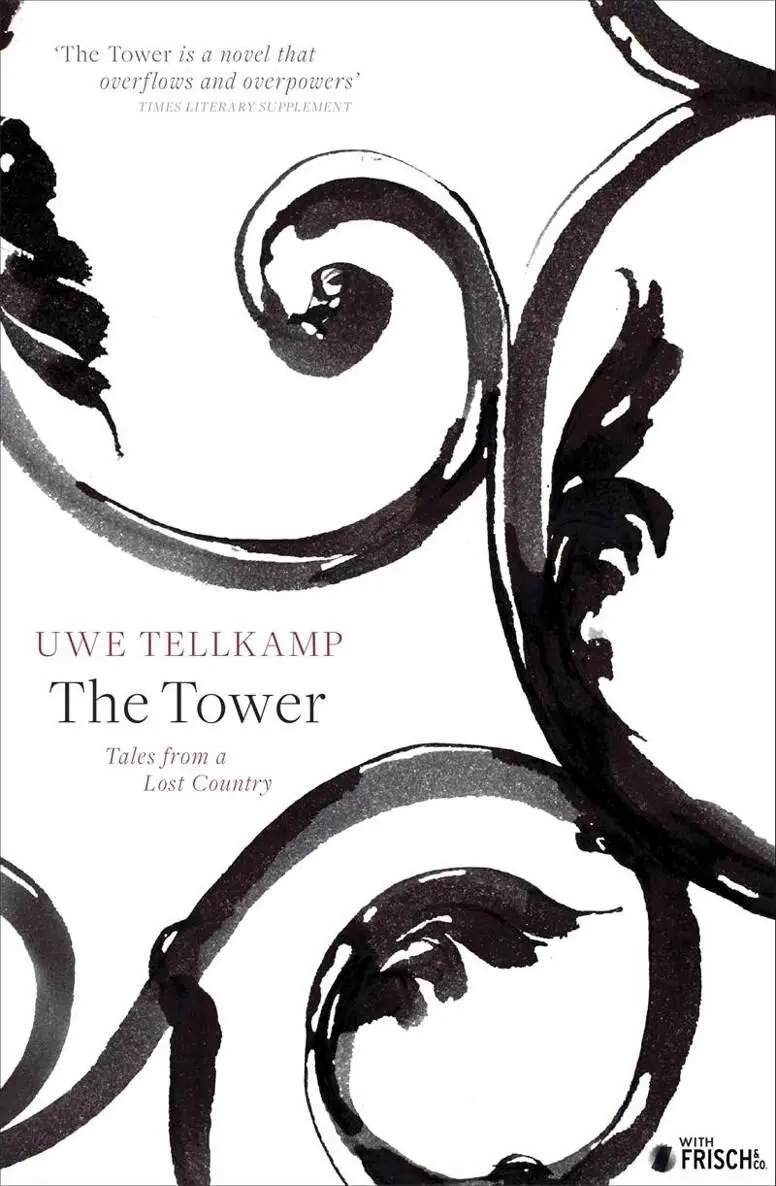
- Название:The Tower
- Автор:
- Издательство:Penguin
- Жанр:
- Год:2014
- ISBN:нет данных
- Рейтинг книги:5 / 5. Голосов: 1
-
Избранное:Добавить в избранное
- Отзывы:
-
Ваша оценка:
The Tower: краткое содержание, описание и аннотация
Предлагаем к чтению аннотацию, описание, краткое содержание или предисловие (зависит от того, что написал сам автор книги «The Tower»). Если вы не нашли необходимую информацию о книге — напишите в комментариях, мы постараемся отыскать её.
The Tower — читать онлайн бесплатно полную книгу (весь текст) целиком
Ниже представлен текст книги, разбитый по страницам. Система сохранения места последней прочитанной страницы, позволяет с удобством читать онлайн бесплатно книгу «The Tower», без необходимости каждый раз заново искать на чём Вы остановились. Поставьте закладку, и сможете в любой момент перейти на страницу, на которой закончили чтение.
Интервал:
Закладка:
It was Christian’s winter holiday from school. He had been accepted for medicine at university. Oddly enough, he hardly felt delighted at all, relieved rather, also weary; a guilty conscience for those who had been rejected. Becoming famous didn’t seem that important any more after his experiences at the training camp and with Reina. He’d hardly done any school work since the start of the twelfth year, his marks had got worse, which was a matter of concern to more than just Dr Frank — there had been discussions in the staff room: he’d stopped singing in Uhl’s choir, had resigned from the Free German Youth committee without giving any reason, cut himself off more and more. When Hedwig Kolb set an essay on the essential characteristics of socialist literature, Christian wrote a single sentence: ‘It lies.’ Hedwig Kolb didn’t give his essay a mark, took him on one side and told him that she had to insist he did the essay: couldn’t he? As he knew, his acceptance for university was still provisional, so couldn’t he? He was kept in for an extra hour, under the surveillance of Herr Stabenow, who was still full of enthusiasm for physics, a critical attitude to research and the unprejudiced pursuit of the truth, and he put together some rubbish with the usual platitudes that Hedwig Kolb returned to him without comment but with a two minus mark. He avoided Reina. Verena was in Dresden a lot now. Siegbert had to find another career, since he’d been rejected for the merchant navy because of a lack of social commitment. He still didn’t know what to do. When Svetlana started a discussion at the supper table in the hostel, Christian would silently drink his soup, and when Falk started fooling around and set Jens Ansorge off as well, he went out for a walk, stood for a long time on the bank of the Wilde Bergfrau or Kaltwasser reservoir, where there were just a few ice fishers with Mormyshka rods, sitting staring gloomily at the holes they’d made. He often went out for walks when he was at home, which made Richard remark that the lad had been ruminating and brooding over things too much recently, perhaps a regular work-out would do him good, a girlfriend; he, at Christian’s age … Anne said that with all those walks at least he got out in the fresh air and if he didn’t want to talk they ought to respect that. Christian neglected his cello. In his pocket he had Reina’s letters. There were long queues outside Hauschild’s coal store, the conversations of those waiting cut across by the sharp sound of the shovels with which Plisch and Plum removed the swiftly diminishing mountain of briquettes. It was the time of theatre productions, of Erik Orré’s Recitation Evenings, Adeling’s (the waiter) and Binneberg’s (the pastry cook) ‘Chocolate kitchen for children and those who want to become one’ in the foyer of the Felsenburg: cooking chocolate was melted in pots and pans to a dark brown molten mass with a Christmassy smell and poured into baking moulds from Binneberg’s cake shop: chocolate caravels stuck out their curving bows that Binneberg, an obese man with a network of burst veins and cheeks like a bulldog, provided with frosting sails and a sweet dribble of rigging from a piping bag; Pittiplatsch with his tongue sticking out and a white fondant cowlick multiplied on the edge of the table as if in a hall of mirrors; heads of Napoleon and culverins attacking the fortress of Königstein delighted the fathers. For each chocolate moulding Binneberg and Adeling charged one mark, which they put in a money box on which ‘Solidarity’ was written; they used the money to buy toys in König’s toyshop on Lübecker Strasse that they gave to the children in the Arkady Gaidar children’s home on Lindwurmring: an extensive, dilapidated building in the Swiss style beside the villas requisitioned by the Russians.
Once the cold season begins the heating levels are announced daily on the radio. The heating levels apply to firms and institutions with buildings and plant that do not have functioning output regulators. They set maximum heating times: heating level 1 means the heating is on for at most four hours a day with the proviso that the room temperature must not exceed the limit — for offices, schools, cinemas and other social institutions that is 19–20 °C. Heating level 0: no heating for any firms or institutions, special arrangements are in operation for certain buildings or spaces (e.g. hospitals). The date at which space heating starts (heating level 1) is determined by the director of the energy combine after consultation with the chairman of the District Energy Committee.
‘Learning from the Soviet Union means learning to freeze’ is the joke going round the queues outside Hauschild’s coal store.
In the spring Josta broke up with Richard. She wrote him a letter: since he refused to divorce his wife, she had drawn the obvious conclusion; moreover there was another man now. She was going to get married. She and her fiancé would take action to prevent any attempt by Richard to see Lucie again, to influence her or to challenge their right to custody of the child. Her fiancé had connections. ‘Farewell.’
One evening Christian saw his father come round the corner of Wolfsleite into Turmstrasse. Richard had dug his hands into his coat pockets and his eyes were on the ground. Christian’s first impulse was to hide behind one of the parked cars and wait until his father had passed, but Richard had already seen him. ‘Well, lad,’ he said, raising his shoulders like a large, skinny bird that felt cold. He seemed tired, he didn’t have his usual coolly searching look. ‘Problems?’ Richard went on, prodding Christian gently with his elbow without taking his hand out of his pocket.
‘Nah.’ Christian made an effort to make his voice sound unconcerned. ‘And you?’ He was alarmed at his familiarity, the forced joviality hung in the air. He’d never talked to his father like that before, as an equal, it just wasn’t done. He drew his head down into the collar of his parka.
‘Keep everything bottled up, hm?’ Richard said with a soft laugh. ‘Keep everything bottled up, that’s the way it is. The Hoffmanns and the Rohdes — we keep our mouths shut.’
‘Meno says, “A wise man —” ’
‘ “— walks with his head bowed, humble like the dust.” A Chinese proverb. He’s good at following it. The art of lying … You might perhaps find it useful some day, who knows?’
‘Are you going home?’
‘Not yet.’
‘Can I walk along with you?’
Richard looked up, then he suddenly went to Christian and embraced him. ‘I have to walk a bit by myself, my lad. — Sorry I couldn’t do anything about the army. The guys at district headquarters promised they’d conscript you into the medical corps.’ But that hadn’t happened, Christian had been conscripted into an armoured division.
‘I’ll survive.’
‘You go that way, I’ll go this.’ Richard pointed in either direction along Turmstrasse.
It’s a time for reading: Orwell is read, circulates in laboriously typed copies — transcripts by hand, such as the monks made, would be too easily recognized, cases were known in which State Security had sent registered mail to every household in one district in order to have a sample of handwriting on the receipt they could use for comparison, checked dictations done by children at school, students’ test papers, documents written by the spouse who hadn’t signed the receipt. It’s the time of the chain letters, of transfers, the time when poetry albums go from hand to hand in the classrooms and boys whose voices are breaking fill them with sparks of genius such as: ‘There’s no place like home’ or ‘Roses are red / violets are blue / sugar is sweet / and so are you.’ It’s busy at the post office: beside the buzzing long-distance booth — Herr Malthakus calling a philatelist who lives abroad; beside the booth for local calls — the mother of Frau Zschunke, the greengrocer, has been admitted to hospital; there’s a queue at the parcel counter to send solidarity parcels to Poland. Outside the church Pastor Magenstock has put up a list of items that are most urgently needed, which should be sent to make the long journey (because they fetch the highest prices on the Polish black market, though that reason doesn’t feature on the list, of course); addresses have also been attached to the notice. People have little trust in the officials of the German and Polish post, border control and customs, in dark hands in the interior of the People’s Republic of Poland. Coffee, sugar (whole shopping-bagfuls of one-kilo packets at 1.55 marks each are lugged there from HO Lebensmittel or Holfix), children’s clothes, cigarettes, flour. In the furrier’s section of Harmony Salon the clippings of fur are collected; ‘It’s all going to Poland,’ Barbara informs the children who ring at the door; the dressmakers do extra shifts to make the scraps into winter clothes that they proudly deliver to the parcel counter, where the assistant, wheezing asthmatically and wearing DVT-stockings and slippers with furry pink mice on them, is heaving weighty string-tied blocks up onto the scales with a regularity that usually only occurs at Christmas, writes the postcode on the wrapping paper with a blue wax crayon (zeros the size of hot-water bottles), brushes the completed dispatch form with glue and slaps it onto the parcel. There’s a smell of glue in the post office. There’s a smell of wet umbrellas drying in a plastic stand in the entrance; there’s a smell of Postmaster Gutzsch’s St Bernard, who’s lying, like a calf, on a blanket in the passage behind the counters. The special stamps to mark the forthcoming thirty-fifth anniversary of the founding of the Republic only have a faint smell of glue, and of Gutzsch’s extinguished cigar — he sometimes puts it down on the edge of the sponge used for moistening the glue on the stamps when he’s checking that both the recipient’s and the sender’s address on the envelope are written correctly; he draws one of the narrow-gauge railway series with the fine edging past his cigar across the wet sponge or takes a statue from Balthasar Permoser’s seasons series of stamps out of a folio-sized post office file and measures the space up meticulously before sticking down ‘Spring’ and ‘Summer’, then picking up the rubber stamp and thumping it down twice: pa-dum, first of all on the rich black of a pre-war Pelikan inkpad, then, joyfully, on the virgin stamp.
Читать дальшеИнтервал:
Закладка:
Похожие книги на «The Tower»
Представляем Вашему вниманию похожие книги на «The Tower» списком для выбора. Мы отобрали схожую по названию и смыслу литературу в надежде предоставить читателям больше вариантов отыскать новые, интересные, ещё непрочитанные произведения.



Обсуждение, отзывы о книге «The Tower» и просто собственные мнения читателей. Оставьте ваши комментарии, напишите, что Вы думаете о произведении, его смысле или главных героях. Укажите что конкретно понравилось, а что нет, и почему Вы так считаете.