Uwe Tellkamp - The Tower
Здесь есть возможность читать онлайн «Uwe Tellkamp - The Tower» весь текст электронной книги совершенно бесплатно (целиком полную версию без сокращений). В некоторых случаях можно слушать аудио, скачать через торрент в формате fb2 и присутствует краткое содержание. Год выпуска: 2014, Издательство: Penguin, Жанр: Современная проза, на английском языке. Описание произведения, (предисловие) а так же отзывы посетителей доступны на портале библиотеки ЛибКат.
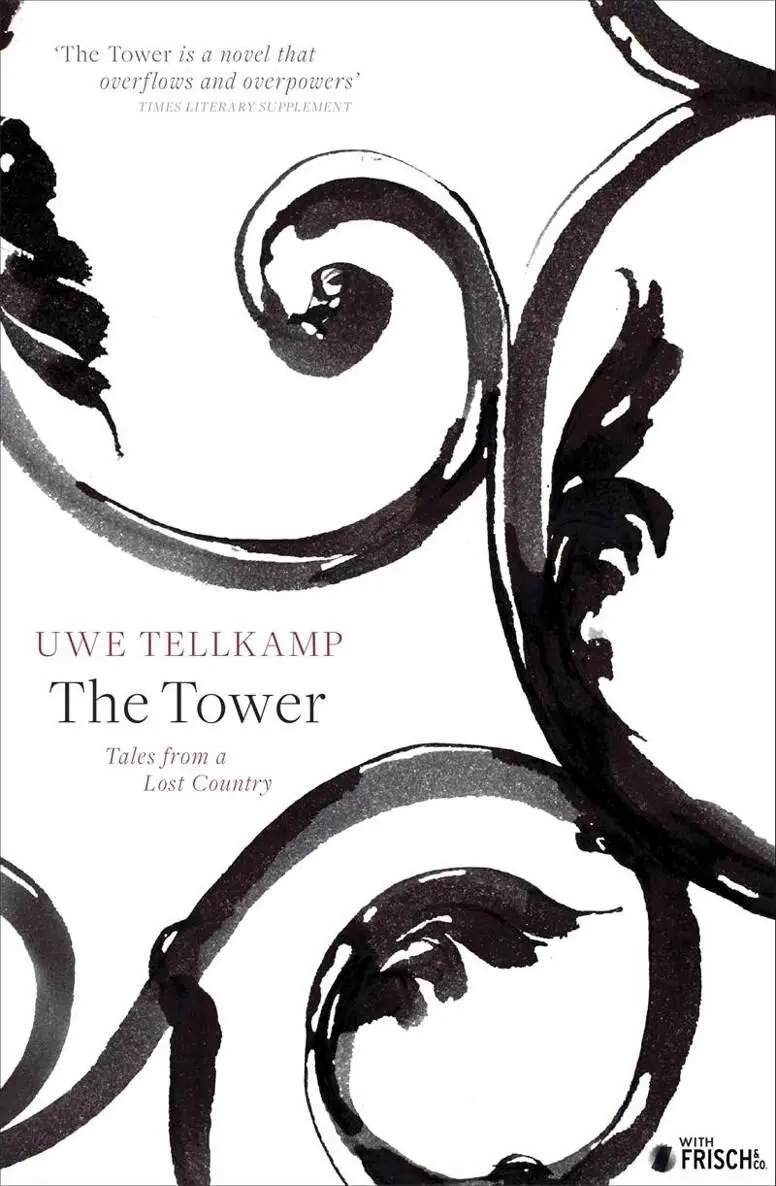
- Название:The Tower
- Автор:
- Издательство:Penguin
- Жанр:
- Год:2014
- ISBN:нет данных
- Рейтинг книги:5 / 5. Голосов: 1
-
Избранное:Добавить в избранное
- Отзывы:
-
Ваша оценка:
The Tower: краткое содержание, описание и аннотация
Предлагаем к чтению аннотацию, описание, краткое содержание или предисловие (зависит от того, что написал сам автор книги «The Tower»). Если вы не нашли необходимую информацию о книге — напишите в комментариях, мы постараемся отыскать её.
The Tower — читать онлайн бесплатно полную книгу (весь текст) целиком
Ниже представлен текст книги, разбитый по страницам. Система сохранения места последней прочитанной страницы, позволяет с удобством читать онлайн бесплатно книгу «The Tower», без необходимости каждый раз заново искать на чём Вы остановились. Поставьте закладку, и сможете в любой момент перейти на страницу, на которой закончили чтение.
Интервал:
Закладка:
Kosmonautenweg was a series of steep winding bends, ending at steps that led through romantic woodland, held back by walls, down to Pillnitzer Landstrasse. In winter the steps were slippery, anyone going up had to pull themselves up laboriously by the rail, carrying the shopping they’d had to do in the town on their back, like a mountaineer, in order to keep both hands free. In the summer there was a smell of moss, it was damp and cool as a gorge on the steps that cut through between Eschschloraque’s house and a guarded property, the entrance to which was blocked by a broad iron gate; the park had been allowed to run wild. Rumour had it that Marn, the right-hand man of the Minister of Security, would come here to recover from the stresses and strains of his responsibilities in the capital. A further set of steps linked Kosmonautenweg with the higher parts of East Rome, they were hardly wide enough for one person on foot and now, when the autumn rains had begun, full of rotting leaves on which it was easy to slip; the wooden handrail was rotten and longish sections had completely broken off.
‘How’s your nephew doing?’
‘Not particularly well, I assume. He’s got to go into the army soon. Three years.’
‘I have pleasant memories of that evening in your garden,’ Schevola said after a while. ‘I thought your nephew — he’s called Christian, isn’t he? — was, in a strange sort of way, nice.’
‘What d’you mean, in a strange sort of way? Are you going in for baby-snatching now?’ Philipp laughed but it didn’t sound genuine.
‘Very charming you revolutionaries are. But for you lot revolution’s a male thing anyway.’
‘When it comes to fighting, yes.’
‘While your wives are at home warming your slippers. By nice in a strange sort of way I mean that normally I can’t take a man I call nice seriously. Your nephew’s nice but I still take him seriously, that’s what I find strange. He seems to know a lot. Perhaps a bit too much for his age. And he’s attractive to women. Interestingly, he doesn’t seem to be aware of that.’
‘I hope you’re not going to put that idea into his head,’ Meno warned more brusquely than he intended.
‘Don’t worry,’ Judith Schevola replied, ‘I don’t believe he’s unthinking and carnal enough to climb into bed with a woman who’s twice his age and could therefore be his mother. There are men who, in a certain way, always go to bed with their mother and others who hate that. He probably belongs in the second category.’
‘Young things belong together.’
‘How tactful you are, Philipp. From mature women young men can learn what sensual fulfilment and discretion are. And they’d soon lose the desire to play war games.’
‘You have an uncomfortable way of assessing other people,’ Philipp remarked, hurt. ‘You often base it on mere outward appearances.’
‘Don’t you start getting profound with me, Comrade Professor. — Revolutionaries! You only have to scratch the surface a bit and the home sweet home appears. And a kitchen with a stove and a red-and-white-checked tablecloth with a cosy samovar making heartwarming drinks to go with the cake.’
‘You’re accusing me of that? Me? Of being a bourgeois old fogey? I think you need someone to knock some sense into you.’
‘Don’t worry, my friend, there are lots who’re trying to do that. By the way, you’re welcome to bring your little Chilean woman along. I was never particularly taken with middle-class morality.’
‘Here we are,’ Meno said.
Eschschloraque’s house was built into the slope. A dilapidated-looking bridge, with cannonballs in iron baskets and chains between them as a guard rail, led from the wrought-iron gate, a bent bee lily at the top, to the first floor of the foreign-looking building set amid gloomy firs. The street lamp on the steps down to Pillnitzer Landstrasse cast a faint light over the gable and part of the roof that, with its ornamental shingles, looked scaly, like dragon’s skin. ‘Cinnabar House,’ Judith Schevola murmured, reading the inscription written underneath a rusty culverin between half-timbered gables.
Eschschloraque flung the door open, surveyed Philipp, who still had his hand stretched out for the bell push, then Meno and Schevola. ‘We’re busy with glue,’ he said, nodding for them to come in. ‘For the more advanced part of the evening we had thought of lectures on repetitions and preservatives. Anyone who has something to contribute to that should not be shy and raise their hand; and it would make the quality of the Michurin dinner seem forgivable should anyone urgently desire to correct something even while chewing. Albin!’ he cried to the smiling young man waiting behind him in the hall who seemed to favour the same pastel-colour suits as Eschschloraque, although Albin’s was an iridescent lilac and Eschschloraque’s the silvery shade of fishes’ fins. ‘We have visitors.’
Albin was wearing a monocle and introduced himself with a bow, sketched a kiss on the hand for Judith Schevola. ‘Albin Eschschloraque, whether pleased to meet you remains to be seen. I’m — the son. My father gave me strength and height, my lack of application. My mother, I beg you, nothing at all. Welcome.’ He pointed to a row of sandals and through the barely furnished hall into the living room. It was like the spacious cell of Japanese monks that seemed to receive them with a severely elegant mien; a sparse room, not made for putting your feet up in the evening; two desktops on roughly hewn sections of tree trunk stood facing each other, some distance apart, like proud, unapproachable chieftains, a plank, sticking out into the room from a bookshelf, like a springboard, held a few little bonsai trees up to the bright white of a spotlight. On the sofa under it Vogelstrom, the painter, was sitting with a sketchbook on his knees; he’d torn out several pages and placed them down in front of him on the low wooden table with the clearly defined wavy grain. The ‘Michurin dinner’ kept its head down in a stainless-steel cart. The most striking thing in the room was an aquarium where, in pleasant, slow motion, colour-coordinated choreography, a wide variety of tropical fish alternated in the dreamy oxygen bubbles of its clarity.
‘Philipp, my friend, before you reveal to me how understanding Barsano was of your, I’m sure, polished, trenchant report, sparkling with figures, I’d like to ask you to cast your eye over my aquarium. Can you tell what heinous deed this individual’ — he pointed to Albin, who was still standing by the door, arms folded — ‘committed against my darlings, against their Mozartian weightlessness? And you, Rohde, you who are usually slitting allusions with red commas, can you see it? Ah, Fräulein Schevola, you who have Schiffner piping like a billy-goat, demonstrate your gift for observation undimmed by that fine bottle of Scheurebe, the label of which you were just examining.’
‘You have to admit,’ Albin explained, detaching himself from the door frame and approaching, theatrically limp-wristed, ‘that it can’t have been easy. The slipperiness of fish in general and of their tail-fins in particular, thin and gossamery as they are, resists the adhesive power of even the best glues. And then glue is water soluble-ollubel-wollubel, oh yes.’ He giggled extravagantly. ‘But in this country many things are possibul. Even special adhesives. A spot on every tail-fin, slight pressure in the hollow of your hand — they wriggle like butterflies — then straight back into their element. See, it sticks, they’re heading pointlessly in different directions.’
‘You’ve stuck the tails of my most valuable fish together,’ Eschschloraque retorted, taking a ham sandwich from the Michurin cart. ‘Was it an ideological test? This way or that? What were you up to?’
Читать дальшеИнтервал:
Закладка:
Похожие книги на «The Tower»
Представляем Вашему вниманию похожие книги на «The Tower» списком для выбора. Мы отобрали схожую по названию и смыслу литературу в надежде предоставить читателям больше вариантов отыскать новые, интересные, ещё непрочитанные произведения.






Обсуждение, отзывы о книге «The Tower» и просто собственные мнения читателей. Оставьте ваши комментарии, напишите, что Вы думаете о произведении, его смысле или главных героях. Укажите что конкретно понравилось, а что нет, и почему Вы так считаете.