Uwe Tellkamp - The Tower
Здесь есть возможность читать онлайн «Uwe Tellkamp - The Tower» весь текст электронной книги совершенно бесплатно (целиком полную версию без сокращений). В некоторых случаях можно слушать аудио, скачать через торрент в формате fb2 и присутствует краткое содержание. Год выпуска: 2014, Издательство: Penguin, Жанр: Современная проза, на английском языке. Описание произведения, (предисловие) а так же отзывы посетителей доступны на портале библиотеки ЛибКат.
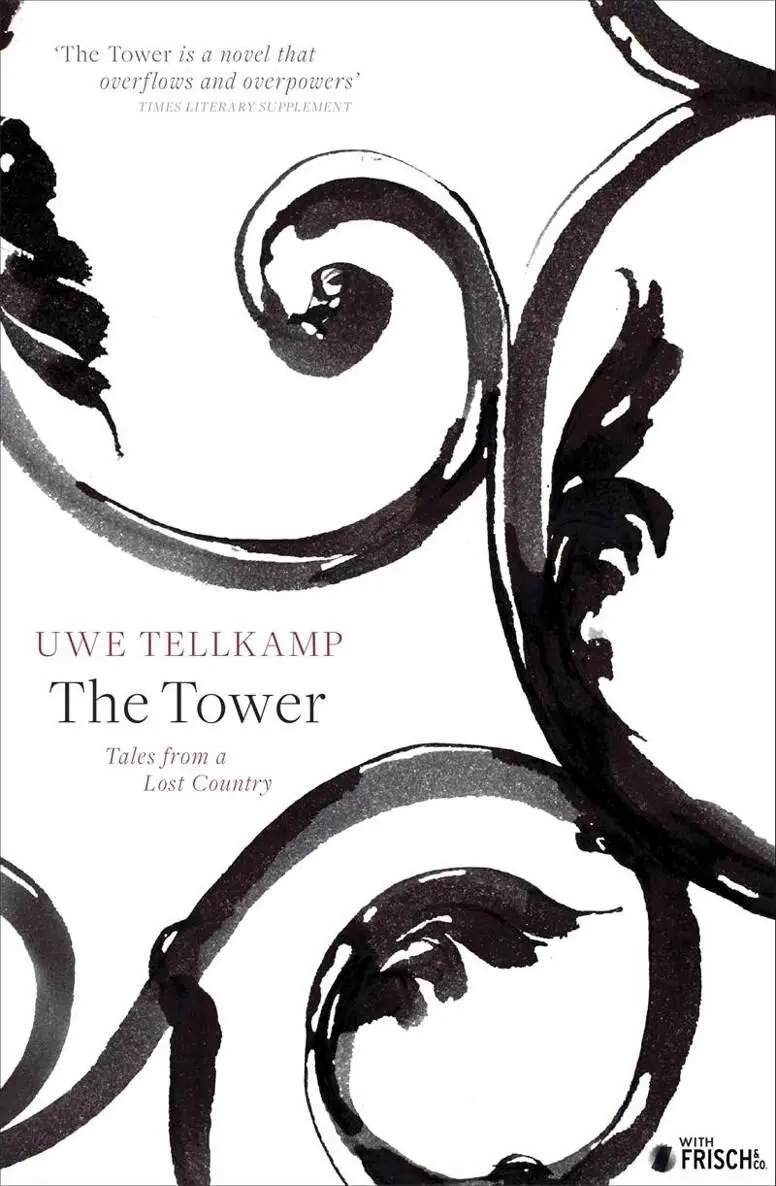
- Название:The Tower
- Автор:
- Издательство:Penguin
- Жанр:
- Год:2014
- ISBN:нет данных
- Рейтинг книги:5 / 5. Голосов: 1
-
Избранное:Добавить в избранное
- Отзывы:
-
Ваша оценка:
The Tower: краткое содержание, описание и аннотация
Предлагаем к чтению аннотацию, описание, краткое содержание или предисловие (зависит от того, что написал сам автор книги «The Tower»). Если вы не нашли необходимую информацию о книге — напишите в комментариях, мы постараемся отыскать её.
The Tower — читать онлайн бесплатно полную книгу (весь текст) целиком
Ниже представлен текст книги, разбитый по страницам. Система сохранения места последней прочитанной страницы, позволяет с удобством читать онлайн бесплатно книгу «The Tower», без необходимости каждый раз заново искать на чём Вы остановились. Поставьте закладку, и сможете в любой момент перейти на страницу, на которой закончили чтение.
Интервал:
Закладка:
… but the tram was travelling, and his father had said, ‘Goodbye’, Ulrich, ‘Keep your chin up, lad’, Ina that he just shouldn’t start to cry; only Anne had said nothing and made him a mountain of sandwiches and had been all over the place for treats, and Kurt Rohde had scribbled a couple of lines on a postcard that Christian knew was in the bag round his neck, a card from the Danube delta, a melancholy hoopoe was sitting on a tree staring out over water and reeds: in the first place life is short and in the second it goes on; Meno had said, ‘Come what come may, time and the hour runs through the roughest day’ … day, day echoed in his memory like a bell tolling; Christian dug his hands in the pockets of his battledress and slipped forward to expose a greater area of his body to the underseat heating, pulled his case in out of the corridor: it had stopped raining, the window was covered in strands of watery hair, the passengers getting on and off left moisture on the grooved surface of the floor; he felt for the box of books with the tip of his toe: Reclam paperbacks, stories by Tolstoy, Gorki’s The Artamanovs , Meno’s Old German Poems , a few volumes from the Hermes-Verlag’s ‘Black Series’, he wouldn’t turn into a cabbage, he wouldn’t forget language, that was what he feared most — that they would manage to cut out part of his brain
… but the tram was travelling and he had a strange experience, he was sitting in a place where he was not yet present, he was still walking along Wolfsleite and Mondleite and was on the way to the House with a Thousand Eyes; he could still hear the Stenzel Sisters’ gramophone tunes in Caravel, watch Kitty doing her ‘Müllers’, enjoy the quietness in Wachwitz Park, where October made furious peace with the clay court outside the Roman Villa and its windows that couldn’t help the light casting itself on them so lavishly, the bushes looking like waiting cats spattered with honey and the fire of the rhododendrons already dying in the afternoon; he was still walking round the park, seeing the gardening implements, wheelbarrows, bottles of propane gas, and thinking of fleeing: to stay here, to be here , screwed up his eyes: the world in orange, opened them: reddish brown and ochre flitting through the tops of the beeches, leaves tilting like the visors of tiny sentries, speckled with rust and definite, there were still gossamer threads of spiders’ webs floating through the air and he tried to catch them with outspread fingers, as if they were tissue hanging down from the cloud-steamers and he could unravel them or fly along with them like a little boy; but he couldn’t, he was sitting here on a grey seat in one of the red-and-white-painted Czech Tatra trams — and was yet still there; it was as if he were the shadow and the other Christian the man of flesh and now congealed blood (do I have everything with me? Conscription papers, military identity card, in a moment of hysteria he pulls out the bag round his neck, Kurt’s card is already dog-eared), and he, the shadow, were attached to the other at every point of his body by thousands of untearable but enormously elastic threads that were tearing him off, molecule by molecule, and filling the shadow (like swimmers who were attached to the edge of the pool by rubber ties and tried to swim a length, did thirty or forty metres then fought to at least touch the other end with their fingertips, their arms going round like the sails of a windmill, whipping up the water into foam, then the swimmers gave up, pretended to be dead and floated back, face down — but he was torn off)
… for the tram was travelling, he looked at the Elbe opening up in a wide curve on the left, on the other bank was the Käthe-Kollwitz-Ufer, the three high-rise buildings before Brücke der Einheit, blocks made with prefabricated concrete slabs stuck into the silhouette of the Old Town, he walked round the Old Town once more, as he had done the previous day: the Academy of Art seemed to be letting its shoulders droop in the blinding white sun, cranes were revolving over the Semper Opera House, the ruins of the Frauenkirche stretched the stumps of two charred arms up to the heavens, the Catholic Church of the Royal Court of Saxony lay athwart the river like a portly duck and seemed to be baked in sleep amid the agitation of the morning traffic; the Elbe, covered in grey-brown scales, resembled a dinosaur lethargically creeping forward and at this moment the other, the more real Christian was sitting with Niklas on the chaise longue in the sparkling brightness of the music room, his parents, Lothar Däne, record shop Trüpel, Ezzo and Reglinde, Gudrun at the table with the filigree Meissen place settings, Gudrun’s father, bearded, morose and ignored in the armchair by the veranda: guests at a birthday party, musicians from the State Orchestra were standing in the hall recounting gossip, Robert was looking over Ezzo’s angling equipment in the children’s room, Christian was sitting beside Meno, who, as always, was quiet and observing the others; the tiled stove twittered softly, Niklas was fussing about with the arm of the record player, brushing the sapphire needle, checking the speed setting, he was going to play Weber’s Freischütz , with which the Semper Opera House was to reopen on 13 February, it had been the talk of the town for months.
… but the tram only stopped briefly on Rothenburger Strasse, allowing commuters heading for Sachsenplatz and Äussere Neustadt to alight, picking up schoolchildren and their teachers with their exhortations, office workers with briefcases under their arms, Christian thought of Muriel, the news that she was being sent to a reformatory had got round the neighbourhood
… and didn’t stop at Platz der Einheit, at the Transport Services’ high-rise building nor at Otto-Buchwitz-Strasse with the light-blue Central Post Office, he felt like simply getting out and walking down Strasse der Befreiung, past the memorial to the Soviet army with its heroic Red Guards and past the Schiller stele, past the four-ball clock and then going on to the Golden Rider, simply leaving his suitcase in the tram, let whoever wanted take care of it; to run away, yes; why could he not simply run away (because they’ll catch you), why did he have to be here (because you want to study medicine), but aren’t there people who managed to get to university even though they only did a year and a half (perhaps, but there’s that law saying you can only go to university after you’ve completed your military service … what if they don’t conscript you for years?); he wanted to see the Golden Rider, now, to wonder about the circular hole at a particular place on August the Strong’s horse (where was the thingy kept, was it really made of gold?); he wanted to walk over Dimitroff Brücke to the Brühlsche Terrasse and he remembered at that moment, as the doors of the 11 closed and also singing could be heard from the other carriage, making a few passengers lower their newspapers and shake their heads, the apple his mother had placed on a white porcelain plate, the last apple from a, as Anne put it, priceless gift in kind Richard had been given by a patient in thanks for good treatment: a basket with old varieties of apple, priceless because unavailable in the shops; Star Rennet, English Strawberry Apple, Red Warrior, Mohrenstettiner (Meno used a regional name, Chimney Sweep, Richard knew it from his father’s garden in Glashütte as Red Eiser), which had given Robert stomach ache because they weren’t quite ripe; Yellow Bellefleur, Pomeranian Crooked Boot, Lemon Apple; they still grew on the slopes above the Elbe, but they were guarded by their owners, kept for their own consumption; boys who tried to steal them had to watch out for fierce dogs and even Lange only rarely gave away some of his treasured fruit (Meno got some in exchange for books); fragrance, the crackle of leaves when the autumn drizzle came, shiny green, full, harlequin-striped fruits on the branches, Christian remembered the clear, almost brazen red of the apple on the plate, a shallow, slanting oval of shadow licked like a tongue across the porcelain in the angora light of a November morning, the harsh, glazed-looking red, beside the living-room door was a jug with the same red bleeding down from its rim in decorative dribbles; now he was going out of the kitchen into the hall and listening, stepped on a place in the parquet flooring that creaked because all was quiet in the house, no Stenzel Sisters’ gramophone sketched gestures made of starch and melancholy, neither lawnmower noise nor doleful poodle slurped at the windowpanes, Plisch and Plum weren’t shovelling either, no stove-stirring plumbed the silence; he thought of cutting a slice out of the apple and placing it on the toaster — or holding it in a spoon over the flame of the gas stove, as Robert sometimes did with honey substitute that he scraped out of a cardboard tub (the honey tasted of sugared wax), but he put the apple back on the plate and decided to walk round the house once more before eating the apple; he still had plenty of time
Читать дальшеИнтервал:
Закладка:
Похожие книги на «The Tower»
Представляем Вашему вниманию похожие книги на «The Tower» списком для выбора. Мы отобрали схожую по названию и смыслу литературу в надежде предоставить читателям больше вариантов отыскать новые, интересные, ещё непрочитанные произведения.


Обсуждение, отзывы о книге «The Tower» и просто собственные мнения читателей. Оставьте ваши комментарии, напишите, что Вы думаете о произведении, его смысле или главных героях. Укажите что конкретно понравилось, а что нет, и почему Вы так считаете.