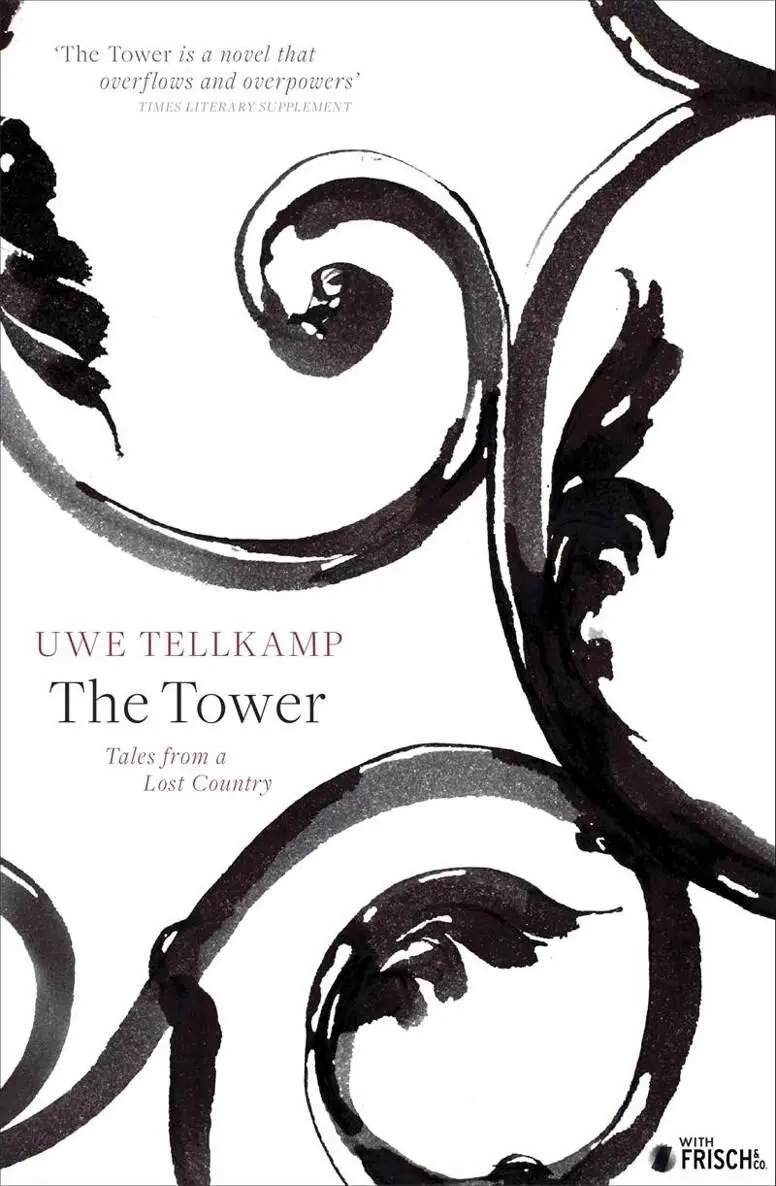
Uwe Tellkamp - The Tower
Здесь есть возможность читать онлайн «Uwe Tellkamp - The Tower» весь текст электронной книги совершенно бесплатно (целиком полную версию без сокращений). В некоторых случаях можно слушать аудио, скачать через торрент в формате fb2 и присутствует краткое содержание. Год выпуска: 2014, Издательство: Penguin, Жанр: Современная проза, на английском языке. Описание произведения, (предисловие) а так же отзывы посетителей доступны на портале библиотеки ЛибКат.
- Название:The Tower
- Автор:
- Издательство:Penguin
- Жанр:
- Год:2014
- ISBN:нет данных
- Рейтинг книги:5 / 5. Голосов: 1
-
Избранное:Добавить в избранное
- Отзывы:
-
Ваша оценка:
The Tower: краткое содержание, описание и аннотация
Предлагаем к чтению аннотацию, описание, краткое содержание или предисловие (зависит от того, что написал сам автор книги «The Tower»). Если вы не нашли необходимую информацию о книге — напишите в комментариях, мы постараемся отыскать её.
The Tower — читать онлайн бесплатно полную книгу (весь текст) целиком
Ниже представлен текст книги, разбитый по страницам. Система сохранения места последней прочитанной страницы, позволяет с удобством читать онлайн бесплатно книгу «The Tower», без необходимости каждый раз заново искать на чём Вы остановились. Поставьте закладку, и сможете в любой момент перейти на страницу, на которой закончили чтение.
Интервал:
Закладка:
… as the tram took the Otto-Buchwitz-Strasse/Bautzner Strasse crossing and approached Neustadt Station, he was walking round Caravel thinking about the apple on the plate that was as red as a billiard ball and would be just as cool, and also too refined to tip its fragrances on demand and without exception into his greedy mouth, the flesh would crunch as he bit into it, perhaps there would be a trace of blood along the edge of the bite; the apple would taste of pride, of autumn or, to be more precise: of the frothy concord between the zenith and the calm of descent in which that raphe had pursued its course — he had found the term in the Leipzig anatomical atlas that medical students, as was recommended in a letter from the dean’s office, should purchase before their military service or their year of work experience, Richard had acquired the lavishly illustrated book with the orange binding for him from the duplicate copies of the library of an out-of-the-way academy — that raphe (Christian loved the word), the force with which, just for moments, the tidal waves of September and October collided, that point in time (but it wasn’t that, Stabenow had spoken of ellipses of time and blobs of time), this blob of time, then, would suck the essence of the autumn out of immense aromas: it was smells (for Christian autumn, October, the month of his birth, began with smells: the scent of the leather of old wallets that came from the gills of mushrooms, the smell of horses that came from wet foliage, the impotent sweetness of the fruit in the Anker jars that were heated in the preserving pans), it was haste going hither and thither, crossed by the lines of a great crested grebe in the shiny, sleepily quivering calm of the castles of Pillnitz, it was images furiously popping up and down (lemon sticks, spiders’ stars in the trees, moist wood washed up on the banks of the Elbe, decay, moss-green in forgotten sewer pipes and in the joins in the wall on the lower section of Rissleite, the coral red of the rowan berries, peacock butterflies on the greying, sun-warmed wood of a window seat, the fine-pored stillness, slightly loosened at the edges, of a watering can in the corner of a garden, little, transparent camels of warmth slipping away from the radiator fins past chairs and sofas in the direction of cracks in the doors); and yet the apple had blemishes and ‘stocking marks’, as Barbara called them, scaly notches caused, perhaps, by some parasite or abnormal growth, so he wouldn’t bite into the apple but cut it with a Japanese blade, would delight in the moisture on the cut (the steel would turn blue from the malic acid and taste pleasantly bitter), he didn’t divide the apple into four pieces, as everyone else he’d watched eating apples did, instead he cut the apple across in slices as thick as your finger (Reina said she’d never seen anyone cut an apple like that before),
Reina
tired and lame, I sought an inn, my host was wondrous kind, a golden apple was his sign … he murmured as he went up the stairs to the attic, lines from his school reader that had stuck in his mind, Uhland was the name of the poet who had refreshed his parched throat with an apple,
don’t think of
Reina
he thought, having taken up the struggle with the loft, suddenly he hated the quiet and the coppery red of the purlins, the clay pots and the Stenzel Sisters’ cork swimming belts that helped them when they went swimming — they also wore bathing caps decorated with rubber roses — in the Massenei baths, felt fury rising up inside him at the rusted, heavy radiators next to Griesel’s attic room, that they could listen to the memories of the dust here and needed nothing; he unlocked the door to the Hoffmannesque room, opened the suitcase with the film magazines, took out his penknife and stuck it right in the face of the girl on Fanø, sharply lit in momentous black-and-white on one of the programmes, saw an abandoned wasps’ nest and thought of the apple, the hungry red that seemed to suck at the other objects in the kitchen, broke off, went down into the apartment, gathered his things together, left the apple untouched
… and for a few moments couldn’t understand why Neustadt Station had come into sight, why the 11 was slowing down and stopping; even while he was some way away he could see the people waiting on Dr-Friedrich-Wolf-Platz, a motley crowd that was fed by cars driving up and suitcase-bearing young men such as he was; it blocked the entrances to the station and when he got off he could even hear the cries and raucous shouts from the tram stop, which was separated from the station by the wide square reflecting the blue of the sky.
39. Pink is the colour of your weapons
Comrade Soldier, Comrade Sailor, a new phase in your life lies ahead — active service in the National People’s Army. With your work and your study you have already helped to shape our socialist society. Now, as a soldier, you are exercising a basic constitutional right, you are fulfilling your duty to defend peace and socialism against all enemies.
What It Means to be a Soldier
Training Centre Q/Cadet School Schwanenberg,
9.11.84
Dear Parents, 1,000 days, but the first ones are over. We were driven from the station in Schwanenberg to the barracks in several batches of 30. There were only 2 lorries so we had to spend 4 hours standing by the loading ramp on a cobbled square outside the station, we sat down on our cases and bags, the corporal accompanying us forbade us to go under cover. I was one of the last batch, it was already dark and we were silent (we should never let an opportunity to be silent pass ungrasped, the corporal said with a knowing smile); I was sitting by the tailboard and could have a look around. On the horizon the reflected glow of industrial areas, blast furnace tappings licking at the sky, the land is flat, there are just a few stunted trees like frozen sentries on the edge of the open-cast mines. The lorry drove out of the town, there was less and less traffic on the road, then I saw Schwanenberg disappearing like a space station (it was us who were moving away, of course, but it felt as if the lorry were standing still and the populated areas were being pulled away from us), a few lights here and there, navigation lights for the brown-coal excavators that lumber along like prehistoric animals, grazing mastodons in the dark. There’s a metallic hum in the air, interrupted, when the excavators are moved, by the squeal of their rusty joints, you have to get used to it, it reverberates across the countryside, breaking at night on the concrete of the living quarters of the cadet school. Then smells: the soil smells of metal, the air of flints being struck against each other; there’s a large sweet factory in Schwanenberg and when they’re pouring chocolate into moulds the smell drifts into our corridors and rooms, you can even tell the different liqueurs they use to fill the chocolate sweets. Then, depending on the wind direction, cocoa dust settles on the tables, stools, beds, in such fine layers you can’t collect it.
The school is in the middle of the brown-coal district, no houses, no trees in the vicinity, bushes just along the drive. It covers an extensive area, light-grey, almost white roads made of concrete slabs that are swept by squads with brushes made of willow twigs. That scraping noise, the hum of the excavators, the croaking of the crows, on Sundays music in 4/4 time from the loudspeakers along the roads of the facility and the barked commands are our daily music. Accommodation boxes, a hectare of parade ground right by the entrance (here they call it the CEG — controlled-entry gate), a few low cubes in the background, watchtowers at the corners, barbed-wire fence, a flowerbed outside the staff officers’ building: Welcome to the Hans Beimler Training Centre Q. After we got off the lorry we had to fall in, a different corporal took us into a hall where they went through the general attendance check. After each name, the unit and the number of the building where we are quartered were bawled out; I was assigned to Block 1, an oblong with hundreds of windows in the long sides and with 100-metre-long (132 metres to be precise, they were measured generations ago) corridors floored with granite slabs spattered with black and white spots and polished till they are smooth as glass. The black and white spots are distributed more regularly than on a Great Dane and therefore don’t look very nice. We had to go by ourselves. Not a person to be seen. Fluorescent tubes, in the middle of the corridor a plain table and two stools, above them a wall newspaper on red cloth with the title ‘Subject area: Tanks/Fiedler Unit’, underneath that a large-format daily schedule, a calendar for birthdays and a slogan: ‘The stronger socialism, the more secure peace.’
Читать дальшеИнтервал:
Закладка:
Похожие книги на «The Tower»
Представляем Вашему вниманию похожие книги на «The Tower» списком для выбора. Мы отобрали схожую по названию и смыслу литературу в надежде предоставить читателям больше вариантов отыскать новые, интересные, ещё непрочитанные произведения.






Обсуждение, отзывы о книге «The Tower» и просто собственные мнения читателей. Оставьте ваши комментарии, напишите, что Вы думаете о произведении, его смысле или главных героях. Укажите что конкретно понравилось, а что нет, и почему Вы так считаете.