Amir Gutfreund - Our Holocaust
Здесь есть возможность читать онлайн «Amir Gutfreund - Our Holocaust» весь текст электронной книги совершенно бесплатно (целиком полную версию без сокращений). В некоторых случаях можно слушать аудио, скачать через торрент в формате fb2 и присутствует краткое содержание. Год выпуска: 2006, Издательство: Toby Press Ltd, Жанр: Современная проза, Прочая документальная литература, на английском языке. Описание произведения, (предисловие) а так же отзывы посетителей доступны на портале библиотеки ЛибКат.
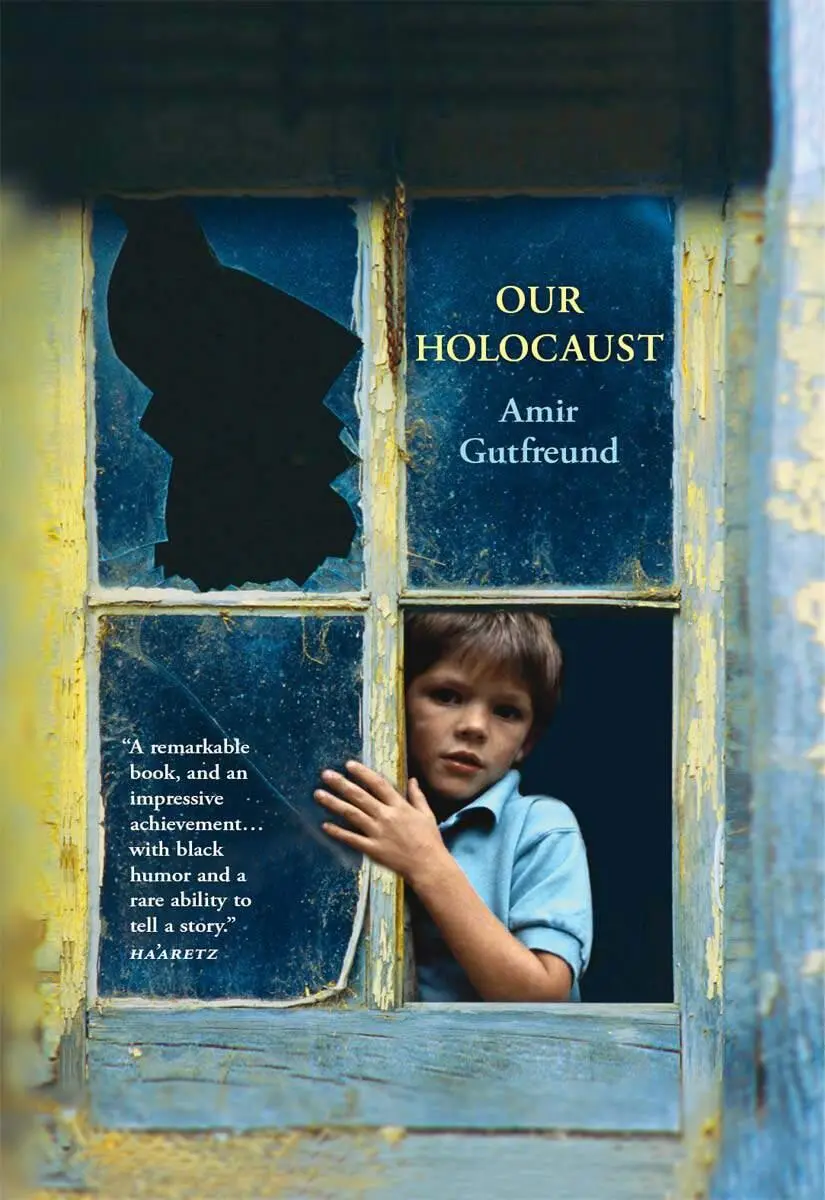
- Название:Our Holocaust
- Автор:
- Издательство:Toby Press Ltd
- Жанр:
- Год:2006
- ISBN:нет данных
- Рейтинг книги:4 / 5. Голосов: 1
-
Избранное:Добавить в избранное
- Отзывы:
-
Ваша оценка:
Our Holocaust: краткое содержание, описание и аннотация
Предлагаем к чтению аннотацию, описание, краткое содержание или предисловие (зависит от того, что написал сам автор книги «Our Holocaust»). Если вы не нашли необходимую информацию о книге — напишите в комментариях, мы постараемся отыскать её.
Our Holocaust — читать онлайн бесплатно полную книгу (весь текст) целиком
Ниже представлен текст книги, разбитый по страницам. Система сохранения места последней прочитанной страницы, позволяет с удобством читать онлайн бесплатно книгу «Our Holocaust», без необходимости каждый раз заново искать на чём Вы остановились. Поставьте закладку, и сможете в любой момент перейти на страницу, на которой закончили чтение.
Интервал:
Закладка:
It was clear that new powers had taken control of Grandpa Yosef. This was evidenced by the fact that one day, while he was being driven by a colleague to visit a mutual acquaintance who was sick, a policeman popped up and accused the driver of disobeying a stop sign. Grandpa Yosef was overtaken by a rebellious spirit.
Disobeying?
Failure to come to a complete stop with all four wheels behind the line?
The wheels, after all, are all on one axis. If one stops, they all stop. And Grandpa Yosef was prepared to testify that the front wheel had stopped. And if it had stopped, it stood to reason that its siblings had too.
The policemen, at first, was extremely patient, responding calmly to his elderly interlocutor. But Grandpa Yosef entered into Talmudic debates and arguments, later telling us how he struck down the policeman’s claims one after the other until victory. The policeman grew angry and began to make threats. Grandpa Yosef fumed as well. Things were fast approaching the most dreaded outcome. Grandpa Yosef was not hauled off to jail, but he came close. He gave the policeman quite an argument, and earned a ticket to show for it.
He dug through his pockets and pulled out the official confirmation for us, then looked at the report covered in Hebrew letters. “ Nu , at least it’s one of our own policemen.” And he breathed a breath of calmness, inhaling the flavor of a Hebrew ticket, in Hebrew characters, from “one of our own” policemen. Even the argument seemed to take on a renewed form in his thoughts — softer, entirely conducted in the language of Eliezer Ben-Yehuda, inventor of the modern Hebrew language.
We hoped the pale light and the tart aromas of cooking from the neighborhood windows would quiet his blood. But in the Turkish market Grandpa Yosef found curry powder, and from Sammy of the vegetables he demanded mango, fresh coconut and ginger. He replaced his tea with strong coffee. Then he began researching names — Arabica, Robusta, Segafredo, Jamaican Blue Mountain.
At times it seemed as if the new, temporary persona would soon settle down and put forth roots. Grandpa Yosef scurried around even when he had no reason to. He could not find tranquility in his armchair, and changed outfits a few times a day. At some point, a great secret almost escaped him: since his return, the Gemara had struck him as too slow, too lingering. How long could one debate a seah of carobs? And so instead of studying Gemara pages, he sometimes took off to the beach — the actual beach. Red sunsets. Beautiful young women, excuse-me-sir-what-time-is-it? And an oceanfront café where you could buy cocoa and fruit juices. The Caribbeanism within him radiated to the outside, pulling out his personality like a rabbit from a hat. But we gradually sensed that a great weight had sat itself down in Grandpa Yosef’s garden, clarifying: things will be tough. There was no Feiga, no Moshe, no one to make an effort for.
Grandpa Lolek continued to visit. When the Vauxhall showed up the yard looked briefly as it had in days past. Hope glistened; perhaps Moshe’s quick figure would emerge from the distance to wash off the nettlesome dust. Grandpa Lolek sat down for a cup of tea, his face respectable, and inspected the new reality. He missed Moshe and, more than Moshe, he missed the wondrous miracle that could flourish thanks to him. (There was something disrespectful about the way he missed him, like a magician who had lost his rabbit.) We were amazed to learn that it was he who had bought a triple burial plot for Grandpa Yosef and his two loves. He had gritted his teeth and financed the erection of two marble tombstones. For now, Grandpa Yosef had saved him a third. No need. Grandpa Lolek had no qualms about taking pride in this act of charitableness, recounting in great detail how he had acquired the triple plot against all odds, outdoing competitors. As if he had completed a winning row of three in a game of tic-tac-toe.
“They said, take two, this here and this another separate, they said is expensive here, no possible three because of wall. They said here is good plot, no possible three, one in middle is already taken. Not possible to cancel. Very expensive. Here in middle is already taken, there is others who want three together. That’s it. Must give up. Then suddenly, yes! On the side, in shade. A good plot! They already jumped on it, to take it. From between teeth I took it away, bam! There is nothing which that money cannot do.”
And yet it was with him, of all people, one fine day, that the incident occurred.
We were drinking tea (strong “Eva” coffee for Grandpa Yosef), and as on every day, Grandpa Lolek waved his tea bag, hanging it from the edge of a cake-fork by its string. Selektion . When he held the bag up close to Grandpa Yosef’s face, teasing him in his customary way, Grandpa Yosef suddenly snatched the bag away. He held it in his hand and contemplated whether to throw it in Grandpa Lolek’s face or do something else. But in the end he just crushed it in his fist. Dark brown rivets of tea trickled from his hand to the table as Grandpa Yosef squeezed and squeezed.
All his life Grandpa Yosef had held back, exercising restraint for the sake of the little miracle that was Moshe. We could actually sense the word, RESTRAINT, appearing on his face, and further inside. But now it all fell apart. There was no Moshe. No Feiga. No one to make an effort for. With the tea bag in his hand, Grandpa Yosef hurried to the kitchen, where he traded his anger for some trivial business and then returned to us slightly calmer.
Grandpa Lolek, in a rare outburst of sensitivity to what was occurring, quickly found a reason to leave.
Grandpa Yosef was left alone, not only on that day. There began a period of isolationism. He had finally found the strength to declare himself a mourner with rights. He fenced himself off and avoided the family. He made us feel punished, unworthy. We tried. We came up to the foot of the cliff of righteousness, and there we broke down, wretched, spilling over with shortcomings.
Grandpa Yosef taught us a chapter in remorse. He did not have to use many looks or words, he trusted that we would sense the nuanced emotions, the hidden meanings of his gestures of withdrawal. But with Grandpa Lolek it was simple and determined. As if to pay him back for many seconds, many hours, for the six million whom Grandpa Lolek had continuously humiliated without anyone doing anything about it. Instead of the whole six million, they usually focused their grief on one or two people, becoming their voice.
Grandpa Lolek’s response was surprising. It would seem that he could have avoided Grandpa Yosef’s presence — what was bringing them together? But instead he repeatedly asked for Grandpa Yosef’s forgiveness, insistently, innocently, without complaint. He admitted that he had behaved badly. And he was prepared to apologize, to atone. We could see that he cared. Delegations were sent. Grandpa Yosef welcomed the guests with his usual humbleness, taking his doughy cakes out of the oven, serving herring and home-made pickles. But despite the normal hospitality, in the matter of Grandpa Lolek he would not budge. His face hardening, his temples sprouted veins as he announced that he was unwilling to make up. “May he go to hell and go in peace,” he blessed the banished relative.
We kept trying. Our self-declared role as mediators allowed us to feel objective, outside the fan of Grandpa Yosef’s anger. We were merely the organizers of a transaction, not a party to the affair. A number of times the reconciliation was about to come to fruition. The two were already positioned on either side of the bridge, the exchange ceremony about to begin, when suddenly Grandpa Yosef would brush off the agreement — he would never forgive, never! We tried to persuade him. Tried to demand explanations. Grandpa Yosef extricated himself from us. Trembling. He wagged his finger, mumbled, grumbled, rubbed one fist against the other. His temples lit up in rage. Words tried to escape. Commotions. Little crackles in the pipe works. Sweat glistening on his forehead.
Читать дальшеИнтервал:
Закладка:
Похожие книги на «Our Holocaust»
Представляем Вашему вниманию похожие книги на «Our Holocaust» списком для выбора. Мы отобрали схожую по названию и смыслу литературу в надежде предоставить читателям больше вариантов отыскать новые, интересные, ещё непрочитанные произведения.







Обсуждение, отзывы о книге «Our Holocaust» и просто собственные мнения читателей. Оставьте ваши комментарии, напишите, что Вы думаете о произведении, его смысле или главных героях. Укажите что конкретно понравилось, а что нет, и почему Вы так считаете.