Greg Jackson - Prodigals - Stories
Здесь есть возможность читать онлайн «Greg Jackson - Prodigals - Stories» весь текст электронной книги совершенно бесплатно (целиком полную версию без сокращений). В некоторых случаях можно слушать аудио, скачать через торрент в формате fb2 и присутствует краткое содержание. Год выпуска: 2016, Издательство: Farrar, Straus and Giroux, Жанр: Современная проза, на английском языке. Описание произведения, (предисловие) а так же отзывы посетителей доступны на портале библиотеки ЛибКат.
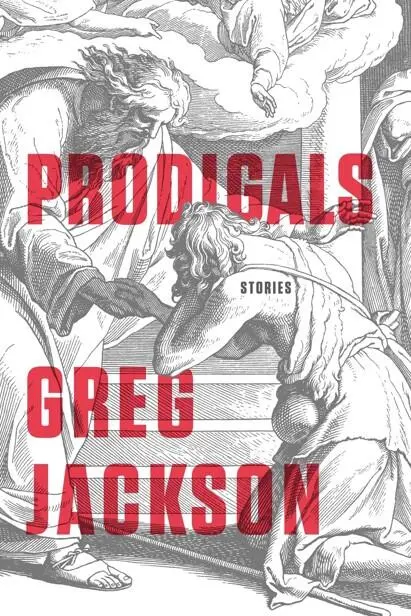
- Название:Prodigals: Stories
- Автор:
- Издательство:Farrar, Straus and Giroux
- Жанр:
- Год:2016
- ISBN:нет данных
- Рейтинг книги:4 / 5. Голосов: 1
-
Избранное:Добавить в избранное
- Отзывы:
-
Ваша оценка:
Prodigals: Stories: краткое содержание, описание и аннотация
Предлагаем к чтению аннотацию, описание, краткое содержание или предисловие (зависит от того, что написал сам автор книги «Prodigals: Stories»). Если вы не нашли необходимую информацию о книге — напишите в комментариях, мы постараемся отыскать её.
A filmmaker escapes New York, accompanied by a woman who may be his therapist, as a violent storm bears down. A lawyer in the throes of divorce seeks refuge at her seaside cottage only to find a vagrant girl living in it. A dilettantish banker sees his ambitions laid bare when he comes under the influence of two strange sisters. A group of friends gathers in the California desert for one last bacchanal, and a journalist finds his visit to the French country home of a former tennis star taking a deeply unnerving turn.
Strivers, misfits, and children of privilege, the restless, sympathetic characters in Jackson's astonishing debut hew to passion and perversity through life's tempests. Theirs is a quest for meaning and authenticity in lives spoiled by self-knowledge and haunted by spiritual longing. Lyrical and unflinching, cerebral and surreal,
maps the degradations of contemporary life with insight and grace, from the comedy of our foibles, to the granular dignity of experience, to the pathos of our yearning for home.
Prodigals: Stories — читать онлайн бесплатно полную книгу (весь текст) целиком
Ниже представлен текст книги, разбитый по страницам. Система сохранения места последней прочитанной страницы, позволяет с удобством читать онлайн бесплатно книгу «Prodigals: Stories», без необходимости каждый раз заново искать на чём Вы остановились. Поставьте закладку, и сможете в любой момент перейти на страницу, на которой закончили чтение.
Интервал:
Закладка:
“What are you doing?” Susan said. I was rummaging around in back for my camera and its waterproof case. “Really, Ben, I’m not sure this is the best idea.”
But I was out of the car as she said it, out and filming into the raging storm. The river rolled heavily below, seething with a whitish foam in which new life, for all I knew, was in the process of constituting itself.
She came out and stood beside me.
“It’s beautiful, isn’t it?” I said.
She stared out into the storm. “It’s strange,” she said, “how terrible things are beautiful when you’re safe from them.”
“Safety first.”
“Ben.” I could hear in her tone that she was tired of this, tired of these conversations. “There’s a pitch you live at, Ben. It’s not a pitch I can live at all the time.”
I can come down! I wanted to shout. I can come down, just ask . But it was a little late in the day for that. And what was I proving out here, chasing the storm, but the opposite? And yet who knows his own capacity to change, her own, or the capacity of two people to change together? Who can ever say where the line falls between I can’t and I won’t ?
We saw headlights in the distance coming our way. I turned the camera from the river to Susan.
“I was wrong before, so tell me,” I said. “Why couldn’t you be close?”
I filmed her in profile, watching the car approach over the long, straight road. “There aren’t easy answers, Ben.” She looked so beautiful with the rain streaking her face and hair. “Sometimes you have to grow tough or never leave. Sometimes comfort and independence seem to be at odds. Or maybe you get scared of your own desire to fall in too deep, what would happen if you gave in to it.”
I put the camera down. I couldn’t look at her. “What a stupid way to live,” I said. The car, highway patrol, flashed its lights and pulled up behind us. A trooper got out.
“Sir, ma’am. What’s the trouble?”
I told the officer everything was fine, that we’d been on the bridge and decided to get out for a second to look at the storm.
“I saw the hazards,” she said, not entirely convinced.
“Sorry to inconvenience you,” I said. “We’ll be on our way.”
“All right.” She had her hat off, hair pulled back like wet reeds, a plain face. She considered the storm with us for a minute. “Some people, you know, drive into the storm,” she said. “Thrill seekers. Stubborn folks. Puts us in a bad spot because we’re on the hook for getting them out.”
I said it was selfish and the trooper nodded. “No great mystery what’s there — more storm. Some folks don’t know what’s best for them.”
“But people need to be free, don’t they,” Susan said, “even to make terrible mistakes?”
The officer looked at Susan. I did too. “I guess so,” she said and laughed. “I guess so.” She shook her head.
And I could have kissed them both just then. I could have taken their hands and jumped with them into the frothing river, I thought — would have done so happily and lived my life forever in the swollen moments of that mistake.
We waved to the officer as she pulled away and then got back in our car. I kept on to the end of the bridge. I could feel Susan waiting for me to turn around, I could hear it in the language of her body, tensing, but I refused to turn.
We heard further reports on the radio: sea levels, wind speeds, guesses at the damage wrought. In coastal North Carolina, southern Virginia, on the Eastern Shore, along the Delaware coast. Towns had been washed away. Towns. Barrier splits dissolved, swallowed by the sea. Power was out everywhere, lines and towers down. Water ran through city streets, turning streets to rivers. People kayaked through downtowns, waited out the storm on rafts. Water touched everything there was to touch.
“I don’t like this anymore,” Susan said. I said nothing. She had taught me the power of keeping silent, of giving the other person no shared reality to build off of, no ground on which to begin working around to a compromise. If you want to have your way, Susan had taught me, shut up.
We passed by a town, an intersection with a dark gas station, a small retail bank. There were a few other cars, old ghostly Buicks and Lincolns. They drifted by us, pale headlights dying short, swathed in the cerements of rain.
We would get to the coast, as near as possible, I had decided. Let Susan fight me, let her strike out from the bunker of her frightful composure. In this one way I was too strong for her, within the logic of the storm. I was taking charge. I could continue — continue driving, continue loving her — and she couldn’t stop me. Because I wanted her there with me at the ocean, watching its power, watching it surge. I wanted to film it, to capture it so I could say, Look, Susan, the unstoppable ocean! so that she would have to see it and to stop pretending the ocean didn’t exist.
“Our poor kids,” she said.
We were past the town, in flat farmland. Silos stood by barns, wood fences squaring off fields. The water before us was no longer rainfall, I saw, but standing water. The far point of its incursion. A new beginning to the sea.
“Why did you fall in love with me,” I said, “way back when?” We had been watching occasional cars pass the other way. I kept having the sensation of seeing people from our past in them, our parents and friends, old childhood friends we’d introduced each other to, grandparents who’d been dead for years, cousins we hadn’t seen since the wedding, old teachers and former lovers, all glancing at us with worry but glancing away quickly too, old enough to have learned that you never talk people out of their mistakes.
People are bullets, fired.
“I wanted to be the sort of person who could love you.”
“But you are,” I said, seizing on the logic like it would matter, like I could twist her words into a prophecy against her. “Because you have.”
“Ben, you think because you’re loving that you can’t be dangerous.”
Perhaps she didn’t mean dangerous, but something more elusive. Or perhaps she did.
“Some women like danger,” I said. I was being funny.
I looked at her. She smiled — in spite of herself, I thought. I smiled too. Our smiles grew as we looked at each other and then we were laughing. The wind rattled the car and something — a branch? a rock? — hit the window and sent a web of shattering through it; and as this happened the air shifted, a sudden brightening in the sky, and I felt the wind grow confused, like the tide does when it changes, bucking. And then stillness, perfect stillness. Sunlight. The eye.
I pulled us to the side of the road. It wasn’t a road any longer but a tiny river, eight inches deep. The land stretched before us — submerged, sodden, jeweled everywhere with light.
The skin of the earth, I thought. We are still just only on the skin.
The air right then was soft and moist. The sun burned on the fringes of far-off clouds, at its evening cant, glancing in. Oh, those evenings! I thought, like the first hot evenings of spring, when the air is satin and as warm as your body, as though you have descended from an airplane into some warmer place, L.A. or Tucson, say, and the breeze feels like an uncomplicated lover, and the air, that air! so full of plant life and dirt, as full of these things as the ground. That is what I smelled just then, the smell of life, the vaporous smell of life. And I had a memory of Susan, when I knew her in college, of bicycling on a night like this and watching her put her hand out by her hip to feel the breeze collect in it. And another time, of watering the lawn one evening and seeing a figure at the end of the street jogging, and knowing for no more than her awkward, determined stride that it was her, my wife. Or when I lifted her up on the kitchen counter three weeks ago, late one afternoon, and she yelped in surprise and gave me a look of lovely and time-softened lust — because time softens things, it does. If she felt I was dangerous, was it any more than this, that I threatened to pull us under in moments as small as these?
Читать дальшеИнтервал:
Закладка:
Похожие книги на «Prodigals: Stories»
Представляем Вашему вниманию похожие книги на «Prodigals: Stories» списком для выбора. Мы отобрали схожую по названию и смыслу литературу в надежде предоставить читателям больше вариантов отыскать новые, интересные, ещё непрочитанные произведения.








Обсуждение, отзывы о книге «Prodigals: Stories» и просто собственные мнения читателей. Оставьте ваши комментарии, напишите, что Вы думаете о произведении, его смысле или главных героях. Укажите что конкретно понравилось, а что нет, и почему Вы так считаете.