Greg Jackson - Prodigals - Stories
Здесь есть возможность читать онлайн «Greg Jackson - Prodigals - Stories» весь текст электронной книги совершенно бесплатно (целиком полную версию без сокращений). В некоторых случаях можно слушать аудио, скачать через торрент в формате fb2 и присутствует краткое содержание. Год выпуска: 2016, Издательство: Farrar, Straus and Giroux, Жанр: Современная проза, на английском языке. Описание произведения, (предисловие) а так же отзывы посетителей доступны на портале библиотеки ЛибКат.
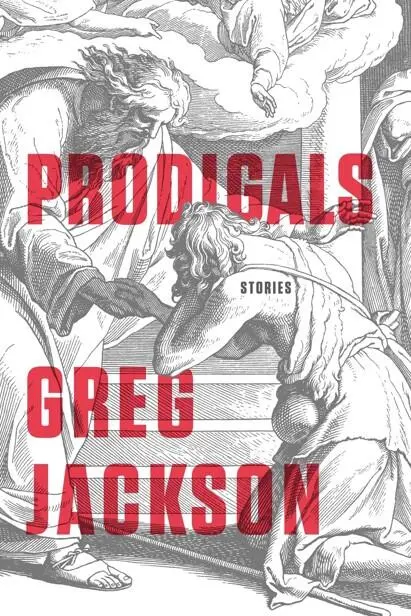
- Название:Prodigals: Stories
- Автор:
- Издательство:Farrar, Straus and Giroux
- Жанр:
- Год:2016
- ISBN:нет данных
- Рейтинг книги:4 / 5. Голосов: 1
-
Избранное:Добавить в избранное
- Отзывы:
-
Ваша оценка:
Prodigals: Stories: краткое содержание, описание и аннотация
Предлагаем к чтению аннотацию, описание, краткое содержание или предисловие (зависит от того, что написал сам автор книги «Prodigals: Stories»). Если вы не нашли необходимую информацию о книге — напишите в комментариях, мы постараемся отыскать её.
A filmmaker escapes New York, accompanied by a woman who may be his therapist, as a violent storm bears down. A lawyer in the throes of divorce seeks refuge at her seaside cottage only to find a vagrant girl living in it. A dilettantish banker sees his ambitions laid bare when he comes under the influence of two strange sisters. A group of friends gathers in the California desert for one last bacchanal, and a journalist finds his visit to the French country home of a former tennis star taking a deeply unnerving turn.
Strivers, misfits, and children of privilege, the restless, sympathetic characters in Jackson's astonishing debut hew to passion and perversity through life's tempests. Theirs is a quest for meaning and authenticity in lives spoiled by self-knowledge and haunted by spiritual longing. Lyrical and unflinching, cerebral and surreal,
maps the degradations of contemporary life with insight and grace, from the comedy of our foibles, to the granular dignity of experience, to the pathos of our yearning for home.
Prodigals: Stories — читать онлайн бесплатно полную книгу (весь текст) целиком
Ниже представлен текст книги, разбитый по страницам. Система сохранения места последней прочитанной страницы, позволяет с удобством читать онлайн бесплатно книгу «Prodigals: Stories», без необходимости каждый раз заново искать на чём Вы остановились. Поставьте закладку, и сможете в любой момент перейти на страницу, на которой закончили чтение.
Интервал:
Закладка:
“It’s really coming down,” Susan said. “Oh, there’s my exit!”
“Your exit…”
“If we were going to my house, I mean. Where I grew up.”
“Ah, the panopticon.”
“You’re making too much of this.”
“No,” I said. “Let me see if I understand.” A tangle of lightning flashed on the retina of the sky. “There’s no outward privacy in the panopticon — everything can be seen, right? — but inward privacy exists too, the privacy of the mind. All you really need for inward privacy is to keep quiet, to shut up. So you learn to keep quiet, keep your thoughts to yourself, not betray your emotions. That seems safe. And by the same token the idea of being open, really open, with another person seems terrifying. Yes? Tell me if I’m missing anything.”
We didn’t speak for a while after this. I knew I had gone too far, as no doubt I had at other times when I thought I saw the shadow of an emotion cross her face. I had the unpleasant feeling of seeing myself act in a way I didn’t approve of and would reproach myself for later. But it was a hard moment for me. Cracks shivered out through my marriage, threatening at any moment its collapse. And had I married my wife out of much more, really, than my own aggrieved inner plea for stability? When I thought about her, a woman I had dated in college and parted ways with only to meet again seven years ago, I supposed I had married her because I was tired of thinking about that side of life, because she was smart and self-sufficient and maternal, in her way, and because I did love her. I loved her honestly, in a reasonable way, a way in touch with her flaws, and so sober and quiet, this love, that it seemed far truer than the fevered infatuations I’d been used to as a younger man. But I also think I had the idea that we would grow together over time, that our differences would soften, and that we would erosively remake each other in the gentle spaces of domesticity and parenthood. And so I was haunted, when this didn’t happen, to see, and even more to feel, that there were parts of her I still had never gained access to and probably, therefore, never would. I wondered achingly what these parts were, because I never doubted that she was honest with me, and she could be warm too. It was not so much information that lay beyond my reach, I felt, as a sort of presence, of shared and consummate openness, a kind of psychic nudity.
And then Celeste, this past weekend, my friend Mark’s wife, whom I had dated for two years before Mark and had almost asked to marry me but instead dumped — because we were young and I thought we should part to reconnect later (maybe), because I had my first solo show (at twenty-six!) and felt powerful and important and suddenly bored with Celeste. We live with our mistakes. We regret them, we move away from them in time, and later we tell ourselves that they were necessary to create the person we have become. In time we grow to love our mistakes because we are inseparable from them and they comprise our belief in ourselves as people with access to wisdom. But all this retrospection never confronts the counterfactual mood, which of course it is beyond us to confront, though still, at times, there are mistakes that so resist our revisionary impulse that we are left wondering, When this path branched, what really did I decide? And Celeste is such a mistake for me.
An example. This past weekend Mark was called into the office on Sunday and Celeste and I went out to walk the High Line. It was cold and we cupped espresso drinks in our hands. Celeste’s cheeks burned with a rosy blush. She’d cut her hair short and it was tousled prettily. I was telling her about my problems at home, that although I dreaded the ending, dreaded admitting defeat and losing my wife, there were days when part of me longed for it to happen, longed at least to have it out, because I was sure my wife and I were both, in private, looking at the same decaying structure, and I no longer knew which was worse, the collapse of our marriage or the tacit consensus in our silence.
“I know what you mean, Ben.” She had taken my arm and turned to me. “I have days too when I look at my life, at Mark, the kids, and think, What the hell? When did this happen? And it feels almost like panic. Like, how did I get in this deep? And I want it all to disappear. I have this fantasy where I just walk off into another life and nobody comes looking. How terrible is that?”
“It isn’t terrible,” I said. “But what do we do with that feeling?”
“I don’t know,” she said. “Be open to it. Feel it. Let that openness wash over you. Refuse to be ashamed of the things we feel.”
The buildings ensconced us, the hotel above, the path below with its brown vegetation and little branchings. The wind ran against us like metal, and in that moment, feeling understood, feeling her response against me like the naked flesh of a sibling soul, I had the urge to take Celeste’s hand and lead her away into that other life, to start over, the two of us. And just as I thought this, at that moment, we ran into someone I knew, a gallery owner in Chelsea who wanted to know all about my recent work and what I thought of Rist’s and what was I up to, and it was so nice to meet Celeste, she said, although she mostly ignored Celeste, and by the time she left I had more or less transformed back into the Ben who is a little crasser and more abrasive than he feels, because you have to talk to these art world assholes like you give even less of a fuck than they do, and I don’t mean to say I’m not one of these art world assholes myself, just that I left New York and decided to teach because I wanted to rope off a few spaces in my life where I could be genuine, or what I felt to be genuine, and where I could give a fuck.
And Celeste is one of those spaces. And I’d let her marry Mark, who is a wonderful man and surely a steadier soul than I. I no longer remember why I let Celeste go, except that I probably thought we understood each other too easily and would therefore exhaust each other quickly, whereas my wife kept me at a remove from the central space that I believed constituted her her-ness, which for no clear reason I believed existed , and which I longed to get to the way you only long for things you can’t possess.
“We have kids, though,” Celeste said. “That helps a little. Our lives aren’t just our own.”
“Yes,” I said, “except I took them to be the cement of our family, my marriage, and they turn out to be kids and not building materials.”
“You’re a wonderful father, Ben.”
I could, and perhaps should, have stopped to wonder what evidence she was drawing on, but I didn’t. I could have lain down and made a bed in no more than the tone of her voice. She said it so warmly that I felt the prelude to tears gather at my eyes and wished briefly that she were the mother of my kids. We sat by the Hudson and watched evening come over it, lurid and grandiose in the fall cold, then we walked back to Mark and Celeste’s to relieve the sitter. Soon Mark came home. And there I watched Celeste as she melted back into her family and away from me, watched her laugh with love at the not-funny jokes of her small children and put a hand on Mark’s shoulder, until she was gone from me, back into her real life, where I didn’t exist.
That was all the day before.
The rain was heavy now, heavy enough that I was having trouble seeing in front of us. I had slowed to 45 and was hunched over partway, as if my posture could affect the visibility.
“I was playing basketball the other day,” I said. We had been driving in silence for maybe half an hour. “There were these kids in the park with me, high school kids, I think. Kind of the weirdos, the freaks. It was just me and them.” I was shooting by myself, I told Susan, and they were being loud, joking around a little crudely, and at first I was annoyed. But this one kid kept looking over. A big kid, awkward, with shaggy hair and a black leather trench coat. “At first I thought maybe he was gay and that was why he was looking over. He kept stealing glances, giving me this shy smile. But no, I realized, no, that wasn’t it. He was trying to find his place . Do you know what I mean?” I looked at Susan. “He was trying to find his place in the world, and this wasn’t it. This was the best he could do just now, but it wasn’t it. And it made me feel tenderly toward him. He looked at me and thought I was at home in the world because I’m grown, because I can shoot baskets by myself and don’t really get embarrassed by things anymore. He thought I was at home in the world, and I’m not. Do you see? I felt protective of him but also nauseated — by his mistake, by the innocence of his mistake — and part of me wanted to step into his life and make it better, and part of me felt helpless and sick because I couldn’t, because you can never do that for someone. You only have time to live your own life, and mine was falling apart.”
Читать дальшеИнтервал:
Закладка:
Похожие книги на «Prodigals: Stories»
Представляем Вашему вниманию похожие книги на «Prodigals: Stories» списком для выбора. Мы отобрали схожую по названию и смыслу литературу в надежде предоставить читателям больше вариантов отыскать новые, интересные, ещё непрочитанные произведения.








Обсуждение, отзывы о книге «Prodigals: Stories» и просто собственные мнения читателей. Оставьте ваши комментарии, напишите, что Вы думаете о произведении, его смысле или главных героях. Укажите что конкретно понравилось, а что нет, и почему Вы так считаете.