Greg Jackson - Prodigals - Stories
Здесь есть возможность читать онлайн «Greg Jackson - Prodigals - Stories» весь текст электронной книги совершенно бесплатно (целиком полную версию без сокращений). В некоторых случаях можно слушать аудио, скачать через торрент в формате fb2 и присутствует краткое содержание. Год выпуска: 2016, Издательство: Farrar, Straus and Giroux, Жанр: Современная проза, на английском языке. Описание произведения, (предисловие) а так же отзывы посетителей доступны на портале библиотеки ЛибКат.
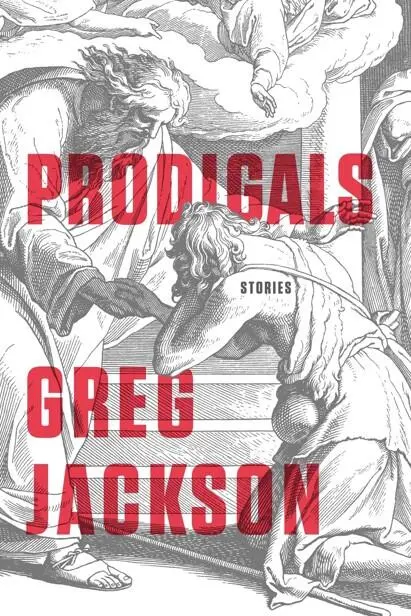
- Название:Prodigals: Stories
- Автор:
- Издательство:Farrar, Straus and Giroux
- Жанр:
- Год:2016
- ISBN:нет данных
- Рейтинг книги:4 / 5. Голосов: 1
-
Избранное:Добавить в избранное
- Отзывы:
-
Ваша оценка:
Prodigals: Stories: краткое содержание, описание и аннотация
Предлагаем к чтению аннотацию, описание, краткое содержание или предисловие (зависит от того, что написал сам автор книги «Prodigals: Stories»). Если вы не нашли необходимую информацию о книге — напишите в комментариях, мы постараемся отыскать её.
A filmmaker escapes New York, accompanied by a woman who may be his therapist, as a violent storm bears down. A lawyer in the throes of divorce seeks refuge at her seaside cottage only to find a vagrant girl living in it. A dilettantish banker sees his ambitions laid bare when he comes under the influence of two strange sisters. A group of friends gathers in the California desert for one last bacchanal, and a journalist finds his visit to the French country home of a former tennis star taking a deeply unnerving turn.
Strivers, misfits, and children of privilege, the restless, sympathetic characters in Jackson's astonishing debut hew to passion and perversity through life's tempests. Theirs is a quest for meaning and authenticity in lives spoiled by self-knowledge and haunted by spiritual longing. Lyrical and unflinching, cerebral and surreal,
maps the degradations of contemporary life with insight and grace, from the comedy of our foibles, to the granular dignity of experience, to the pathos of our yearning for home.
Prodigals: Stories — читать онлайн бесплатно полную книгу (весь текст) целиком
Ниже представлен текст книги, разбитый по страницам. Система сохранения места последней прочитанной страницы, позволяет с удобством читать онлайн бесплатно книгу «Prodigals: Stories», без необходимости каждый раз заново искать на чём Вы остановились. Поставьте закладку, и сможете в любой момент перейти на страницу, на которой закончили чтение.
Интервал:
Закладка:
* * *
Hara did not remember getting home. She remembered very little, in fact, when she heard Lyric speak and felt the project of locating herself in space and time crash in on her with such violence it seemed she might never pull clear.
“Hey, are you all right?”
She was in the living room, her own living room, that seemed true. Yes, on the sofa; she could feel it now as more than a cloud holding her aloft. Was it daytime? It was. Lyric sat facing her, a magazine open on her thigh.
“I think … I’m alive,” Hara said. “You look like a friend of mine, but of course the devil takes many forms.” She tried to catch Lyric’s eye. “Joking.”
“I’m leaving soon.”
“To town, or…” Lyric was silent. In the stillness Hara saw something flash at the periphery of her consciousness, something awful. She squinted. She couldn’t quite make it out, darting and flitting among the trees. Another flash. It nearly gave itself up, dodged away, dashed this way and that, almost at hand.
Then she saw it.
“Ah,” she said. She hoisted herself up — it took some effort — and went to the kitchen to make coffee.
“Where will you go?” she said. “Do you know?”
The girl shrugged.
Hara shook her head. “Just friends,” she said under her breath, too softly, she thought, for Lyric to hear.
But the girl said yes and laughed once. “Just.”
It was Robert’s car Lyric piled her stuff into. Well, that figured. Hara couldn’t see into the driver’s seat and she didn’t go out. She stood in the doorway with her coffee and watched Lyric carry out her bags.
“Well,” Lyric said when she was done. “Bye.”
“Bye,” Hara said, feeling that crippling dignity hold her in the doorframe and seal her lips.
But the things she could have done, the things she could have said!
She watched the car drive away and listened until the sound of the tires faded on the drive. Then she took her coffee to an armchair. She didn’t move until the sun began to dip in the sky.
By evening she felt better. She got up and wandered around the house. How big it was! How quiet. Had it always been so big or was it bigger in the silence? The lights were off and shadows lengthened across the room. The early evening had turned a golden color outside; the light seemed to burn as it fell, catching on the lawn, scattering on the ocean. There was the puzzle. Her hand had fallen on it without her realizing. God, she had been truly crazy to think Lyric wouldn’t leave until it was done. She touched it tenderly for a moment, the stiff-edged cardboard, the soft joints where the pieces met. Then on an impulse she swept it to the floor. The sun pulsed. Good riddance, she thought. The sun pushed into the clouds, good riddance , pushed through the clouds, and she saw them, the wolves. Out in the meadow the pack was running. The sun caught their backs as they tore across the grass. They reminded her just then of the golden jackals she had heard calling from the grassland in her youth. On the darkening porch she heard the jackals calling and her mother calling—“Haaaaaaara”—summoning her to another of their prim, stately dinners. She strained for a moment to hear the jackals. She wanted to join them, as if such a thing were possible! They were deniable, she supposed, the wolves. But then who was to say? Who was there to contradict her now? The trees around the yard were so much fiber and pith. Milkweed and primrose flowered here in spring. The moon was rock, Hara thought. The ocean so many particles of water. And people — what did they say? — minerals and proteins, was it? Minerals and proteins who ate to persist. Who slept to persist. Who fucked to persist. At some point the stories had to stop. At some point the wolves died, the people died. The alarm clock went off. The particles did what they did and at times, out of chaos, suggested order. And at times, out of chaos, dashed order. And at times, who knew? The facts were stubborn. They were also stories. Quite a lot, in other words, was left to interpretation. But moments continued to come, this one on the last one’s heels. And a new one. And a new one. And a new one.
Dynamics in the Storm
The storm was coming. The storm was coming. For days that’s all we heard. How big it would be. How the colliding systems might encounter each other. How long power could be out. Towers would come down and houses too. Lives would be lost (about that we heard less). About how to protect ourselves we heard a lot . Residents stockpiled candles, batteries, and canned food, cleaning out stores. Critical patients were flown to hospitals inland. Those who could, left. Most stayed. They had nowhere to go. And could they leave every time, could they make it a habit? Train and bus stations were mob scenes. Flights were canceled en masse. Grounded fliers camped out in airports, amateur survivalists. We saw them on TV. Going nowhere in an airport was now news. I was still brash and foolish enough to wait for the day of the storm to drive south. I had a car, the storm wasn’t due until evening, and I had no interest in cutting my visit short. It wasn’t often I saw my old friend Mark and his wife, who had once almost been my wife long ago.
So, brash and foolish, yes, but not quite young. Nor was I well-off. I was okay, I was doing okay. I taught filmmaking and video art at the college in the small southern city where I lived. I had two kids, three and five, and a wife I loved who no longer loved me. I drove an old Nissan Pathfinder that was, like the rest of us, doing okay. It had four-wheel drive and I thought it could handle the trip even if things got wet. That was how, Monday morning, I found myself walking the thirty or so blocks north from Mark and Celeste’s to the cheap lot near Penn Station where I’d left the car. The sky that morning was clear and pretty, a violent, indecisive wind the only sign of the storm to come.
It was on my way to the lot that I saw Susan. The streets were a mess but I picked her out at once, and then, because it was so improbable to see her, I convinced myself it wasn’t her, couldn’t be, watched for another minute wondering whether she hadn’t said something about a conference, ducking and pushing through the crowd to catch her face (she was in front of me), only to realize, unbelievable as it was, that it was her, and I called out, half in jest, I suppose, “Dr. Duranti,” and when she didn’t respond to that and yelling “Dr. Duranti” sounded ridiculous, I called out “Susan,” which she responded to at once, turning and seeing me, and then we had to acknowledge each other’s existence as people outside the rarefied context in which we habitually encountered each other.
“Ben,” she said, a bit the way you say hello to an ex you’ve run into on a date. At times she seemed tense around me, I thought, as though worried I might bind her to my distress, but Susan was a therapist and you would have been forgiven for thinking she was prepared for this.
“Of all the places,” I said.
“Yeah, this is funny,” she said, like it was maybe the least funny thing ever.
“You told me you were out of town, I forgot. What was it?”
“Conference,” she said. “APA, or last week. I saw my sister over the weekend.” People streamed by us, an island with our luggage in the middle of the sidewalk. “Actually, I was supposed to head back yesterday. My flight got canceled.”
It came back to me then, a conversation the week before, the schedule juggling. I was teaching three classes and trying to keep a few of my own projects afloat. I was preoccupied. Maybe I preoccupied myself to keep from being alone with my thoughts. Susan’s eyes were red, I saw. Her hair unwashed. She looked like she hadn’t slept.
Читать дальшеИнтервал:
Закладка:
Похожие книги на «Prodigals: Stories»
Представляем Вашему вниманию похожие книги на «Prodigals: Stories» списком для выбора. Мы отобрали схожую по названию и смыслу литературу в надежде предоставить читателям больше вариантов отыскать новые, интересные, ещё непрочитанные произведения.








Обсуждение, отзывы о книге «Prodigals: Stories» и просто собственные мнения читателей. Оставьте ваши комментарии, напишите, что Вы думаете о произведении, его смысле или главных героях. Укажите что конкретно понравилось, а что нет, и почему Вы так считаете.