Greg Jackson - Prodigals - Stories
Здесь есть возможность читать онлайн «Greg Jackson - Prodigals - Stories» весь текст электронной книги совершенно бесплатно (целиком полную версию без сокращений). В некоторых случаях можно слушать аудио, скачать через торрент в формате fb2 и присутствует краткое содержание. Год выпуска: 2016, Издательство: Farrar, Straus and Giroux, Жанр: Современная проза, на английском языке. Описание произведения, (предисловие) а так же отзывы посетителей доступны на портале библиотеки ЛибКат.
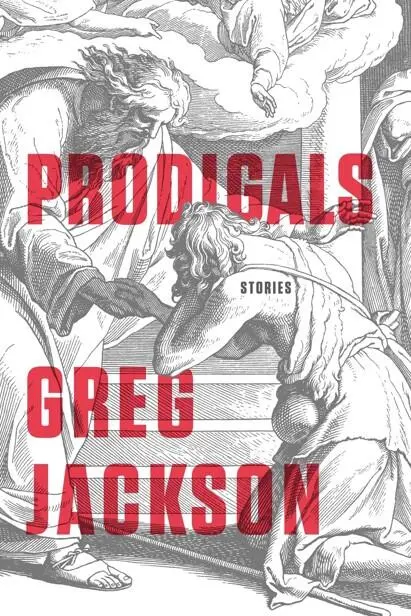
- Название:Prodigals: Stories
- Автор:
- Издательство:Farrar, Straus and Giroux
- Жанр:
- Год:2016
- ISBN:нет данных
- Рейтинг книги:4 / 5. Голосов: 1
-
Избранное:Добавить в избранное
- Отзывы:
-
Ваша оценка:
Prodigals: Stories: краткое содержание, описание и аннотация
Предлагаем к чтению аннотацию, описание, краткое содержание или предисловие (зависит от того, что написал сам автор книги «Prodigals: Stories»). Если вы не нашли необходимую информацию о книге — напишите в комментариях, мы постараемся отыскать её.
A filmmaker escapes New York, accompanied by a woman who may be his therapist, as a violent storm bears down. A lawyer in the throes of divorce seeks refuge at her seaside cottage only to find a vagrant girl living in it. A dilettantish banker sees his ambitions laid bare when he comes under the influence of two strange sisters. A group of friends gathers in the California desert for one last bacchanal, and a journalist finds his visit to the French country home of a former tennis star taking a deeply unnerving turn.
Strivers, misfits, and children of privilege, the restless, sympathetic characters in Jackson's astonishing debut hew to passion and perversity through life's tempests. Theirs is a quest for meaning and authenticity in lives spoiled by self-knowledge and haunted by spiritual longing. Lyrical and unflinching, cerebral and surreal,
maps the degradations of contemporary life with insight and grace, from the comedy of our foibles, to the granular dignity of experience, to the pathos of our yearning for home.
Prodigals: Stories — читать онлайн бесплатно полную книгу (весь текст) целиком
Ниже представлен текст книги, разбитый по страницам. Система сохранения места последней прочитанной страницы, позволяет с удобством читать онлайн бесплатно книгу «Prodigals: Stories», без необходимости каждый раз заново искать на чём Вы остановились. Поставьте закладку, и сможете в любой момент перейти на страницу, на которой закончили чтение.
Интервал:
Закладка:
“Easy,” Lyric said. “You okay?”
“I am, thank you,” said Hara. “And I don’t need to be babysat.”
The girl was silent.
And how Hara loathed her just then, loathed all of it — her simplicity and openness, the opacity of her openness, the light, flitting quality of her affection, her quiet restraint.
“You think it’s so easy,” she said, “traipsing about without a plan or care in the world, with no job or money. But not to worry! Just throw yourself on the mercy of fate! How magical life is — fa la la!”
Lyric toed a twig. “I never said it was easy.”
“No. But you don’t buy the groceries, do you? Or the gas for the car that takes you to and from what’s-his-name’s house? Or the heat that keeps us from freezing? Or the electricity, et cetera, et cetera.”
“So?” Lyric said. She said it as an actual question and so simply that Hara lost her point. What was her point? Something stupid, clearly.
“Right. So . So what? So what ? Let’s just wear flannel and mosh to Nirvana and say ‘So what?’ when life gets, like, totally annoying.”
Lyric laughed. “What are you talking about?”
“I don’t know,” Hara said. “I don’t know, and now I have to pee. So excuse me.”
She pushed past Lyric down a path in the woods. When she had finished, she followed the path the rest of the way to the water, to the shoreline strip of dark rocks where a downed tree shone a ghostly color in the moonlight. She sat and lit a cigarette.
“You missed us play.”
Hara started but didn’t turn.
“Alas, alas,” she said. The feel of his presence behind her set a tingle at the base of her neck. When he didn’t respond she said, “I heard a different band play. If you sounded anything like them, never might be too soon.”
He snorted. She looked up to see him shaking his head, lighting his own cigarette, face yellowed in the flame.
“Strange thing, you and Lyric,” he said.
“Yes. Well. My husband’s a twat.” She could just make out the islands in the distance. She should have built the house there, hidden in the woods, with embrasures to fire arrows through. “It worked out well enough though.”
He nodded in a ruminative way. “Maybe, maybe.”
“Or, strange that I let her stay, do you mean? Strange that we got on so well?”
His laugh rang false in Hara’s ear. “Do you know anything about her?”
She stood and stretched. She hugged herself. “Oh, enlighten me, Robert. What is it you’re just dying to tell me.”
“Jesus,” he said. It thrilled Hara to hear even the faint note of exasperation in his voice. “The way you treat people—”
“People, Robert, let themselves be treated this way or that. Or did they not teach you that in clam school?” A warmth was passing through her, a taste as charged as blood. He looked her in the eye and she wanted to laugh. “Are we fighting, Robert? Over Lyric or what exactly?” Her expression was all concerned incomprehension and nothing else.
He dragged on his cigarette until he had the tempo back. “Her parents didn’t win any charity auction, you know.”
Her lip twitched. “Well, somebody did.”
“Yeah, I guess she overheard—”
“Are you her savior, I don’t understand? Do you imagine you’re protecting her from me, her knight in armor, that little trip?”
They were standing rather close.
“You never owe anyone anything, huh?”
“ Owe? I think you have economics there backwards, Robert.”
“People like you…” He flicked his cigarette away.
“Yes, people like me. Go on.”
“You—” Oh, he did seem childish, didn’t he, struggling to find his words? “People aren’t there for your amusement.”
Hara laughed and clapped her hands. “Oh, very good, Robert. Thank you . Thanks for letting me know . Is it quite disorienting to get a woman of my age and not a mother’s selfless charity in the bargain? Not that you’ll ever know, but that is what the world seems to expect.” She had closed the remaining ground between them, a glorious ringing pressure in her head. “But, ah, is it that you feel you’re owed something? For your honesty, perhaps? Your masculinity? Your stern good looks? Does the world owe you something because you’re awfully handsome?” She felt the destructive element swim into the night, as beautiful and wild as the surf below. “Or for the clams, how could I forget? And clearing the yard, and stacking fruit in the market, there’s that…” She thought he was looking at her like a windup toy whose program had simply to be endured. She forced her voice to a hush and straightened a lock of hair on his forehead. “Does it take an awful lot of restraint? And now you have to listen to some spoiled bitch. Because that’s what I am, isn’t it? Some spoiled bitch tossing about handfuls of glitter, expecting everyone to be grateful. But you have to clean it up, don’t you? That’s your job. Sweeping up all the glitter spoiled bitches leave around.” She looked at him with sympathy. She felt herself partway enwrapped in her own words, the tightening ligature of silk, but she was tempted to laugh at herself in the same instant, her ridiculousness, the ongoing and self-regarding performance of her desperation. It was his look that stopped her. Her hand had found its way to his cheek. And now she saw uncertainty there on his face, the utter absence of the irony that opened channels in one’s own seriousness, and this absence seemed to her, in précis, the very gross vulnerability of youth. Children, always thrilling to an adult business with no ability to follow through. Flinching at the moment of consequence because they had gotten only as far as its pantomime. It was uncertainty, hesitance, that was ugly. And youth thought beauty was a matter of looks! She shivered and turned in to him against the cold. “Oh, Robert,” she said consolingly, and it might have been no more than instinct that made him hold her, instinct, habit, or the confusion of seeing tenderness offer to replace contempt, attention lavished in hatred suddenly as a permutation of ardor. “Brr,” she murmured, no longer cold but simply intent on the tide of uncertainty in him, on not letting it settle, the warring impulses that cleft men, so eager to possess, to protect, and to get away. Her cheek brushed his. When she turned her eyes to him, open wide and faintly imploring, she might have set a clock, she thought, by how long it took their lips to touch.
In the fantasy she would play out for herself Lyric found them like this. Or better still, found Robert fucking her with her dress hiked up on the log. And Lyric watched, dismayed, entranced, relieved in some way perhaps, or just submissive to the actuality before her, the new order spread as creaselessly as linens on the sovereign bed. She would go down on Robert, yes, with Zeke watching — that was good — and her father, their precious flower , defiling herself and for nothing, for no more than the monstrousness of their own vanity, the wild-burning ego that had to vindicate itself in the ashes of all it laid to waste. She, the daughter of a goddamn Indian ambassador, wed so regally and for all to see, front and center in the Times notices, like a fucking princess! Look, Daddy! Look, Zeke! Look … But even as she entertained the wish, she felt the gap between the fantasy and reality like a plummet in the mist, a fall awaiting her, a dizziness, a despair. She would come back to herself, she and the dream would fall apart. And there she would simply be, bereft of even shame and anger, bereft with only her life before her, all the things that made it up, her job and few friends, the rental, the cottage, the knowledge that it would all be there waiting for her tomorrow and the next day, and through all the days ahead. Days demanding to be filled, because even if you got rid of the stuff there would still be days. Time had to be filled, one way or another. And what an obligation it was! There had once been places for people like her, hadn’t there been, walled off in the countryside or mountains, where you were spoken to in a soft voice and spent your days beneath arbors, wandering garden paths, stilled in the lovely sedation of pills from tiny plastic cups? Yes, that sounded right. And Daeva would come visit once a year, citing concern but really there to gloat, to delight in her sister’s ruination. “If only you’d been less sure you were special,” she would say. “Less certain that the world cared . But you were always very self-involved, weren’t you?” And Hara would smile and nod agreeably, lost to the wondrous indifference — that’s how it would feel — the delicious peace of no longer having a life to fight for, an identity to pretend was hers.
Читать дальшеИнтервал:
Закладка:
Похожие книги на «Prodigals: Stories»
Представляем Вашему вниманию похожие книги на «Prodigals: Stories» списком для выбора. Мы отобрали схожую по названию и смыслу литературу в надежде предоставить читателям больше вариантов отыскать новые, интересные, ещё непрочитанные произведения.







Обсуждение, отзывы о книге «Prodigals: Stories» и просто собственные мнения читателей. Оставьте ваши комментарии, напишите, что Вы думаете о произведении, его смысле или главных героях. Укажите что конкретно понравилось, а что нет, и почему Вы так считаете.