Greg Jackson - Prodigals - Stories
Здесь есть возможность читать онлайн «Greg Jackson - Prodigals - Stories» весь текст электронной книги совершенно бесплатно (целиком полную версию без сокращений). В некоторых случаях можно слушать аудио, скачать через торрент в формате fb2 и присутствует краткое содержание. Год выпуска: 2016, Издательство: Farrar, Straus and Giroux, Жанр: Современная проза, на английском языке. Описание произведения, (предисловие) а так же отзывы посетителей доступны на портале библиотеки ЛибКат.
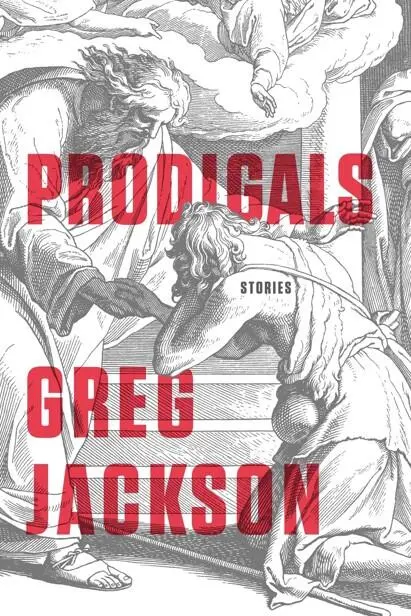
- Название:Prodigals: Stories
- Автор:
- Издательство:Farrar, Straus and Giroux
- Жанр:
- Год:2016
- ISBN:нет данных
- Рейтинг книги:4 / 5. Голосов: 1
-
Избранное:Добавить в избранное
- Отзывы:
-
Ваша оценка:
Prodigals: Stories: краткое содержание, описание и аннотация
Предлагаем к чтению аннотацию, описание, краткое содержание или предисловие (зависит от того, что написал сам автор книги «Prodigals: Stories»). Если вы не нашли необходимую информацию о книге — напишите в комментариях, мы постараемся отыскать её.
A filmmaker escapes New York, accompanied by a woman who may be his therapist, as a violent storm bears down. A lawyer in the throes of divorce seeks refuge at her seaside cottage only to find a vagrant girl living in it. A dilettantish banker sees his ambitions laid bare when he comes under the influence of two strange sisters. A group of friends gathers in the California desert for one last bacchanal, and a journalist finds his visit to the French country home of a former tennis star taking a deeply unnerving turn.
Strivers, misfits, and children of privilege, the restless, sympathetic characters in Jackson's astonishing debut hew to passion and perversity through life's tempests. Theirs is a quest for meaning and authenticity in lives spoiled by self-knowledge and haunted by spiritual longing. Lyrical and unflinching, cerebral and surreal,
maps the degradations of contemporary life with insight and grace, from the comedy of our foibles, to the granular dignity of experience, to the pathos of our yearning for home.
Prodigals: Stories — читать онлайн бесплатно полную книгу (весь текст) целиком
Ниже представлен текст книги, разбитый по страницам. Система сохранения места последней прочитанной страницы, позволяет с удобством читать онлайн бесплатно книгу «Prodigals: Stories», без необходимости каждый раз заново искать на чём Вы остановились. Поставьте закладку, и сможете в любой момент перейти на страницу, на которой закончили чтение.
Интервал:
Закладка:
When Lyric had gone to Robert’s, Hara removed pieces from the puzzle. Not so many the girl would notice, but a few here and there. On the nights Lyric stayed in, they might replace exactly these. Sometimes Hara would trace the composition of the girl’s tattoos. She knew them by now, the sinewy thicket of green tangles on the girl’s shoulder, bursting here and there in a red corolla, the ox-eyed nymph washing fruit in a brook; the brook that flowed beneath the flowers, ran out into a river and shimmering ocean, crossed Lyric’s back and washed up below a fishing village, an outpost of sand and stilted huts. Above the village a city rose into the ocher sky, sunlight spilling onto the clouds, where a pair of naked angels embraced and an amazon warrior with one breast and a sword occupied a throne. Then on the girl’s neck errant rays of sunshine fed a painted vasculature, turned from gold to red, merging back into the flowers and carrying crimson blood along green stems to the calyxes where the roses bloomed.
Sometimes it seemed to Hara that if she looked hard enough she might find herself there, a timeless fixture in the fretwork prophecy, and then she would know that this life was all a joke, subject to an extraneous order, and that her suffering and happiness, by implication, had meaning. Other times she thought, Enough of that. You could measure the line between craziness and isolation on a day’s shed eyelashes. The flakes of an early snow fell softly on the ocean, dissolving into it, and Hara thought, Maybe I can live here and dissolve into the ocean myself.
“You feel like real life is going on somewhere else,” she told Lyric. “You’re young. You think if you keep looking you’ll find the place you’re meant to be.”
“I don’t think that,” Lyric said. “I’ve been to Morocco.”
Oh, sometimes Hara wished Lyric would leave. The girl’s presence, having become the very augury of its absence, could seem at times the worse of the two. It wasn’t only the pleasure you took in a person’s company that made you covet it, Hara knew. Just as often it was the compulsion to ensnare something elusive, fleeting, the urge to establish a state of permanence, if not of happiness, and then too the fear of what solitude permitted, the flights and phantasms of inner life, of unuttered thought, and the terrifying possibility, absent the correlative of another person, that you were not at all the composite of your past, but merely the confused nerves of the present, ever-supplanting moment.
And it was this fear, this possibility, when you got down to it, that Lyric did without.
* * *
Hara begged off the night of Robert’s party. She begged off, and she implored Lyric to stay in with her, a demand as reckless, it seemed, as a straight last-dollar bet on a roulette game, and she might have bared her soul, she thought, if she knew how to do that and where a person began. The party sounded ghastly, though. The idea of hearing Robert’s band play made her expectantly ill. And she had less than zero desire, really, to rummage around for fellow feeling with locals, mutual curiosities, feeling old while Lyric made friends easily.
They drank in joyless fashion, sorting puzzle pieces, until Hara asked Lyric whether she hadn’t given it more thought.
“Given what more thought?”
“The Church’s views on women,” Hara said. “What do you think? About staying on.”
Was it possible Lyric was pouting? Hara wouldn’t have believed it, but she had never seen this reticence in the girl, her lower lip thrust ostentatiously forward. It was hard to remember sometimes that the girl was just that, a child, subject to emotions all her own and yet emotions she could not have lived with long enough to understand in all their unoriginality and predictable rhythm, their mendacity, their worthless force.
“What about Robert?” Hara said, hating herself a little as she said it.
“Robert and I are friends ,” Lyric said. “I’ve told you that.”
“Okay, God. Did you ever hear about the lady who protested too much? But let’s go to the party if it’s going to be like this.”
“Don’t you think it’s strange,” Lyric said, “you’ve had the house, what, six years and you don’t know anyone who lives here?”
“I know Gerry. Now I know Robert,” Hara said. “I know people who come here in the summer.”
“That’s not what I mean.”
“I’m not an adorable sprite like you. I don’t like people nearly so much. What do you want from me?”
“A minute ago you didn’t want to go to the party because you said someone named Dwayne was going to sneeze type-two herpes in your cornea.”
“I don’t think I said that, and anyway,” said Hara, “I can’t be held responsible for every dreadful remark that escapes my mouth.” She affixed a puzzle piece and sensed a bit of humor stealing back into the girl. “Look, I’ll take the risk.”
“It’s late,” Lyric said.
“Oh, it’s barely ten. I’ll bet we’re just in time for some chip detritus or whatever they eat.”
“They?”
“I’m joking . The Morlocks.”
Perhaps Hara had misunderstood. Perhaps Lyric merely wanted to bring her two worlds together. Perhaps she wanted to help Hara make friends. She seemed to have enough of them, Lyric did. And the girl was right, the party was outside, although why Hara had disbelieved her she couldn’t quite say. It was next to the site of a new house going up. There was a fire at least, a faint hint of rippling heat coming from the crowd dancing at the foot of a platform on which a few underdressed young men were trying to damage some instruments. Hara shivered and pulled her jacket around her.
“I told you,” Lyric said.
“All right, you don’t have to gloat.” Hara took a shot of bourbon, then filled her plastic cup. “What? Oh Lord.” She drifted away from Lyric, toward the fire, catching in its sweet odor a second scent, bodily and intimate. A man pressed a small pipe to his lips.
“Excuse me,” Hara said with her most obliging look. “Hi, would it be a terrible bother…”
“Be my guest,” the man said through a held breath.
He was a few years older than her, she guessed, his face leathered and ruddy. She took the pipe from him and sucked the flame over the embers while he gazed off at the stage.
“Shit that passes for music these days,” he said.
“They said the same thing about Schoenberg, though, didn’t they?” said Hara.
What on earth was she talking about? How old did this man think she was ? She was, come to think of it, exactly the age Zeke had been when they married. She tried to hold the thought still, to explore it for the deeper meaning it seemed to promise, but her attention was turning molten. The lights around her, blazing at points along their catenaries, edged into a sharper dazzle.
“Don’t believe I know you,” the man said.
“No, it’s unlikely,” Hara agreed. His hand in her smaller, softer hand felt like clay, the hand of a golem. “Where, um— Do we pee in the bushes then?”
He laughed. “Probably your best bet. There’s a porta-potty down the road. Plumbing won’t go in for another month or two.”
“Oh, is it your house?” Of course it wasn’t.
“No, no. House like this? Summer folk, you know. All the new construction, really.”
It was Hara’s turn to laugh. “An invasion then! How terrible! No doubt you just want to be left in peace to pursue your venerable folkways.”
He looked at her, his mouth seeming to flicker between uncertainty and something else, but he left whatever it was unsaid.
Of course. She was hated. They all were, seasonal invaders, self-important snobs from their effete enclaves, bringing the entire economy with them but full of prissy needs and ideas, their impossible diets, their fussy attachments to foreign wine and East Asian calisthenics. So peculiar and helpless, weren’t they, babes in the woods when it came to anything practical, but not above affecting a chummy tone and shedding grammar to mingle with the brutes who cleared their lawns and fixed their toilets. Well, Hara would love to see them try the contract law on a corporate merger. Ha! Or— She tripped on a root and righted herself, just.
Читать дальшеИнтервал:
Закладка:
Похожие книги на «Prodigals: Stories»
Представляем Вашему вниманию похожие книги на «Prodigals: Stories» списком для выбора. Мы отобрали схожую по названию и смыслу литературу в надежде предоставить читателям больше вариантов отыскать новые, интересные, ещё непрочитанные произведения.










Обсуждение, отзывы о книге «Prodigals: Stories» и просто собственные мнения читателей. Оставьте ваши комментарии, напишите, что Вы думаете о произведении, его смысле или главных героях. Укажите что конкретно понравилось, а что нет, и почему Вы так считаете.