Greg Jackson - Prodigals - Stories
Здесь есть возможность читать онлайн «Greg Jackson - Prodigals - Stories» весь текст электронной книги совершенно бесплатно (целиком полную версию без сокращений). В некоторых случаях можно слушать аудио, скачать через торрент в формате fb2 и присутствует краткое содержание. Год выпуска: 2016, Издательство: Farrar, Straus and Giroux, Жанр: Современная проза, на английском языке. Описание произведения, (предисловие) а так же отзывы посетителей доступны на портале библиотеки ЛибКат.
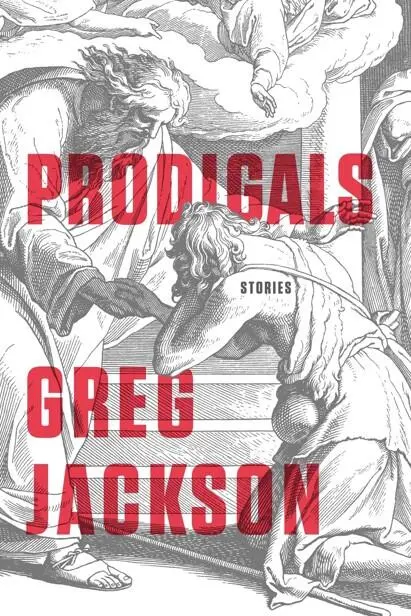
- Название:Prodigals: Stories
- Автор:
- Издательство:Farrar, Straus and Giroux
- Жанр:
- Год:2016
- ISBN:нет данных
- Рейтинг книги:4 / 5. Голосов: 1
-
Избранное:Добавить в избранное
- Отзывы:
-
Ваша оценка:
Prodigals: Stories: краткое содержание, описание и аннотация
Предлагаем к чтению аннотацию, описание, краткое содержание или предисловие (зависит от того, что написал сам автор книги «Prodigals: Stories»). Если вы не нашли необходимую информацию о книге — напишите в комментариях, мы постараемся отыскать её.
A filmmaker escapes New York, accompanied by a woman who may be his therapist, as a violent storm bears down. A lawyer in the throes of divorce seeks refuge at her seaside cottage only to find a vagrant girl living in it. A dilettantish banker sees his ambitions laid bare when he comes under the influence of two strange sisters. A group of friends gathers in the California desert for one last bacchanal, and a journalist finds his visit to the French country home of a former tennis star taking a deeply unnerving turn.
Strivers, misfits, and children of privilege, the restless, sympathetic characters in Jackson's astonishing debut hew to passion and perversity through life's tempests. Theirs is a quest for meaning and authenticity in lives spoiled by self-knowledge and haunted by spiritual longing. Lyrical and unflinching, cerebral and surreal,
maps the degradations of contemporary life with insight and grace, from the comedy of our foibles, to the granular dignity of experience, to the pathos of our yearning for home.
Prodigals: Stories — читать онлайн бесплатно полную книгу (весь текст) целиком
Ниже представлен текст книги, разбитый по страницам. Система сохранения места последней прочитанной страницы, позволяет с удобством читать онлайн бесплатно книгу «Prodigals: Stories», без необходимости каждый раз заново искать на чём Вы остановились. Поставьте закладку, и сможете в любой момент перейти на страницу, на которой закончили чтение.
Интервал:
Закладка:
“I don’t know,” she said. “Sometimes it’s healthy to split up, right? Healthy .” She shook her head. “God, what do we even mean?”
And who are we talking about now? I thought, but I held my tongue. I said the no-privacy thing must have given her a terrible time with boys.
“Oh, boys! I had to wait until college, really. Dad was Catholic, you know, and owned guns.”
“Fathers with guns,” I said and hypothesized that we’d never get around to fixing the gun problem in this country with so much teenage pussy to protect. I wasn’t really thinking when I said it, but Susan laughed, a real laugh, not the polite one she used in our talks to let me know she understood I’d made a joke. “I guess so,” she said after a minute. But as the laughter faded we found ourselves left with the idea, and behind the idea the image — of Susan’s teenage pussy — and I scrambled to move us along so that we wouldn’t have to consider the other considering Susan’s teenage pussy and the awkwardness of our shared understanding of what we were both simultaneously considering.
“I don’t think I ever had a gun in one of my films,” I said. What a stupid thing to say. “Are you hungry?” I said, because what I’d said before had been so stupid.
“Actually, I’m starving.”
The traffic wasn’t too bad and it seemed like a decent time to get off the highway, fuel up, and eat. It wasn’t yet noon but I was hungry too, looking forward to the junk you permit yourself on the road, when the trial of the day overtakes and obscures any thought of the future. I was worried Susan would want to find a Starbucks and I’d be stuck with a cheese plate with like two red grapes, but when we pulled off into the clutter of roadside chains there wasn’t a Starbucks in sight, and Susan suggested Denny’s, which made me want to kiss her, and so Denny’s it was.
Over breakfast Susan asked about my current projects and I told her. One involved filming violent criminals remembering happy moments from their childhoods. For another I was following around a trucker I’d met who liked to dress in drag. Susan asked what interested me about these projects and I said it was difficult to talk about them that way; it was the fact that you couldn’t summarize them that made them art and to try to capture their effect in words would only lead to my sounding pretentious and evasive. She said that all sounded pretty pretentious and evasive so why didn’t I just try, and I said, Fine. I was interested in our response to seeing people in situations that seemed to run directly counter to their public identities. Imagine a group of Fortune 50 °CEOs at a petting zoo, I said. Imagine leaving them there too long. If I could get Fortune 50 °CEOs to give me an afternoon, that’s what I’d have them do.
“Interesting.”
“Do you think so? When people say ‘interesting’ they usually mean ‘ not interesting’ or ‘I’d like to stop talking about this immediately.’”
“No, it is interesting,” she said. “Just, how do you make sure it’s not gimmicky?”
I told her this was always the worry. It was why these projects took so long. You had to film for a long time before people got so used to the scrutiny that they stopped playing to the camera, before authentic moments of self-discovery could occur. “You can always tell an authentic moment,” I said. “I don’t know how, but at some point you can see that a person has stopped trying to manage your perception of them. The true self peeks through.”
“I wonder if I believe in such a thing,” she said.
“Well, forget the word ‘true,’ if that seems problematic. I mean the self that’s not an actor. The self we are in private and with our best friends, our spouses. The effortless self, let’s call it.”
She looked at me, but past me, to the point in space where the truth of words is judged against reality. She was quiet. The look on her face, as she gazed off, passed from caught-up to sad and then, I thought, to something like a premonitory glimpse of the possibilities and limits of a life. It was brief, this terror — if that’s what it was — and I longed and dreaded to know what she was thinking. In another second, though, she had returned to the moment and to picking the crusts of her chicken sandwich, which I had found and continued to find a strange order.
It was raining when we left the restaurant, light, sparse drops shuttled about by the wind, a pleasant rain that seemed to be cleaning you rather than getting you wet. The lights of restaurants and gas stations shone wetly all around, and it was lovely, in the rain, at a Denny’s, in New Jersey.
“You don’t have to like my films,” I said when we were back in the car.
“It’s not that…” I could feel her on the edge of an admission, having second thoughts but caught in her point’s momentum. “It’s … just my boyfriend in college, he was a filmmaker. He was always telling me about his projects. At first I liked it, I thought he was brave. But the intensity, you know, it kind of wore me down. I think I’m not smart or edgy enough for experimental film.”
I didn’t say anything. I stared straight ahead. I wanted to give Susan the impression that she had hurt me, which she had a little, but that I was going to ride the hurt out stoically. It wasn’t that I needed Susan to like my work, although for what if not pockets of intensity were we in the business of living? But I was jealous of that young man, a man who now of course would be my age, but who in memory preserved something of what is lost to time. What had he done to capture her affection that I could not? And what had Susan been like all those years ago, before intensity came to seem a burden and discretion led her to hide away the treasure of herself, discovered and buried some day long ago under a soil of rotting youth? I wanted, pointlessly, to return to college, to that Susan, excitable and unformed, spilling slightly beyond herself as people when they are most beautiful do.
“I’m sorry,” she said after a minute. “I’m distracted. The storm, the kids … I know your films are very good. You’ve had a lot of success, right? They matter to people.”
“Why did you become a therapist?” I said, ignoring the dubious logic of her last remark. I remembered sitting in therapy with her, week after week, wondering if she always believed the things she said, the terse, careful words she committed to, waiting for what I thought of as her true self to peek through.
“I guess the idea just grew on me,” she said. “I like listening to people, hearing their stories. I wanted to do something that helped people. I believe in the therapeutic space.”
“But how do you know you are? Helping people, I mean.”
She did that thing again of retreating a degree or two into herself. “I don’t,” she said. “I do my best. I trust the process.” I may have snorted. “What happened to listening to music?” she said.
It was really raining now. I had the wipers on their continuous setting, not the really fast one, which by the time it’s raining hard enough for you to need is kind of impotent anyway. The clouds had charcoaled and thickened so that, although it was early afternoon, it was as dark as evening. The weather felt obscurely punitive, and though I knew the storm would cause extraordinary damage and harm many people, part of me longed for it to come, for it to get worse, for it to be as bad, or worse, than they said. I wanted to see it curdling the ocean and bringing waves and wind over the coast, over cities and towns, ripping up sidewalks and porches, downing power lines, traffic lights, trees. I wanted the chaos, to feel the power of something powerful, and then the still aftermath of chaos in which we get to be our better selves and rebuild. In which the challenges are simple and communal and vast. I thought somewhere in this mess of longings and contradictory impulses was a film, and then I knew why I’d taken 95 instead of heading inland to 81. I wanted to encounter the storm. I wanted to film it.
Читать дальшеИнтервал:
Закладка:
Похожие книги на «Prodigals: Stories»
Представляем Вашему вниманию похожие книги на «Prodigals: Stories» списком для выбора. Мы отобрали схожую по названию и смыслу литературу в надежде предоставить читателям больше вариантов отыскать новые, интересные, ещё непрочитанные произведения.









Обсуждение, отзывы о книге «Prodigals: Stories» и просто собственные мнения читателей. Оставьте ваши комментарии, напишите, что Вы думаете о произведении, его смысле или главных героях. Укажите что конкретно понравилось, а что нет, и почему Вы так считаете.