Greg Jackson - Prodigals - Stories
Здесь есть возможность читать онлайн «Greg Jackson - Prodigals - Stories» весь текст электронной книги совершенно бесплатно (целиком полную версию без сокращений). В некоторых случаях можно слушать аудио, скачать через торрент в формате fb2 и присутствует краткое содержание. Год выпуска: 2016, Издательство: Farrar, Straus and Giroux, Жанр: Современная проза, на английском языке. Описание произведения, (предисловие) а так же отзывы посетителей доступны на портале библиотеки ЛибКат.
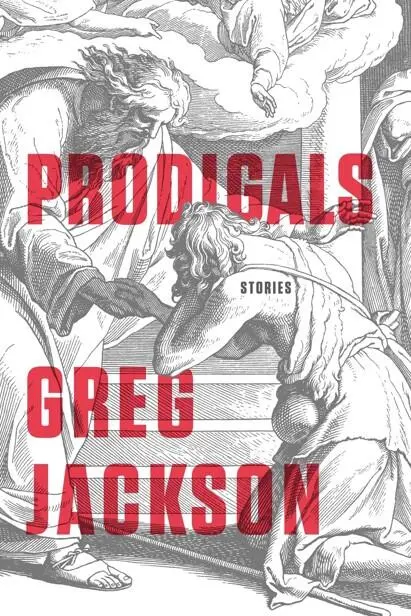
- Название:Prodigals: Stories
- Автор:
- Издательство:Farrar, Straus and Giroux
- Жанр:
- Год:2016
- ISBN:нет данных
- Рейтинг книги:4 / 5. Голосов: 1
-
Избранное:Добавить в избранное
- Отзывы:
-
Ваша оценка:
Prodigals: Stories: краткое содержание, описание и аннотация
Предлагаем к чтению аннотацию, описание, краткое содержание или предисловие (зависит от того, что написал сам автор книги «Prodigals: Stories»). Если вы не нашли необходимую информацию о книге — напишите в комментариях, мы постараемся отыскать её.
A filmmaker escapes New York, accompanied by a woman who may be his therapist, as a violent storm bears down. A lawyer in the throes of divorce seeks refuge at her seaside cottage only to find a vagrant girl living in it. A dilettantish banker sees his ambitions laid bare when he comes under the influence of two strange sisters. A group of friends gathers in the California desert for one last bacchanal, and a journalist finds his visit to the French country home of a former tennis star taking a deeply unnerving turn.
Strivers, misfits, and children of privilege, the restless, sympathetic characters in Jackson's astonishing debut hew to passion and perversity through life's tempests. Theirs is a quest for meaning and authenticity in lives spoiled by self-knowledge and haunted by spiritual longing. Lyrical and unflinching, cerebral and surreal,
maps the degradations of contemporary life with insight and grace, from the comedy of our foibles, to the granular dignity of experience, to the pathos of our yearning for home.
Prodigals: Stories — читать онлайн бесплатно полную книгу (весь текст) целиком
Ниже представлен текст книги, разбитый по страницам. Система сохранения места последней прочитанной страницы, позволяет с удобством читать онлайн бесплатно книгу «Prodigals: Stories», без необходимости каждый раз заново искать на чём Вы остановились. Поставьте закладку, и сможете в любой момент перейти на страницу, на которой закончили чтение.
Интервал:
Закладка:
“You’re a caretaker, Ben,” Susan said.
“You say that—” I wiped the windshield with the back of my hand. I didn’t mean to sound so bitter. “But tell me, am I really grieving other people’s loneliness and suffering, or my own?”
“Are you lonely? Are you suffering?”
Don’t you know ? I wanted to say, but it seemed indulgent of me to insist. I am, after all, a white American man with a toehold in the upper middle class, with a good job, a wife, and two kids — someone the world has licensed to express himself. A heartbeat of hope raps within my suffering, and while I am thankful for this, truly thankful, I have had to wonder at points whether the hope and the suffering were really two different things.
“What about you?” I said. “Are you so happy? Are you never lonely?”
“I don’t know.” Susan ran her fingers through the condensation on her window. “Maybe I don’t expect to be unlonely.”
I pulled to the side of the road, unable, in any case, to see. The clouds had opened up, the rain no longer seeming to fall so much as to be , there, beyond us, everywhere — a matrix suffusing the air. All we could see through the windows was a wild silver tide dashing itself on the glass.
“That boy in college,” I said, “the filmmaker. It sounds like he wanted to be unlonely with you.”
Even in the half-light I could see that Susan’s face had paled. She had a way of looking stricken and distant, wounded but unwilling to name the hurt, to let you in to soothe it. The shadows of raindrops ran down her face.
“I couldn’t be close in that way.”
“Because of your family.”
“Yes. Maybe. I don’t know.”
“Your whole family?”
“What’s the use, Ben?”
“Let me guess,” I said. I was being cruel, and I’m not proud of it, I’m rarely cruel, but I was being cruel, and I’m sorry, Susan, darling, I am. “It was your father, wasn’t it? The guy’s guy. You were his favorite. There was a sense, in this family that was so close, that things were maybe a little too close.”
“Stop.”
“So you turned inward. Closed yourself off.”
“Ben.”
“That poor boy in college.”
Susan was quiet. The rain tapered abruptly, bronze light cutting through the clouds. Drops still fell, more the afterthought of rain than rain itself, glistening in the ocher ashes of the sky. How was your mood to keep up with a day like this?
“I’m sorry,” I said.
“It’s all right.” She had composed herself and it terrified me, her ability to compose herself like this. “It’s not that simple, Ben.”
“No, of course. It’s just your job, right? Inventing these plausible little stories. Anyway, you’re too strong for me. I keep trying to break through, but I should probably just accept that you’re too tough.”
She smiled. It was not a smile of compassion or tenderness, I saw, but a broad smile of unfeigned delight. She beamed and I thought — it came to me powerfully, dizzyingly — my God, this woman is a child . She wants to be praised . Well, goddamn it, I can praise her if that’s what she wants.
The light painted her face gold, her hair, her eyes. The sky parted in flaxen sheaves, and I began with the ridiculous story, the one we have all, with each year, loosened our grip on a little more, about how we came to our parents in woven baskets, gifted from the second world, the world behind this one: how we are all sacred children.
“Ben,” she murmured. “Please. I’m just a flawed, selfish person, like everyone.”
But do you really think that? I wanted to say. Does anyone — but especially you? Her eyes were closed. Are we not all born with wings we take out only in private? Except the beauty scared you, Susan. She was still smiling. She had laid a hand in mine, those delicate fingers, leaned into me, breathing slowly. We are all failed imagoes, earthbound under each other’s weight. I could hear the doves in the dripping trees. We are all scared, Susan, I told her. All scared no one else will find them as beautiful.
She kissed me so I had to stop talking, a kiss at first contained, but that gave in to itself until our mouths pressed together, made a seal, and our tongues sought out the depths or sought to show themselves in pursuit of the depths. We can argue forever about the meaning of a kiss. After a minute she pulled back, a hand on my chest. We looked into each other’s eyes. I wanted to see longing in hers, sorrow, any sign that she needed me, or anything, but she looked only happy, held once again gently within herself, brimming with the seraphic light of some perverse joy.
“I fell in love with you once,” she said. “You must have known.”
“I did,” I said. “It was a dirty trick. It made me love you, and now I’m stuck loving you and you’ve moved on.”
She stopped smiling and the sun passed behind a cloud. It was cold in the car. I started the ignition and pulled us back onto the highway. In no time at all warm air flooded the cabin. And it seemed almost sad to me, that warm air could flood in just like that.
On the radio we heard reports of the storm. It was flirting with a Category 4 off Delaware, gale-force winds with flooding deep into the coast. Millions of people were without power now, states of emergency had been declared everywhere, National Guards called up. The coast guard had suspended rescue operations north of Point Pleasant. A Fujiwara interaction was possible. In my mind I saw the rainbands of the storm, the falcate concentric arms, reach out across a thousand miles to embrace the coast.
The rain had picked up again, a hard, steady downfall. The wind too. On the side of the road it forced the trees together like lousy drunks. I suggested we get gas — although the tank was more than half full — and load up on provisions in case we passed through a large area without power.
“Do you think that’s a worry?” Susan asked.
I said I didn’t know, but not knowing meant it was possible and if it was possible it was a worry. Susan said she meant likely and I said that’s what I didn’t know when I said I didn’t know. We were near Philadelphia. We had missed the 295 bypass in the rain, but when we took the next exit the world we pulled off into was deserted and it was impossible to imagine a city anywhere nearby. The lights were off at the first gas station and the whole strip had an unearthly feel. The gallon prices on the sign were out of date, as though the station had been closed for months, maybe years.
“Maybe we should get back on the highway,” Susan said.
I said let’s go a little farther, how far could a gas station be? The road was empty, narrow, and surveyor-straight, with no more than a bleak-looking house every mile or so. The vegetation had a stunted, marshy look, like we were near brackish water, and then, out of nowhere, we were climbing a bridge, a vast suspension bridge rising up over a river — the Delaware, surely — an immense gray bridge lit at intervals along its cables and frame, where a bright fizz seemed to clothe the steel. The air was alive with water. So much water! Tons no doubt, millions of tons. The forms things take amaze me. Water in the river as waves, in the air as moisture, falling as rain; in my blood, against my skin, dissolving and colluding with salt shorn of rocks, catching light from glowing wires and breaking it into strands and shards of colored light, collecting as clouds above us blotting out the sun; water in the milk my children drank from my wife’s breasts, in the cooling systems of reactors, the turbines of dams, and the forensic patterns of rock on Mars, the afterthought of water, stagnant pools in the waning moon, and then all around us, everywhere, except the bubble of our car. We were the only car on the bridge. At the high point of its arcing roadway I pulled us over and put on the hazard lights.
Читать дальшеИнтервал:
Закладка:
Похожие книги на «Prodigals: Stories»
Представляем Вашему вниманию похожие книги на «Prodigals: Stories» списком для выбора. Мы отобрали схожую по названию и смыслу литературу в надежде предоставить читателям больше вариантов отыскать новые, интересные, ещё непрочитанные произведения.




Обсуждение, отзывы о книге «Prodigals: Stories» и просто собственные мнения читателей. Оставьте ваши комментарии, напишите, что Вы думаете о произведении, его смысле или главных героях. Укажите что конкретно понравилось, а что нет, и почему Вы так считаете.