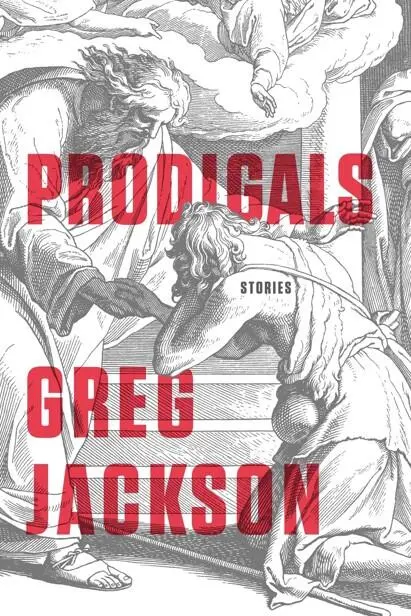
Greg Jackson - Prodigals - Stories
Здесь есть возможность читать онлайн «Greg Jackson - Prodigals - Stories» весь текст электронной книги совершенно бесплатно (целиком полную версию без сокращений). В некоторых случаях можно слушать аудио, скачать через торрент в формате fb2 и присутствует краткое содержание. Год выпуска: 2016, Издательство: Farrar, Straus and Giroux, Жанр: Современная проза, на английском языке. Описание произведения, (предисловие) а так же отзывы посетителей доступны на портале библиотеки ЛибКат.
- Название:Prodigals: Stories
- Автор:
- Издательство:Farrar, Straus and Giroux
- Жанр:
- Год:2016
- ISBN:нет данных
- Рейтинг книги:4 / 5. Голосов: 1
-
Избранное:Добавить в избранное
- Отзывы:
-
Ваша оценка:
Prodigals: Stories: краткое содержание, описание и аннотация
Предлагаем к чтению аннотацию, описание, краткое содержание или предисловие (зависит от того, что написал сам автор книги «Prodigals: Stories»). Если вы не нашли необходимую информацию о книге — напишите в комментариях, мы постараемся отыскать её.
A filmmaker escapes New York, accompanied by a woman who may be his therapist, as a violent storm bears down. A lawyer in the throes of divorce seeks refuge at her seaside cottage only to find a vagrant girl living in it. A dilettantish banker sees his ambitions laid bare when he comes under the influence of two strange sisters. A group of friends gathers in the California desert for one last bacchanal, and a journalist finds his visit to the French country home of a former tennis star taking a deeply unnerving turn.
Strivers, misfits, and children of privilege, the restless, sympathetic characters in Jackson's astonishing debut hew to passion and perversity through life's tempests. Theirs is a quest for meaning and authenticity in lives spoiled by self-knowledge and haunted by spiritual longing. Lyrical and unflinching, cerebral and surreal,
maps the degradations of contemporary life with insight and grace, from the comedy of our foibles, to the granular dignity of experience, to the pathos of our yearning for home.
Prodigals: Stories — читать онлайн бесплатно полную книгу (весь текст) целиком
Ниже представлен текст книги, разбитый по страницам. Система сохранения места последней прочитанной страницы, позволяет с удобством читать онлайн бесплатно книгу «Prodigals: Stories», без необходимости каждый раз заново искать на чём Вы остановились. Поставьте закладку, и сможете в любой момент перейти на страницу, на которой закончили чтение.
Интервал:
Закладка:
She was standing next to me. We leaned against the front of the car, smiling into the sun, letting the light explore our faces. The water ankleted our calves. Susan took my hand, took it with a kind of purpose I recognized that said, C’mon, we’re getting out of here. We’re going home.
The air was crazy and beautiful with life. The sun, the hills, the water at our feet. Do you remember what it’s like to go home with the person you love? Do you? Don’t say yes. Remember. Stay there with me, linger. Then make me laugh while we drive home.
Amy’s Conversions
A (Reluctant) Melodrama
(I)
It is in certain moods that I take it upon myself to tell the story of me and Amy, the years we have known each other, our friendship, and my love for her. They are moods of course that tend to the self-serious, when the inner decoration of life seems very rich and heavy in color and to call such and such simply purple or red would be a crime of inattention or laziness, a failure of patience or nerve. When you want someone to see just exactly what you are seeing and already pretty much hate everyone for not being able to get there. Not having the stubbornness or the perversity it takes.
I am a painter. You must forgive me my cynicism about the sensitivity people bring to the act.
But first, years before I work up the nerve to say, I am this , I am that , I run into Amy in the bookstore. It’s the one out on the northbound highway due to metamorphose into a candle shop, a discount shoe store, and finally an unrentable gap tooth in that sad strip. Amy and I trade a sly smile that says, Yes, of course we are the only ones in our town who would come here to escape the heat, and it is then, as we are talking, that she tells me she’s left the church.
My God, I say.
Well, she says — gallows humor — not mine anymore.
We are home from college that day. It is June, and we are twenty. To the west somewhere a storm remakes the sky to suit its wild fancy, and if I could do the same maybe it would be Women in Love in Amy’s hands, though life is rarely like that, is it? Fitting.
On the mission trips we took as high school students, back when we were devout — Amy and I and pretty much everyone we knew — we used to lie in ministry basements far from home, whispering things too hopeful and foolish for the light of day. Amy would say how when He came, we would live a thousand years of peace and happiness on earth. Can you imagine, she said, the hungry fed? The sick cured? The needs of the world met? A breeze might bring the thick, exotic leaves scratching against the low windows. We talked of mundane things too, school-year gossip and embarrassments, who was gorgeous or getting hotter, teachers we liked and those we found ridiculous. I remember those nights, but nothing of the countries. An image here or there: bright colors, dirt roads. I do remember thinking, Amy, will you shut the fuck up and listen to yourself? Do you really think it’s possible to meet all the needs of the world — everyone’s — at the same time? But I also thought that in a perfect world my love for Amy would find its proper form, so I could be stupid too.
What did it? I ask.
I just couldn’t take the hypocrisy, she says.
Which?
Do I have to pick?
And because we are young and this has the cadence of a joke, we laugh. But of course she has to pick. Who doesn’t have to pick?
Amy was a pastor’s kid, see. Her father, Pastor Bob, was our family’s pastor, a man I found fatuous and condescending at the time but who in retrospect probably deserved better. Amy loved him, of course, and took his faith as her own. So there must be more. I press Amy, and she tells me — about the varieties of life and belief she’s encountered away from home and can’t believe lead briskly to hell. I bite down the irony, the irony of me. I know I should have given Amy more grief, then and all along, but we grow into our toughness like snakes, molting hope. And before you judge me, understand: Amy and I are different; we are the only ones who would come here to avoid the heat; the only ones who look at these fine pages of violent dreaming and think how delicate and timid a lunge at optimism should be. We spent our childhoods under the same southern sun, where possibilities grew and budded or withered silently within us, and we had only each other to look at for confirmation or its opposite. No one parted Amy’s legs when they were as young and faultless as they are that day in the bookstore. Someone should have. Youth should be used. It should be ruined and swallowed. We all know this. What else is youth for?
Amy blushes the way she does. Less from embarrassment, I think, than from the surprise of continuing to encounter herself, the white stone of her own stubbornness, beneath everything. I know the look from the days in high school when she would pass me in the hall and whisper, Hey, we’re going out to…, thumb and forefinger pinched to her lips. And then in the catalpa grove, among the hackberries, with the floral musk of spring in the air like sex, we passed the joint around, our little group. We stole for a time too. Bras and soda, eyeliner, chewing gum. Anything you could slip into a pocket or purse. We were devout, we weren’t prudes. And what I saw at last was that Amy would have found it easier not to steal, and so she stole.
This petty theft ended the day the cops were called. A crowd gathered on the curb to watch as they handcuffed Amy and put her in the car. She was weeping. She kept asking the cops whether it wasn’t all part of God’s plan. Doesn’t everything happen for a reason? she said again and again. Don’t you think everything happens for a reason?
And I am sure this is what we all would like to know, but really, what reason would you devise for a scene like this? Tell me, because I’ll take a good lie over a pitiless truth. Did I expect the wind to rise up and free Amy? No, I can’t believe I did. We had been taught from a young age to put great faith in the unseen drama of our lives, but even as a kid I think I had a good sense of where the literal and figurative began and ended. Pastor Bob liked to rest a hand on the church wall and say, This is not the church. Then he would point to all of us and say, This is the church. But the building had been a department store not long before, and we could all remember the rows of perfume and sandals, the fishing tackle and cotton dresses, lining these same floors. Pastor Bob must have known as well as I did that he was correcting a mistake none of us had made. And the question begged: What then as the church did we make up? What did our privacies sum to?
The hopeless things we want to know. I try again in the bookstore. I ask Amy, Why now? as though she can tell me something meaningful about where, in the fluid process, sentiment hardens into conviction, decision into action, or molten spirit into the rock of belief.
It wasn’t like that, she says. It was like … You know when you’re on the phone with someone you’re into, and you don’t even realize you’re speaking in this weird, airy voice? It was like that. Like realizing I was speaking in a weird voice and stopping. Returning to my normal voice.
She looks at the open book in her lap. There is a little universe inside it, wonderfully still.
But how do you know? I say. How do you know which is which?
She considers this. I guess you don’t, she says. One just feels more natural. Other answers begin to make more sense.
Uh-huh, I say. Uh-huh. And only now do I wonder: What is an answer? What satisfies us?
How did her parents take it, I ask. Dad threw up, she says. She stares straight ahead. But you know, we took the boat out the other night, just the two of us. We’d been fighting for days and we went out on the lake at dusk. We didn’t say anything, just held hands. And I kept thinking, In a way I should be dead to him. If I’m serious, I should be a little dead. But we just sat there watching the mist rise off the lake.
Читать дальшеИнтервал:
Закладка:
Похожие книги на «Prodigals: Stories»
Представляем Вашему вниманию похожие книги на «Prodigals: Stories» списком для выбора. Мы отобрали схожую по названию и смыслу литературу в надежде предоставить читателям больше вариантов отыскать новые, интересные, ещё непрочитанные произведения.








Обсуждение, отзывы о книге «Prodigals: Stories» и просто собственные мнения читателей. Оставьте ваши комментарии, напишите, что Вы думаете о произведении, его смысле или главных героях. Укажите что конкретно понравилось, а что нет, и почему Вы так считаете.