Greg Jackson - Prodigals - Stories
Здесь есть возможность читать онлайн «Greg Jackson - Prodigals - Stories» весь текст электронной книги совершенно бесплатно (целиком полную версию без сокращений). В некоторых случаях можно слушать аудио, скачать через торрент в формате fb2 и присутствует краткое содержание. Год выпуска: 2016, Издательство: Farrar, Straus and Giroux, Жанр: Современная проза, на английском языке. Описание произведения, (предисловие) а так же отзывы посетителей доступны на портале библиотеки ЛибКат.
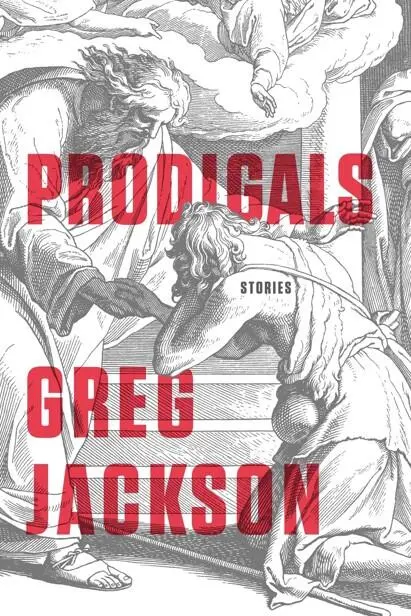
- Название:Prodigals: Stories
- Автор:
- Издательство:Farrar, Straus and Giroux
- Жанр:
- Год:2016
- ISBN:нет данных
- Рейтинг книги:4 / 5. Голосов: 1
-
Избранное:Добавить в избранное
- Отзывы:
-
Ваша оценка:
Prodigals: Stories: краткое содержание, описание и аннотация
Предлагаем к чтению аннотацию, описание, краткое содержание или предисловие (зависит от того, что написал сам автор книги «Prodigals: Stories»). Если вы не нашли необходимую информацию о книге — напишите в комментариях, мы постараемся отыскать её.
A filmmaker escapes New York, accompanied by a woman who may be his therapist, as a violent storm bears down. A lawyer in the throes of divorce seeks refuge at her seaside cottage only to find a vagrant girl living in it. A dilettantish banker sees his ambitions laid bare when he comes under the influence of two strange sisters. A group of friends gathers in the California desert for one last bacchanal, and a journalist finds his visit to the French country home of a former tennis star taking a deeply unnerving turn.
Strivers, misfits, and children of privilege, the restless, sympathetic characters in Jackson's astonishing debut hew to passion and perversity through life's tempests. Theirs is a quest for meaning and authenticity in lives spoiled by self-knowledge and haunted by spiritual longing. Lyrical and unflinching, cerebral and surreal,
maps the degradations of contemporary life with insight and grace, from the comedy of our foibles, to the granular dignity of experience, to the pathos of our yearning for home.
Prodigals: Stories — читать онлайн бесплатно полную книгу (весь текст) целиком
Ниже представлен текст книги, разбитый по страницам. Система сохранения места последней прочитанной страницы, позволяет с удобством читать онлайн бесплатно книгу «Prodigals: Stories», без необходимости каждый раз заново искать на чём Вы остановились. Поставьте закладку, и сможете в любой момент перейти на страницу, на которой закончили чтение.
Интервал:
Закладка:
I’m not telling you my name.
I’ll call you Randi then.
Fuck off, the woman says, smiling.
Jesse flicks her cigarette. Bye forever … Randi.
We were just saying how it’s like that whole ‘religion without God’ thing, Dot says when Jesse sits back down. You know, what’s-his-name’s?
No.
Oh, never mind.
Sorry, I don’t mean to be an asshole. It just feels like intellectual masturbation to me.
So?
So I guess I never came jacking off that way.
Dot looks right at her. Oh yes, you have.
It is a flash like the unbending of time’s clenched fist in which Jesse sees it, the hours laid out before her, half lost to the shadows of drink, some zealous making out in a doorframe, arms lifted to ease a passage of shirts, the emigration of clothes from body to floor, new skin — all that is waiting for them back home in a chapter of the night breached by visions. Cigarette smoke drifts in tendrils to the streetlamps. Midges play in the hot dirty air. And how many nights like this must a life contain, spent half waiting to be caught up in urgencies we can’t invent?
But of course waking in Dot’s bed the next morning, it is Amy Jesse imagines beside her, among the tangles of thrown sheet. If she could stop right then and disinvest Amy of demure mystery, the innuendo of beatitude, this would be a different story. A happier one perhaps, if she could rebuff the small imaginary production in which she rolls over to Amy — Amy asleep, with her head cradled in her arms, kinked hair falling at her shoulders, heavy, graceful curve of her ass to the ceiling — and kisses her shoulders, telling her she’s sorry as she comes awake.
About what?
I acted like I didn’t understand you last night when I did. I don’t know why I did that.
And what had Amy said? There’s a bit of cruelty in every judgment, don’t you think? Don’t you think every judgment enacts a kind of violence on the world?
Enacts violence on the world … Jesse had said, like she were confused, which she doesn’t understand because of course she knew , of course she thought . When were we not violence to one another? Her father’s ungiving silence, Amy’s unreachable heart. Marissa in college, who after months of ardent fucking introduced Jesse to her parents as a friend. Jesse’s mother, lit on wine, so sad , so scared Jesse would have no one to protect her and would never know the joy of having a family of her own. This sort of joy, Ma? Her mother was not a stupid or an ignorant woman. From within the grip of what elect delusion did she speak? Through the kaleidoscope of what half-turn disarrangement of truth?
But Jesse had pretended Amy had lost her.
How’s your sex life? she’d said.
Ha, what sex life, Amy said.
And how funny now to think back to a night like that and remember that they had no idea what came next, that they sat in the bar happy enough to let the blank nothing of the future open out before them like a landscape in the process of being drawn. That in that moment, before the night collapsed into nothingness, into three still images perhaps, into itself and other nights just like it, they let themselves believe that for its very vividness, for its particularity , it might never end. But there was so much still to happen. This was before Amy had been touched or loved. Before her family shook apart after her father’s affair with an elder’s wife — an unconsummated intimacy, not unlike prayer — and he was driven from the church he’d built. Before Jesse’s mother got cancer (breast, she is fine). Before Amy dropped out of school and disappeared into the revolutionary politics that would consume the rest of her youth and Jesse took the job as office manager at the start-up clothing company in Baltimore, painting in what free time she had left. She had a dog, Peter, and a girlfriend, Sally. On good days it seemed she had grown old enough to feel at home in her skin. She considered her friend sometimes and wondered how much thought one ought to give to the way one lived. Then she thought that only Amy knew.
I was a child raised by wolves, she tells Sally one nothing October day. They are on a beach in Delaware, the ocean wrought and glinting. In grays and browns the day presents as grades of rupture, bands of oblivion unfolding outward — the sky, the water, the sand, the sedge. The thought settles over Jesse in the absence of other thoughts: there is nowhere else she needs to be.
Later she will think how foolish our dreams of arrival are. How many times must we say to ourselves, Maybe this is it, maybe the struggle is over, when we are only on the vast crescent of an expansive boredom, some beach in Delaware with our back to the sea?
Peter runs after a flight of sandpipers that rise into the air like spangled filaments after light.
Everyone thinks they were raised by wolves, Sally says.
(III)
You are twenty-nine. You are going home. This is happening. Kick and scream if you will. Carp all the way to the airport. Complain to your friends, to Anita. Such a drag . A duty, really, and joyless. No, you love your mother, she’s just impossible, deluded. The way parents are. Such lame-o’s, irredentists lost to an irrecoverable past. You look a bit bedraggled, you must admit. A bit showily causal in your knockabout jeans and Keds. No sense getting dressed up for your mother, but it’s like you’re trying to prove you’ve left. Prove you don’t belong. And yes, you’ve been away too long, it’s true. A year, can it be? And yes, everyone else in what was once your family now has a different family of his own. Meanwhile your mother’s life has shrunk to the space of three stories she tells herself not exactly riveted to the truth: that she and your father continue to enjoy a spiritual bond since the split; that she is happy, all things considered; that you and she are a pair, alike in loneliness, although you often have girlfriends whom she continues to conceive of as very close women friends.
It rains your first days home. You sit with your mother in the back room and she says she’s been feeling close to God lately. We talk, she tells you and says He put her on her own to know Him better. Water runs down the frosted glass. You should have more conversations with real people, you say. You know the sort: flesh-and-blood, visible , prone to unfortunate differences of opinion. I never knew what profound companionship I could find in God, she says. And what you want to say is that a person can’t find companionship in an echo, that she is listening to her echo and the thing about an echo is it will never surprise you. But you say nothing. You can rip the bandages off everyone else’s private wounds, not hers.
Your father and me, Jesse, we just wanted different things.
Anita told me to tell you to date more.
It’s nice you have such nice friends, she says.
The rain taps out your silence. On your third day home you escape Ma.
The weather has broken and hot sun floods the shadeless downtown. The heat culls moisture from the hollows. You pause at the old department store. Through the windows you can see the dais and pulpit where Amy’s father used to preach. People you don’t know are gathered at a card table with coffees and notepads — congregants, strangers, new stewards of what was once yours — and you have the brief urge to go in and tell them to stop, that you and Amy have explored this blind alley and can tell them the dimensions if they like. It is a kind of vertigo you feel, a queasy lurch at the precipice of collapsed time, seeing those things continue on from which your own life has diverged. And it reminds you of watching the high school girls play soccer on a visit home years ago, the sudden truth in your stomach, as they ran in their red pinnies through the quickening dusk, that new bodies would keep coming to fill those jerseys year after year, shouting in a joy that was itself the very act of forgetting — forgetting those who had come before, forgetting how they would disappear themselves.
Читать дальшеИнтервал:
Закладка:
Похожие книги на «Prodigals: Stories»
Представляем Вашему вниманию похожие книги на «Prodigals: Stories» списком для выбора. Мы отобрали схожую по названию и смыслу литературу в надежде предоставить читателям больше вариантов отыскать новые, интересные, ещё непрочитанные произведения.











Обсуждение, отзывы о книге «Prodigals: Stories» и просто собственные мнения читателей. Оставьте ваши комментарии, напишите, что Вы думаете о произведении, его смысле или главных героях. Укажите что конкретно понравилось, а что нет, и почему Вы так считаете.