Greg Jackson - Prodigals - Stories
Здесь есть возможность читать онлайн «Greg Jackson - Prodigals - Stories» весь текст электронной книги совершенно бесплатно (целиком полную версию без сокращений). В некоторых случаях можно слушать аудио, скачать через торрент в формате fb2 и присутствует краткое содержание. Год выпуска: 2016, Издательство: Farrar, Straus and Giroux, Жанр: Современная проза, на английском языке. Описание произведения, (предисловие) а так же отзывы посетителей доступны на портале библиотеки ЛибКат.
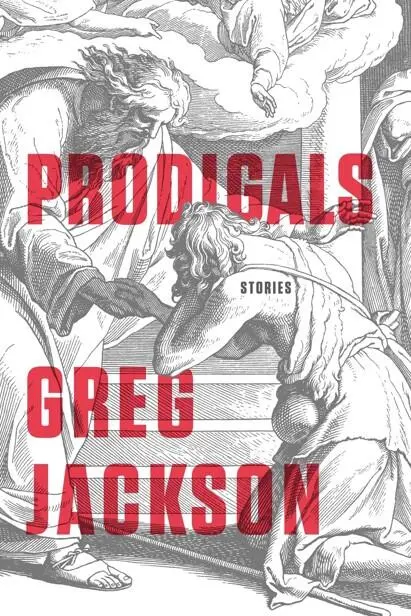
- Название:Prodigals: Stories
- Автор:
- Издательство:Farrar, Straus and Giroux
- Жанр:
- Год:2016
- ISBN:нет данных
- Рейтинг книги:4 / 5. Голосов: 1
-
Избранное:Добавить в избранное
- Отзывы:
-
Ваша оценка:
Prodigals: Stories: краткое содержание, описание и аннотация
Предлагаем к чтению аннотацию, описание, краткое содержание или предисловие (зависит от того, что написал сам автор книги «Prodigals: Stories»). Если вы не нашли необходимую информацию о книге — напишите в комментариях, мы постараемся отыскать её.
A filmmaker escapes New York, accompanied by a woman who may be his therapist, as a violent storm bears down. A lawyer in the throes of divorce seeks refuge at her seaside cottage only to find a vagrant girl living in it. A dilettantish banker sees his ambitions laid bare when he comes under the influence of two strange sisters. A group of friends gathers in the California desert for one last bacchanal, and a journalist finds his visit to the French country home of a former tennis star taking a deeply unnerving turn.
Strivers, misfits, and children of privilege, the restless, sympathetic characters in Jackson's astonishing debut hew to passion and perversity through life's tempests. Theirs is a quest for meaning and authenticity in lives spoiled by self-knowledge and haunted by spiritual longing. Lyrical and unflinching, cerebral and surreal,
maps the degradations of contemporary life with insight and grace, from the comedy of our foibles, to the granular dignity of experience, to the pathos of our yearning for home.
Prodigals: Stories — читать онлайн бесплатно полную книгу (весь текст) целиком
Ниже представлен текст книги, разбитый по страницам. Система сохранения места последней прочитанной страницы, позволяет с удобством читать онлайн бесплатно книгу «Prodigals: Stories», без необходимости каждый раз заново искать на чём Вы остановились. Поставьте закладку, и сможете в любой момент перейти на страницу, на которой закончили чтение.
Интервал:
Закладка:
So, what? Anarchists don’t dance? I’d have thought that was about all they could get together on.
She laughs. It’s good to see you. She shakes her head. Boy, a little strange. But good.
It’s been forever. Hey, I saw your mom.
Her smile fades and she shakes her head. I just can’t talk to them anymore, she says. And while you know she means her parents, with her words it is your town that lurches into the night, your childhood behind it, as fake as a soap you watched too many seasons of long ago, a fairy tale wound in gauze, that false, that rich in dream life, in the shabby promise of days bandaged in their amazing heat, ropes of water turning coruscant in the sun, parents — yours, Amy’s — congregants, group prayer, praying next to Amy praying, the endless pretense of shared dreaming, of so many privacies obscured below the canopy of that easy discarnate happiness, as if the thing billowing in the laundered shirts that blew from clotheslines, fanning streamers on your bike, and glinting in the eye of the horse across the street who ate apples from your hand were one thing and you it. And later if you snort coke in a club bathroom? And later if you run your tongue in Anita’s cunt? Will home know anything of this? Will this know anything of home? And if we say no, how is it then that the woman before you in black clothes, with a streak of pink in her hair, was once the girl reminding you to take out your contacts before a crawfish boil, before your fingers grew sharp with spices, raffia dishes of potato and Jell-O salad appeared to anchor blown linen, before children’s cries filled the air and fireflies emerged to sear the ripening canvas of twilight? How is it some people listen to the wind blowing through the vacancies of their hearts and hear a voice urging them on in flight, and some don’t hear it at all?
And Amy must feel it too because you ask her, So babe, when’s the revolution?
And she says, You know the funny thing about that word, Jesse, is where you wind up at the end of a revolution.
(IV)
Honesty is a lie, a more arduous self-deceit, like a white light that approached and seen up close decomposes into every color but itself. So begin the problems with ideas, with chitchat, with nuance. Nuance is a terror, a widow turned courtesan. Pillow talk in a bed that collects everything and nothing. It is a nice bed, of course. Certainty is no better.
On the day I think this — something of the sort — I am sitting in BWI waiting for a plane that will take me to another plane and so on in this manner to Berlin. It is a year and a few months since Anita left. She left just after my thirty-fifth birthday, the night she said, I’ll do anything you want, just ask, and I took it as a provocation, the way it made itself out to be a present when it was really the request for a gift. There was a time it might have thrilled me, of course, the submissive possibility of it, but by then I didn’t care. It rang only with Anita’s desperation and her desperation with the pain I would cause her, which made me want to get out, leave at any cost, made me desperate and ready to punish her in advance for the pain she would make me feel in making me hurt her.
And still, we make messes at night to have something to do with the day.
Here is what I want, I said, meting out tequila in two glasses. I might have been a child holding a glass statuette — knowing not to drop it, knowing I would to watch it break. You’re not going to like it though, I said. And that’s how the role-play comes about. We curl Anita’s hair with an old iron; it’s darker than Amy’s and her skin darker too. Outside, the whistling black winter is a banshee train caroming through the streets. The loft’s light is bleak against the dark, the room as empty as a stoned mood. Anita sits at the paint-stripped vanity we found on Keswick one afternoon, the two of us out exploring the city in the idle improvisation of early love. We apply makeup, a little to lighten her complexion and return a hint of dewy youth — not that Amy ever wore much. We give her black jeans, a loose sleeveless top, a bra to hold in her tits. She looks, when we’ve finished, like neither Amy nor herself, but maybe a monster’s dream of human beauty, a child’s crayon drawing of lurid glamour.
I don’t know why you’re doing this, she says. There’s nothing in the rocks glass when she sets it down.
I don’t know. It’s exciting to me.
To pretend your girlfriend’s someone else.
Christ — she’s right of course, I am the monster — but Christ , aren’t we past that? I say. Those ridiculous little stories about identity? I’ve got mine , and you’ve got yours … It’s all such nonsense. What’s the point of role-playing anyway?
To play a role, Anita says. Not someone else. When I don’t respond she says, Look, just tell me how this isn’t demeaning, okay? Just walk me through it.
It’s my fucked-upness, isn’t it? My perversion? If it’s demeaning to anyone, it’s demeaning to me.
You are such a fucking sophist, she says and laughs bitterly.
I clear her hair from her face. I’m sorry. Forget it. Forget Amy, I say. Be my high school crush from Bible study, that’s all I wanted. And maybe it is, and maybe it isn’t, but it would be too much to say it is exactly Amy I want when I sit Anita down at the desk with the Bible between us, caressing her as she reads, words from a book that says love does not dishonor others, is not self-seeking, and keeps no record of wrongs. That says so many ridiculous things it is hard to know what is contradiction and what is just violent longing for a world not our own. With my lips at her shoulders and the floral sweat of her hot skin in my nostrils, I say, Let’s study something else. Okay, she says, what? God’s image, I say and laugh. We were made in God’s image, right?
She lets me lead her to the bed and lay her down. She lies there tremulous, rigid, wide-eyed in the role. And how do you enact the fallen moment? Sneak a finger up her pant leg and under the elastic of a sock. Pull it down. One, then the other. Touch her thigh. Feel her flinch. The waist of her jeans, the button at the fly. Undo, unzip. Take the jeans down around her ass so they come inside out. The skin below crimping to gooseflesh. Hairs rising together and flesh cold where her thighs bulge. Watch a tremor pass through her. Circle her and ease the shirt up over her body. Let your hands brush her sides. Her breathing is an audible wind. Pinch the bra clasp, let it go — let the fabric calve from her, nipples alive, tight. Circle each with a finger. Let her shudder … Underpants last. Take them down so slowly they grip and release each tangle of hair.
She breathes in.
And I stop.
I can’t go on.
Something is off.
Or no, that’s not right. Something is gone . But who can say, really, what founders on the dull thingness of a body? Who has ever been able to say? It is not what Anita says later, that I am in love with Amy and stopped when I saw it wasn’t her. That keeps things legible, so that’s where Anita goes. But it isn’t so simple, not when desire turns in on itself, switches back, burrowing like roots into the hollow cavities of what inside us is hardest to fill. May never be filled. May never want to be filled. Or perhaps we make peace with those pockets of wind. Or perhaps we keep costuming strangers in our vain hopes. But either way, right? Either way .
Or let us go deeper for a moment because this is a religious story — that is one way to understand it — and every religious story is a love story, and every love story a story about childhood. For how are we to know if the noise we strike on after is more than the echo of our footfalls? Would it be too fanciful to say we are pearl divers in despoiled harbors? Blind archers among wet trees, forever hunting the phantom quarry of our perverse compulsions? The blackbird sits in the cedar-limbs, the arrows in our ribs. I have been single since she left.
Читать дальшеИнтервал:
Закладка:
Похожие книги на «Prodigals: Stories»
Представляем Вашему вниманию похожие книги на «Prodigals: Stories» списком для выбора. Мы отобрали схожую по названию и смыслу литературу в надежде предоставить читателям больше вариантов отыскать новые, интересные, ещё непрочитанные произведения.









Обсуждение, отзывы о книге «Prodigals: Stories» и просто собственные мнения читателей. Оставьте ваши комментарии, напишите, что Вы думаете о произведении, его смысле или главных героях. Укажите что конкретно понравилось, а что нет, и почему Вы так считаете.