Greg Jackson - Prodigals - Stories
Здесь есть возможность читать онлайн «Greg Jackson - Prodigals - Stories» весь текст электронной книги совершенно бесплатно (целиком полную версию без сокращений). В некоторых случаях можно слушать аудио, скачать через торрент в формате fb2 и присутствует краткое содержание. Год выпуска: 2016, Издательство: Farrar, Straus and Giroux, Жанр: Современная проза, на английском языке. Описание произведения, (предисловие) а так же отзывы посетителей доступны на портале библиотеки ЛибКат.
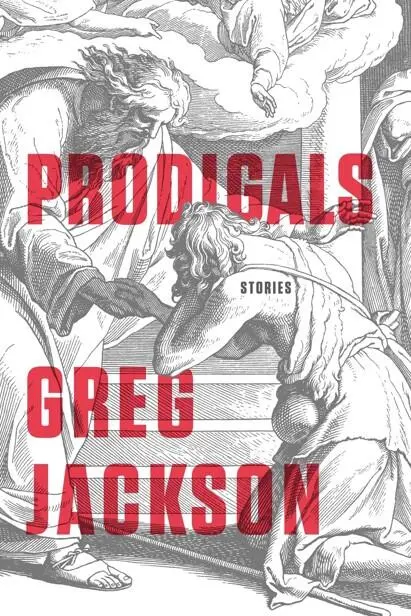
- Название:Prodigals: Stories
- Автор:
- Издательство:Farrar, Straus and Giroux
- Жанр:
- Год:2016
- ISBN:нет данных
- Рейтинг книги:4 / 5. Голосов: 1
-
Избранное:Добавить в избранное
- Отзывы:
-
Ваша оценка:
Prodigals: Stories: краткое содержание, описание и аннотация
Предлагаем к чтению аннотацию, описание, краткое содержание или предисловие (зависит от того, что написал сам автор книги «Prodigals: Stories»). Если вы не нашли необходимую информацию о книге — напишите в комментариях, мы постараемся отыскать её.
A filmmaker escapes New York, accompanied by a woman who may be his therapist, as a violent storm bears down. A lawyer in the throes of divorce seeks refuge at her seaside cottage only to find a vagrant girl living in it. A dilettantish banker sees his ambitions laid bare when he comes under the influence of two strange sisters. A group of friends gathers in the California desert for one last bacchanal, and a journalist finds his visit to the French country home of a former tennis star taking a deeply unnerving turn.
Strivers, misfits, and children of privilege, the restless, sympathetic characters in Jackson's astonishing debut hew to passion and perversity through life's tempests. Theirs is a quest for meaning and authenticity in lives spoiled by self-knowledge and haunted by spiritual longing. Lyrical and unflinching, cerebral and surreal,
maps the degradations of contemporary life with insight and grace, from the comedy of our foibles, to the granular dignity of experience, to the pathos of our yearning for home.
Prodigals: Stories — читать онлайн бесплатно полную книгу (весь текст) целиком
Ниже представлен текст книги, разбитый по страницам. Система сохранения места последней прочитанной страницы, позволяет с удобством читать онлайн бесплатно книгу «Prodigals: Stories», без необходимости каждый раз заново искать на чём Вы остановились. Поставьте закладку, и сможете в любой момент перейти на страницу, на которой закончили чтение.
Интервал:
Закладка:
I had first come to know him because we had the same therapist, Dr. Kirithra, a moonfaced Jungian with a sad smile who worked out of a church in the East Seventies. Tanner was leaving one day just as I was ducking in, or perhaps the other way around, and we said the awkward hello you do at the shrink’s. It turned out later that he knew Travis and Clea, and my old friend Marilena — that Tanner knew everyone —and we met again at a dinner party and made a big joke of the whole thing at our expense. How typical, how neurotic, how this city . Tanner, loud, witty, and personable, struck me as exactly the sort of person who doesn’t need a shrink but gets one anyway, because he can, because it seems like what an interesting, theoretically tormented person does. He had a job at a reputable bank and he came from money too. He spent lavishly and indifferently. Everything he did had an air of worldly apathy about it, the sort that shelters under a melancholic idea of itself, and I mistrusted the seriousness of people like this and so kept Tanner at arm’s length.
But this is not to say he was without earnestness or charm. Tanner referred to his firm as “the well-represented conspiracy” and once memorably described their business model as “light-footprint imperialism.” He wasn’t dumb, he liked to talk this way, and if he didn’t quit his job for whatever truth lay behind his words he owned up to his complicity grandly. In the evening, after hours, when work got out and the long city night buzzed to life, you would find Tanner at gallery openings and literary events, dressed in the hip tatters of the set, trying to work Agamben and Deleuze into his small talk. I joked that he only slept at night secure in the notion that he was deepening the contradictions of capitalism, but what was truer, no doubt, was that it took a certain and ironic consequence before anyone much cared what you had to say about homo sacer or your own moral implication. Such are the true contradictions we drown in, like grapplers in the ocean at each other’s throats. Then, maybe a year after I met him, Tanner left his job to enroll in film school, and while I would hardly have called this a risky departure for Tanner, it did seem to validate some of the dreaminess and fitful integrity that had always appeared in him to swim just beneath the surface, fighting up for air.
Knowing Tanner as I had, then, when I saw him that night, sitting outside in the sweater weather of early April, it took me by surprise to find him looking a bit unkempt. His blond hair had grown out and darkened, a greasy mess atop hollow features. He seemed thin, his clothes hardly fit him. And although I had gotten to the café early, he was there when I arrived, fiddling with the silverware. I watched him for a minute before he spotted me. “Jonah,” he said when he had. He smiled, rising, extending a hand, and then in a rush of unexpected warmth he pulled me in for one of those one-armed hugs that pass for affection among men my age.
“Tanner,” I said, more stiffly than I meant to. His appearance set off a faint alarm in me. A subtle impression, I don’t mean to overstate it. He seemed distracted, unmoored. And yet if I am being fully honest, alongside this apprehension I felt the opposite, a quiet triumph at seeing Tanner like this, for he had always struck me as a person destined for a luck he hadn’t earned, the sort of person who inhabits the world so effortlessly that good fortune can’t help but attach to him, and because of this I had at times taken his life as a measuring stick against my own, which was by comparison the life of an outsider, someone without Tanner’s social grace or ease, without his ability to fold seamlessly into the currents around him. I felt vindicated seeing Tanner like this, even if knowing what I do now, having heard his story, it is a feeling I would rather disown. I am ashamed of it, and still, undeniably, it is what I felt.
“So,” I said, breaking under his gaze, “long time. I heard you’d left the country.”
“I did, I did,” he agreed. “I only just got back.”
“When was that?” I motioned to the waiter, who ignored us with a kind of élan.
“Oh, two or three weeks ago.” He waved away precision with a hand, as though weeks were hardly a thing to keep track of. “Look—” He smiled, suddenly self-conscious. “I hope this isn’t odd, my calling you, asking you to see me. It’s been forever, I know. My sense of what’s odd and normal is a bit off these days … But see, the thing is, you were my first thought when I got back. I thought, If anyone will understand what I’ve been through, it’s Jonah. I can’t say why. An intuition, I guess.”
Privately, at this point, I was thinking something along the lines of “Oh, great.” I am a person who has been taught to listen, to ask questions, and to respond appropriately. It is amazing how few people do any of these things, and I often feel, as a consequence, that my attention is taken advantage of. I didn’t think of Tanner as a particularly bad offender, but I assumed this was what he meant: that I of all people would sit there and listen to him.
Our waiter had finally come and taken our order with — what else to call it? — stoic disgust. I asked for a Carménère and Tanner said, “Make it a bottle,” waving away my objection and assuring me that he was buying. “Thank you,” I said, meaning surely something closer to the opposite and wondering a bit vertiginously what we had to discuss that would take us an entire bottle.
“Well, here I am,” I said. “You’ve got me.”
“Got you…,” Tanner said vaguely, but it appeared to be the prompting he needed, because he asked me then whether I was reasonably au fait with his time in film school — his phrase — and I said yes, I supposed I was. “Well,” he said, “it turned out I was too restless to make films. You remember how I was, hardly able to sit still. I liked films. I had ideas . Who doesn’t, right? But you get the stray idea and think, Fuck, what an idea! I’m going to do this. And then you get down to it and it’s a shit-ton of work. And you’re on to the next idea before you’ve even roughed out the first. And pretty soon it dawns on you that everyone has ideas, and we’re all just jerking off, mourning the falsehoods of youth or whatever. Because we’ve all been taught, right, every last one of us, that we have some unique something to offer up to the world. But c’mon. Let’s be real.”
His eyes brightened as he spoke, the gleam, I thought, of restless people who find refuge in the moment, the exigency of its impermanence, if I can say that. And while I noted the dirt under his fingernails and the grease at his temples, building a case for my initial impression, in his words the old Tanner showed through, a person whose wry and crude honesty, I had always thought, betrayed a longing for things a bit nobler or more serious than he permitted himself.
Our wine had come, but Tanner seemed not to have noticed. “So what was I doing in film school?” he was saying. “I’ve asked myself quite a few times. Some people aren’t searching for anything, I think, but for the rest there’s an emptiness, isn’t there, and we’re all looking for things with that particular shape to fill it. Before I met Rhea I’m not sure I even recognized any — what do I mean to say? — lacuna . I thought I had things in hand, more or less. I thought a certain brand of, I don’t know, urbanity would see me through.”
I felt then, drinking my wine too quickly, a brief stab of recognition in my gut, the way you do on hearing someone begin a sentence and knowing instantly what he will say. I do not mean I anticipated Tanner’s words or point, exactly, but I could see certain lines of inquiry begin to braid, I felt an intimacy in the pattern, I understood, however reluctantly, why Tanner had sought me out — because without our quite saying it we do somehow communicate a receptivity, or else impatience, when it comes to matters of the spirit. Questions of the heart in crisis, dark nights of the soul — that sort of thing. I remembered at an exhibition once seeing Tanner turn from Bacon’s Pope Innocent X with a strange, faraway look in his eye. I had taken it for preoccupation at the time, but I wondered now whether I might not have had the true pretense in Tanner, the priority of his allegiance, backward from the beginning.
Читать дальшеИнтервал:
Закладка:
Похожие книги на «Prodigals: Stories»
Представляем Вашему вниманию похожие книги на «Prodigals: Stories» списком для выбора. Мы отобрали схожую по названию и смыслу литературу в надежде предоставить читателям больше вариантов отыскать новые, интересные, ещё непрочитанные произведения.








Обсуждение, отзывы о книге «Prodigals: Stories» и просто собственные мнения читателей. Оставьте ваши комментарии, напишите, что Вы думаете о произведении, его смысле или главных героях. Укажите что конкретно понравилось, а что нет, и почему Вы так считаете.