Greg Jackson - Prodigals - Stories
Здесь есть возможность читать онлайн «Greg Jackson - Prodigals - Stories» весь текст электронной книги совершенно бесплатно (целиком полную версию без сокращений). В некоторых случаях можно слушать аудио, скачать через торрент в формате fb2 и присутствует краткое содержание. Год выпуска: 2016, Издательство: Farrar, Straus and Giroux, Жанр: Современная проза, на английском языке. Описание произведения, (предисловие) а так же отзывы посетителей доступны на портале библиотеки ЛибКат.
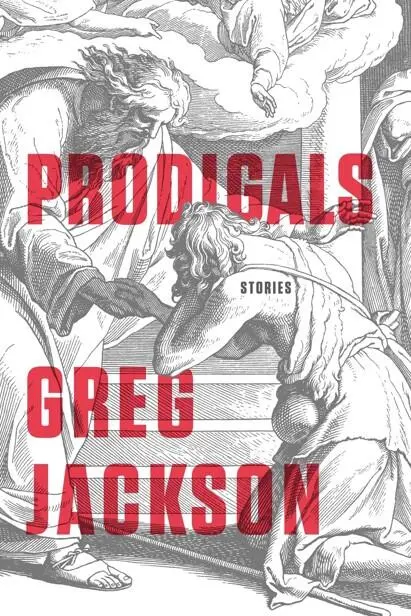
- Название:Prodigals: Stories
- Автор:
- Издательство:Farrar, Straus and Giroux
- Жанр:
- Год:2016
- ISBN:нет данных
- Рейтинг книги:4 / 5. Голосов: 1
-
Избранное:Добавить в избранное
- Отзывы:
-
Ваша оценка:
Prodigals: Stories: краткое содержание, описание и аннотация
Предлагаем к чтению аннотацию, описание, краткое содержание или предисловие (зависит от того, что написал сам автор книги «Prodigals: Stories»). Если вы не нашли необходимую информацию о книге — напишите в комментариях, мы постараемся отыскать её.
A filmmaker escapes New York, accompanied by a woman who may be his therapist, as a violent storm bears down. A lawyer in the throes of divorce seeks refuge at her seaside cottage only to find a vagrant girl living in it. A dilettantish banker sees his ambitions laid bare when he comes under the influence of two strange sisters. A group of friends gathers in the California desert for one last bacchanal, and a journalist finds his visit to the French country home of a former tennis star taking a deeply unnerving turn.
Strivers, misfits, and children of privilege, the restless, sympathetic characters in Jackson's astonishing debut hew to passion and perversity through life's tempests. Theirs is a quest for meaning and authenticity in lives spoiled by self-knowledge and haunted by spiritual longing. Lyrical and unflinching, cerebral and surreal,
maps the degradations of contemporary life with insight and grace, from the comedy of our foibles, to the granular dignity of experience, to the pathos of our yearning for home.
Prodigals: Stories — читать онлайн бесплатно полную книгу (весь текст) целиком
Ниже представлен текст книги, разбитый по страницам. Система сохранения места последней прочитанной страницы, позволяет с удобством читать онлайн бесплатно книгу «Prodigals: Stories», без необходимости каждый раз заново искать на чём Вы остановились. Поставьте закладку, и сможете в любой момент перейти на страницу, на которой закончили чтение.
Интервал:
Закладка:
“Rhea?” I said, perhaps a bit weakly.
“Oh, yeah, right. Rhea. Rhea Magnusson. This girl in film school with me,” Tanner explained. “I didn’t know her at first. I’d seen her around and hadn’t paid her much mind. I didn’t find her pretty and she had this revolutionary-garb thing going that put me off. You know, patriarchy this , hegemony that . How utterly compromised we all are by Western culture. Not that it’s wrong, you know, just so fucking humorless, so exhausting. All those little right sentiments to offer up in worthless atonement for our dreary privilege … That’s the vibe I got anyway, and I kept my distance. Then we were assigned this project together — we had to make a short. Well, we met for coffee, and coffee turned into a walk, and the walk into dinner. I was spellbound. It wasn’t so much Rhea as the manner of our conversation. Its honesty. Its sweetness, even. I had her pegged all wrong. She had this quality — I’d never met someone quite like her before — it was like she’d never been exposed to a single idea. Not that she was stupid, not at all. But like every idea we stumbled on had the force of revelation, a kind of joy almost. I mean, can you imagine, coming from the world we do, what a — you know— baptism it is to be treated as a source of mystery and insight? I didn’t care if it was all a complicit delusion. Let’s pretend we’re special and all that. I didn’t care! By the end of the night Rhea had come to seem beautiful to me. And I don’t mean her soul was beautiful or some crap like that.”
They made the short, Tanner told me. It was Rhea’s story. She had it all worked out the next time they met: script, actors, shooting locations. The plot was incoherent — this was my impression — something tiresome and postmodern about an architect who designs the world’s most beautiful skyscraper, or so some magazine calls it, finds he can’t handle the success, and begins wandering the city at night. Later he’s unable to locate his apartment building, or finds it’s been destroyed — this isn’t clear — and he winds up at the harbor, where a ship is waiting for him. He boards the ship, which soon departs for lands unknown. Tanner described the final shot in unnecessary detail (I’m skipping over a great deal) and said “To black” loudly, chopping a hand down to end the scene. He took a sip of wine, his first, and I said something uninspired about exile and anonymity.
“No, no.” He waved me off. “Don’t get the impression I think this is some great film. It’s just … Rhea . She had an actor ready to play the architect, a ship lined up for us to film on. We got the project on, like, a Tuesday and by Thursday she was ready to shoot. You can’t believe what an amazing person she is. I was just starting to realize it myself. She knew people everywhere, had friends all over town. People willing, eager , to do her favors. I thought it was a put-on, this — what do I mean? — innocence , this blithe … capability . So I introduced her to a few friends, Reece and Scooby, you know, people so oppressively hip there are about four square blocks in the world where they can exist, and she just melted them.” He shook his head. “You had to see it.”
This predictably annoyed me. So Tanner had a new girlfriend. Great . He would have a different one next week. And I was disposed against the curatorial approach to human beings, besides, strewing them about your life like oddments or knickknacks. This was Tanner’s bag if it was anyone’s, and people are not jokes or curiosities, not in my view anyway, although I don’t mean to say we are ever very good at investing ourselves in another person’s reality. That might be why, after all, I hadn’t realized that this was a different Tanner, why I still felt the need to bring him down a notch when I said, “Well, how did this Rhea wind up in film school? Where did she come from? Who was paying the bills?”
I sounded peevish to myself, I admit, brimming with the sort of pedantry I loathe at least as much as our mythologizing impulse. Tess has said that if we didn’t snag on ourselves from time to time she has no idea what a self really is, and I grant this notion a certain truth. It takes on a mise-en-abyme quality if you look at it too long, but yes, maybe there are times to forgive ourselves our inveterate pettinesses, those dead limbs of personality we’re always hoisting about into their awkward, casual poses.
“Oh, didn’t I say?” Tanner grinned. “But you’re the storyteller, after all.”
I wasn’t, I hadn’t been for many years, but Tanner had a charming faith, I think, that underneath everything we were all artists manqués. And maybe he was right, maybe the soil below the placid lawns of everyday life was always rich and black, rife with a chaos of growth and rot that called out for acknowledgment or cultivation. Nonetheless, I had done what I could to let the question alone, to tend the lawn, see the books bound, and gaze out from the safe distance of the museum floor. And now I could feel Tanner dragging me gently but insistently from the safety of this firm shore. I wasn’t even sure he knew.
“Rhea was Danish, see, or half Danish. Their mother was Chilean,” he said. “Rhea and her sister were born in Demark, then moved here as girls. Their father got some big fucking appointment. The Neue Galerie, I’m pretty sure it was. Arts administration. You should have seen their place: just off Lex, modern, minimalist, all white impenetrable surfaces, you know, but then Groszes and Kirchners on the wall. They had a Schiele too, I think.
“I first saw it when Rhea brought me by one afternoon. We were wandering around town and she needed to change. We were in her room. She didn’t send me out or ask if I minded, just started changing — her pants, her shirt — and almost out of habit, I guess, I went over and kissed her. She didn’t move away. She seemed to go along with the kiss, but when I pulled back, her look was ambiguous, something between surprise and amusement, like she didn’t know what I was doing or else knew so well that it amused her. The predictability of it maybe. But then I’m not sure Rhea expected or anticipated a single thing in her life. That was her charm. She took things as they were, without apparent judgment, so much so that it didn’t seem strange when we had sex right then and there. Or if anything was strange it was only the look of baffled amusement on her face, like I was taking her on a long detour and hadn’t told her the reason. Well, we finished, and I got dressed, and she got dressed, and as I left the room I turned to say something and almost walked right into a young woman sort of loitering where the hall turned.
“I collected myself enough to say hello. I’d thought we were alone, I don’t know why, and in any case the look the woman was giving me was — I don’t know. Horror? Disgust? Rhea came around from behind me, smiling.
“‘Elena,’ she said. ‘Tanner, this is my sister, Elena. Elena, Tanner.’
“‘Pleased to meet you,’ I said, putting out a hand which she regarded briefly as if I’d offered her a piece of rotting fruit.
“Elena turned to Rhea. ‘I have to run down to the pharmacy.’
“‘Do you want Tanner to take you?’ Rhea asked.
“She looked me up and down with a more moderated disgust. ‘Fine,’ she said.
“Well, sometimes you don’t ask questions, you know. You want to think of yourself as someone who can say yes without asking why, who can take a break from living under the sovereignty of clear intentions, and this must have been one of those times because soon we were riding the elevator down together in silence. I was wondering how two sisters managed to look so unalike, Rhea with her sunken, strung-out mien, her messy gold hair, and Elena, very fresh looking, with drum-tight skin over wide, gently tented features, her jet-black hair cut short.
Читать дальшеИнтервал:
Закладка:
Похожие книги на «Prodigals: Stories»
Представляем Вашему вниманию похожие книги на «Prodigals: Stories» списком для выбора. Мы отобрали схожую по названию и смыслу литературу в надежде предоставить читателям больше вариантов отыскать новые, интересные, ещё непрочитанные произведения.





Обсуждение, отзывы о книге «Prodigals: Stories» и просто собственные мнения читателей. Оставьте ваши комментарии, напишите, что Вы думаете о произведении, его смысле или главных героях. Укажите что конкретно понравилось, а что нет, и почему Вы так считаете.