Greg Jackson - Prodigals - Stories
Здесь есть возможность читать онлайн «Greg Jackson - Prodigals - Stories» весь текст электронной книги совершенно бесплатно (целиком полную версию без сокращений). В некоторых случаях можно слушать аудио, скачать через торрент в формате fb2 и присутствует краткое содержание. Год выпуска: 2016, Издательство: Farrar, Straus and Giroux, Жанр: Современная проза, на английском языке. Описание произведения, (предисловие) а так же отзывы посетителей доступны на портале библиотеки ЛибКат.
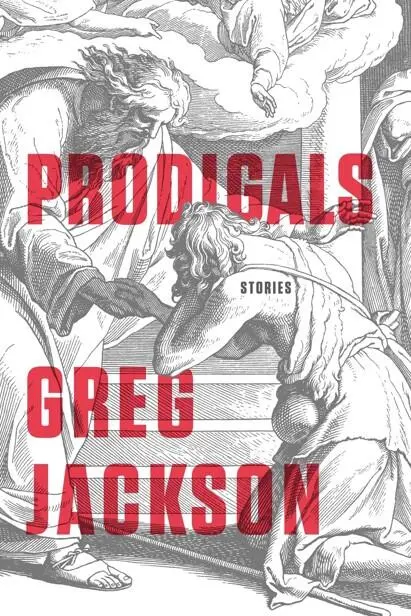
- Название:Prodigals: Stories
- Автор:
- Издательство:Farrar, Straus and Giroux
- Жанр:
- Год:2016
- ISBN:нет данных
- Рейтинг книги:4 / 5. Голосов: 1
-
Избранное:Добавить в избранное
- Отзывы:
-
Ваша оценка:
Prodigals: Stories: краткое содержание, описание и аннотация
Предлагаем к чтению аннотацию, описание, краткое содержание или предисловие (зависит от того, что написал сам автор книги «Prodigals: Stories»). Если вы не нашли необходимую информацию о книге — напишите в комментариях, мы постараемся отыскать её.
A filmmaker escapes New York, accompanied by a woman who may be his therapist, as a violent storm bears down. A lawyer in the throes of divorce seeks refuge at her seaside cottage only to find a vagrant girl living in it. A dilettantish banker sees his ambitions laid bare when he comes under the influence of two strange sisters. A group of friends gathers in the California desert for one last bacchanal, and a journalist finds his visit to the French country home of a former tennis star taking a deeply unnerving turn.
Strivers, misfits, and children of privilege, the restless, sympathetic characters in Jackson's astonishing debut hew to passion and perversity through life's tempests. Theirs is a quest for meaning and authenticity in lives spoiled by self-knowledge and haunted by spiritual longing. Lyrical and unflinching, cerebral and surreal,
maps the degradations of contemporary life with insight and grace, from the comedy of our foibles, to the granular dignity of experience, to the pathos of our yearning for home.
Prodigals: Stories — читать онлайн бесплатно полную книгу (весь текст) целиком
Ниже представлен текст книги, разбитый по страницам. Система сохранения места последней прочитанной страницы, позволяет с удобством читать онлайн бесплатно книгу «Prodigals: Stories», без необходимости каждый раз заново искать на чём Вы остановились. Поставьте закладку, и сможете в любой момент перейти на страницу, на которой закончили чтение.
Интервал:
Закладка:
This is not a decision , exactly, but perhaps the repetition of a choice. I paint. I clock in, out. Walk Peter, paint some more. Sometimes I call my mother, who tells me God is keeping her cancer-free. It’s nice he’s come around, I say. She is quiet on the other end — the beauty of inflection, or just after.
Hey, do you ever talk to him about me?
Sometimes, she says.
And what does he say?
He says you’re stubborn.
Ha. You say that too.
We both know you very well.
Okay, it’s not wrong. God is stubborn too. In our battle of wills we at least respect each other. He and I, She and I — whatever. Sometimes it’s a blessing, sometimes a curse, this ability to keep to myself, to brook unhappiness before compromise. I don’t miss Anita. I wish I missed her and I don’t. I miss missing , if anything, the belief in the nonabsurdity of your life that seems to be a precondition for valid longing. I spend hours in the studio, watching time spill through the paint-flecked windows. Peter dozes in the geometries of puddled sunlight. And although I spend morning and evening here, those hours when the day reconstitutes itself most radically, not even this secondhand sense of movement can push forward my stone-bound spirit. I drink wine from a water glass, stop leaving the bottle in the kitchen. This is my hermitage, I think, my chrysalis, my penitence.
One day I decide to take a trip. It is a day quite a while later and it happens to be spring. Rather, it is spring the way it is sometimes spring, without warning and just everywhere, mild air charged with that unmistakable damp estrus. The breeze is fragrant against my skin, the day heavy with the prurient scent of flowering trees. Chalkboards line the sidewalks in front of cafés. People shout to one another across the street, flirting. And I feel something steal over me, a happiness so tepid it might be the smell of cut grass. A spiderweb falling across your face. The sense of someone’s hand just above your spine. I will visit Berlin. I’ve always wanted to and now I will. I ask for the time off work, book a ticket, get a friend to watch Peter. And of all the people, on all the days, who do I run into at the airport, but Amy.
No fucking way.
Jesse.
She smiles, startled.
And then we hug. And then we say the things you do. How crazy is this? How are you? What are you doing here? She’s on a layover, she says, heading home. Nothing serious, I hope. No, no, just a visit, she says. I have an hour. Get a drink? She hesitates, glances at her watch. What the hell. And as we walk to the bar and sit down, it might be that we are stepping out of the river of our lives, out of time itself, to watch it flow on without us from the banks.
That’s how it feels. Amy pokes the olives in her drink with the little spear. It’s so strange going home, she says. Everything’s so different. Every one . How is her family? They’re good, she says. Her sister had a baby. Her mom started a small business arranging flowers. Her father’s teaching Greek and Hebrew at the college, if I can believe it.
Well, yes, I can, even if it is nonetheless strange to consider the accidents of history that lead to a man like Pastor Bob, in a town like ours, running his hands daily through the sands of those ancient worlds. But it is really the absence of strangeness in people’s lives that with each passing year I have come to suspect. And accident must only be the wide-angle view besides, because here is Amy, and here am I, and it is so easy to pick up after all these years that we cannot be accidents or self-creations, the people we are. For an instant I feel the plunging acceptance of having been there from the beginning, witness to the earnest stupidity of every mistake, of being able to travel back along the violent current of life to the days when as small girls our bare feet slapped the lush, moist earth, when the sound of choirs were ribbons plaiting the air, and on damp tended lawns the voices of adults carried over, the very timbre of what was knowable and known. We remember things differently according to our purposes, of course. When my mother reminded me how as a child I liked to undress and break apart my dolls, she said it like it explained something primal and forbidding in my nature.
It’s why I’m a serial killer, Ma.
I could have been more maternal, she says.
Amy wears pearl earrings, wool pants, a cream halter under a black cardigan. Her hair has lost its oxbow curls. Lord knows what she does to stay so thin. But it is less these things, I see, than that she appears to belong here now, flying off on a Tuesday with these businessmen and businesswomen. She is in business, she tells me. She works for a textbook publisher and lives in New York. With her partner of two years. She is happy. Life is quiet, manageable.
I thought you were a revolutionary, I say.
She sips her drink. Well, I still think we’re fucked if that’s what you mean.
No, it isn’t.
What then do I want her to say? What happened, I suppose. I want her to tell me what happened.
Life, she says. Exhaustion. I don’t know.
Not good enough.
Love?
Please.
I wanted to be happy, Jesse. Isn’t that awful? Isn’t that just awful? I wanted my little happiness, like everyone, and Sundays to read.
But it isn’t happiness for which she needs to apologize. It isn’t even an apology she’s on the hook for. The mood comes to me unbidden, the resurrection of old roles. I’ve had enough, it seems — two bourbons on an empty stomach — not to care much what I say. That sunburnt feeling is moving inside of me, like light breaking in double time over the crops.
So you’re happy, I say. And less tired. And in love.
Yes, she says. I am exactly those things.
And what I would ask her, if I could say it in a way that made any sense, is whether this is one more costume in the pageant or if it’s her .
In the stillness the airport noises rise up. Shoes ring against the polished floor. Outside, a plane takes off as soft and heavy as a dandelion’s seed head. Bye forever.
Amy has collected herself and changes tones. Did you tell me you were going to Germany? she’s saying. That sounds amazing . It’s going to be so fun. A lot better than going home. Ugh. I’m going for a while, actually, did I say? I got promoted and while we’re transitioning anyway I thought I’d take a little break. Three weeks. I mean, I won’t be home the whole time, but still— She pauses. Isn’t it strange how we do that? How we call it home after all these years?
But I’m only half listening. I’m thinking that were I to paint her in this moment I would have her in three-quarter view, looking down, wearing a look that shields her from me, a posture uneasy with the viewer’s gaze. That gestures at the things we can’t know from the outside, different angles on the impenetrable mapping its armor, nothing more. An écorché would be no help, of course, it is not a matter of anything material can touch. We must let the strange gods come and go. That light in Amy’s eyes. Faint doublings in lacquer and liquid. The black rimming shadows of a day that seems already the intimate of its own regrets. And it is not so simple anymore to say who is purer or more stubborn, but what I understand just then is that Amy is not happy, and has never been. She is fighting a battle. I am fighting it too.
Tanner’s Sisters
It had been two years since I’d last seen Tanner, when he called out of the blue to say he was back in town and wanted to get together. I was busy at the time. I’d just been made editor at the publishing house where I worked, and my girlfriend, Tess, and I had moved in together. It was a pleasant one-bedroom with a cutaway view of the river, and with everything going on I fancied myself in what we term, with equal parts self-satisfaction and error, a period of growth . Was it more than acquiescence, really? Gracious defeat? A sort of buying in or selling out? This line of thinking no doubt typifies someone with a child’s idea of purity, and maybe I am such a person, but at the time of Tanner’s return I was enjoying with some complacent satisfaction how my life looked to adult eyes. I did not want Tanner disrupting things, that is. We had never been such close friends, besides. But he was insistent and didn’t even sound put off when I suggested an evening two weeks later. That was when we met, in the early spring at an outdoor café, and that was when Tanner told me this remarkable story.
Читать дальшеИнтервал:
Закладка:
Похожие книги на «Prodigals: Stories»
Представляем Вашему вниманию похожие книги на «Prodigals: Stories» списком для выбора. Мы отобрали схожую по названию и смыслу литературу в надежде предоставить читателям больше вариантов отыскать новые, интересные, ещё непрочитанные произведения.









Обсуждение, отзывы о книге «Prodigals: Stories» и просто собственные мнения читателей. Оставьте ваши комментарии, напишите, что Вы думаете о произведении, его смысле или главных героях. Укажите что конкретно понравилось, а что нет, и почему Вы так считаете.