Greg Jackson - Prodigals - Stories
Здесь есть возможность читать онлайн «Greg Jackson - Prodigals - Stories» весь текст электронной книги совершенно бесплатно (целиком полную версию без сокращений). В некоторых случаях можно слушать аудио, скачать через торрент в формате fb2 и присутствует краткое содержание. Год выпуска: 2016, Издательство: Farrar, Straus and Giroux, Жанр: Современная проза, на английском языке. Описание произведения, (предисловие) а так же отзывы посетителей доступны на портале библиотеки ЛибКат.
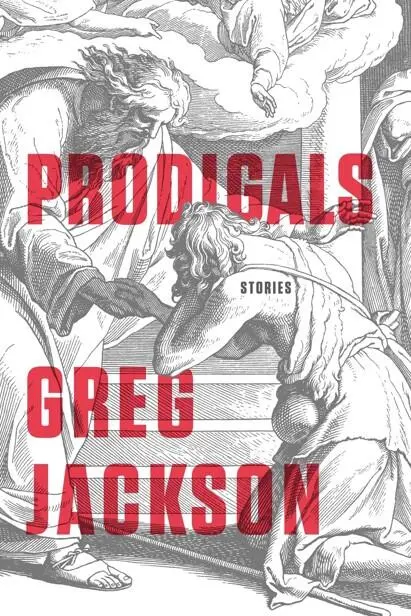
- Название:Prodigals: Stories
- Автор:
- Издательство:Farrar, Straus and Giroux
- Жанр:
- Год:2016
- ISBN:нет данных
- Рейтинг книги:4 / 5. Голосов: 1
-
Избранное:Добавить в избранное
- Отзывы:
-
Ваша оценка:
Prodigals: Stories: краткое содержание, описание и аннотация
Предлагаем к чтению аннотацию, описание, краткое содержание или предисловие (зависит от того, что написал сам автор книги «Prodigals: Stories»). Если вы не нашли необходимую информацию о книге — напишите в комментариях, мы постараемся отыскать её.
A filmmaker escapes New York, accompanied by a woman who may be his therapist, as a violent storm bears down. A lawyer in the throes of divorce seeks refuge at her seaside cottage only to find a vagrant girl living in it. A dilettantish banker sees his ambitions laid bare when he comes under the influence of two strange sisters. A group of friends gathers in the California desert for one last bacchanal, and a journalist finds his visit to the French country home of a former tennis star taking a deeply unnerving turn.
Strivers, misfits, and children of privilege, the restless, sympathetic characters in Jackson's astonishing debut hew to passion and perversity through life's tempests. Theirs is a quest for meaning and authenticity in lives spoiled by self-knowledge and haunted by spiritual longing. Lyrical and unflinching, cerebral and surreal,
maps the degradations of contemporary life with insight and grace, from the comedy of our foibles, to the granular dignity of experience, to the pathos of our yearning for home.
Prodigals: Stories — читать онлайн бесплатно полную книгу (весь текст) целиком
Ниже представлен текст книги, разбитый по страницам. Система сохранения места последней прочитанной страницы, позволяет с удобством читать онлайн бесплатно книгу «Prodigals: Stories», без необходимости каждый раз заново искать на чём Вы остановились. Поставьте закладку, и сможете в любой момент перейти на страницу, на которой закончили чтение.
Интервал:
Закладка:
“Time began passing more quickly after that. Elena stayed indoors all day, but I began to venture out through the city. I walked the same streets I had since childhood and hardly recognized them. I didn’t know what was happening to me. I’ve spent my entire life here and, as you no doubt know, this place teaches you nothing if not a profound blindness to the strangeness and horror of people’s lives. We live to validate for one another the insane pretext that this is normal and right, and what are we all searching for but some moment when the world’s gaze falls on our gross, petty lives and says, How special . How hiply thrown together. How baroquely casual . I don’t know … I felt crushed, just crushed, by the profligacy of a single block, the effort of it, the florid misfortune and exhausting Kabuki of other people’s lives. I could scarcely pass someone on the street — young, old, men, women — without falling neck-deep into the idea that at that very moment, like me, they were taking some internal stock of their frustration and misery, of where they stood next to their most extravagant and private dreams. And what were their dreams? Or the trials of their daily lives? Was it presumptuous and condescending to think myself happier than them? But I didn’t. I didn’t . I was not happy. I was just young, vital, credentialed, moneyed … I am not the first person to think these things, clearly, but if it’s patronizing to pretend to understand the trials and miseries of other people’s lives, it is no doubt worse to use this as an excuse never to try. And the greater misery seemed, suddenly, the soulless disregard of people like me — anyone really — and not for other people’s sakes, but for our own. We had reached an inflection point, I thought, the contradictions we had to live with were too great, and in the interest of obscuring them we had abused language to the point that we could no longer speak to one another. We could scarcely leave our tribes.
“What does this have to do with Rhea and Elena? I don’t know. I really don’t. Except they began to seem a refuge, a corrective of some sort. Was this crazy? I mean, you’ve been listening. What had they done but make me unfit to live? Unable to countenance the petty, impoverished, glib, bankrupt, unfeeling, and passionless world that stalked our streets and invaded our hearts? And still they felt like some faint hope amid the spires verging up into the sky, some forgotten possibility under the soles of our feet.”
I was listening, of course. I had been. I thought I knew the hope Tanner meant and the peril that lived inside it. Had I found a voice to speak just then I might have reminded him that it is the nature of a refuge to leave us less fit to live and that we do not blinker ourselves for the fun of it. It is out of necessity, rather — the necessity of living within ourselves, feeding our hungers, crediting the worthless strength of our emotions. In the days before I gave up my artistic ambitions there were moments, I thought, when I had caught a glimpse around the blinders, and what I saw was the landless gray expanse of a northern sea, that emptiness of pewter ribbed in wind and sun. There was no channel marker I could find. No shore to crawl up on. I simply could not concede my life anymore, my centrality to it, nor the privilege I gave to the insular language in which we invented ourselves, the endless stories that, if each were only a degree off true north, put end to end added up to a world turned upside down. It seemed to me my only choice was between complicity in this boundless small perjury and the sort of honesty that becomes self-negating.
“I couldn’t help thinking of Rhea’s smile in the weeks that followed,” Tanner continued. “How had she given me to Elena so peaceably? Of course maybe she cared for me little in that way or cared for Elena in a superlative sense, loving her sister’s happiness more than her own. But I thought there was something more here too, that perhaps this augured a new relationship to the world of things, a correction to the awful harm embedded in our idea of possession.
“But I didn’t have it in me to go as far as the sisters. After a month Elena said to me, ‘You miss her. Go.’
“‘I’m happy with you,’ I said, although this wasn’t exactly true.
“‘Look,’ Elena said a little sadly. ‘Rhea and I made a trade-off early on, not explicitly, but in the way siblings do, and perhaps especially sisters. I agreed to see what was in front of me, see things for what they were, so that Rhea wouldn’t have to. So that for her, meaning and motive never split, if you understand what I mean. So that language stayed intact. But it means she doesn’t keep some part of herself for her alone, do you see, the way the rest of us do. And for my part I am too disabused to believe a lie, even a small one, and I would rather you leave than start telling me falsehoods. In the end you can’t fool me anyhow.”
“So I did go. I left. I went to Copenhagen. I got a studio in Nørrebro, across the canal from the center of town. I started painting. I lived on almost nothing, coffee, bread, a little herring. I walked the city and painted. Rhea was shooting a new film, documentary, soundless. She followed foreigners through the city filming them, immigrants, men smoking in bead-curtain cafés, professors at chalkboards, cannery workers, roustabouts on the docks. I spent my nights with her, watching the footage she had shot. I found it mesmerizing, the neutrality of its attention, and although it was always silent I often thought I heard a sound running through it all the same, an expectancy at the edge of silence, the pregnancy of a fermata, a sound like wind passing through apertures in the distance.
“I was painting color fields during the day, gradients of bleeding hue tinged with washes and drizzles. Derivative, amateur AbEx, but I enjoyed it. I walked through Strøget at dusk, a ghost among the waves of purpose. I had a vague notion that I could fade slowly into the latticework of the world, like an image dissolving in the evening light. And I might have, had a disarming thing not occurred.
“I was settling down to paint one day when I realized I’d left a book of mine at Rhea’s. Blake’s engravings. I wanted to steal a color arrangement of his for the piece I was working on, so I hiked back across town and let myself into her apartment. I was wiping my feet in the foyer when it came to me that something was wrong. I don’t know whether it was more than an intuition, but I felt compelled to creep through the apartment to Rhea’s room, where I found the door ajar, a soft, plangent music issuing from inside. I peeked in. There were Rhea and a young woman, naked in bed. The woman was ugly — truly hideous, I realized later — but all that I remarked on in that moment was the look of earnest hope on her face, a look I recognized, that stopped me cold. I froze, or rather I saw the part of me supposed to feel anger freeze, like a person at the periphery of a black hole, and moving away from that person, floating away to a different vantage, I felt instead a kind of joy, a sense of possibility embodied in the act, written on her face, and ferrying them beyond the jealousies of time. Just then Rhea caught my eye. She smiled at me, and I … smiled back. It’s strange to tell you, but it’s the truth. Before that figure posed at the edge of eternity recalled me, I smiled. Before the suspension broke, before the bardo state collapsed, for a few seconds Rhea and I grinned at each other. I don’t think I’ve ever been present with another person as deeply as I was in that moment. And then, like a plunging anchor that finally consumes its rope, the childish hurt and anger I had been expecting returned to me, tugged suddenly at my stomach, and I shut the door and left quickly, feeling very stupid and weak.
Читать дальшеИнтервал:
Закладка:
Похожие книги на «Prodigals: Stories»
Представляем Вашему вниманию похожие книги на «Prodigals: Stories» списком для выбора. Мы отобрали схожую по названию и смыслу литературу в надежде предоставить читателям больше вариантов отыскать новые, интересные, ещё непрочитанные произведения.






Обсуждение, отзывы о книге «Prodigals: Stories» и просто собственные мнения читателей. Оставьте ваши комментарии, напишите, что Вы думаете о произведении, его смысле или главных героях. Укажите что конкретно понравилось, а что нет, и почему Вы так считаете.