Greg Jackson - Prodigals - Stories
Здесь есть возможность читать онлайн «Greg Jackson - Prodigals - Stories» весь текст электронной книги совершенно бесплатно (целиком полную версию без сокращений). В некоторых случаях можно слушать аудио, скачать через торрент в формате fb2 и присутствует краткое содержание. Год выпуска: 2016, Издательство: Farrar, Straus and Giroux, Жанр: Современная проза, на английском языке. Описание произведения, (предисловие) а так же отзывы посетителей доступны на портале библиотеки ЛибКат.
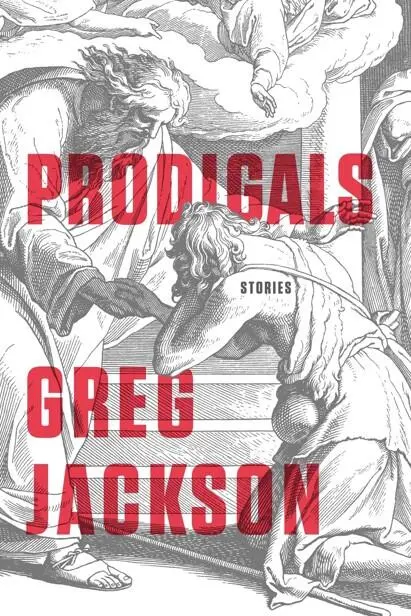
- Название:Prodigals: Stories
- Автор:
- Издательство:Farrar, Straus and Giroux
- Жанр:
- Год:2016
- ISBN:нет данных
- Рейтинг книги:4 / 5. Голосов: 1
-
Избранное:Добавить в избранное
- Отзывы:
-
Ваша оценка:
Prodigals: Stories: краткое содержание, описание и аннотация
Предлагаем к чтению аннотацию, описание, краткое содержание или предисловие (зависит от того, что написал сам автор книги «Prodigals: Stories»). Если вы не нашли необходимую информацию о книге — напишите в комментариях, мы постараемся отыскать её.
A filmmaker escapes New York, accompanied by a woman who may be his therapist, as a violent storm bears down. A lawyer in the throes of divorce seeks refuge at her seaside cottage only to find a vagrant girl living in it. A dilettantish banker sees his ambitions laid bare when he comes under the influence of two strange sisters. A group of friends gathers in the California desert for one last bacchanal, and a journalist finds his visit to the French country home of a former tennis star taking a deeply unnerving turn.
Strivers, misfits, and children of privilege, the restless, sympathetic characters in Jackson's astonishing debut hew to passion and perversity through life's tempests. Theirs is a quest for meaning and authenticity in lives spoiled by self-knowledge and haunted by spiritual longing. Lyrical and unflinching, cerebral and surreal,
maps the degradations of contemporary life with insight and grace, from the comedy of our foibles, to the granular dignity of experience, to the pathos of our yearning for home.
Prodigals: Stories — читать онлайн бесплатно полную книгу (весь текст) целиком
Ниже представлен текст книги, разбитый по страницам. Система сохранения места последней прочитанной страницы, позволяет с удобством читать онлайн бесплатно книгу «Prodigals: Stories», без необходимости каждый раз заново искать на чём Вы остановились. Поставьте закладку, и сможете в любой момент перейти на страницу, на которой закончили чтение.
Интервал:
Закладка:
“For a long time I walked. I walked to the edge of the Øresund, to the water, where I watched for hours as the day moved to completion, a coarse gray sheet shaken out in a motion so slow you didn’t notice when it settled over you, entombing the light beyond. I thought many things. I thought I had heard the Sirens’ call, driven bereft against the rocks, drunk on beauty and madness — or, fuck beauty — drunk on the kaleidoscope of involuted moods, the infinite divisions within everything, the moods within their song for which we have no name. I had been crippled in the deepest way, I felt — past the point of wanting to be healed. But then not entirely, for within me still was some corrupted anger, of righteousness or me-ness, some ridiculous self-importance. And sure enough, when I got home that night, I found I hadn’t thrown out my credit cards or passport. I still had an old phone with friends’ numbers on it, my parents’ numbers. My hair was a disaster, but none of it was hopeless. I had never committed, see, never stepped out with both feet. I had been playacting . I could get on a plane and come back. And now that I’m back, confused, adrift, in some sense unviable as a person, I have this one thing, I know this one thing about myself: I am a playactor and will never be anything more.”
Tanner fell silent. My bladder was going to burst, I feared, but I was past the point of interrupting and hadn’t signaled to our waiter in forty-five minutes. Our wine was gone, as was the water in my glass, and although the evening had grown cold I noticed that my back, pressed against the iron chair frame, was coated in sweat. It is not hard to say what I felt, although in another sense it is hard to say it in fewer words than it took Tanner to tell. I had the familiar feeling of being a cracked vessel refilled by blind servants. And although this was not a pleasant self-knowledge to possess, I reconciled myself, to carry the metaphor further still, with the notion that all this water was being gathered to drown a prisoner who was free to leave. Which is all to say better cracked than whole.
But maybe I am just more oblique than Tanner because I have more cause for self-protection. Or maybe I have lived longer in the jeopardy he describes. Or . Sometimes I think we might define ourselves by such simple words—“and,” “or”—and that I merely side with paralysis over fabrication.
“So you’re back,” I said.
Tanner looked at me sadly, seeing, I guess, that I did not understand or couldn’t say aloud how much I did, that this is what it meant to playact, to have bought in or sold out — never acknowledging how much you understood.
“I’m not back,” he said.
He got up, laid some amount of money on the table. I didn’t count. I didn’t offer to chip in.
“What, is that it?” I said.
“I’m tired.” He looked away. “Another time.”
“Soon though,” I said.
“Sure,” he said. “Soon.”
When I returned from the bathroom Tanner was gone. I wouldn’t see him again for many months.
When I did see Tanner next he had begun to fill back in. His hair was clean, his scruff shorn to a handsome stubble. The clothes he wore looked expensive and fit. He joked about our previous meeting, saying how he’d been in a state. “Overwrought” was the word he used, I think, and he described the intervening months as a rappel à l’ordre . We were at some insignificant party, on the roof, drinking cocktails out of Mexican glasses and gazing across the river at the city that loomed above. I watched Tanner as he laughed and made his way through the crowd, watched as he leaned in to make a joke or bent to catch a private word whispered in his ear. He seemed his old self and so I was surprised, later, when I saw him gazing at a print— Ruggiero Freeing Angelica , I believe — to catch a far-off look in his eye, a look he didn’t mask right away on registering my glance but shared with me, letting it settle briefly in the wry despair of officers who, without a word, tell each other they know their city will fall. It was too much for me, this brief window on the shoreless sea we carry around inside us. I said my goodbyes hurriedly and went home, settling in the living room as voices in the dark around me wove a thin fabric from the tatters of what we have been taught to call our lives.
Perhaps you will not be surprised to learn — perhaps it is already clear — that Tanner and I had ceased to be different people. We are different in the sense that we look different, have different Social Security numbers and addresses, and that I never met the Magnusson sisters. But in another, and the more important, sense, of course I did, I have met them, and it has been the great joy and misfortune of my life.
My memory is not perfect, nor would I hope it to be, for if my perception isn’t either this would simply be the faithful transcription of a mistake. But I can still hear the voices that spoke to me in the dark living room that night saying, “Once, when you thought she was caring for you, your mother was walking the fault lines of a perilous terrain. When you see the spires fall, you will know we are singing to you. It is a melody constructed from the martyrdom of a swimming pool filled with drowned cowards. The earth was ripped open so that you could fall in. It is we, the sisters, come. Come join us at the bottom, and sing!”
Summer 1984
There is a gun in Act I. I have put it there. I am one and a half when this happens, when Michaela’s story takes place, an age when the literature tells me the child’s personality has begun to emerge, a sense of independence, and the imagination too. When children first pretend to be people they are not, characters from books and movies, and when they may begin to mimic their caretaking on dolls. Because I am a boy-child I have no dolls. Many years later I am fascinated by the claim that “violence is essentially the form of the quest for identity.” I leave the conclusions to you. At one and a half, my parents tell me, I was curious, baffled, intent. I liked car rides, the quiet displacements beyond the glass. The simple magic of vision, the reality of space. I liked going home.
MICHAELA’S STORY (AS TOLD BY HER)
I signed on with D.H. for a second summer because it was a sure thing and I needed the money if I was going to Nicaragua. All summer my dreams would be dark coiled things sprung from a wilderness I didn’t, or hadn’t yet taken the time to, understand. I was back from college, living at my mom’s, trying to get through Paulo Freire. I was reading too much news. Central America had become an obsession with me, I couldn’t get enough. I read articles on breaks at work, bought magazines and dailies on my nightly walks. There wasn’t much else to do. My sister Tatiana — the youngest after me — had finally done what Kiki, Viola, and Erin had all done, which was to leave. She wanted to go to the far side of the continent and ride motorcycles through redwood forests with guys named Bruce, it turned out. So that left me. I was glad D.H. took me on. Tatiana and I had set a record the summer before, painting four dorm rooms in a day, and I guess that was résumé and interview.
I worked with Mellie wallpapering the first week. Mellie was twenty-three. She put me in mind of a tomboy who had grown up prettier than anyone expected and I’m not sure she understood her effect on people. A lot of what she told me had to do with her boyfriend Judson and their sex life, a semipublic affair inflected by some exhibitionist hankering. Mellie could be racist too, but these failings aside, and I certainly counted Judson a failing, she was my favorite on the crew. I granted her a good soul that had come under a bad influence, which was probably granting her too much, but I liked her so that’s what happened.
Читать дальшеИнтервал:
Закладка:
Похожие книги на «Prodigals: Stories»
Представляем Вашему вниманию похожие книги на «Prodigals: Stories» списком для выбора. Мы отобрали схожую по названию и смыслу литературу в надежде предоставить читателям больше вариантов отыскать новые, интересные, ещё непрочитанные произведения.








Обсуждение, отзывы о книге «Prodigals: Stories» и просто собственные мнения читателей. Оставьте ваши комментарии, напишите, что Вы думаете о произведении, его смысле или главных героях. Укажите что конкретно понравилось, а что нет, и почему Вы так считаете.