Greg Jackson - Prodigals - Stories
Здесь есть возможность читать онлайн «Greg Jackson - Prodigals - Stories» весь текст электронной книги совершенно бесплатно (целиком полную версию без сокращений). В некоторых случаях можно слушать аудио, скачать через торрент в формате fb2 и присутствует краткое содержание. Год выпуска: 2016, Издательство: Farrar, Straus and Giroux, Жанр: Современная проза, на английском языке. Описание произведения, (предисловие) а так же отзывы посетителей доступны на портале библиотеки ЛибКат.
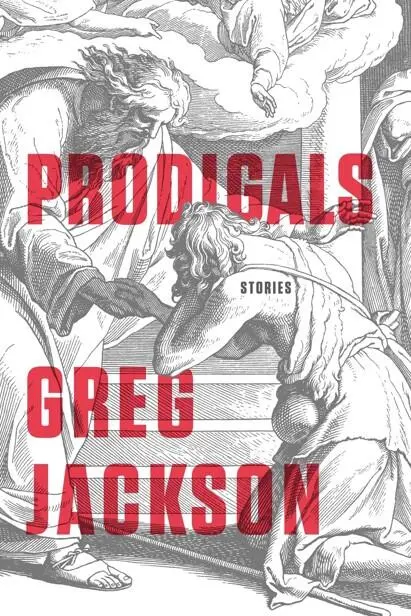
- Название:Prodigals: Stories
- Автор:
- Издательство:Farrar, Straus and Giroux
- Жанр:
- Год:2016
- ISBN:нет данных
- Рейтинг книги:4 / 5. Голосов: 1
-
Избранное:Добавить в избранное
- Отзывы:
-
Ваша оценка:
Prodigals: Stories: краткое содержание, описание и аннотация
Предлагаем к чтению аннотацию, описание, краткое содержание или предисловие (зависит от того, что написал сам автор книги «Prodigals: Stories»). Если вы не нашли необходимую информацию о книге — напишите в комментариях, мы постараемся отыскать её.
A filmmaker escapes New York, accompanied by a woman who may be his therapist, as a violent storm bears down. A lawyer in the throes of divorce seeks refuge at her seaside cottage only to find a vagrant girl living in it. A dilettantish banker sees his ambitions laid bare when he comes under the influence of two strange sisters. A group of friends gathers in the California desert for one last bacchanal, and a journalist finds his visit to the French country home of a former tennis star taking a deeply unnerving turn.
Strivers, misfits, and children of privilege, the restless, sympathetic characters in Jackson's astonishing debut hew to passion and perversity through life's tempests. Theirs is a quest for meaning and authenticity in lives spoiled by self-knowledge and haunted by spiritual longing. Lyrical and unflinching, cerebral and surreal,
maps the degradations of contemporary life with insight and grace, from the comedy of our foibles, to the granular dignity of experience, to the pathos of our yearning for home.
Prodigals: Stories — читать онлайн бесплатно полную книгу (весь текст) целиком
Ниже представлен текст книги, разбитый по страницам. Система сохранения места последней прочитанной страницы, позволяет с удобством читать онлайн бесплатно книгу «Prodigals: Stories», без необходимости каждый раз заново искать на чём Вы остановились. Поставьте закладку, и сможете в любой момент перейти на страницу, на которой закончили чтение.
Интервал:
Закладка:
A Mellie vignette: Sometimes we’ll be out, and Judson’ll tell me to go wait for him in the stall. Just get ready and wait. A few minutes later he’ll come in. I’ll be turned away, but I’ll know it’s him by how he’s breathing. I’ll feel his eyes on me. It’s the most exciting thing, Michaela, that moment, right before anything happens. She’ll have stopped working, the seam roller in her hand hovering at her shoulder. Her gaze will drift to the window, like out there somewhere is her real life … I’ll feel him looking, and sometimes my heart just catches it’s beating so hard. Do you know what that’s like, just surrendering like that?
Show me again how to get the bubbles out without it creasing, I might say, just to say something. And Mellie would give me a look like my big sisters used to and say, Ah, you’re too young to understand.
But that didn’t seem to me to be the problem. I kept imagining the poor person trapped in the stall next to theirs, listening to the bullish exhaust of Judson’s appetite. Clearly that was part of what thrilled them, though, the possibility of being discovered, overheard, seen . I was back to painting the next week, anyway, and that was the end of Mellie’s stories. I had to work with Bobby, but otherwise I preferred painting, which was mindless and voiding. We’d been contracted to do the sports facilities that summer, the basketball complex, the doorframes, chairs, the mascot logo at center court. Don’t let that idiot near it, D.H. told me, meaning Bobby, meaning the logo. So for a few days it was just me and that mischievous grinning face, eye to eye.
The coach stopped by one day to see how we were making out. It was pretty decent of him, I thought, given his status in our town, which compared favorably to the Messiah. He had a growth on his head. It caught me off guard and for a second I thought it was a trick of the light, but then I looked again, without really meaning to but also shamelessly, and there it was, wan and hideous like a tree fungus. He flinched. His hand leapt to his head and he brushed his hair back.
Let’s hope this heat breaks, he said.
Oh! I said, which wasn’t what I meant to say.
Our work began early and ended in the late afternoon. Every day at four we trickled into the basement room by the lockers: me, Mellie, Bobby, Carl, Radar, Stan, Ellen S., and Ellen V. Because we couldn’t leave until everyone was there, we sat around chitchatting, changing our shoes, and watching Bobby pick the calluses on his feet. Most days I rode home with Carl, but when luck turned against me I was stuck with Radar and Stan.
They were cousins of some sort, that’s what they said anyway, but if they shared anything it was an omission, I thought, the absence of a trait necessary to the composition of a full human. They are missing the chromosome on which God placed love, Carl once said, seeming to pluck the idiotic phrase from the ticker tape homily of his mind. Radar was short and round, Stan tall and gaunt. Together they made a backcountry Laurel and Hardy. When I rode with them, always in the back, they seemed to forget I was there and told stories that might’ve even made Mellie blush.
So down to the motel, Radar said on the Tuesday after a long weekend, me and Derek are out drinking beers by the pool. And there’s this girl, she wants to go swimming. She’s maybe eleven or twelve, I don’t know, and the thing is, and you can see where this is going, she doesn’t have a suit. Well so the mother says, Ah, you don’t need none, just go in. And Derek and me’s looking at each other like, did we just hear right? We’ve maybe had a few at this point. The girl’s stripping, Derek’s cracking. And thing is, she like … likes it, you can tell. She’s, like, showing off . Stan hit a fist against the doorframe. What’s the mother thinking? Fuck, said Radar, for all I know they’re nudists. His voice took on a sudden sober conviction. I’ll tell you this though, boy — she gave us a show . Bet you saw a little pink button, Stan said. Shit, said Radar. Size of my pinkie.
It amazed me in those days how quickly my presence, my very existence, seemed to disappear from people’s minds. I got to the point of daydreaming so deeply, dreams empty of any content, that I began to think myself some astral walker, present but on a different plane, and when people spoke to me it often took me long seconds before I could remember how to speak. And yet even as I entered states of attention so total and immediate as to purge my mind of thought, I found I could later recall what had taken place around me, indexed with emotions like the colors on file tabs. And what I felt recalling Radar and Stan, with the benefit of some distance, was not disgust, though they were gross, but the tragic smallness of what they needed and still could not get, the smallness of their need next to the need that drove others not so very far away, the people whose stories I read daily in the news, to martyrdom and murder in conflicts that stretched into other lifetimes. I don’t mean Radar and Stan were pathetic. I mean I couldn’t reconcile the scales. And I knew nothing of sex then. I’m still mystified by its true nature, whether it is an itch to scratch, an exercise in power, in pleasure, a form of togetherness, of renewal, an act of reckless hope, slavery, or freedom. All I feel confident saying, I suppose, is that you act differently when there are eyes on you. You undress differently observed.
My mother worked odd hours at the furniture factory. She was never around when I got home, so after checking on Mad Max, the screech owl that flew freely in our house that summer, and sometimes picking a cicada for him from the pear tree out front, I set out into the endless summer evening, cutting through the developments next door, that creeping mold of selfsame houses and curving roads, crossed guardrails and culverts, dirt lots and light-industrial blight, past baseball fields where kids called to one another in the hot, low sun and the dust rising from the infield was gold powder, all the way to the rutted path that traced our little river, a river of rocks that summer, which I would follow until it turned off into the nicer part of town.
It was there, in one of the cafés, among the antique shops and sycamores that I first saw her. She was a woman of some dignified middle age, in an elegant sleeveless dress the color of the sky before, or maybe after, a storm. She had short hair, silver earrings, a cup of tea before her, and a piece of white cake she was eating slowly. Looking back I don’t know whether it was her appearance that made me glance at what she was reading or what she was reading that sensitized me to the air of loneliness, or incongruity, that had settled around her. It was a magazine article I’d read a few days before on El Mozote, about which great controversy then raged. It was enough, anyway, for me to take note and then recognize her a week later in front of a house, trimming sundrops and coral bells in gray gloves. That was early evening. The sun coursed down like a river, washing over her and the house’s weathered brick all the way to the rhododendrons in the back, which stood guard at the border where her yard abutted a small park with a pond.
I had no history of spying on people, no buried desire in this direction, I think, and I did not, even much later, consider my curiosity a violation, although it was in its way. I did not — here was the thing — I never associated what I was doing with the sort of furtive spying you saw in movies and on TV, which grew out of some disorder or perversion and went by the name of peeping . I simply fell into the habit of passing through the small park on my nightly walk and, when it was dark and I could do so unobserved, slipping through the bushes into her backyard.
Читать дальшеИнтервал:
Закладка:
Похожие книги на «Prodigals: Stories»
Представляем Вашему вниманию похожие книги на «Prodigals: Stories» списком для выбора. Мы отобрали схожую по названию и смыслу литературу в надежде предоставить читателям больше вариантов отыскать новые, интересные, ещё непрочитанные произведения.









Обсуждение, отзывы о книге «Prodigals: Stories» и просто собственные мнения читателей. Оставьте ваши комментарии, напишите, что Вы думаете о произведении, его смысле или главных героях. Укажите что конкретно понравилось, а что нет, и почему Вы так считаете.