Greg Jackson - Prodigals - Stories
Здесь есть возможность читать онлайн «Greg Jackson - Prodigals - Stories» весь текст электронной книги совершенно бесплатно (целиком полную версию без сокращений). В некоторых случаях можно слушать аудио, скачать через торрент в формате fb2 и присутствует краткое содержание. Год выпуска: 2016, Издательство: Farrar, Straus and Giroux, Жанр: Современная проза, на английском языке. Описание произведения, (предисловие) а так же отзывы посетителей доступны на портале библиотеки ЛибКат.
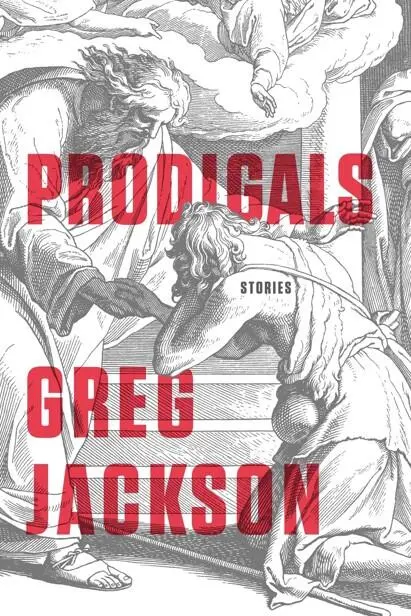
- Название:Prodigals: Stories
- Автор:
- Издательство:Farrar, Straus and Giroux
- Жанр:
- Год:2016
- ISBN:нет данных
- Рейтинг книги:4 / 5. Голосов: 1
-
Избранное:Добавить в избранное
- Отзывы:
-
Ваша оценка:
Prodigals: Stories: краткое содержание, описание и аннотация
Предлагаем к чтению аннотацию, описание, краткое содержание или предисловие (зависит от того, что написал сам автор книги «Prodigals: Stories»). Если вы не нашли необходимую информацию о книге — напишите в комментариях, мы постараемся отыскать её.
A filmmaker escapes New York, accompanied by a woman who may be his therapist, as a violent storm bears down. A lawyer in the throes of divorce seeks refuge at her seaside cottage only to find a vagrant girl living in it. A dilettantish banker sees his ambitions laid bare when he comes under the influence of two strange sisters. A group of friends gathers in the California desert for one last bacchanal, and a journalist finds his visit to the French country home of a former tennis star taking a deeply unnerving turn.
Strivers, misfits, and children of privilege, the restless, sympathetic characters in Jackson's astonishing debut hew to passion and perversity through life's tempests. Theirs is a quest for meaning and authenticity in lives spoiled by self-knowledge and haunted by spiritual longing. Lyrical and unflinching, cerebral and surreal,
maps the degradations of contemporary life with insight and grace, from the comedy of our foibles, to the granular dignity of experience, to the pathos of our yearning for home.
Prodigals: Stories — читать онлайн бесплатно полную книгу (весь текст) целиком
Ниже представлен текст книги, разбитый по страницам. Система сохранения места последней прочитанной страницы, позволяет с удобством читать онлайн бесплатно книгу «Prodigals: Stories», без необходимости каждый раз заново искать на чём Вы остановились. Поставьте закладку, и сможете в любой момент перейти на страницу, на которой закончили чтение.
Интервал:
Закладка:
By the time I have every last one of these thoughts Bobby has moved on, to Radar and Mellie and Ellen S. and Ellen V. I don’t feel sick anymore. Something else has risen up in me, and I think Bobby’s right, it is going to be a wonderful day, what’s left of it.
When he’s done he opens the chamber and dumps out the bullets in his hand. We sit there, slow to move as he wipes the gun with a chamois cloth. He looks at the bullets in his hand, then at us, then back at the bullets, counting.
One of you would have lived, he says.
That August I flew south.
* * *
The gun does not go off. Michaela and I meet thirty years later. I am grown by then, having passed through the appropriate stages of development, or so I hope, having grown more fixed in myself, set in my ways, and more open to inhabiting another’s life, I think — an irony which, like all ironies, must resolve somewhere in a deeper truth. Michaela tells me her story, gives me permission to use it, and I do, I write what you have read, something quite different from what Michaela told me, her name, of course, not being Michaela at all, which means “who is like God.”
A meaningful detail? I don’t know. Don’t ask me to go on the record. I named her that; my attention went to other things. I liked the name, I kept it. What is my responsibility to any of this, a face pressed to the glass, peering in? A ghost, a spy. Let me be the trellis of vantage points, I might say, the lattice hidden everywhere in the leaves of another’s story. Probably not the way it works, but what do I know.
Well, this.
In the summer of 1984 there are consolations ahead that Michaela can’t know about. Five years after Bobby points a gun in her face and says it is always and only today that a thing begins or ends, the movement that began as Diretas Já succeeds in bringing democratic elections to Brazil; Joe Moakley, U.S. representative from Massachusetts, the state to which I have just moved at the time, travels to El Salvador to investigate the killing of six Jesuit priests, their housekeeper, and her daughter; the history of evil is being disinterred, recorded, and the creeping vines of complicity will stretch from the fine verandas of San Salvador to the banks of the Potomac. There are setbacks too, of course. What comes to light, like everything so terrible and pointless, is destined for a living burial in summaries, figures, and paragraphs. In the way our attention drifts. The acid bath of bald numbers is always the second death in which people, as individuals, melt away. But first the stories will be heard, the people will seen, and that much alone will cost lives.
The harbor town where Michaela and I walk is protected from the sea. Still, it gets quite a lot of wind, waves too. It is winter, so — cold. Wind turbines turn across the bay. Lighthouses mark the points where land juts out. Some sweep through the night and some are just relics now. We pass the breakwater. Michaela is telling me a story, a funny story with bits in it that aren’t so funny. We are passing friends in a moment, the sort that lasts a few months. It is odd, I think, how these intimacies happen, how we grow close in circumstances that promise only to abandon us, at first chance, to the estrangement where we began. Meanwhile Michaela might have been my big sister, and why not? I would have liked that, walking together like this, the wind off the ocean meeting us with its parcels of sea spray. And were I a child she might have told me, Once upon a time a ship full of people landed here. They were far from home and they were full of hope. This is how you tell stories to children, of course. Once upon a time. Full of hope. And the eyes blinking in the forest? they ask. The thick woods chime with green light.
What about them? you say.
Metanarrative Breakdown
As he lay dying, Icarius remembered something that had happened not long before. Dionysus had taught him how to plant the vines and look after them. Icarius watched over their growth with the same love he had for his trees, waiting for the moment when he would be able to squeeze the grapes with his own hands. One day he caught a goat eating some vine leaves. He was overcome by anger and killed the animal on the spot. Now he realized the goat had been himself.
But something else had happened that had to do with that goat. Icarius had skinned it, put on its pelt, and, with some other peasants, improvised a dance around the beast’s mangled corpse. Icarius didn’t appreciate, as he lay dying, that the gesture had been the origin of tragedy, but he did sense that the death of the goat was connected with what was happening to him, the shepherds circling him, each one hitting him with a different weapon, until he saw the spit that would pierce his heart.
— Robert Calasso, The Marriage of Cadmus and Harmony
To begin with, the house. A large house. Shingle style, on an island bluff in a northern American state. A handsome house, my grandparents’ house — or so it had been, and that was how I first knew it. Once upon a time they had sailed up the coast. Once upon a time they had packed a summer’s worth of books and clothes on their sailboat and set off with no more than a direction in mind. A sense of adventure. A muted good-burgher quixotism. After a month of following the bights and inlets of the shore, tacking upwind to round headlands and capes, from the calm waters of the bay they saw it glinting in the sun: their house. This is the story I was told. I don’t question it because I like it. I forgive it dubiety and simplicity because this was a time when stories were easier to tell. When the arcs were cleaner and optimism cast like daylight into the corners of a June afternoon redolent of flowers slaked with rain. Was it on such an afternoon that my grandparents first arrived?
In later years, when they were feeling whimsical, or perhaps extravagant, they would fly a flag bearing our family’s coat of arms from a mounting bracket between the second and third stories of the house. It was either a charming or an affected display because we had not the slightest trace of heraldic legacy. Our ancestors had been émigré Jews who arrived in this country penniless and built what they had out of daydreams and hewn wood: furniture makers, shopkeepers, gold rush prospectors, salesmen. They told a better story every year. The house was no different. It was a fantasy, a shoreside idyll. Before a legacy — always — a property, and the dull present.
My grandfather was still alive, but the house now belonged to my aunts. They were his daughters, my mother’s sisters, Cynthia and Ruth, and although they all lived together in the summer, they lived apart. My aunts had remodeled the house to accommodate the sense of grievance that lingered between them and their father, a change undetectable from the outside but which divided a building constructed in a style preoccupied with unity into two distinct living spaces, two houses , so aesthetically incoherent on the inside that moving between them felt like passing between eras, temporalities, consciousnesses — a seamless entanglement of discontinuity that called to mind nothing so much as exotic species grafted onto each other, a vaguely ouroboric and labyrinthine autophagy, like knotted cities in a China Miéville novel.
It is not for me to say what wounds of childhood, parenthood, or time had scarred over in this prickly intimacy. I don’t know. If this were a different story, my mother would be the youngest daughter and the only one to love her father with his due, my aunts would be wicked and conniving, my grandfather gripped by a vital senility, raging against the cruel terms life and love have to offer at their best. Things aren’t like that, of course. People aren’t often good or evil, and it’s no different here. There are no Kents disguised as Caius attending one’s madness on the heath. No good father, no bad daughter. There are paid nurses, caretakers from the West Indies. Pricey doctors titrating statins from cities down the coast. There are housekeepers, maids, gardeners, cooks. Because there is money, there are these things.
Читать дальшеИнтервал:
Закладка:
Похожие книги на «Prodigals: Stories»
Представляем Вашему вниманию похожие книги на «Prodigals: Stories» списком для выбора. Мы отобрали схожую по названию и смыслу литературу в надежде предоставить читателям больше вариантов отыскать новые, интересные, ещё непрочитанные произведения.










Обсуждение, отзывы о книге «Prodigals: Stories» и просто собственные мнения читателей. Оставьте ваши комментарии, напишите, что Вы думаете о произведении, его смысле или главных героях. Укажите что конкретно понравилось, а что нет, и почему Вы так считаете.