Greg Jackson - Prodigals - Stories
Здесь есть возможность читать онлайн «Greg Jackson - Prodigals - Stories» весь текст электронной книги совершенно бесплатно (целиком полную версию без сокращений). В некоторых случаях можно слушать аудио, скачать через торрент в формате fb2 и присутствует краткое содержание. Год выпуска: 2016, Издательство: Farrar, Straus and Giroux, Жанр: Современная проза, на английском языке. Описание произведения, (предисловие) а так же отзывы посетителей доступны на портале библиотеки ЛибКат.
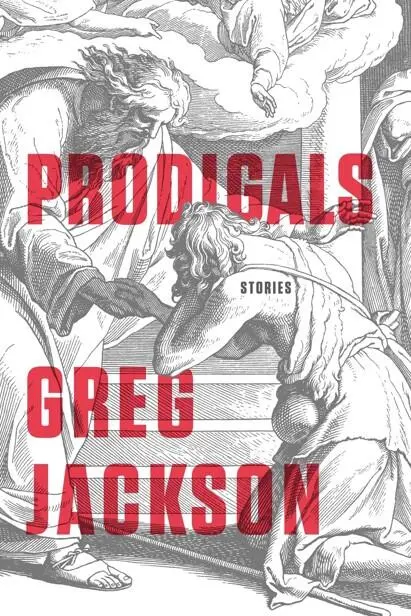
- Название:Prodigals: Stories
- Автор:
- Издательство:Farrar, Straus and Giroux
- Жанр:
- Год:2016
- ISBN:нет данных
- Рейтинг книги:4 / 5. Голосов: 1
-
Избранное:Добавить в избранное
- Отзывы:
-
Ваша оценка:
Prodigals: Stories: краткое содержание, описание и аннотация
Предлагаем к чтению аннотацию, описание, краткое содержание или предисловие (зависит от того, что написал сам автор книги «Prodigals: Stories»). Если вы не нашли необходимую информацию о книге — напишите в комментариях, мы постараемся отыскать её.
A filmmaker escapes New York, accompanied by a woman who may be his therapist, as a violent storm bears down. A lawyer in the throes of divorce seeks refuge at her seaside cottage only to find a vagrant girl living in it. A dilettantish banker sees his ambitions laid bare when he comes under the influence of two strange sisters. A group of friends gathers in the California desert for one last bacchanal, and a journalist finds his visit to the French country home of a former tennis star taking a deeply unnerving turn.
Strivers, misfits, and children of privilege, the restless, sympathetic characters in Jackson's astonishing debut hew to passion and perversity through life's tempests. Theirs is a quest for meaning and authenticity in lives spoiled by self-knowledge and haunted by spiritual longing. Lyrical and unflinching, cerebral and surreal,
maps the degradations of contemporary life with insight and grace, from the comedy of our foibles, to the granular dignity of experience, to the pathos of our yearning for home.
Prodigals: Stories — читать онлайн бесплатно полную книгу (весь текст) целиком
Ниже представлен текст книги, разбитый по страницам. Система сохранения места последней прочитанной страницы, позволяет с удобством читать онлайн бесплатно книгу «Prodigals: Stories», без необходимости каждый раз заново искать на чём Вы остановились. Поставьте закладку, и сможете в любой момент перейти на страницу, на которой закончили чтение.
Интервал:
Закладка:
When the lights were on I could see into the house. Sometimes I saw her in an armchair, reading, music playing at low volume, or else in the kitchen preparing a meal, an apron strung around her waist, steam rising from steel pots. The house looked like she might be expecting a dignitary at any minute. There was a mantel clock above the fireplace, long pretty curtains gathered neatly at the windows. I don’t know what I hoped to discover. Possibly I was just bored and this opportunity had fallen into my lap. Someone seemingly as alone as me, and yet completely different. Or maybe I convinced myself that the secret of the massacre lived in this house, whatever that might have meant.
I didn’t drink then, I already found the world confusing enough, but Bobby drank, and as June wound into July he began showing up to work drunk and then drinking on the job. It meant I had to work harder to keep us on pace, and laboring amid oil and epoxy fumes I got terrible headaches. Head rushes swept over me, leaving my vision abuzz and scattered in blocks of color. At times I had to lie down to let the nausea pass.
D.H. found me like this one day, on my back in the bleachers. Michaela, he said, you’re a good painter: you’re fast and you’re precise. But if I catch you lying down on the job again, I’ll fire you without a second thought. I couldn’t respond; the moment had come and gone too fast. Woo- ee , Bobby said when D.H. had left. Look who ain’t long for the world!
I tried to talk about it with Carl on the ride home that afternoon. In a fair world, Carl philosophized, I’d say rat out the drunk. But we don’t live in a fair world, and it’s probably worse to be thought a snitch. I just don’t see why I care , I said. Carl smiled. It’s all for naught, he said. You know what that means? I blinked at him so that I didn’t hurt him. Who didn’t know what all for naught meant? He said it all the time, anyway, like a ludicrous mantra. In his thick accent it sounded like he was saying it’s often hot —which was true, it was.
But it wasn’t all for naught, not for me anyway. I needed the money so I could leave, like my sisters had, so I could fly to Nicaragua, or El Salvador, and begin what I imagined to be my life. I had already told college I wouldn’t be back in the fall and part of me doubted I ever would. College was fine. It was just fine.
When I got home from my walks, I often found my mother on the sofa, watching reruns and drinking Stroh’s. Sometimes Max would be perched on her head and turn his eyes on me, fixed in their dead-ahead regard. Something was wrong with him, I’d say a broken wing if that didn’t sound so stupidly symbolic, but his summer in our house anyway was a convalescence.
One night my mother asked me to come over and sit down, and before I knew it she’d cut a lock of my hair with a pair of scissors. For Max, she said, who needed the roughage for his digestion. You could have asked, I said. And what’s wrong with your hair? You don’t want Max eating dye , she said aghast. She cut a raw steak into small pieces and wrapped them in my hair. See how much he likes it, she said. He seemed to like it the exact amount he liked everything.
In those moments when our eyes met, I thought I saw my mother’s wobble, unable to fixate or lock, as though steady gaze and the picture of the world it offered were a thing she’d given up, a thing taken from her or traded away, and in those moments I had the urge to flee and never come back. I sometimes thought I heard goats bleating out back, before I remembered that we no longer kept goats, that it had been my father’s idea to keep goats, before he left us and left us the goats, the asshole. I didn’t intend to forgive him, even as I forgave my sisters, wordlessly, without a second thought, knowing that in their shoes I would have done the same. You save yourself first.
My only companionship that summer was my college friend, Linda. She was a camp counselor in New Hampshire, a thousand miles away, and for the first half of the summer we wrote each other diligently. Having nothing to report myself, I told stories from work. The Dynamic Duo , I wrote, which was the name I’d given Radar and Stan, recently hatched a plan to knock over a convenience store called Binny’s. Now Binny’s is possibly the saddest convenience store on earth. I don’t know whether they accept or have ever seen paper currency, but well, the boys, they’re like Sonny Wortzik and Sal when they get plotting (remember when we saw that at the Nugget?). They think it’s a cinch because it’s all stoned teenagers working there over the summer, but what about me? What do they think I’m going to say to the cops? If I die under mysterious circumstances please show them this letter.
Linda began most of her notes by telling me how crazy and hilarious my life at home was; then she’d tell me about sailboats capsizing on the lake, taking ticks off campers with blown-out matches, girls getting their periods for the first time, convinced they were diseased or dying, campers who got so homesick their parents had to come get them. Homesick? I thought like love this referred to an emotion I lacked the sensitivity to pick up. Late at night, Linda said, she and the other counselors snuck out to meet up with their counterparts from the boys’ camp nearby. I may have done a certain something with Hot Josh, she wrote. Aaaah! I feel crazy! I skimmed for a couple of pages until Josh’s name stopped appearing. I didn’t know this Linda. Foucault had died and she hadn’t even mentioned it.
As much as Linda described it I failed to understand what camp really was. I kept thinking, You do what all day? sure I’d missed something. It wasn’t envy I felt. I felt the way I did when I read about Buddhist monks walking barefoot on hot coals. I felt: Why?
On breaks at work, while the others smoked, I skimmed the papers looking for news from the south. People were killing one another here in the U.S. too — at McDonald’s, in San Diego, in Alaska. That was different, I thought. That was despair. They wanted to kill . To kill intransitively . That was how the AIDS virus killed, science had just told us, so long as you agreed it wasn’t punishment from God, believed it followed the thoughtless compulsion of its biology or chemistry or whatever clockwork urged it on, like the freak tornado swarm that had swept through just east of here while I was at school, killing dozens and wreaking its fantastic havoc. People still spoke of the tornadoes in low tones like fate were listening. Violence of this sort unnerved me. It didn’t believe in the world.
At work Bobby sometimes asked me to tell him again what it was I was studying in college.
History, I said. Latin American history.
You, he’d say, shaking his head. You I do not understand.
But the truth was, if there was a truth, that thin strip of umbilical land between Mexico and Colombia turned out to be the only thing that could hold my attention: Nicaraguan land reform, Panzós and the Spanish embassy fire, Rigoberta Menchú’s memoir, the assassination of Archbishop Romero. I read article after article on the unfolding revolutionary chaos, the power seizures and coups, the juntas, the leftist turns against the juntas, the brave stands taken by peasants and clergy. That spring in São Paulo, a million and a half had gathered in the Anhangabaú Valley demanding democratic elections. And though the vote had failed, things seemed to be changing, the impulse spreading — the impulse to change everything, to take every mistake and inevitability that went by the name of life — as in, that’s life —and erase it, like footprints in the sand, or to cut it off like chains binding us to the past. I had no real clue what I would do if I made it to Nicaragua or El Salvador, but I knew that I would never forgive myself if I failed to see what was happening firsthand. If I failed in whatever small way to participate. History still existed there and it had dried up here at home. I don’t think I put things to myself in those terms then, but I sensed a fissure in me that would otherwise never heal.
Читать дальшеИнтервал:
Закладка:
Похожие книги на «Prodigals: Stories»
Представляем Вашему вниманию похожие книги на «Prodigals: Stories» списком для выбора. Мы отобрали схожую по названию и смыслу литературу в надежде предоставить читателям больше вариантов отыскать новые, интересные, ещё непрочитанные произведения.






Обсуждение, отзывы о книге «Prodigals: Stories» и просто собственные мнения читателей. Оставьте ваши комментарии, напишите, что Вы думаете о произведении, его смысле или главных героях. Укажите что конкретно понравилось, а что нет, и почему Вы так считаете.