Herman Koch - Dear Mr. M
Здесь есть возможность читать онлайн «Herman Koch - Dear Mr. M» весь текст электронной книги совершенно бесплатно (целиком полную версию без сокращений). В некоторых случаях можно слушать аудио, скачать через торрент в формате fb2 и присутствует краткое содержание. Год выпуска: 2016, Издательство: Hogarth, Жанр: Современная проза, на английском языке. Описание произведения, (предисловие) а так же отзывы посетителей доступны на портале библиотеки ЛибКат.
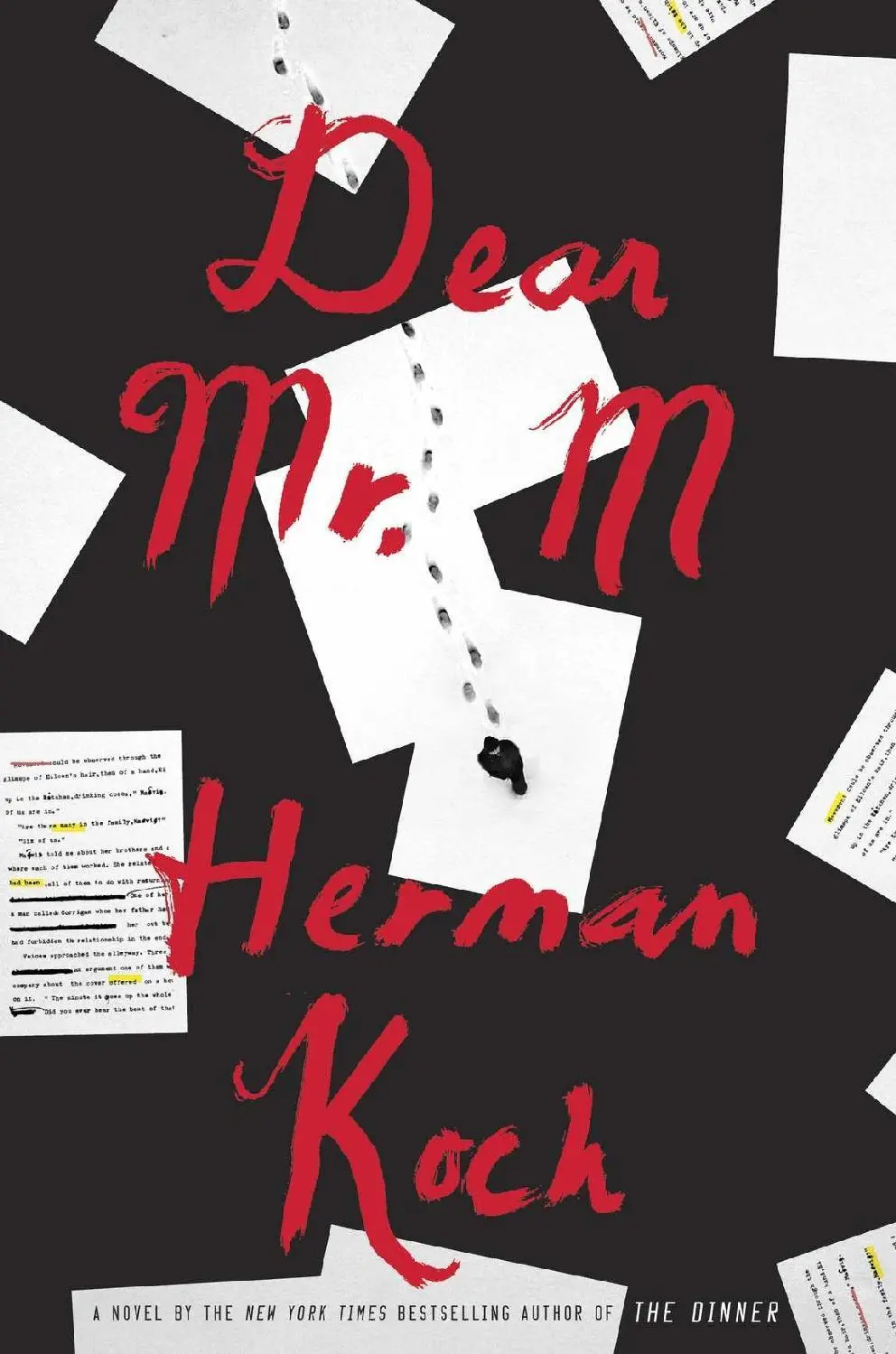
- Название:Dear Mr. M
- Автор:
- Издательство:Hogarth
- Жанр:
- Год:2016
- ISBN:нет данных
- Рейтинг книги:5 / 5. Голосов: 1
-
Избранное:Добавить в избранное
- Отзывы:
-
Ваша оценка:
Dear Mr. M: краткое содержание, описание и аннотация
Предлагаем к чтению аннотацию, описание, краткое содержание или предисловие (зависит от того, что написал сам автор книги «Dear Mr. M»). Если вы не нашли необходимую информацию о книге — напишите в комментариях, мы постараемся отыскать её.
bestselling author of
and Once a celebrated writer, M's greatest success came with a suspense novel based on a real-life disappearance. The book was called
, and it told the story of Jan Landzaat, a history teacher who went missing one winter after his brief affair with Laura, his stunning pupil. Jan was last seen at the holiday cottage where Laura was staying with her new boyfriend. Upon publication, M.'s novel was a bestseller, one that marked his international breakthrough.
That was years ago, and now M.'s career is almost over as he fades increasingly into obscurity. But not when it comes to his bizarre, seemingly timid neighbor who keeps a close eye on him. Why?
From various perspectives, Herman Koch tells the dark tale of a writer in decline, a teenage couple in love, a missing teacher, and a single book that entwines all of their fates. Thanks to
, supposedly a work of fiction, everyone seems to be linked forever, until something unexpected spins the "story" off its rails.
With racing tension, sardonic wit, and a world-renowned sharp eye for human failings, Herman Koch once again spares nothing and no one in his gripping new novel, a barbed tour de force suspending readers in the mysterious literary gray space between fact and fiction, promising to keep them awake at night, and justly paranoid in the merciless morning.
Dear Mr. M — читать онлайн бесплатно полную книгу (весь текст) целиком
Ниже представлен текст книги, разбитый по страницам. Система сохранения места последней прочитанной страницы, позволяет с удобством читать онлайн бесплатно книгу «Dear Mr. M», без необходимости каждый раз заново искать на чём Вы остановились. Поставьте закладку, и сможете в любой момент перейти на страницу, на которой закончили чтение.
Интервал:
Закладка:
In the men’s room, I am not alone. There are about five of us at the sinks. Famous faces, less-famous faces, an awfully famous face is just coming out of one of the cubicles.
When the shouting starts, we all look at each other. No one wants to be the first to go out. Excited voices are still coming from outside the door, but a little further away now, the ruckus seems to be moving — a thunderstorm passing, the number of seconds between flash and rumble is increasing, soon it will all be over.
Finally, I’m the first one to the door, the first one to open it and step out.
At the foot of the stairs, two old men are on the ground. Or rather: one old man is lying on his back on the dark red carpet, the back of his head pressed at an uncomfortable-looking angle against the bottom step, the other old man is sitting on top of him; he raises his fist and punches the man on the ground in the face. The carpet is sprinkled with glass.
A semicircle has formed around the two combatants: men in tuxedos, men in sport coats, men in jeans. At a safe distance. No one does anything. No one intervenes. There are women in the semicircle too: women in evening gowns, women with nutty hats and even nuttier dresses — but the women are standing a little back, behind the men.
“You pig!”
I suppress my first urge to go rushing over, to grab your fist, which is now poised in the air for the next punch, to say that enough is enough. I put my hands in my pockets and find a place among the lookers-on.
I do what the others do.
I do nothing.
40
It feels good, he hadn’t known it could feel so good. He plants his knuckles hard against N’s upper lip, he’s already done enough damage to the nose; there had been too much ambient noise to actually hear it crack, but he’d felt it. Perhaps he should have done this long ago, maybe not only to N (to N, too, of course, in any case to N!), but also to all the others who had foiled him all his life. All those failures and near-failures who begrudged him his success. Sometimes the talking has to stop and one must act. During the war, collaborators were shot and killed in their own doorways. Talking is something you do in peacetime. Yes, you should have done this long ago, he knows now, raising his fist in the air once more.
In his long life as a writer he has done a lot of talking, but even more often he has been silent. Dozens, maybe even hundreds of insults and left-handed compliments, below-the-belt taunts, unfounded accusations: he has swallowed it all. Usually he kept his mouth shut, turned and looked the other way, got up from the table. But sometimes he was awfully close. One more word, he told the other person in his thoughts. One more word and I’ll shut that mouth of yours once and for all. One more insult in the guise of an ironic comment and that face will shut down for good. But it had always been as though the other person realized in the nick of time that he was toying with his own well-being — perhaps with his life. Something in M’s eyes must have warned him, a minimal change in M’s breathing had told the other person that they were about to cross a line: two cars racing at each other down a narrow road, which one will swerve first and run off the road? Almost never, M realized to his regret, had the other person turned their back on him, they must have realized just in time that they were dealing with a dog. A dangerous dog with its teeth bared, a dog in a barnyard where they had no business being. Always maintain eye contact with a dog, walk backward slowly, never turn your back on it. No, they were smarter than that: they quickly changed the subject in order to save their own skin.
The eye. The eye is a soft target par excellence; his fist doesn’t land quite right, his wedding ring nicks the brow, blood wells up between the hairs and runs into the swollen eye. Like a boxer, it occurs to M in a flash. Muhammad Ali. Joe Frazier. But when an eyebrow keeps bleeding, they have to stop the fight. That would be a pity, he’s not finished yet.
At first, just after he had grabbed N by the lapels and slammed the back of his head against the men’s room door, colleagues, publishers, booksellers had tried to separate them. Hands on his shoulders, on his upper arms, at his wrists. But that’s over now. He knows how it works: Too dangerous. They probably saw the look in his eyes, the grimness with which he went to work. The others are now only spectators. Onlookers.
Then M feels it between his legs, in his groin. N’s knee has come up and hit him there, intentionally or not, precisely at the spot you have to hit when you’re trying to get away from an opponent who’s on top of you. He gasps for breath, there’s no pain yet, just deep nausea, he has to be careful not to puke all over N’s face, he thinks, and the next moment the head lifts itself from the step: he wonders how that can be, how the hell that’s possible, he had assumed that he’d had him pinned completely, both knees on N’s upper arms, his right hand squeezing N’s throat. Now something really is coming up through his gullet, he opens his mouth wide to let it out, it’s only air, warm air, it reminds him of the air in an underground subway station, the air that an onrushing train pushes out ahead through the tunnel. It tastes sour, he notes then, the pain rising at the same moment, the pain spreads out from his balls all over his lower body, the tears well up in his eyes — and at that moment, at that very moment, N’s forehead slams hard into the bridge of his nose.
I literally saw stars… That’s how people often describe the sensation after a hard blow or fall. But it’s not like that: it’s more like flashes of light, a reel of film flapping loose from the projector, sunlight reflected off a windowpane rattled by the wind, like lightning from a violent storm right above your head. And immediately after that comes the blackout. There is nothing that comes after, or at least there is no chronology. Between N’s forehead hitting his nose and the moment when M himself is lying on his back on the soft carpet of the theater, there’s something missing — for good, as it turns out.
He opens his eyes and sees N standing there — at his feet, his colleague is rubbing the bloodied knuckles of one hand with the fingers of the other.
“Goddamn,” N says to no one in particular. “Goddamn it…”
And then there are already hands and arms helping M to a sitting position. A hand holding out a glass of water. Another hand wiping something from his face with a paper napkin.
Someone has squatted down beside him, it takes a moment for him to focus, to slide the two images of a face on top of each other, to form one face. The lips move, but he hears nothing, only a hissing sound. The flashes of light have come back.
“What?” he says — he can barely hear his own voice either, as though he’s swimming underwater.
The face moves up, leans toward him until the mouth is close to his ear.
“I’ll take you home,” M makes out.
The Teacher at the Blackboard
41
Jan Landzaat, history teacher at the Spinoza Lyceum, pulls on his socks and shoes. It is the day after Christmas, the radio forecasts are calling for heavy snowfall.
He sits on the edge of his bed, his hair still wet from the shower. He thinks about Laura. Then he tries not to think about her. It works, for five seconds. He sighs, brushes back his wet hair with his fingers. He hasn’t shaved since the start of the Christmas vacation, four days ago — and maybe not before that either, he can’t remember. But this morning everything is different. A new start, at least that’s how it felt as he drew the razor across his soapy cheeks and, with each swipe, saw a bit of his old face reappear.
Читать дальшеИнтервал:
Закладка:
Похожие книги на «Dear Mr. M»
Представляем Вашему вниманию похожие книги на «Dear Mr. M» списком для выбора. Мы отобрали схожую по названию и смыслу литературу в надежде предоставить читателям больше вариантов отыскать новые, интересные, ещё непрочитанные произведения.







Обсуждение, отзывы о книге «Dear Mr. M» и просто собственные мнения читателей. Оставьте ваши комментарии, напишите, что Вы думаете о произведении, его смысле или главных героях. Укажите что конкретно понравилось, а что нет, и почему Вы так считаете.