Herman Koch - Dear Mr. M
Здесь есть возможность читать онлайн «Herman Koch - Dear Mr. M» весь текст электронной книги совершенно бесплатно (целиком полную версию без сокращений). В некоторых случаях можно слушать аудио, скачать через торрент в формате fb2 и присутствует краткое содержание. Год выпуска: 2016, Издательство: Hogarth, Жанр: Современная проза, на английском языке. Описание произведения, (предисловие) а так же отзывы посетителей доступны на портале библиотеки ЛибКат.
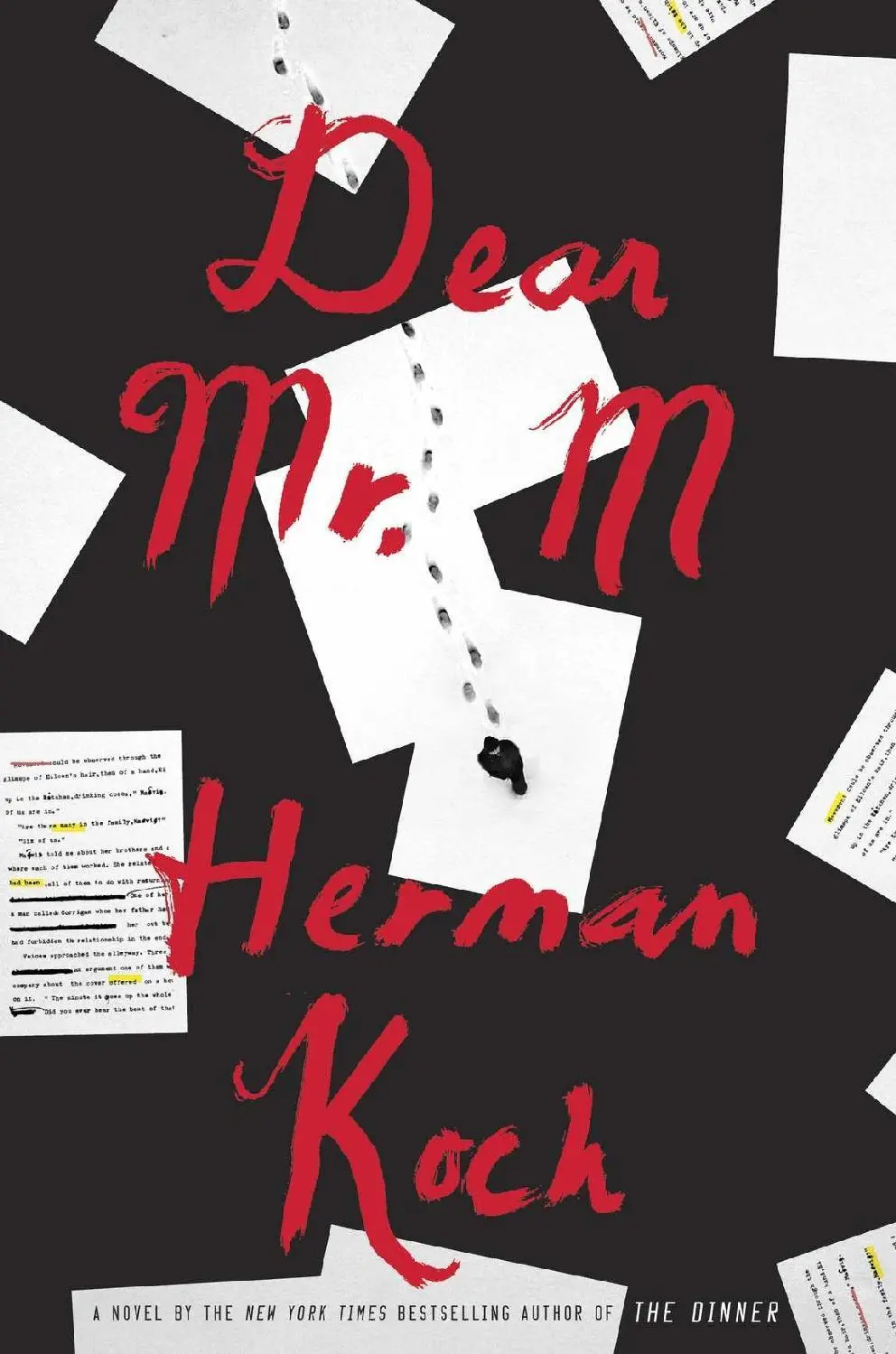
- Название:Dear Mr. M
- Автор:
- Издательство:Hogarth
- Жанр:
- Год:2016
- ISBN:нет данных
- Рейтинг книги:5 / 5. Голосов: 1
-
Избранное:Добавить в избранное
- Отзывы:
-
Ваша оценка:
Dear Mr. M: краткое содержание, описание и аннотация
Предлагаем к чтению аннотацию, описание, краткое содержание или предисловие (зависит от того, что написал сам автор книги «Dear Mr. M»). Если вы не нашли необходимую информацию о книге — напишите в комментариях, мы постараемся отыскать её.
bestselling author of
and Once a celebrated writer, M's greatest success came with a suspense novel based on a real-life disappearance. The book was called
, and it told the story of Jan Landzaat, a history teacher who went missing one winter after his brief affair with Laura, his stunning pupil. Jan was last seen at the holiday cottage where Laura was staying with her new boyfriend. Upon publication, M.'s novel was a bestseller, one that marked his international breakthrough.
That was years ago, and now M.'s career is almost over as he fades increasingly into obscurity. But not when it comes to his bizarre, seemingly timid neighbor who keeps a close eye on him. Why?
From various perspectives, Herman Koch tells the dark tale of a writer in decline, a teenage couple in love, a missing teacher, and a single book that entwines all of their fates. Thanks to
, supposedly a work of fiction, everyone seems to be linked forever, until something unexpected spins the "story" off its rails.
With racing tension, sardonic wit, and a world-renowned sharp eye for human failings, Herman Koch once again spares nothing and no one in his gripping new novel, a barbed tour de force suspending readers in the mysterious literary gray space between fact and fiction, promising to keep them awake at night, and justly paranoid in the merciless morning.
Dear Mr. M — читать онлайн бесплатно полную книгу (весь текст) целиком
Ниже представлен текст книги, разбитый по страницам. Система сохранения места последней прочитанной страницы, позволяет с удобством читать онлайн бесплатно книгу «Dear Mr. M», без необходимости каждый раз заново искать на чём Вы остановились. Поставьте закладку, и сможете в любой момент перейти на страницу, на которой закончили чтение.
Интервал:
Закладка:
“Could I ask you to leave my father out of this?” M says at last. “My father made his own decisions at the time, but he’s no longer around to defend them now.”
“The point is that perhaps you should be a bit more conscious of what you’re saying,” N says. “You in particular, M. In your books you’ve always made clever use of your past and your background. That also gives you a certain amount of responsibility. When someone like you says things like this about the Dutch resistance, it’s different than it would be coming from some half-baked idiot. Especially in combination with all the dirty laundry that was aired in that interview. No, I find it absolutely tasteless.”
But the theme is resistance, isn’t it? M wants to say back to him. The theme of the party? If you make resistance the theme of a party, you can’t go complaining afterward when someone makes a few critical remarks about it?
“That we’re all allowed to say anything we like doesn’t mean that we have to say everything, does it?” C says. “I don’t get it, M. Especially not coming from you, with your background.”
Oh my God, here we go again! M thinks. Freedom of expression…and then especially the limits to that freedom.
“I agree with you completely, C,” M says in a conciliatory tone; at least he hopes it sounds conciliatory, because inside he’s already boiling like — a pan of water: you can turn down the gas, but the water won’t cool, not for a while. “Except there are some things that have to be said, because otherwise no one will say them these days. I’m not out to offend anyone; the two things are confused far too often: exercising one’s freedom of expression and demanding the right to offend whomever we please.”
“But there are cultures, religions, I don’t have to name names, that are offended awfully quickly,” Van der D says. “So are we supposed to censor ourselves and keep our mouths shut just because someone might feel insulted?”
“The point is to not apply a double standard,” M says. “If I stand in front of colleague N’s door every day and scream that his girlfriend is a whore, have I any right to complain when, on the third day, that girlfriend or N himself comes down and punches me in the face? Or do N and his girlfriend have every right to do that? They can, in any case, count on our sympathy. Or should we keep it simple and say that N and his girlfriend belong to a backward, medieval culture and that they are offended far too readily? That they have no right at all to defend that backward culture against insults?”
Besides his rage, M also feels light; he feels himself drifting away slowly, being lifted into the air: in the same way that they, as by some fortunate circumstance, were also drifting a bit further away from his remarks about the Dutch resistance.
“Each and every day,” he goes on, because no one else is saying anything. “ ‘Liliane is a whore! Liliane is a whore!’ I assert my right to express myself freely. Maybe I’m wrong, N,” he says, addressing his colleague directly now. “Maybe she’s not a whore at all. But I’m allowed to say so. After all, we live in a free country.”
“You’re a pitiful figure,” N says. He adopts a sad expression as he says it, which makes the countless wrinkles and folds in his cheeks and around his eyes seem to deepen even further — the landscape of gorges and deep valleys above which the sun is now going down. “In fact, I’ve known that for a long time, but today I know for certain.”
“And The Garden of Psalms is a tired shit-cake of a book,” M says — the water has stopped boiling, the gas has been turned off, the pan placed in the freezer: he feels calm. This calm, this icy calm, is something he hasn’t felt for ages. “But I don’t think I have to tell you that. I think you know that yourself already.”
“And that from the writer who keeps churning out books about the war, year in and year out? We all fell asleep long ago, M. I think you’re the only one who hasn’t realized that yet. Why don’t you write about something else for a change? About your mother, for example. In that interview you spend three pages whining about your dear mother, but in all those flog-a-dead-horse war books of yours we never read a word about her.”
39
I’m washing my hands in the men’s room when the tumult begins. First there are only a few excited voices. Then the screaming grows louder, the voices become distinct, with distinguishable words and sentences. “Cut it out!” “Stop…knock it off…knock it off…You hear me? Knock it off, right now!” “Grab him!..Grab him, goddamn it!”
There is a loud thud against the door of the men’s room, as though someone has fallen or been pushed forcefully against it.
“Pervert!” a voice screams. “Dirty piece of shit!”
A dull boom, the wood cracks: That was someone’s head, I think right away, the back of someone’s head hitting the door— being hit against the door.
“I’ll kill you, you pig! I’ll rip your fucking lungs out!”
The show in the big theater was over more than an hour ago. I won’t dwell too long on the show itself. You look at your watch a few times. You sigh deeply. When the woman comes on stage on her bicycle, you start to shift in your seat and groan. Everyone saw it. We all saw that the bike had wooden wheels, that the woman was wearing clogs and had a yellow Star of David sewn to her worn coat. You could feel it run through the audience. Everyone held their breath. Then the woman started talking. With a weird accent, the way drama school actors think normal people in Amsterdam talk. “Chrise Amighty,” the weird voice said. “Here I bike all this friggin’ way out to the farm on wooden wheels to get some spuds, and the Krauts confiscate my tater peeler!” The audience laughed. It was a laugh of relief. We were watching a sketch. We were allowed to laugh, no one was going to recite any poetry in honor of the resistance, thank God for that. But after that first wave of relief, the laughter dwindled. Vicarious embarrassment settled over us like a cloud of gas. An odorless but deadly gas. “Tulip bulbs? Tulip bulbs?” the actress shrieked. “Go tell that one to the floralist!” No effective antidote has yet been found for vicarious shame. It’s something physical. It hurts in a place you can’t get to. You could leave, try to sneak out of the theater as quietly as possible, but you don’t budge. Vicarious shame is contagious. Not only does it infect the people around you, in the end it also makes its way back to the source of the embarrassment. It was only a matter of time before the cloud of gas drifted up onto the stage. The actress began speaking faster and louder. She was probably in desperate search of a point where she could cut the monologue in half. Away! Away from this stage, into the wings, the soothing fit of weeping in the dressing room — anything was better than going on acting cute in front of an audience that apparently didn’t think it was cute at all.
Then it was over at last and we shuffled out of the theater. You looked left and right, shook someone’s hand, someone else tapped you on the shoulder. You introduced me: the mayor, the cabinet minister, a colleague: “Ana stayed home with our daughter, she’s ill, this is my neighbor.” The mayor, the cabinet minister, and the colleague all shook my hand just to be polite, their eyes lingered on my face for less than a second, then they turned away, sometimes quite literally, with their whole body. And so we finally reached the stairs beside the men’s room.
I won’t try to claim now, in hindsight, that there was tension in the air from the very beginning. But maybe you thought so? I don’t know, something in your colleagues’ faces, their glances, the way they looked at each other more than at you. I could be wrong, though, I don’t actually know how writers look at each other — maybe they always look that way.
Читать дальшеИнтервал:
Закладка:
Похожие книги на «Dear Mr. M»
Представляем Вашему вниманию похожие книги на «Dear Mr. M» списком для выбора. Мы отобрали схожую по названию и смыслу литературу в надежде предоставить читателям больше вариантов отыскать новые, интересные, ещё непрочитанные произведения.









Обсуждение, отзывы о книге «Dear Mr. M» и просто собственные мнения читателей. Оставьте ваши комментарии, напишите, что Вы думаете о произведении, его смысле или главных героях. Укажите что конкретно понравилось, а что нет, и почему Вы так считаете.