Herman Koch - Dear Mr. M
Здесь есть возможность читать онлайн «Herman Koch - Dear Mr. M» весь текст электронной книги совершенно бесплатно (целиком полную версию без сокращений). В некоторых случаях можно слушать аудио, скачать через торрент в формате fb2 и присутствует краткое содержание. Год выпуска: 2016, Издательство: Hogarth, Жанр: Современная проза, на английском языке. Описание произведения, (предисловие) а так же отзывы посетителей доступны на портале библиотеки ЛибКат.
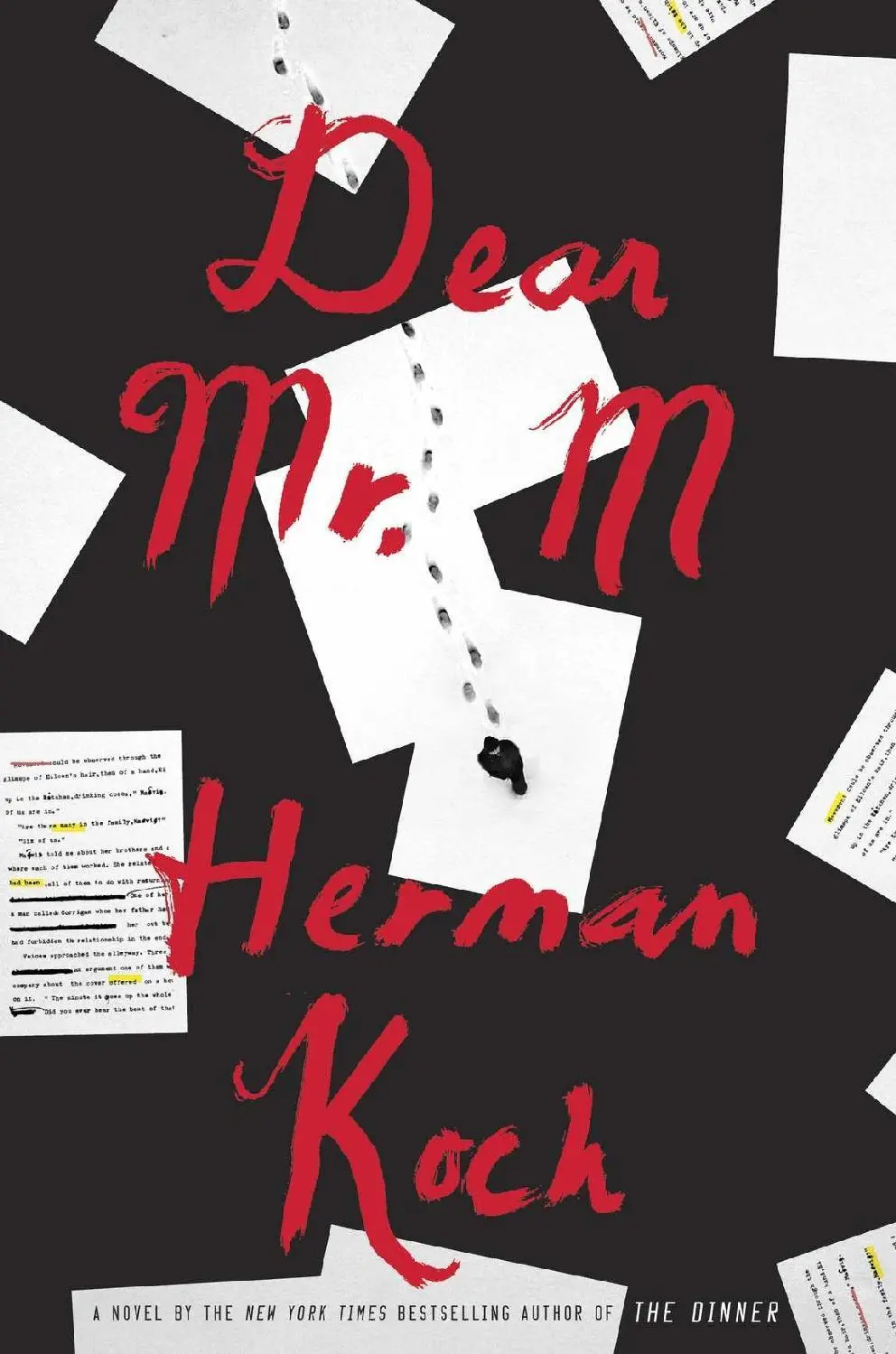
- Название:Dear Mr. M
- Автор:
- Издательство:Hogarth
- Жанр:
- Год:2016
- ISBN:нет данных
- Рейтинг книги:5 / 5. Голосов: 1
-
Избранное:Добавить в избранное
- Отзывы:
-
Ваша оценка:
Dear Mr. M: краткое содержание, описание и аннотация
Предлагаем к чтению аннотацию, описание, краткое содержание или предисловие (зависит от того, что написал сам автор книги «Dear Mr. M»). Если вы не нашли необходимую информацию о книге — напишите в комментариях, мы постараемся отыскать её.
bestselling author of
and Once a celebrated writer, M's greatest success came with a suspense novel based on a real-life disappearance. The book was called
, and it told the story of Jan Landzaat, a history teacher who went missing one winter after his brief affair with Laura, his stunning pupil. Jan was last seen at the holiday cottage where Laura was staying with her new boyfriend. Upon publication, M.'s novel was a bestseller, one that marked his international breakthrough.
That was years ago, and now M.'s career is almost over as he fades increasingly into obscurity. But not when it comes to his bizarre, seemingly timid neighbor who keeps a close eye on him. Why?
From various perspectives, Herman Koch tells the dark tale of a writer in decline, a teenage couple in love, a missing teacher, and a single book that entwines all of their fates. Thanks to
, supposedly a work of fiction, everyone seems to be linked forever, until something unexpected spins the "story" off its rails.
With racing tension, sardonic wit, and a world-renowned sharp eye for human failings, Herman Koch once again spares nothing and no one in his gripping new novel, a barbed tour de force suspending readers in the mysterious literary gray space between fact and fiction, promising to keep them awake at night, and justly paranoid in the merciless morning.
Dear Mr. M — читать онлайн бесплатно полную книгу (весь текст) целиком
Ниже представлен текст книги, разбитый по страницам. Система сохранения места последней прочитанной страницы, позволяет с удобством читать онлайн бесплатно книгу «Dear Mr. M», без необходимости каждый раз заново искать на чём Вы остановились. Поставьте закладку, и сможете в любой момент перейти на страницу, на которой закончили чтение.
Интервал:
Закладка:
But after the landing — in Milan, in Frankfurt, in Oslo — he usually perked up quickly enough. As soon as he saw his foreign publisher’s publicity person in the arrivals hall, holding up a sign with his name on it, he relaxed visibly. From that moment on he played his part — the role of Dutch writer with a certain reputation abroad — with verve. In the taxi he asked all the usual things. How many people live in the city? That opera house, was it rebuilt brick by brick after the war? Do you have problems with immigrants here too?
The usual itinerary followed. Interviews in the lobby of his hotel, and that evening a dinner at a restaurant with staff members from the publishing house and a few local bigwigs. During those dinners he answered his hosts’ questions. Ten years ago, foreigners had never asked so many questions about the Netherlands. They never got further than the standard clichés. Drug abuse, euthanasia, and same-sex marriage. But then the politically tinted murders took place, and these days they asked about only one thing: the rise of right-wing extremism.
When they did, he would apply the knife to his veal escalope or Norwegian sea bream, take a sip of wine, and smile affably.
“First of all, I need to correct you,” he said. “In the Netherlands, it’s not about right-wing extremism pur sang. That’s what makes it so difficult to dismiss right off the cuff. The Dutch extremists, for example, are great advocates of gay rights. And our brand of extremism is not at all anti-Semitic, not like in most other European countries. The very opposite, in fact: the right-wing extremists in our country are among the most outspoken supporters of the state of Israel. And when it comes to social equality and care for the aged, you could almost call that particular party a socialist one.”
But the Netherlands had been the most tolerant country in the world for decades, hadn’t it? What happened to that tolerance all of a sudden? his hosts wanted to know.
Putting down his knife and fork, he used the tip of his napkin to wipe an imaginary bit of escalope or bream from the corner of his lips.
“Perhaps we should start by redefining the term ‘tolerance,’ ” he said. “After all, what does it mean to be tolerant ? That you tolerate other people? People of a different color, different religious beliefs, people with earrings and tattoos, as well as women who wear headscarves, people with a different sexual orientation. But there is really nothing to tolerate. By using the word ‘tolerance,’ you’re simply placing yourself on a higher plane than those you tolerate. Tolerance is only possible when one fosters a deep-rooted sense of superiority. That’s one thing we Dutch have never lacked, and it’s been that way for centuries. We have long considered ourselves better than the rest of the world. But now the rest of the world is suddenly thronging to our borders and taking over our houses and neighborhoods. Suddenly, tolerance isn’t enough. The newcomers laugh at us for our tolerance and see it primarily as a sign of weakness. Which in the long run, of course, it is.”
Then dessert arrived. The people from the publishing house ordered coffee with liqueur, but he said he was tired and wanted to get back to the hotel.
During those interviews, Ana would wander through the more exclusive shopping streets. Sometimes she would buy a purse, other times a shawl. In the afternoon there was a buffet lunch at the Dutch embassy.
“It used to be easy to represent the Netherlands abroad,” the ambassador sighed. “But these days we’re always on the defensive. It’s often hard to make it clear that right-wing extremism in Holland is different from in other countries. Just look at their attitude toward gay rights and Israel.”
There were times when she enjoyed those trips abroad, with just the two of them, but the worst were the festivals or book fairs with a whole delegation of Dutch writers. When just the two of them were abroad they would snuggle up together in their hotel bed, order a bottle of wine from room service, and watch reruns of some old Western series, dubbed in the local language. At such moments they were almost happy — or at least she felt so.
But when an entire division of Dutch writers would descend on a foreign city, such moments were rare. The Dutch could never exercise moderation. They always made a contest of seeing who could stay up latest. They would sit at the hotel bar until the wee hours of the night. Some of those writers shouldn’t have been drinking at all, the whites of their eyes were already the color of old newsprint, but they always took “one more for the road.” At breakfast the next morning they bragged about how late they had gone to bed. They winked conspiratorially at other colleagues who had gone on into the wee hours too. With that wink they shut out the others, the pussies and weaklings who had considered their own well-being or who simply preferred not to go to bed too late.
“No,” she says to M’s publisher. “I don’t think I’ll be going along to Antwerp. I think I’ll stay with my daughter.”
“But…” Someone taps the publisher on the shoulder, a female author whose coat is already draped over her shoulders, it was so much fun but she really has to leave now, they give each other three little pecks on the cheeks. Ana knows what the publisher’s objection would have been. The holiday house. The house outside H. is barely fifteen miles outside Antwerp, a half hour’s drive, no more than that. They’ve done that before. One time, after a festival where M had read, the publisher and his wife had actually slept over. Now that he’s finished saying goodbye to the female author, his glance ricochets around the French Room, which is a good deal emptier now, and then he looks at her again.
It’s possible that he’s forgotten what they were talking about. She’s had time to think about what she’ll say if he pushes on. It’s too close. He’ll understand that, she’s sure.
But he doesn’t press the point. He lays a hand on her forearm, squeezes it gently for a moment.
“I understand,” he says.
Some movies only get better once you know how they’re going to end. The two dogs and the cat escape from their new, temporary home and start on their quest for the old one. On their journey straight across North America they navigate somehow — by the stars? The magnetic pole? — the movie doesn’t explain that, in any case it’s something only animals can do, an ability humans lost long ago. During the fight with the bear, Catherine had crept up even closer to Ana, the bowl of popcorn was almost empty, Catherine hadn’t even touched her glass of lemonade. Ana herself definitely felt like another glass of wine, but she didn’t want to get up now and go to the kitchen, she was afraid of interrupting something.
She had vowed not to think about the book ball — about M being on his own at that party, first wandering the corridors, then at his regular spot beside the men’s room — in order to lose herself completely in the film, but she only succeeded partway. When the cat came out of the bushes as the first of the trio and ran across the lawn toward its owners, she tore open the packet of tissues she had waiting and handed one to Catherine.
“Oh, Mama,” her daughter said when the youngest of the two dogs followed from the bushes. “Do you think that old dog made it too? Or is he dead?”
Catherine had started crying quietly, she pressed the tissue to her eyes. Ana was crying too, perhaps even harder than the first three times she’d watched this.
“I’m not sure, sweetheart,” she said. “I really hope so. But I really couldn’t say.”
37
The long line of guests at the entrance forms the first hurdle. There are klieg lights and TV trucks with satellite dishes on the roofs, photographers and cameramen lined up behind the crush barriers on both sides of the red carpet. The trick, M knows, is to exude a certain nonchalance, to feign patience as naturally as possible, with an expression just a tad ironic and complacent. This is the forty-fifth, what, fiftieth time I’ve been here? Try telling me something I don’t know. M has mastered the trick like no other; after all, he really has lost count, he’s never missed a year. On his own at first, or with another new conquest on his arm each time, later with his first wife, and an eternity by now with Ana. There are other — younger, less famous — colleagues who clearly have a harder time with that, with exuding such calm indifference. They stand there with their coats half unbuttoned, their party clothes showing a little, the dress they bought specially for this occasion, the coat they picked up from the cleaner’s only a few hours ago; any way you look at it, it’s clothing that has been thought about. That red coat, isn’t it just a little too red? Isn’t that sequined dress a little too flashy? The rare guest attempts to defy etiquette: a T-shirt bearing the logo of a soccer team, white Nike high-tops with black laces, a weird cap or a crazy hat (nutty glasses don’t cut it here, nutty glasses are the uniform of the elite) — M himself abandoned that defiance years ago, he would like to erect a monument to the inventor of the tuxedo. The tuxedo, of course, is a uniform too, but then a uniform that — unlike the canary-yellow spectacle frames — makes us all equal, in the same way the military or school uniform does. When a man in a tuxedo stands among other men in tuxedos, you no longer look at the clothing but at the face, at the head sticking out above that white collar, black tails, and tie. All in black and white; it’s brilliant, everything else takes on new color above an outfit like that, including gray hair — even one’s facial complexion, be it ever so pale, will never be as white as the shirt.
Читать дальшеИнтервал:
Закладка:
Похожие книги на «Dear Mr. M»
Представляем Вашему вниманию похожие книги на «Dear Mr. M» списком для выбора. Мы отобрали схожую по названию и смыслу литературу в надежде предоставить читателям больше вариантов отыскать новые, интересные, ещё непрочитанные произведения.











Обсуждение, отзывы о книге «Dear Mr. M» и просто собственные мнения читателей. Оставьте ваши комментарии, напишите, что Вы думаете о произведении, его смысле или главных героях. Укажите что конкретно понравилось, а что нет, и почему Вы так считаете.