Herman Koch - Dear Mr. M
Здесь есть возможность читать онлайн «Herman Koch - Dear Mr. M» весь текст электронной книги совершенно бесплатно (целиком полную версию без сокращений). В некоторых случаях можно слушать аудио, скачать через торрент в формате fb2 и присутствует краткое содержание. Год выпуска: 2016, Издательство: Hogarth, Жанр: Современная проза, на английском языке. Описание произведения, (предисловие) а так же отзывы посетителей доступны на портале библиотеки ЛибКат.
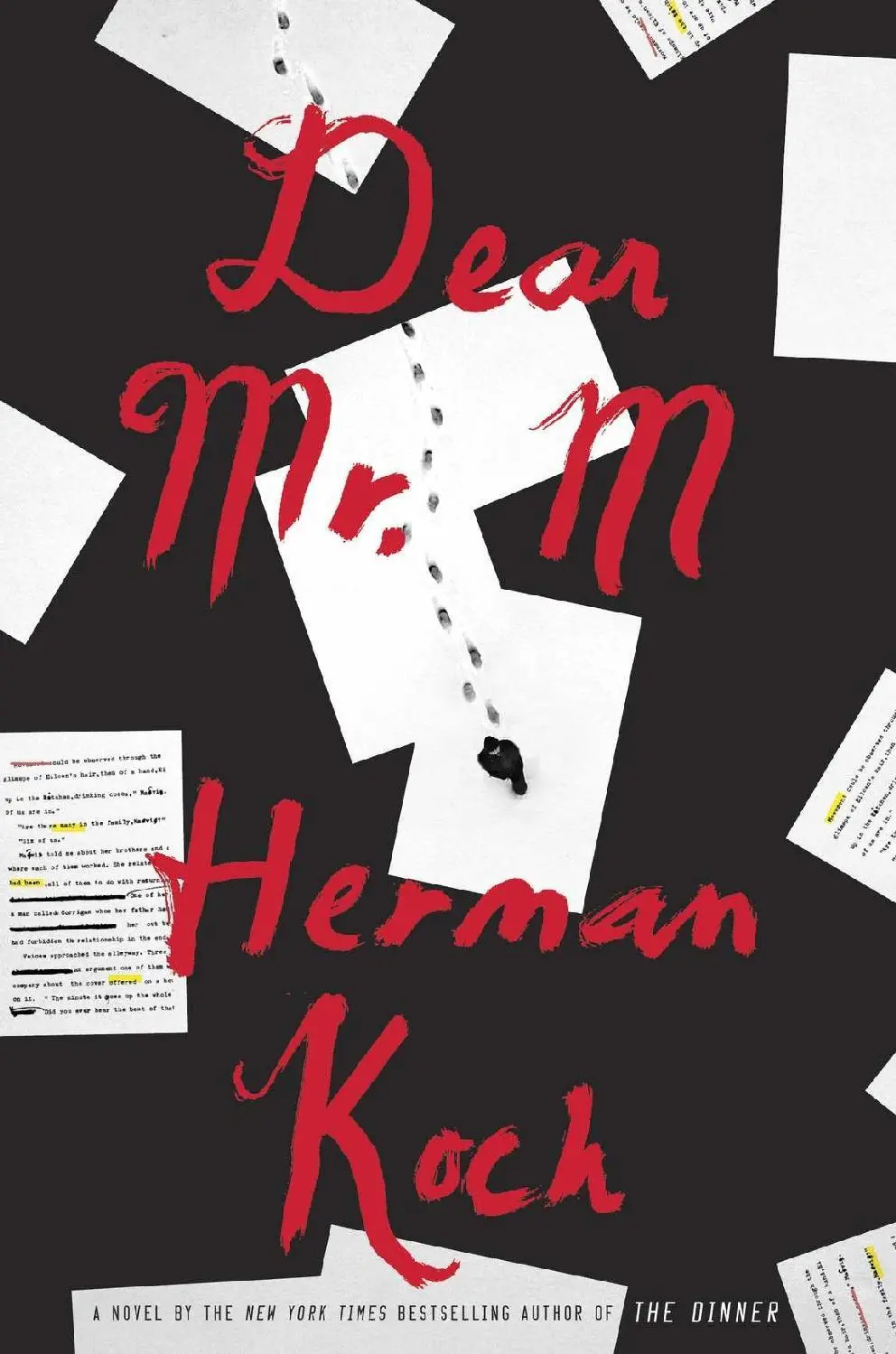
- Название:Dear Mr. M
- Автор:
- Издательство:Hogarth
- Жанр:
- Год:2016
- ISBN:нет данных
- Рейтинг книги:5 / 5. Голосов: 1
-
Избранное:Добавить в избранное
- Отзывы:
-
Ваша оценка:
Dear Mr. M: краткое содержание, описание и аннотация
Предлагаем к чтению аннотацию, описание, краткое содержание или предисловие (зависит от того, что написал сам автор книги «Dear Mr. M»). Если вы не нашли необходимую информацию о книге — напишите в комментариях, мы постараемся отыскать её.
bestselling author of
and Once a celebrated writer, M's greatest success came with a suspense novel based on a real-life disappearance. The book was called
, and it told the story of Jan Landzaat, a history teacher who went missing one winter after his brief affair with Laura, his stunning pupil. Jan was last seen at the holiday cottage where Laura was staying with her new boyfriend. Upon publication, M.'s novel was a bestseller, one that marked his international breakthrough.
That was years ago, and now M.'s career is almost over as he fades increasingly into obscurity. But not when it comes to his bizarre, seemingly timid neighbor who keeps a close eye on him. Why?
From various perspectives, Herman Koch tells the dark tale of a writer in decline, a teenage couple in love, a missing teacher, and a single book that entwines all of their fates. Thanks to
, supposedly a work of fiction, everyone seems to be linked forever, until something unexpected spins the "story" off its rails.
With racing tension, sardonic wit, and a world-renowned sharp eye for human failings, Herman Koch once again spares nothing and no one in his gripping new novel, a barbed tour de force suspending readers in the mysterious literary gray space between fact and fiction, promising to keep them awake at night, and justly paranoid in the merciless morning.
Dear Mr. M — читать онлайн бесплатно полную книгу (весь текст) целиком
Ниже представлен текст книги, разбитый по страницам. Система сохранения места последней прочитанной страницы, позволяет с удобством читать онлайн бесплатно книгу «Dear Mr. M», без необходимости каждый раз заново искать на чём Вы остановились. Поставьте закладку, и сможете в любой момент перейти на страницу, на которой закончили чтение.
Интервал:
Закладка:
His features are striking, M knows. The strikingness of those features is something age has never been able to corrode. Of course he mustn’t pose on a beach in his swimming trunks anymore, and it’s better if they don’t come by early in the morning to find him in his striped pajamas at the breakfast table, but in the pronouncedly masculine uniform that the tuxedo is he looks like one of those old Hollywood actors on his way to the Oscars or the Grammys. To the — what do they call that again — Lifetime Achievement Award. A prize for one’s entire life. It’s no fantasy or wishful thinking; he’s seen himself in the news footage, in the pictures in the paper the next day. He’s no slouch, he leads a healthy life, he’s a moderate drinker, he even has to be careful not to lead too healthy a life, he noted, after seeing last year’s footage. Something about his face (not his teeth, he definitely must not smile, as long as he keeps his lips sealed there’s no reason for concern), his cheeks were sunken, too deeply sunken, no longer charming, as though they’d been vacuum-sealed from the inside out. Perhaps he wasn’t the only one who could see the foreshadowing in his face, the foreshadowing of that day when he would live on only in his work (or not live on, he had seen how quickly that went with most of his late colleagues). A skull. A death’s-head. He had started eating more, he had asked Ana to prepare prime rib and pasta dishes with bacon and cream, a slice of cream cake for dessert or a Magnum Almond from the freezer — within a few weeks the prescient death’s-head cheeks had fairly disappeared.
A few yards ahead of him in line is N, who knows like no other how to do that, stand in line. His hands are in his pockets, he already has his long mohair coat draped over one arm. He stands there the way you’d stand in line in a bakery shop. One sliced whole-wheat and two bread rolls, please. At first M sees only the back of his head, but then N steps over closer to the crush barrier and brings his lips closer to the TV reporter’s mike; behind the reporter, the blinding light of a camera flips on. The light shines straight through N’s hair: like a low-hanging sun above a dry and barren landscape, it underscores the depth of the almost-eighty-year-old creases and lines in his profile, but at the same time gives him something kingly — something imperious, M corrects himself right away.
Close to the entrance, a new torment begins. The party has a different theme each year. Sometimes it’s straightforward — the animal kingdom, youth, the autobiographical in literature — but there are also years when they have obviously been desperate to come up with something, anything. M recalls one year when it was about birds and nests, no one knew whether it was supposed to be about the nesting instinct, about eggs, or about something much more horrible than that.
At the theater entrance, at the end of the red carpet, awaits the evening’s major television moment: the reporter from News Hour who asks any author who counts, however slightly, to say something about the theme of this year’s Dutch Book Week. The tone of the question is usually slightly ironic ( If you could be reincarnated as an animal, which one would that be? ), but the reply, of course, is the important thing. The snappiest answers are the ones that are finally aired, mumbling and stuttering doesn’t stand much of a chance, not unless it’s the mumbling and stuttering of a big literary name: a famous writer who starts to sweat and stutter or can only come up with platitudes has a certain news value too. Whatever the case, it’s always an unequal battle: the reporter from News Hour has had almost a year to dream up his cutesy question, but the writer has to say something eloquent on the spot, right there under the bright klieg lights. A one-liner or two, in quick succession, that’s the best. “Since when are people no longer animals? But even if they aren’t: coming back doesn’t really appeal to me, one time around seems like more than enough.”
This year’s theme is “Resistance — Then and Now.” When he saw the announcement in the paper almost a year ago, M had groaned. There was no escaping it, there was no way he’d make it into the theater unnoticed, the war was his trademark. Even if he succeeded in slipping in behind a colleague, they would drag him back in front of the camera by the sleeve of his tuxedo. Are there things you still resist? If you had to go into hiding, with which colleague would you like to do that? And with which colleague absolutely not? Do you see similarities between the rise of right-wing extremism back then and the way it is today? A question about the truth concerning the resistance was impossible. That was still too touchy. The resistance in the Netherlands had been negligible. Nowhere else in Europe was so little resistance offered. Any German soldier told that he was to be stationed in Holland breathed a sigh of relief. Thank God not the Ukraine, Greece, or Yugoslavia, where the partisans showed no mercy to recruits taken prisoner. In the Netherlands you had the beaches, the tulips, and the pretty girls. Everywhere you went you were treated amiably. At a village party you could ask the girls to dance without getting a knife in your back. Without a homemade fragmentation bomb going off under a haystack. In Russia the girls got you drunk, then cut off your balls in the shed. The rare Dutch act of resistance seemed to disappoint and distress the Germans more than it made them truly angry. They reacted as though they had been betrayed by a sweetheart. They picked up a few chance passersby from the street on a Sunday afternoon, lined them up along a ditch, and executed them. Not too many, not whole villages like in France, Poland, and Czechoslovakia. Why did you people have to go and do that now? it seemed the Germans were asking. We were having such a good time!
Now M is almost to the entrance. He turns his head to locate his downstairs neighbor, who has lingered further back in line. Come on, M gestures, come on, it’s time to go in.
“Mr. M…”
The reporter from News Hour holds the mike up in front of his face. The lamp on the cameraman’s shoulder pops on.
Here comes the question.
And there — smoothly, in one go, he needs barely a second to think about it — comes the answer.
38
It’s half an hour after the show has ended; they are standing and sitting on, or leaning against, the stairs beside the men’s room. N is there, and C, W, and L — they’re not quite all present: a few minutes earlier, S had taken the arm of a young PR manager from his publishing house and, with a wink at the others, headed downstairs to the dance floor. Van der D has gone to fetch drinks, in accordance with the time-honored, roundabout procedure in which one must first stand in line to buy tokens and then move to the next line for the drinks themselves.
Tokens! Chits! If M were to sum up the Dutch national character in one word, it would be “chits.” He’s been all over the world, he feels he has every right to sum up the character of his own country in one word. In France, Spain, and Italy the chit has yet to be invented. In Germany they give you twenty at one shot; that’s also a way to undermine one’s confidence in the value of the chit. In Holland you never get more than two. No matter where, at the library, a literary café, a book festival — everywhere you go you’re handed an envelope containing the program printed on a sheet of white paper, and two chits. Once those chits are finished, you have no further right of appeal.
He had attended the Academy Awards ceremony once, years ago, when the movie version of By a Slender Thread, his best-known book about the war, received an Oscar nomination for Best Foreign Film. After the ceremony, waiters had made the rounds with silver trays filled with glasses of champagne, Jack Daniel’s, and white and red wine. The fancy tables with their linen cloths were loaded with platters of lobster and oysters on ice. Not a chit in sight, not like at the film festival in Holland where he had to “get in line just like everyone else,” as one of the bar employees snarled at him after the premiere of Payback.
Читать дальшеИнтервал:
Закладка:
Похожие книги на «Dear Mr. M»
Представляем Вашему вниманию похожие книги на «Dear Mr. M» списком для выбора. Мы отобрали схожую по названию и смыслу литературу в надежде предоставить читателям больше вариантов отыскать новые, интересные, ещё непрочитанные произведения.






Обсуждение, отзывы о книге «Dear Mr. M» и просто собственные мнения читателей. Оставьте ваши комментарии, напишите, что Вы думаете о произведении, его смысле или главных героях. Укажите что конкретно понравилось, а что нет, и почему Вы так считаете.