Herman Koch - Dear Mr. M
Здесь есть возможность читать онлайн «Herman Koch - Dear Mr. M» весь текст электронной книги совершенно бесплатно (целиком полную версию без сокращений). В некоторых случаях можно слушать аудио, скачать через торрент в формате fb2 и присутствует краткое содержание. Год выпуска: 2016, Издательство: Hogarth, Жанр: Современная проза, на английском языке. Описание произведения, (предисловие) а так же отзывы посетителей доступны на портале библиотеки ЛибКат.
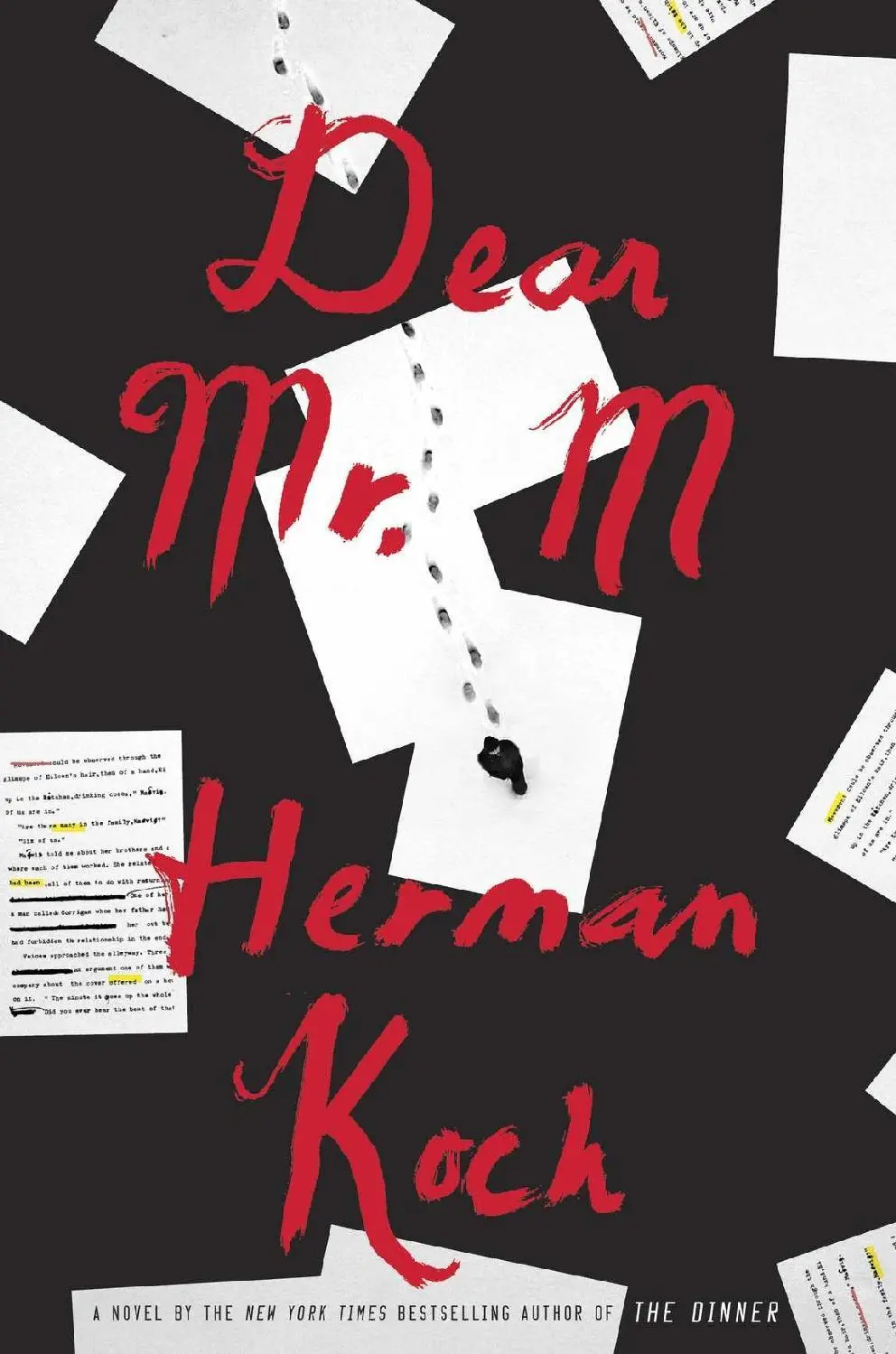
- Название:Dear Mr. M
- Автор:
- Издательство:Hogarth
- Жанр:
- Год:2016
- ISBN:нет данных
- Рейтинг книги:5 / 5. Голосов: 1
-
Избранное:Добавить в избранное
- Отзывы:
-
Ваша оценка:
Dear Mr. M: краткое содержание, описание и аннотация
Предлагаем к чтению аннотацию, описание, краткое содержание или предисловие (зависит от того, что написал сам автор книги «Dear Mr. M»). Если вы не нашли необходимую информацию о книге — напишите в комментариях, мы постараемся отыскать её.
bestselling author of
and Once a celebrated writer, M's greatest success came with a suspense novel based on a real-life disappearance. The book was called
, and it told the story of Jan Landzaat, a history teacher who went missing one winter after his brief affair with Laura, his stunning pupil. Jan was last seen at the holiday cottage where Laura was staying with her new boyfriend. Upon publication, M.'s novel was a bestseller, one that marked his international breakthrough.
That was years ago, and now M.'s career is almost over as he fades increasingly into obscurity. But not when it comes to his bizarre, seemingly timid neighbor who keeps a close eye on him. Why?
From various perspectives, Herman Koch tells the dark tale of a writer in decline, a teenage couple in love, a missing teacher, and a single book that entwines all of their fates. Thanks to
, supposedly a work of fiction, everyone seems to be linked forever, until something unexpected spins the "story" off its rails.
With racing tension, sardonic wit, and a world-renowned sharp eye for human failings, Herman Koch once again spares nothing and no one in his gripping new novel, a barbed tour de force suspending readers in the mysterious literary gray space between fact and fiction, promising to keep them awake at night, and justly paranoid in the merciless morning.
Dear Mr. M — читать онлайн бесплатно полную книгу (весь текст) целиком
Ниже представлен текст книги, разбитый по страницам. Система сохранения места последней прочитанной страницы, позволяет с удобством читать онлайн бесплатно книгу «Dear Mr. M», без необходимости каждый раз заново искать на чём Вы остановились. Поставьте закладку, и сможете в любой момент перейти на страницу, на которой закончили чтение.
Интервал:
Закладка:
The other old men were less forward, but they all looked. They looked when they thought she didn’t see them; C’s oyster eyes had a predilection for her buttocks, and she always felt the gaze of D, the travel writer, somewhere around her left ear, as though he wished he could clamp her earlobe in his doggy, wine-stained lips, then use the tip of his tongue to fiddle loose her earring and swallow it. Van E, the artist, had eyes like a mole, or some other animal that spends more time in darkness than in light; he always kept them squeezed in a tight squint behind his glasses and probably thought she couldn’t tell where he was looking: at her legs — first her thighs, then lower and lower, by way of her calves to her ankles.
A recent addition to their little club on the stairs was K, who was about thirty years younger than the rest. K was what people called a modest writer. “Modest writers are the worst kind,” M had said once, referring to K. “In actual fact, of course, they’re not modest at all. They only act modest because, in their hearts, they consider themselves better than the rest. I can act normal, the modest writer figures. I can act normal because my greatness is beyond any shadow of a doubt. I’m like the queen, who can ride a bike like a normal person might, because everyone already knows she’s the queen. For readers, too, the modest writer is a delight. So normal! they tell each other. You can talk to him like a normal person. He didn’t act as though he was one whit better than the rest of us normal people. Not arrogant like M, not aloof and cerebral like N. ”
In interviews, K had more than once expressed a certain disdain for M’s work (“a writer from the past, a writer whose work will quickly be forgotten once he’s gone”), but whenever they met he always pooh-poohed the critique: “I hope you didn’t mind. It wasn’t really that bad. I didn’t mean anything by it, you know I admire your work as a whole.”
K looked at Ana differently than most of M’s aging colleagues who gathered on the stairs beside the gents’. Or rather, he didn’t look at all. No randy perusal from head to toe, no suggestive kisses on the cheek, not even raised eyebrows or the faintest trace of flirtation. They were closer to each other in age, amid the fogies K could have considered himself the most likely of the lot, but he was the only one in the group who acted as though there was no pretty woman within a few feet of him. Once, when Ana had complimented K on his latest book — a village history smeared out over three generations — she had at some point used the word “special.” She remembered the sentence in which she’d done that, word for word: “I’m only halfway through the first section, at the point where that priest drowns. I can’t say a lot about it yet, but in any case it’s really special.” She had lied about where she was in the book, she wasn’t anywhere near halfway through the first section, after ten pages she had decided that it wasn’t her cup of tea — but the drowned priest was mentioned in the blurb.
“I don’t think I’m special at all,” K had replied grimly, fixing her with his cold gaze; a neutral gaze above all, as though he wasn’t talking to an attractive woman his own age but to a postal clerk or a bailiff. “Just because I happen to be a writer doesn’t make me any more special than anyone else.”
Ana had said something about his book, not about his person — and at that moment she suddenly understood M’s aversion to modest writers.
—
“What do you want to watch? Dumbo, or the real movie about the two dogs and that cat?”
She sat down on the edge of Catherine’s bed and showed her daughter the thermometer again. “A hundred and one, Papa thought it was a good idea too, for me to stay with you. How are you feeling now?” she asked, touching Catherine’s forehead with her fingertips — it wasn’t warm, or at least no warmer than usual.
“Not very well,” Catherine whispered. “Can we watch a movie right now?”
Dumbo was one they’d seen together more than a hundred times, but the film about the adventuresome journey by two dogs and a cat across the United States, based on a true story, was one Ana had bought only a couple of weeks earlier. The first time they watched it they had cried together, the second and third times, too, even though they knew by then that it had a happy ending.
“Let’s wait a bit, till Papa’s gone,” she answered. “In half an hour. Papa and that man are going to the party. Do you remember that man? The downstairs neighbor? The one who brought us to the house in H. when the weather was so bad?”
It was more like forty-five minutes in the end, but then at last they were lying together on the couch in the living room. Catherine beneath a blanket, cuddled up against her mother. During the forty-five minutes that had passed, Ana had used an adhesive roller to pick the lint off of M’s tuxedo, she’d said something about his hair (“Nonsense, it looks perfect”), and then, for the third or fourth time, urged him to simply tell the truth at the party. Our daughter is ill, my wife insisted on staying home with her.
After forty-five minutes she heard the front door close at last, then the doors of the elevator. She went to the kitchen and made popcorn in the microwave, poured a glass of lemonade for Catherine and red wine for herself. For a brief moment, as she was carrying the tray from the kitchen to the living room, she had a slight feeling of regret. No, not really regret, more like a gently gnawing sense of guilt. She could have gone along with M, she knew how important it was to him, how he reveled in having his wife by his side on such occasions. But she already did so much, she told herself, from the very start she had bravely shouldered the role of the wife of. Still with pleasure, during the first few years, lately less and less so; she didn’t know exactly why that was, perhaps it was the predictability. Like with the cocktail parties at the publishing house. The summer party, the autumn party, the New Year’s party, the spring party (“in the garden, if the weather’s nice”), there was no end to them. There were peanuts and dishes of olives on a table in one corner of “the French Room”—almost all the self-respecting publishers were housed in a canal-side mansion with marble corridors and gilded wainscoting — while the bottles of beer stood growing tepid. M’s colleagues greeted her politely but without interest, they never asked how she was doing, how she was getting along at the famous writer’s side, they only asked indirectly about him (“Is he working on something new?” “How did he react to that article, the one that said he no longer counts as the voice of his generation?” “Was he serious about what he said in that interview about the Nobel Prize?”). The colleagues fell into two categories: those who were more successful than M, and those who received less media attention and therefore had to make do with fewer sales. The colleagues in the first category were usually amiable, although it could also be seen as condescension. “It’s such a pity,” they said. “That last book of his really deserves a much wider readership. It’s puzzling.” The second category started in right away about the posters and public-transport campaigns, about the talk shows that were all too pleased to make time for “big names” like M.
“The publishing house has a limited budget, unfortunately,” they said. “But that doesn’t mean they have to spend it all on the same authors.” And then they would go on to wonder aloud whether their work might get the attention it deserved at another house. “Just between the two of us, I sometimes think about going elsewhere.”
Читать дальшеИнтервал:
Закладка:
Похожие книги на «Dear Mr. M»
Представляем Вашему вниманию похожие книги на «Dear Mr. M» списком для выбора. Мы отобрали схожую по названию и смыслу литературу в надежде предоставить читателям больше вариантов отыскать новые, интересные, ещё непрочитанные произведения.











Обсуждение, отзывы о книге «Dear Mr. M» и просто собственные мнения читателей. Оставьте ваши комментарии, напишите, что Вы думаете о произведении, его смысле или главных героях. Укажите что конкретно понравилось, а что нет, и почему Вы так считаете.