Herman Koch - Dear Mr. M
Здесь есть возможность читать онлайн «Herman Koch - Dear Mr. M» весь текст электронной книги совершенно бесплатно (целиком полную версию без сокращений). В некоторых случаях можно слушать аудио, скачать через торрент в формате fb2 и присутствует краткое содержание. Год выпуска: 2016, Издательство: Hogarth, Жанр: Современная проза, на английском языке. Описание произведения, (предисловие) а так же отзывы посетителей доступны на портале библиотеки ЛибКат.
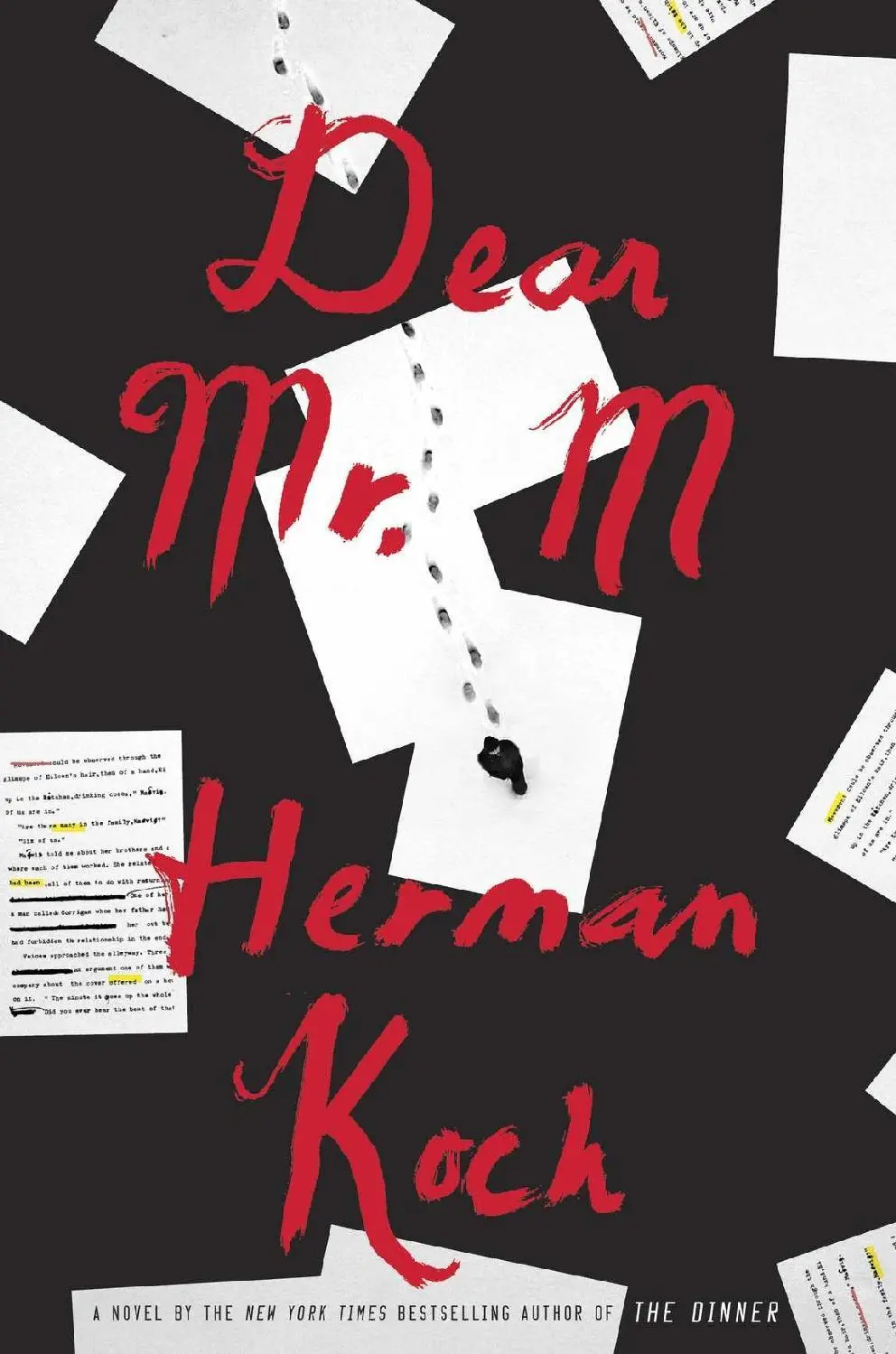
- Название:Dear Mr. M
- Автор:
- Издательство:Hogarth
- Жанр:
- Год:2016
- ISBN:нет данных
- Рейтинг книги:5 / 5. Голосов: 1
-
Избранное:Добавить в избранное
- Отзывы:
-
Ваша оценка:
Dear Mr. M: краткое содержание, описание и аннотация
Предлагаем к чтению аннотацию, описание, краткое содержание или предисловие (зависит от того, что написал сам автор книги «Dear Mr. M»). Если вы не нашли необходимую информацию о книге — напишите в комментариях, мы постараемся отыскать её.
bestselling author of
and Once a celebrated writer, M's greatest success came with a suspense novel based on a real-life disappearance. The book was called
, and it told the story of Jan Landzaat, a history teacher who went missing one winter after his brief affair with Laura, his stunning pupil. Jan was last seen at the holiday cottage where Laura was staying with her new boyfriend. Upon publication, M.'s novel was a bestseller, one that marked his international breakthrough.
That was years ago, and now M.'s career is almost over as he fades increasingly into obscurity. But not when it comes to his bizarre, seemingly timid neighbor who keeps a close eye on him. Why?
From various perspectives, Herman Koch tells the dark tale of a writer in decline, a teenage couple in love, a missing teacher, and a single book that entwines all of their fates. Thanks to
, supposedly a work of fiction, everyone seems to be linked forever, until something unexpected spins the "story" off its rails.
With racing tension, sardonic wit, and a world-renowned sharp eye for human failings, Herman Koch once again spares nothing and no one in his gripping new novel, a barbed tour de force suspending readers in the mysterious literary gray space between fact and fiction, promising to keep them awake at night, and justly paranoid in the merciless morning.
Dear Mr. M — читать онлайн бесплатно полную книгу (весь текст) целиком
Ниже представлен текст книги, разбитый по страницам. Система сохранения места последней прочитанной страницы, позволяет с удобством читать онлайн бесплатно книгу «Dear Mr. M», без необходимости каждый раз заново искать на чём Вы остановились. Поставьте закладку, и сможете в любой момент перейти на страницу, на которой закончили чтение.
Интервал:
Закладка:
But you didn’t do anything with that. In Payback, Stella isn’t mentioned at all. As though she never existed.
“There was nothing I could do with it. I mean, there was nothing I could with it because of the way things went. Because of what happened afterward. I did try. In the first draft, I still had two girls. But it didn’t work. I realized that I needed to focus on one thing and one thing alone. The teacher’s disappearance. What Stella…What she did…That would distract readers too much from the essence of my story. It might throw the whole book out of balance. You read books sometimes that give you the impression that the writer was trying to sweeten the pot. That he thought that one central premise wasn’t enough. It’s quite understandable too. Every writer has that urge, you work on a book for months, often years, you’re sick and tired of it, the story is starting to bore you, and to combat that boredom you toss another element into it, a surprising twist, something spectacular. But there’s a very real chance that adding that element will destroy the book’s balance right away. Maybe the writer is bored, but the reader isn’t. Not yet. The writer forgets that the reader doesn’t spend months or years with a book. Only a couple of days, or a week at most. He doesn’t get enough time to become bored. Payback is not some five-hundred-page doorstop, I knew from the start that half that would be enough. Stella would have been a new narrative line. That would have made it a very different book. There was a very real chance that that one new narrative line wouldn’t have been enough. That happens often. Two storylines can be confusing, while three or five aren’t, then it’s simply that kind of a book. But I didn’t feel like writing that kind of a book. I felt that the teacher, the boy, and the girl were enough.”
But in reality we also make do with any number of storylines, don’t we? Why is it that writers are always so afraid of that?
“Because one expects a certain degree of order in a novel; a clearer, more compact reality. Actual reality doesn’t worry about that compaction. A writer has to chop into reality. For example: an acquaintance of mine was recently hit by a garbage truck. The ambulance took him to the hospital with a broken leg, and there he was told that his wife had just been admitted to that same hospital: one hour earlier she had fallen off her bike and broken her arm. That’s a true story. The kind you would never make up. In the book version, only one of the two remains: either the husband with the broken leg or the wife with the broken arm. It’s up to the writer to decide which one gets cut out of the book.”
In Payback, of course, you already made that decision by giving your imagination free rein. In your book, the boy and the girl finish the teacher off and hide the body in an ingenious fashion. While in real life there was never any solid evidence to indicate that. The teacher no longer disappears in the literal sense of the word. The reader knows how it went.
“Yes, I thought that was fascinating. What might have happened? That question, in fact, remains interesting. We still don’t know how it went.”
But don’t you ever have the feeling that you, as a writer, have a certain responsibility with regard to reality? There is no Stella. The teacher is murdered in cold blood. It may all be your own imagination, of course, but little is left to the reader’s imagination .
“Maybe I was unconsciously hoping for a reaction, who can say?”
You mean a reaction from the murderers? From the suspects, I should say?
“First of all that, yes. As I’ve already said: I myself never tried to make contact, to the extent that they would have allowed me to; I didn’t want any explanation on their part to get in the way of my imagination. But afterward…Once the book was published, I noticed that I started asking myself whether they were going to read it. Whether they would feel like refuting my solution. And whether their refutation might expose them. Maybe even betray them. Please note: morally speaking, it didn’t interest me at all. They were right in whatever they did. But still, one remains curious. We’re always curious about the fate of someone who disappears from the face of the earth. But I wasn’t thinking only about Herman and Laura, I also thought about the others, about what they knew. Within close groups of friends like that, nothing remains a secret for long. You confide in each other. The way I imagined it, Herman and Laura would have wanted to tell someone their story. In fact, I was sure of it. You can’t walk around with something like that for years, or even weeks. One day you simply have to try to tell someone. David was very close to both Herman and Laura. So was Lodewijk. My speculation was that one of the others from that group of friends might want to react to the book. That they would approach me, anonymously or not, with their version of things.”
And did that happen?
“I don’t know…I could simply say that I never received a direct reaction from anyone involved, and be finished with it. But on the other hand…by now it must have passed the statute of limitations. But you have to promise me that this will remain completely off the record. I wouldn’t want to get anyone into trouble, forty years after the fact.”
Perhaps you could tell me first whether it changed your view of what happened. Whether the new information made you think differently about precisely what went on in that house in Terhofstede.
“Yes, it did.”
—
And then there is a knock at the door. You say “yes” again, but this time with a question mark behind it. The door opens and your wife comes in. In a little over an hour the two of you have to be at the book ball; you might expect that she has come to ask what you think of her dress, that she has come to ask you to close the zipper on the back of her dress, that she would be at least half or three-quarters of the way dressed for the party, but she is still wearing her jeans and white sneakers — the untucked tails of a white shirt (a man’s shirt, I can’t help but notice, maybe one of yours?) are hanging loosely over the jeans.
She’s holding a thermometer.
“We’re almost finished,” you say — apparently you haven’t noticed the thermometer, or at least you ask no questions about it.
“[…] hasn’t been feeling well all afternoon,” your wife says; she mentions your daughter’s name, the name I’m still leaving out; you know her name anyway, and it is indeed no one else’s business. “But now she’s really running a fever.” She takes a few steps toward you and holds out the thermometer, but you are looking only at her. “I don’t like the idea of going away while she’s sick in bed.”
“But Charlotte’s coming in a bit, isn’t she?”
“I don’t know,” she says. “I’d rather not leave her alone with Charlotte. I would just feel much more comfortable staying with her myself.”
You stare at her. I think I know more or less what is going on in your mind. Without your wife, without your much-younger wife, you won’t be complete at a party like this. As though you were being forced to show up in the nude; no, not in the nude, in just your boxer shorts.
“But…,” you start in, but your wife is too fast for you.
“You don’t have to go by yourself,” she says — and then she looks at me for the first time.
36
The last two times it had been more than she could take. She couldn’t stand it anymore. That was why she held the thermometer up to the lightbulb. It was, in fact, a completely ridiculous and unnecessary thing to do. As if M would actually check the thermometer! Still, the black digits made it somehow more real : 101 degrees. Thermometer in hand, she knocked on the door of his study.
Читать дальшеИнтервал:
Закладка:
Похожие книги на «Dear Mr. M»
Представляем Вашему вниманию похожие книги на «Dear Mr. M» списком для выбора. Мы отобрали схожую по названию и смыслу литературу в надежде предоставить читателям больше вариантов отыскать новые, интересные, ещё непрочитанные произведения.





Обсуждение, отзывы о книге «Dear Mr. M» и просто собственные мнения читателей. Оставьте ваши комментарии, напишите, что Вы думаете о произведении, его смысле или главных героях. Укажите что конкретно понравилось, а что нет, и почему Вы так считаете.