Herman Koch - Dear Mr. M
Здесь есть возможность читать онлайн «Herman Koch - Dear Mr. M» весь текст электронной книги совершенно бесплатно (целиком полную версию без сокращений). В некоторых случаях можно слушать аудио, скачать через торрент в формате fb2 и присутствует краткое содержание. Год выпуска: 2016, Издательство: Hogarth, Жанр: Современная проза, на английском языке. Описание произведения, (предисловие) а так же отзывы посетителей доступны на портале библиотеки ЛибКат.
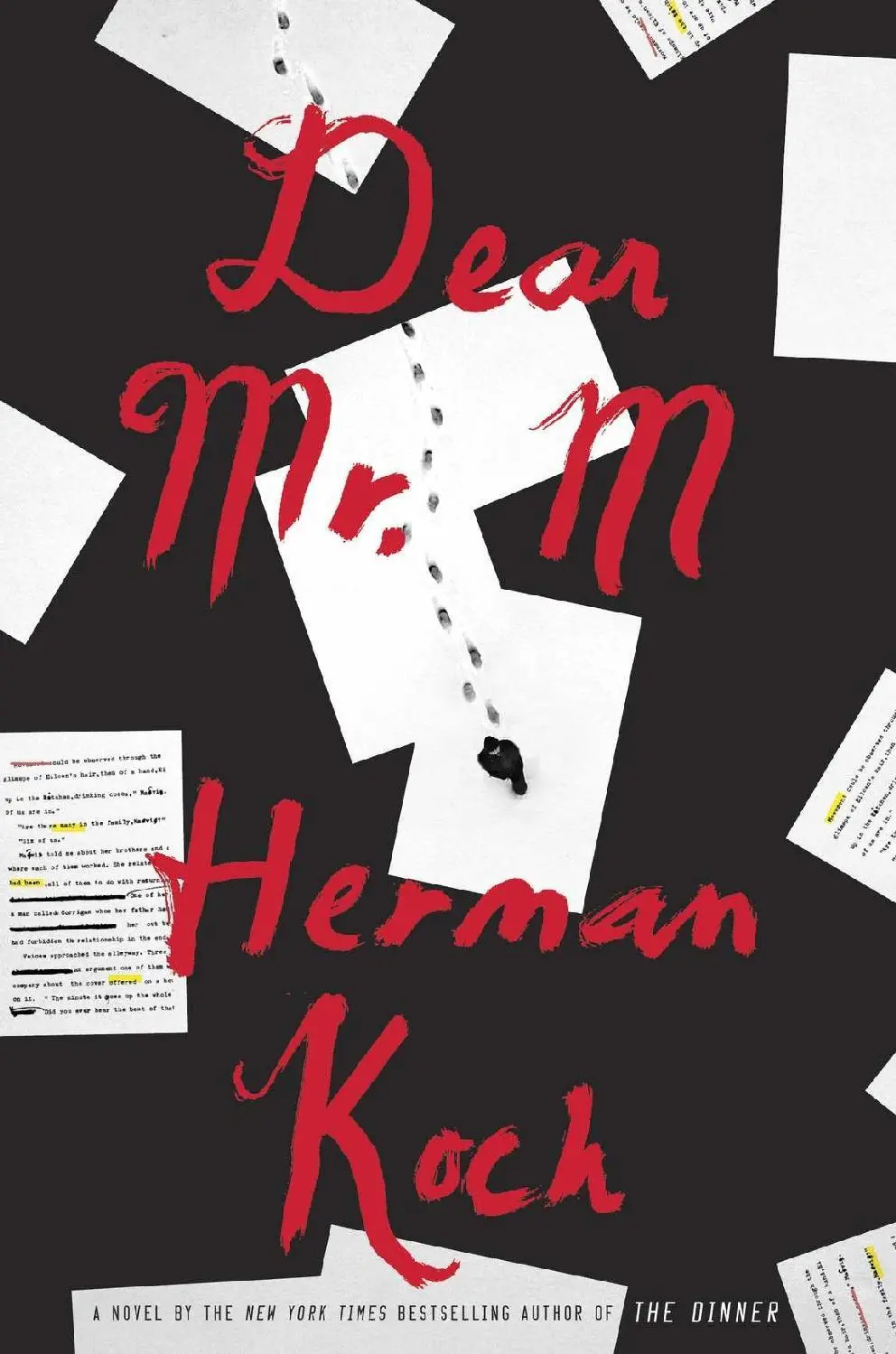
- Название:Dear Mr. M
- Автор:
- Издательство:Hogarth
- Жанр:
- Год:2016
- ISBN:нет данных
- Рейтинг книги:5 / 5. Голосов: 1
-
Избранное:Добавить в избранное
- Отзывы:
-
Ваша оценка:
Dear Mr. M: краткое содержание, описание и аннотация
Предлагаем к чтению аннотацию, описание, краткое содержание или предисловие (зависит от того, что написал сам автор книги «Dear Mr. M»). Если вы не нашли необходимую информацию о книге — напишите в комментариях, мы постараемся отыскать её.
bestselling author of
and Once a celebrated writer, M's greatest success came with a suspense novel based on a real-life disappearance. The book was called
, and it told the story of Jan Landzaat, a history teacher who went missing one winter after his brief affair with Laura, his stunning pupil. Jan was last seen at the holiday cottage where Laura was staying with her new boyfriend. Upon publication, M.'s novel was a bestseller, one that marked his international breakthrough.
That was years ago, and now M.'s career is almost over as he fades increasingly into obscurity. But not when it comes to his bizarre, seemingly timid neighbor who keeps a close eye on him. Why?
From various perspectives, Herman Koch tells the dark tale of a writer in decline, a teenage couple in love, a missing teacher, and a single book that entwines all of their fates. Thanks to
, supposedly a work of fiction, everyone seems to be linked forever, until something unexpected spins the "story" off its rails.
With racing tension, sardonic wit, and a world-renowned sharp eye for human failings, Herman Koch once again spares nothing and no one in his gripping new novel, a barbed tour de force suspending readers in the mysterious literary gray space between fact and fiction, promising to keep them awake at night, and justly paranoid in the merciless morning.
Dear Mr. M — читать онлайн бесплатно полную книгу (весь текст) целиком
Ниже представлен текст книги, разбитый по страницам. Система сохранения места последней прочитанной страницы, позволяет с удобством читать онлайн бесплатно книгу «Dear Mr. M», без необходимости каждый раз заново искать на чём Вы остановились. Поставьте закладку, и сможете в любой момент перейти на страницу, на которой закончили чтение.
Интервал:
Закладка:
So you already had it planned out? Before you started?
“No, no, absolutely not. All I’m trying to say is that I didn’t want to risk curtailing my freedom by being confronted all too abruptly with the facts. My imagination had to do the work. I’ve already told you about my premise. The relationship between the two of them. Pretty girl, a somewhat less handsome but still reasonably attractive boy. Who has the power over whom? As far as that goes, that teacher wasn’t interesting. He is only the victim. No one deserves to be bumped off for something like that: stalking a female student. But you can never completely shake the feeling that he, at least in part, brought it down on himself. That’s what we read back then in the first newspaper reactions, that’s what we heard in the conversations, both on TV and in the cafés. A grown man, a teacher who does something like that, can’t count on much sympathy. But I wasn’t interested in his motives anyway. Grown man falls for young girl, you can be sure he wasn’t the first man to have that happen. He is rejected, can’t take that and goes crazy. He turns into a bothersome stalker. Our sympathy rarely focuses on men who pant on the telephone, men who follow young girls all the way to their doorstep, who stand guard under their bedroom window at night. From that moment on, in fact, the girl becomes the victim. If she had gone downstairs, walked outside and kicked him hard in the balls, we would all have applauded.”
You talk about the novelist’s freedom. About his imagination, which could be obstructed by too much knowledge of the facts. But the reader is very much familiar with the facts. Of the most important facts, in any case. One reads your entire book knowing how it will end: with the teacher’s disappearance.
“That’s true. As a writer you’re free to use that, I think. It’s about the imagination, how do you as a writer fill in the blank spots: Could it have gone this way or that way? The real facts, the ones everyone knows, I should say, serve only as the perspective within which the narrative takes place. There are plenty of examples of that: you write about a Jewish family in Germany in 1938; everyone knows then that something is going to happen, that the sinister shadow of the future is already looming over the characters. These days a lot of writers — especially American writers — have their story begin on the morning of September 11. Or one week before. One day. Six months. It makes you read that story differently. Throughout the entire book you’re waiting, as it were, for the first plane to slam into the North Tower. That’s also the way I started on Payback. A teacher, a boy, and a girl. A high school. A holiday home in the snow. All the ingredients are laid out on the counter. The only thing left is to prepare the meal itself.”
The only difference being that everyone knows roughly when World War II started. The same way everyone knows — now, in hindsight — that neither of those planes flew into the Twin Towers by accident. But in Payback, you fantasize blithely about exactly what might have happened in that holiday cottage. Using what you call your imagination, you saddle the suspects with a theoretical murder.
“Something else occurs to me now. Because we were just talking about September 11. There is a fifteen-minute gap, a naive eternity, between the first plane and the second. Witnesses all thought it was a horrible accident. The dime only drops when the second plane hits. ‘Oh, my God!’ you hear them all shouting. But, as a writer, I’m much more interested in those minutes in between the two planes. In the accident. The belief that there are no evil intentions at play. We all look at it differently now. Now we see the footage of the first plane, and we already know. The accident is gone completely. It was there once, but it has disappeared for good. It’s the writer’s task to bring back that naive belief in the accident. To let us relive those minutes between the first and second planes. Today we sometimes see the Twin Towers in movies or TV series from before September 11, 2001, and you know right away that this is a fairly old movie, if you couldn’t tell already from the clothes and the cars. But those towers in a feature film also remind me of the old archive footage of German cities. A German city in 1938. You see streetcars and crowded cafés, mothers pushing prams, men playing chess in a park, and you know: This will all be laid to waste. Later, all this will be gone completely.
“In the same way, with the same perspective, I often looked at that school photo tacked up above my desk. A normal school photo. There are thousands, hundreds of thousands of photos like that. They’re all different, in that there are other people in each of those photos, yet they still all look alike. There are more similarities than differences. A teacher, a man or a woman, is posing with his or her students for the school photographer, the clothing and hairstyles usually tell you roughly when the picture was taken. Everyone is posing, everyone is looking straight into the camera, except perhaps that one student who doesn’t want to be there, the eternal troublemaker who would like to leave school as quickly as possible, and often there are also one or two jokers who are sticking out their tongues or holding up their fingers in a V behind the head of a fellow student, but those exceptions too are what make the school photos look alike. Sometimes though, with the passing of time, the photos take on more significance. That boy with the pale face and the greasy hair is now a famous writer; that girl with the round cheeks and pigtails is now an anchorwoman on the eight o’clock news; that handsome boy with the sunglasses pushed up on his forehead rose quickly through the ranks of the underworld and was shot and killed a few years ago in the parking lot of the Hilton Hotel. And then of course you have the class photos charged with portent, photos of classes in which more than half the students will not survive the war. But in those photos, too, the tone is largely set by innocence. The faith in a future. Every morning, before I started writing, that’s how I looked at the photo of Class 5A at the Spinoza Lyceum.
“These days there’s a program, it’s called Classmates ; it didn’t exist back when I started on my book, but I thought about it later on. That you would bring together that whole class and let each of them tell their version of that school year. They’re all in that picture. Herman and Laura of course, first of all, and the teacher, Mr. Landzaat. Obviously I changed all the names, but Mr. Landzaat is an improbable name for a book anyway, sounds a bit too suspect, too unbelievable. You always start by changing the names, then come the facts, at least insofar as they’re available.
“But to come back to that photo: I always looked at the protagonists first, then at the bit players, the other members of that group of friends. David, Lodewijk, Michael, Ron. I looked them in the eye, one by one, and I tried to figure out what they were thinking, what they knew, only later of course. The class picture was taken at that empty moment of innocence, the vacant space between the first and second planes, just after the summer vacation. Of course I asked about that, about when those pictures were usually taken: it was shortly after the start of the school year, after that same summer vacation when they went together to the house in Terhofstede, but still before the three protagonists came into alignment. Laura only hooked up with Mr. Landzaat during the junior-class field trip in late September; Herman and Laura became a couple during the fall vacation in October. In December, on Boxing Day, Mr. Landzaat visits Laura and Herman at the house in Terhofstede and disappears. None of that can be seen in the class photo, there are no signs; most of the students look serious, a few are smiling, many of the boys have their hands in their pockets: on the one hand they want to show their indifference to the fact that a class photo is being taken, on the other they want to be sure they look good in the picture. A class photo doesn’t show just a single individual, not like a passport photo or vacation snapshots. You can throw away a passport photo and have another one taken, as often as it takes to satisfy you, or perhaps I should say as often as it takes to be passable. We can dispose discreetly of vacation snapshots that aren’t flattering, or at least not glue them into a photo album. We stuff them into a shoebox that we run across every couple of years. ‘Oh, no, not that one! I look so terrible in that!’ and we try to yank the picture away from the person with whom we’re delving through photos on the couch. Then it disappears again for years. A class photo is a very different thing. We can’t allow ourselves to look bad in it, because later, a few weeks later, everyone in the class will see it. Hence all the serious expressions, the stiff poses, the mortal fear of looking stupid, laughable. The photo can’t be secreted away somewhere, because the whole class has it. ‘Look at that expression on Henry’s face, he looks like he had to pee so badly!’ ‘Oh, Yvonne’s teeth! Oh, I feel so sorry for her!’ ‘Theo, did you wash your hair before you came to school that day? Never do that again!’ You take the class photo home with you, you can hide it from your parents, but then parents aren’t likely to say that it makes you look like a retard: their love ruins their eyesight. You wish you could destroy the photo, tear it into little bits, or even better, burn it. But you know it’s no use. You have twenty-eight classmates, twenty-eight copies of your ugly face are in circulation for all eternity.”
Читать дальшеИнтервал:
Закладка:
Похожие книги на «Dear Mr. M»
Представляем Вашему вниманию похожие книги на «Dear Mr. M» списком для выбора. Мы отобрали схожую по названию и смыслу литературу в надежде предоставить читателям больше вариантов отыскать новые, интересные, ещё непрочитанные произведения.






Обсуждение, отзывы о книге «Dear Mr. M» и просто собственные мнения читателей. Оставьте ваши комментарии, напишите, что Вы думаете о произведении, его смысле или главных героях. Укажите что конкретно понравилось, а что нет, и почему Вы так считаете.