Herman Koch - Dear Mr. M
Здесь есть возможность читать онлайн «Herman Koch - Dear Mr. M» весь текст электронной книги совершенно бесплатно (целиком полную версию без сокращений). В некоторых случаях можно слушать аудио, скачать через торрент в формате fb2 и присутствует краткое содержание. Год выпуска: 2016, Издательство: Hogarth, Жанр: Современная проза, на английском языке. Описание произведения, (предисловие) а так же отзывы посетителей доступны на портале библиотеки ЛибКат.
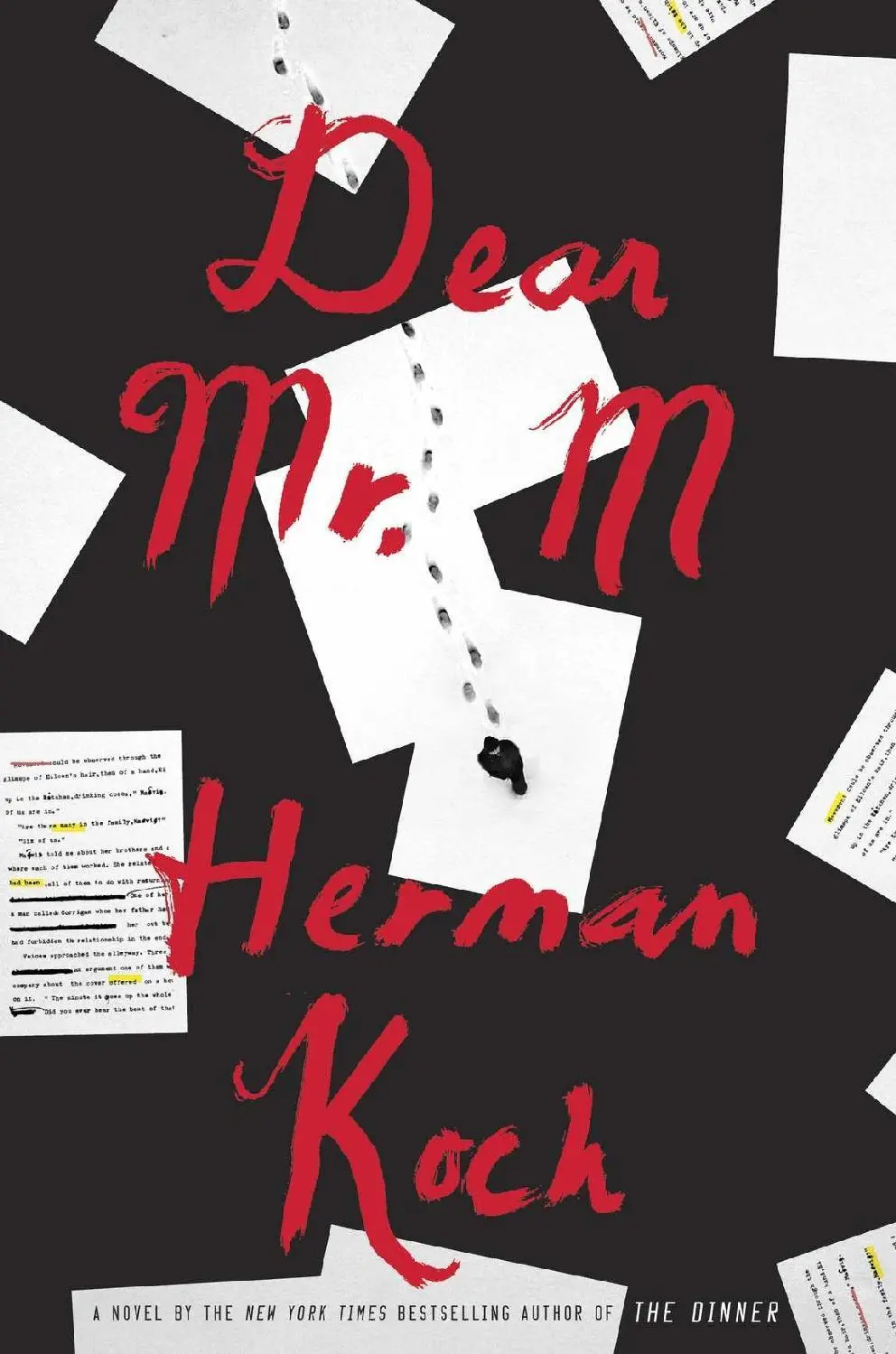
- Название:Dear Mr. M
- Автор:
- Издательство:Hogarth
- Жанр:
- Год:2016
- ISBN:нет данных
- Рейтинг книги:5 / 5. Голосов: 1
-
Избранное:Добавить в избранное
- Отзывы:
-
Ваша оценка:
Dear Mr. M: краткое содержание, описание и аннотация
Предлагаем к чтению аннотацию, описание, краткое содержание или предисловие (зависит от того, что написал сам автор книги «Dear Mr. M»). Если вы не нашли необходимую информацию о книге — напишите в комментариях, мы постараемся отыскать её.
bestselling author of
and Once a celebrated writer, M's greatest success came with a suspense novel based on a real-life disappearance. The book was called
, and it told the story of Jan Landzaat, a history teacher who went missing one winter after his brief affair with Laura, his stunning pupil. Jan was last seen at the holiday cottage where Laura was staying with her new boyfriend. Upon publication, M.'s novel was a bestseller, one that marked his international breakthrough.
That was years ago, and now M.'s career is almost over as he fades increasingly into obscurity. But not when it comes to his bizarre, seemingly timid neighbor who keeps a close eye on him. Why?
From various perspectives, Herman Koch tells the dark tale of a writer in decline, a teenage couple in love, a missing teacher, and a single book that entwines all of their fates. Thanks to
, supposedly a work of fiction, everyone seems to be linked forever, until something unexpected spins the "story" off its rails.
With racing tension, sardonic wit, and a world-renowned sharp eye for human failings, Herman Koch once again spares nothing and no one in his gripping new novel, a barbed tour de force suspending readers in the mysterious literary gray space between fact and fiction, promising to keep them awake at night, and justly paranoid in the merciless morning.
Dear Mr. M — читать онлайн бесплатно полную книгу (весь текст) целиком
Ниже представлен текст книги, разбитый по страницам. Система сохранения места последней прочитанной страницы, позволяет с удобством читать онлайн бесплатно книгу «Dear Mr. M», без необходимости каждый раз заново искать на чём Вы остановились. Поставьте закладку, и сможете в любой момент перейти на страницу, на которой закончили чтение.
Интервал:
Закладка:
But that wasn’t the nerve.
“No, the nerve was how recognizable it was. Every parent’s nightmare. Children who look normal in a school picture may turn out to be killers. And not just the parents’ nightmare. Also for their own age group. It’s still one of the books read most often by high-school students. Could that boy or girl sitting beside me be a murderer? Does that nice neighbor, who always feeds the cats when we’re on vacation, have his wife’s chopped-up corpse in the freezer? They were normal children, the ones we saw in the school picture. Perhaps a little more than normal. A pretty girl, a handsome boy. Not losers.”
There was also someone else in that picture.
“You’ve seen it?”
It’s on the Internet these days. A number of other pictures too. The little house in the snow. The teacher’s car. The nature preserve where he might be buried.
“That’s right, that teacher was also in the school picture. I cut it out of that magazine back then and hung it on the wall above my desk. Every day, before I started writing, I looked at that picture for a few minutes. It was taken a couple of months before the murder, that’s what made it so trenchant. There they are, I thought each morning. There’s the victim, and there are his killers. In one and the same classroom. He still doesn’t know a thing. They don’t know yet either. At least, that was my assumption. That the idea came up only much later.”
But in your book the idea came up beforehand. And not just after the teacher came by the holiday home.
“It was difficult. I struggled with the motive. Or let me put it another way: I simply couldn’t believe that they would have done it just like that. And of course, just like that wasn’t interesting for a book. In dramatic terms. Dramatically speaking, a murder is better if it’s planned beforehand.”
And do you still see it that way? What I mean is, did you actually believe in a murder that happened just like that, but decided that a murder like that wasn’t dramatic enough for your book?
“That’s an interesting question. I asked myself the same thing while I was writing it, and afterward too. Whether there really was a motive. That teacher had had an affair with the girl. She breaks it off, but he keeps bothering her. He goes to find her at the holiday home where she’s staying with her new boyfriend. Motives aplenty, you might say. An adult — an adult in a position of power — imposes himself on a couple of minors. They could have reported him to the police. Maybe that wouldn’t have helped much, but the teacher would have been fired at the very least.”
But these days, do you believe a bit more in the just like that theory? In the lack of a motive?
“There are any number of classic situations in which the balance of power is out of kilter right from the start. In which the stupid ones sometimes have more power than the intelligent ones. The few intelligent ones, I should say. An army, a prison. A sergeant humiliates a recruit who’s smarter than him. Guards torment a prisoner. At a high school, the balance of power is not so very different. A high-school teacher is not among the most intelligent of the species, and that’s putting it very mildly. A physics teacher will hardly be the one to develop a new theory of relativity. Generally speaking, they’re sort of stuck in the middle. Lame and frustrated. You can keep that up for a few years with empty talk about idealism and the transfer of knowledge to coming generations, but in the long run a frustrated intelligence like that devours itself from the inside out. Teachers don’t stick around long enough to get old. That has nothing to do with their ability or inability to maintain order. Day in, day out, they stand in front of a classroom full of intelligences just as mediocre as their own. In principle, things can go on that way for years. But every year there are also a few people in the class who are more intelligent than them. They can’t handle that. Just like a soccer trainer who was once a mediocre player himself, teachers will try to frustrate an intelligent student wherever and whenever they can. The soccer trainer makes his best player sit on the bench. The teacher can’t give low grades to the student who’s smarter than him. That student already gets those. Only mediocre, hardworking students get good grades. The above-average intelligence is bored to death in high school. A C-plus is the best he can do. And so the frustrated teacher thwarts him in other ways.
“Deep in his heart, what the frustrated teacher hopes for is that the goaded student will explode. You can go on tormenting a prisoner until he finally stabs a guard to death. In the barracks, the recruit who has been provoked will yank the machine gun out of the sergeant’s hands and open fire. The employee who has been sacked returns to his former place of work and kills the personnel manager and his secretary before taking his own life. But that still happens only rarely at high schools. Whenever one or more of the students finally settles accounts, it’s automatically front-page news. We are shocked by it. We are conditioned to have it shock us. A high school! What’s become of the world when high schools are no longer safe? But we see no further than the ends of our noses. What has always surprised me, in fact, is that it doesn’t happen much more often.
“For years, a student is made a fool of by a teacher — by an inferior, mediocre intelligence. One day the provoked student comes into the classroom to get even. He restores the natural order of things. Sometimes a student like that will go wild and wreak vengeance on the whole school. On the innocent. Innocent in the objective sense, perhaps, but seen from a broader perspective those are the stooges who are now getting a taste of their own medicine. The obedient students, the eager beavers who have spent all those years trying to cull favor with their teachers. The weaklings who have lowered themselves. During the nightly news shows after a massacre, all the attention focuses on the culprits. People say that they had been acting peculiar for years. They had watched violent films, of course, and played even more violent games on their PlayStations. The ‘wrong’ books were found in their bookcases and desk drawers. Biographies of Hitler and Mussolini. They also dressed weirdly or extravagantly, of course, and were severely withdrawn because they didn’t take part in all kinds of school social activities. But then you can still wonder: Who is more disturbed? The student who wants to be left in peace, or the student who takes part voluntarily in all kinds of idiotic activities meant to develop his or her ‘social skills’? In an army, it’s always the socially skilled who volunteer first for an over-the-top suicide charge. Those who function well in a group will find it easier to herd the villagers together onto the village square. To torch the houses and then separate the men from the women.”
In your book you chose to use the perpetrators’ perspective. For the moment, let’s leave aside the question of whether they were actually perpetrators in the usual sense of the word. Did you ever consider trying to meet with them? To ask them what happened? Or what might have happened, I suppose I should say.
“Of course I considered that. I would have been interested to find out more. On the other hand, though, I realized right away that it would curtail my freedom. My freedom as a novelist. As it was, the teacher’s disappearance was only a pretext. I could fill in the rest myself. What do they call that: ‘based loosely on the facts’? I was afraid that, if I actually succeeded in meeting the boy or the girl, I would hear things that would endanger my novel, the way I saw it in my mind’s eye.”
Читать дальшеИнтервал:
Закладка:
Похожие книги на «Dear Mr. M»
Представляем Вашему вниманию похожие книги на «Dear Mr. M» списком для выбора. Мы отобрали схожую по названию и смыслу литературу в надежде предоставить читателям больше вариантов отыскать новые, интересные, ещё непрочитанные произведения.




Обсуждение, отзывы о книге «Dear Mr. M» и просто собственные мнения читателей. Оставьте ваши комментарии, напишите, что Вы думаете о произведении, его смысле или главных героях. Укажите что конкретно понравилось, а что нет, и почему Вы так считаете.