Herman Koch - Dear Mr. M
Здесь есть возможность читать онлайн «Herman Koch - Dear Mr. M» весь текст электронной книги совершенно бесплатно (целиком полную версию без сокращений). В некоторых случаях можно слушать аудио, скачать через торрент в формате fb2 и присутствует краткое содержание. Год выпуска: 2016, Издательство: Hogarth, Жанр: Современная проза, на английском языке. Описание произведения, (предисловие) а так же отзывы посетителей доступны на портале библиотеки ЛибКат.
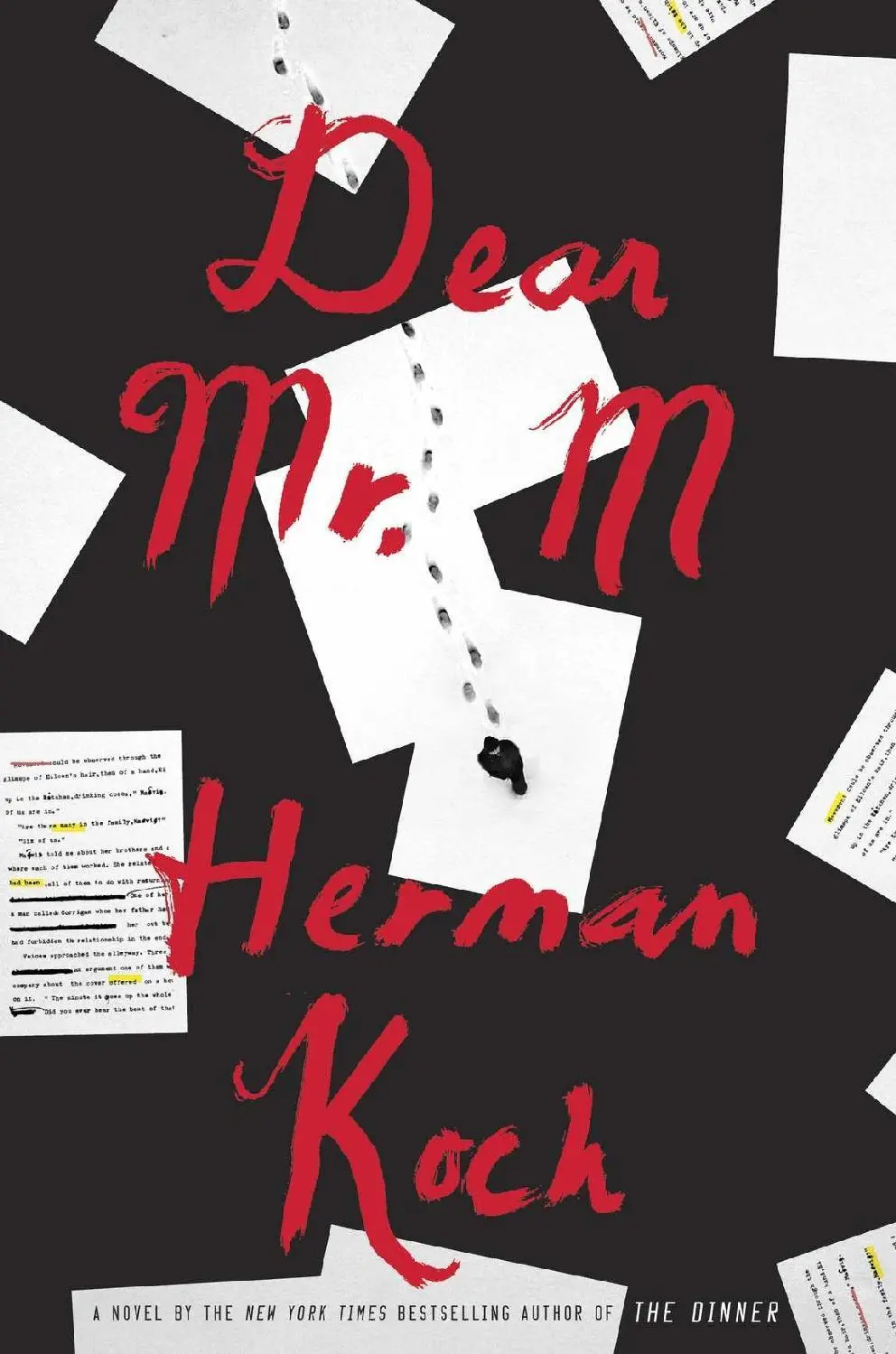
- Название:Dear Mr. M
- Автор:
- Издательство:Hogarth
- Жанр:
- Год:2016
- ISBN:нет данных
- Рейтинг книги:5 / 5. Голосов: 1
-
Избранное:Добавить в избранное
- Отзывы:
-
Ваша оценка:
Dear Mr. M: краткое содержание, описание и аннотация
Предлагаем к чтению аннотацию, описание, краткое содержание или предисловие (зависит от того, что написал сам автор книги «Dear Mr. M»). Если вы не нашли необходимую информацию о книге — напишите в комментариях, мы постараемся отыскать её.
bestselling author of
and Once a celebrated writer, M's greatest success came with a suspense novel based on a real-life disappearance. The book was called
, and it told the story of Jan Landzaat, a history teacher who went missing one winter after his brief affair with Laura, his stunning pupil. Jan was last seen at the holiday cottage where Laura was staying with her new boyfriend. Upon publication, M.'s novel was a bestseller, one that marked his international breakthrough.
That was years ago, and now M.'s career is almost over as he fades increasingly into obscurity. But not when it comes to his bizarre, seemingly timid neighbor who keeps a close eye on him. Why?
From various perspectives, Herman Koch tells the dark tale of a writer in decline, a teenage couple in love, a missing teacher, and a single book that entwines all of their fates. Thanks to
, supposedly a work of fiction, everyone seems to be linked forever, until something unexpected spins the "story" off its rails.
With racing tension, sardonic wit, and a world-renowned sharp eye for human failings, Herman Koch once again spares nothing and no one in his gripping new novel, a barbed tour de force suspending readers in the mysterious literary gray space between fact and fiction, promising to keep them awake at night, and justly paranoid in the merciless morning.
Dear Mr. M — читать онлайн бесплатно полную книгу (весь текст) целиком
Ниже представлен текст книги, разбитый по страницам. Система сохранения места последней прочитанной страницы, позволяет с удобством читать онлайн бесплатно книгу «Dear Mr. M», без необходимости каждый раз заново искать на чём Вы остановились. Поставьте закладку, и сможете в любой момент перейти на страницу, на которой закончили чтение.
Интервал:
Закладка:
“Happen to be,” you say. Does that mean that being colleagues makes it difficult to be friends?
“No, on the contrary. If you ask me, you can be good friends with a colleague whose books you don’t particularly enjoy reading. And the other way around too: that a writer you think is good turns out to have an intolerable personality in real life.”
Is that a hard-and-fast rule?
“A rule? How am I to see that?”
You should see it in the sense that perhaps it’s always that way. That friendships can exist only between writers who find each other’s work fairly ho-hum. That you can never be friends with a colleague who is more or less your equal, who writes books that stand comparison to yours. Let alone with a colleague who is better than you.
“Jealousy exists. Envy. Why do I sell much less than colleague R? Why does L always come in right at the top of the bestseller list? I mean, these days it’s no longer such a circus for me when it comes to sales figures, but back in the days when I wrote the occasional bestseller, I felt as though I needed to apologize all the time. Sorry, my book is selling well. There are people who want to read my books. I’m so sorry. Next time I’ll try to write something no one wants to read.”
Among women, among girls, one often sees that a pretty girl chooses a very unremarkable girl as her best friend. Not an ugly girl, no, an unremarkable girl. The unremarkable girl’s function is to cast her pretty friend’s beauty into even sharper relief. At the disco, it’s immediately clear that the pretty girl will get the pretty boy and the unremarkable girl will get the nerd. Is it that way with friendships between writers? That the successful writer, for example, surrounds himself with less successful writers? As “friends”?
“That’s a striking comparison you make there. It could very well be. One does, indeed, rarely see two beautiful women who are best friends. That’s too much competition.”
Take your colleague N, for example.
“What about colleague N?”
At this moment, he’s your most direct competitor. In your age category, perhaps your only competitor.
“You’re right, he suffers from no lack of attention. Completely deserved, by the way. I should say that right away. The Garden of Psalms is also, without a doubt, his best book.”
Do you really think so?
“Well, let me put it differently. People consider it his best book. The critics. My own taste is different, but he is good in his own way. I see that too.”
But you don’t wish you’d written it yourself?
“No, no, not at all. I mean, however good it may be, I find the style…the subject matter, how shall I put it…a bit too easy. And that title. Why not call things by their name?”
Would you have had a better idea for the title?
“Not right off the bat. I mean, I’d have to think about it. But The Garden of Psalms …I don’t know, it’s as though the title was already there before N used it. That’s not good.”
N recently changed publishers.
“Really?”
He hasn’t done badly by the switch at all.
“But the important thing is the book itself, first and foremost. If the book’s no good, all those posters around town won’t help.”
Do you really believe that? You sound a bit like your own publisher. “The book’s the thing,” isn’t that what he always says? But do you believe that as well?
“Quality will always win out, I’m convinced of that. A good book can get by without posters or an author who speaks so glibly on all kinds of talk shows.”
But isn’t it also the times that are changing? Isn’t “the book’s the thing” just another way of saying, “in any case, we’re not going to push it”?
“In the days when my books were still being bought and read widely, at least, that wasn’t necessary.”
You’re referring to Payback?
“ Payback was the first big success, but a few of the other books that followed didn’t do badly either. The Hour of the Dog …”
But these days it’s all subsided a bit, right? Liberation Year, of course, is still “the new M.” But do you mind my asking how many print runs it’s had till now?
“There’s a new one coming up. But you should also know that the first print run was quite large.”
What kind of numbers are we talking about here?
“I’d have to ask for the exact figures. But they’re the kind of figures a debuting author could only dream of.”
Until recently, you and your colleague N had the same publisher.
“That’s correct.”
In the interviews about his new book, N wasn’t very complimentary about his former publisher.
“We found that rather bad form too. By ‘we’ I mean the collective authors. That kind of thing is simply not done. It’s the kind of ‘kick them when they’re down’ tactic one usually sees only on the soccer pitch.”
But was he right?
“About what?”
Was he right to say that his former publisher, and now your publisher alone, has lost all contact with reality?
“He still has a very impressive list. One author who runs off can’t change that.”
But they’re all authors who are closer to the grave than to the cradle, if I may put it that way.
“Age is not a factor here. There are plenty of examples of writers who only really blossom at an advanced age.”
Do you count yourself among those? Do you feel that your best work is yet to come?
“I never think that way. I go from book to book. If I knew that I had already written my best work, I could just as well stop right now.”
But meanwhile, the sales of N’s latest book are astronomical.
“That’s true, and I’m happy for him. I sincerely mean that.”
Do you ever dream about that, that one of your books might take the bestseller lists by storm?
“The answer to that is the same as my earlier one. As to whether my best work is yet to come. I don’t worry about bestseller lists. No self-respecting author should.”
Let’s talk about Payback. Your most successful book to date. Do you also consider it your best book?
“No, definitely not. People ask me that sometimes. But I wrote better books before that, and afterward, too, if you ask me. Payback took on a life of its own. Apparently, I struck a chord somewhere. An open nerve.”
And which chord was that, in your opinion?
“A writer should never try to analyze his own work too deeply in retrospect. That can be crippling. Overly deep analyses by others can be fatal too. Sartre needed a whole book to interpret Jean Genet’s work. After that, Genet never wrote another word. But all right, it was a long time ago, so I’ll try to answer you. Even though I believe I’ve formulated that answer before this, so please don’t expect anything earthshaking.”
An “open nerve,” you said. I’ve never heard you say that before. Personally, I find that much more evocative than a “chord.”
“The particulars were well known. Everyone was shocked by that affair. Two young people — still children, really — do away with a teacher. Or at least make him disappear. No body was ever found. I remember it so well, the newspapers of course weren’t allowed to publish pictures of the culprits. To protect their privacy. But a couple of magazines did anyway. We saw their faces. A school picture. That girl with the long black hair. The boy with his blond curls. Not exactly two killers you would pick out of a lineup later on. Pick out of a lineup in retrospect. On the contrary. The girl was absolutely the prettiest girl in the class. But I looked hardest at the boy. He wasn’t bad-looking either, maybe even more handsome than most of the other boys in the picture. But then handsome in a way not all girls like. I can’t recall exactly what it was. A face that was a little too thin, a slender body. Gawky. What happens with a boy like that when the prettiest girl in the class chooses him ? I asked myself. I saw a story in it right away. Just a story at first, then later it become a complete book. Did he do it for her ? That was what I asked myself. That was the question I would try to answer by writing the story.”
Читать дальшеИнтервал:
Закладка:
Похожие книги на «Dear Mr. M»
Представляем Вашему вниманию похожие книги на «Dear Mr. M» списком для выбора. Мы отобрали схожую по названию и смыслу литературу в надежде предоставить читателям больше вариантов отыскать новые, интересные, ещё непрочитанные произведения.


Обсуждение, отзывы о книге «Dear Mr. M» и просто собственные мнения читателей. Оставьте ваши комментарии, напишите, что Вы думаете о произведении, его смысле или главных героях. Укажите что конкретно понравилось, а что нет, и почему Вы так считаете.