Herman Koch - Dear Mr. M
Здесь есть возможность читать онлайн «Herman Koch - Dear Mr. M» весь текст электронной книги совершенно бесплатно (целиком полную версию без сокращений). В некоторых случаях можно слушать аудио, скачать через торрент в формате fb2 и присутствует краткое содержание. Год выпуска: 2016, Издательство: Hogarth, Жанр: Современная проза, на английском языке. Описание произведения, (предисловие) а так же отзывы посетителей доступны на портале библиотеки ЛибКат.
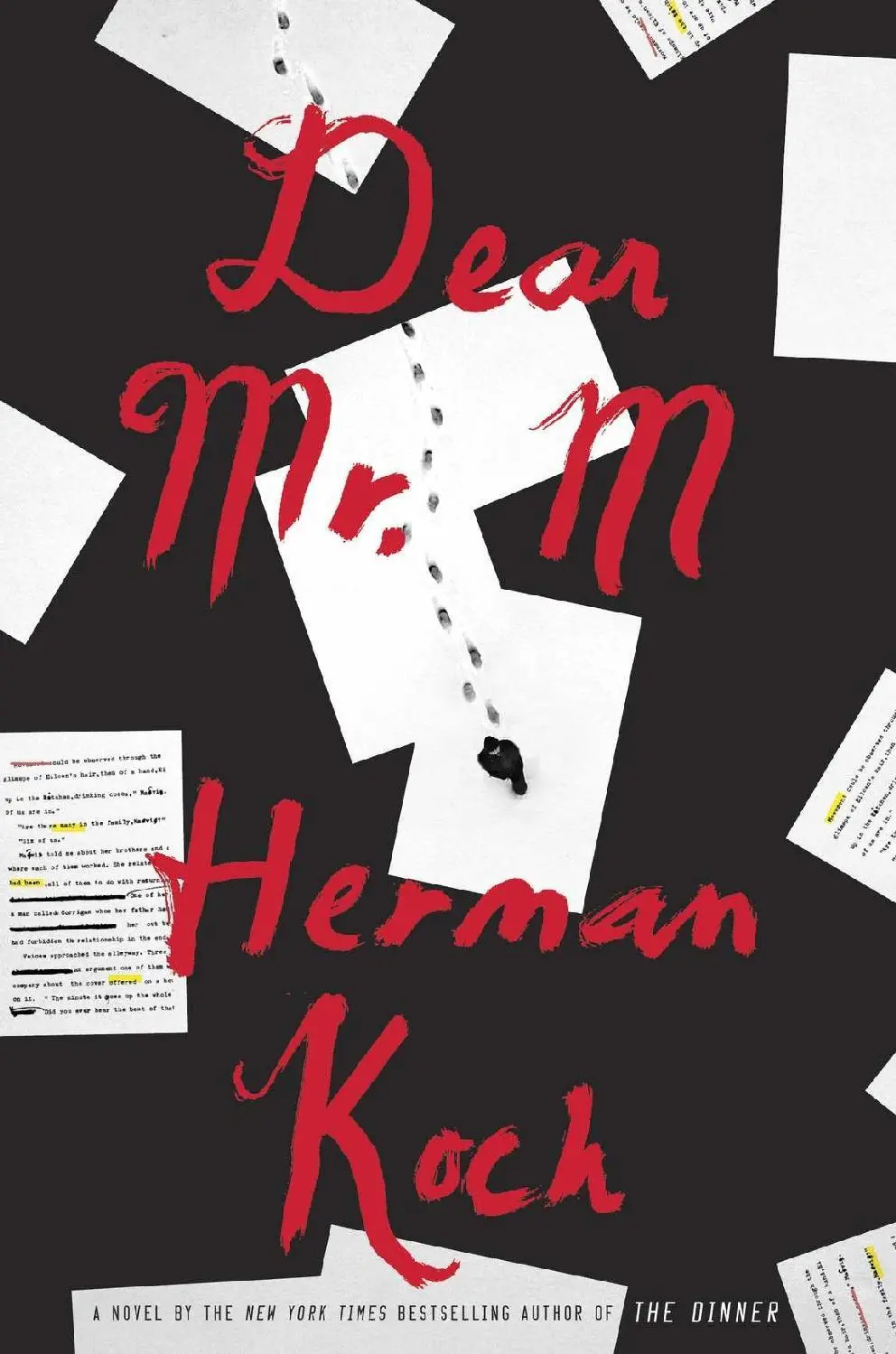
- Название:Dear Mr. M
- Автор:
- Издательство:Hogarth
- Жанр:
- Год:2016
- ISBN:нет данных
- Рейтинг книги:5 / 5. Голосов: 1
-
Избранное:Добавить в избранное
- Отзывы:
-
Ваша оценка:
Dear Mr. M: краткое содержание, описание и аннотация
Предлагаем к чтению аннотацию, описание, краткое содержание или предисловие (зависит от того, что написал сам автор книги «Dear Mr. M»). Если вы не нашли необходимую информацию о книге — напишите в комментариях, мы постараемся отыскать её.
bestselling author of
and Once a celebrated writer, M's greatest success came with a suspense novel based on a real-life disappearance. The book was called
, and it told the story of Jan Landzaat, a history teacher who went missing one winter after his brief affair with Laura, his stunning pupil. Jan was last seen at the holiday cottage where Laura was staying with her new boyfriend. Upon publication, M.'s novel was a bestseller, one that marked his international breakthrough.
That was years ago, and now M.'s career is almost over as he fades increasingly into obscurity. But not when it comes to his bizarre, seemingly timid neighbor who keeps a close eye on him. Why?
From various perspectives, Herman Koch tells the dark tale of a writer in decline, a teenage couple in love, a missing teacher, and a single book that entwines all of their fates. Thanks to
, supposedly a work of fiction, everyone seems to be linked forever, until something unexpected spins the "story" off its rails.
With racing tension, sardonic wit, and a world-renowned sharp eye for human failings, Herman Koch once again spares nothing and no one in his gripping new novel, a barbed tour de force suspending readers in the mysterious literary gray space between fact and fiction, promising to keep them awake at night, and justly paranoid in the merciless morning.
Dear Mr. M — читать онлайн бесплатно полную книгу (весь текст) целиком
Ниже представлен текст книги, разбитый по страницам. Система сохранения места последней прочитанной страницы, позволяет с удобством читать онлайн бесплатно книгу «Dear Mr. M», без необходимости каждый раз заново искать на чём Вы остановились. Поставьте закладку, и сможете в любой момент перейти на страницу, на которой закончили чтение.
Интервал:
Закладка:
“I want to tell you just one last thing, sweetheart,” his mother said now. “And I want you to keep it in mind. You are who you are. Always keep being yourself.”
Lodewijk waited, expecting her to say more, but the only sound was his mother’s labored breathing in the dark. After school tomorrow, he thought, he would bring her a herring. Two herrings, so they could eat them together. After a few minutes he lifted his mother in his arms and carried her back to her bed, she weighed almost nothing these days, no more than a full bag of groceries.
Another thing Lodewijk had arranged for the funeral was that, after the French chansons were over, the coffin was not to be lowered through the floor. But that was the way they always did it, the funeral home people tried to explain to him: after the final piece of music or the last speech, the coffin disappears. It sinks into the ground, down one level, to where the ovens are. But that seemed too dramatic to Lodewijk. “No, not even dramatic,” he said. “Completely kitschy.” He was reminded of what his mother had said about him being who he was. Himself. There were no speeches. After the final notes of “Sous le Ciel de Paris” they all shuffled slowly past the coffin, then outside. It was a lovely day, everyone was happy to be out in the fresh air again, Laura recalled. The trees around the cemetery were big and old, and birds were singing. Somewhere just outside the cemetery they heard the clang of a railway crossing, and then the hiss of a train passing at high speed. There was food and something to drink in the auditorium, but most of them soon took their glasses or coffee cups back outside. They stood there for a while, talking beneath the trees. Here and there people were laughing again. Beside Lodewijk’s group of friends there were a few of his mother’s more distant family members, plus her sister and a few cousins, a few colleagues from the office at the music school where she had worked for the last six years after her husband died.
Laura couldn’t help but notice the way people glanced furtively at her father. As always, the famous face gave no sign that it noticed the glances; it was only eleven-thirty, and Laura’s mother and he were the only ones who had already poured themselves a glass of red wine. She heard her father telling Lodewijk that the music was lovely, then he started in about a woman he’d had as a guest on his show, a university professor who had written a book about coping with bereavement.
The original idea had been that Lodewijk would move in with his mother’s sister, who had a house in Arnhem, a city where, he said, “no one should ever want to live.” If he moved to Arnhem he would have to start over at a new school, and what was maybe even worse, he would be too far from his friends. Friends who, as the aunt also understood by now, were very important to Lodewijk at this difficult moment in his life, and who could perhaps do more for him than some vague family member he had visited only on four Sunday afternoons a year throughout his youth. For a very short time the aunt had considered moving temporarily to Amsterdam, but — to his great relief — had finally abandoned the idea (which Lodewijk referred to as the “worst-case scenario”) as too impractical.
At the very end of the funeral, when almost everyone was getting ready to drive back to Amsterdam, Laura and Lodewijk were standing together when the aunt came to say goodbye. She was a little woman, just like Lodewijk’s mother: she had to stand on tiptoe to kiss him on the cheeks.
She had barely turned away when Lodewijk wiped both cheeks with the back of his hand and made an ugly face at Laura.
“Blech,” he said quietly, but in Laura’s mind still a little too loudly. “At least we’ve got that out of the way.”
Laura burst out laughing. “So what now?” she asked. “What are you going to do now?”
Lodewijk stepped up and put his arms around her. “I’m a poor little orphan now, Laura. Will you take good care of me?” He had laid his head on her shoulder as he hugged her, but then he pulled back and looked at her. He was grinning broadly — looking relieved, mostly, Laura saw.
“You can always come and live with us, you know,” she said. “Meals, a room, there’s plenty of space.”
“Thanks. But first I want to see how it goes on my own. Throw open the windows. The first thing is to get that hospital smell out of the house.”
Laura went by Lodewijk’s house a few days later, and was struck by how light it was, so much lighter than when his mother was still alive. There were empty pizza boxes on the parlor table, and dozens of garbage bags lined up in the hall.
“What’s all that?” she asked.
“My mom’s clothes, mostly. And all those sweaters and vests she knitted for me.”
Laura looked at him, she wanted to say something, but didn’t know quite what.
“I need to do it now,” he said. “Later on I might grow sentimental. Get attached to all the wrong things. I want to make a new start. Can you still smell it?”
“What?”
“That hospital odor. It had seeped into everything. Into the curtains, the bedding, even my clothes. But I sponged down the whole house, and I kept all the windows open for three nights.”
Laura sniffed, she smelled something, but it wasn’t a hospital, more like cleaning products and soap — and a vague, oniony smell, probably from the pizza boxes.
“You still can’t get that Herman off your mind, can you?” Lodewijk asked suddenly.
“What?” Laura said. “What are you talking about?” Don’t blush, she told herself. Don’t blush, not now.
“Laura, sweetheart, you don’t have to play make-believe with me. I saw the way you looked at him at the funeral. How you looked at him the whole time. And I can’t blame you. He is a bit skinny, and he’s certainly no Mick Jagger, but I know what I would do if I were you. I know what I would do myself. That type. Not really masculine. Wonderful! I can stare at that for hours.”
Laura looked into Lodewijk’s eyes and saw something she had never seen before: the new Lodewijk, a Lodewijk who would no longer wear knitted sweaters, who would be who he was from now on, the way his mother had made him promise, who had chased away the hospital smell and would be himself.
—
“Ron asked why you named that movie Life Before Death, ” Miriam said. “I’m curious about that too.”
“I’m glad you mentioned it,” Herman replied. He was back at the dinner table now, and at first it seemed as though he was teasing Miriam as he put on a mock earnest expression and closed his eyes for a moment, but when he opened them again he smiled at her. “That you both asked. No, but seriously. Life before death. Because that’s what it is, because that’s what we’re seeing. Two adults who have nothing more to say to each other just go on living. They stay together ‘for the children’s sake,’ as they say. But the only child in the house is me. They didn’t ask me a thing. That’s too bad. I can see their situation from a greater distance. I could provide them with advice.”
“But your father’s got someone else, doesn’t he?” Miriam said. “It could be that he’d rather be with that other woman, but that he doesn’t dare to go away. Precisely because he has a child. Because he has you.”
Laura saw how Herman’s expression suddenly stiffened; it lasted less than a second perhaps, Laura looked around at the others, but she was almost certain that she was the only one who’d seen it.
“If my father were to ask my opinion, I would strongly urge him to buzz off as fast as possible to that cute new girlfriend of his,” Herman said. “I would tell him that he’s not doing me a favor by sitting at the table with that bored, deadpan face of his. But maybe your parents are nice, Miriam? I don’t know. Maybe you do have parents like that. They do exist. I know a couple. Laura, for example, has nice parents.”
Читать дальшеИнтервал:
Закладка:
Похожие книги на «Dear Mr. M»
Представляем Вашему вниманию похожие книги на «Dear Mr. M» списком для выбора. Мы отобрали схожую по названию и смыслу литературу в надежде предоставить читателям больше вариантов отыскать новые, интересные, ещё непрочитанные произведения.









Обсуждение, отзывы о книге «Dear Mr. M» и просто собственные мнения читателей. Оставьте ваши комментарии, напишите, что Вы думаете о произведении, его смысле или главных героях. Укажите что конкретно понравилось, а что нет, и почему Вы так считаете.