Herman Koch - Dear Mr. M
Здесь есть возможность читать онлайн «Herman Koch - Dear Mr. M» весь текст электронной книги совершенно бесплатно (целиком полную версию без сокращений). В некоторых случаях можно слушать аудио, скачать через торрент в формате fb2 и присутствует краткое содержание. Год выпуска: 2016, Издательство: Hogarth, Жанр: Современная проза, на английском языке. Описание произведения, (предисловие) а так же отзывы посетителей доступны на портале библиотеки ЛибКат.
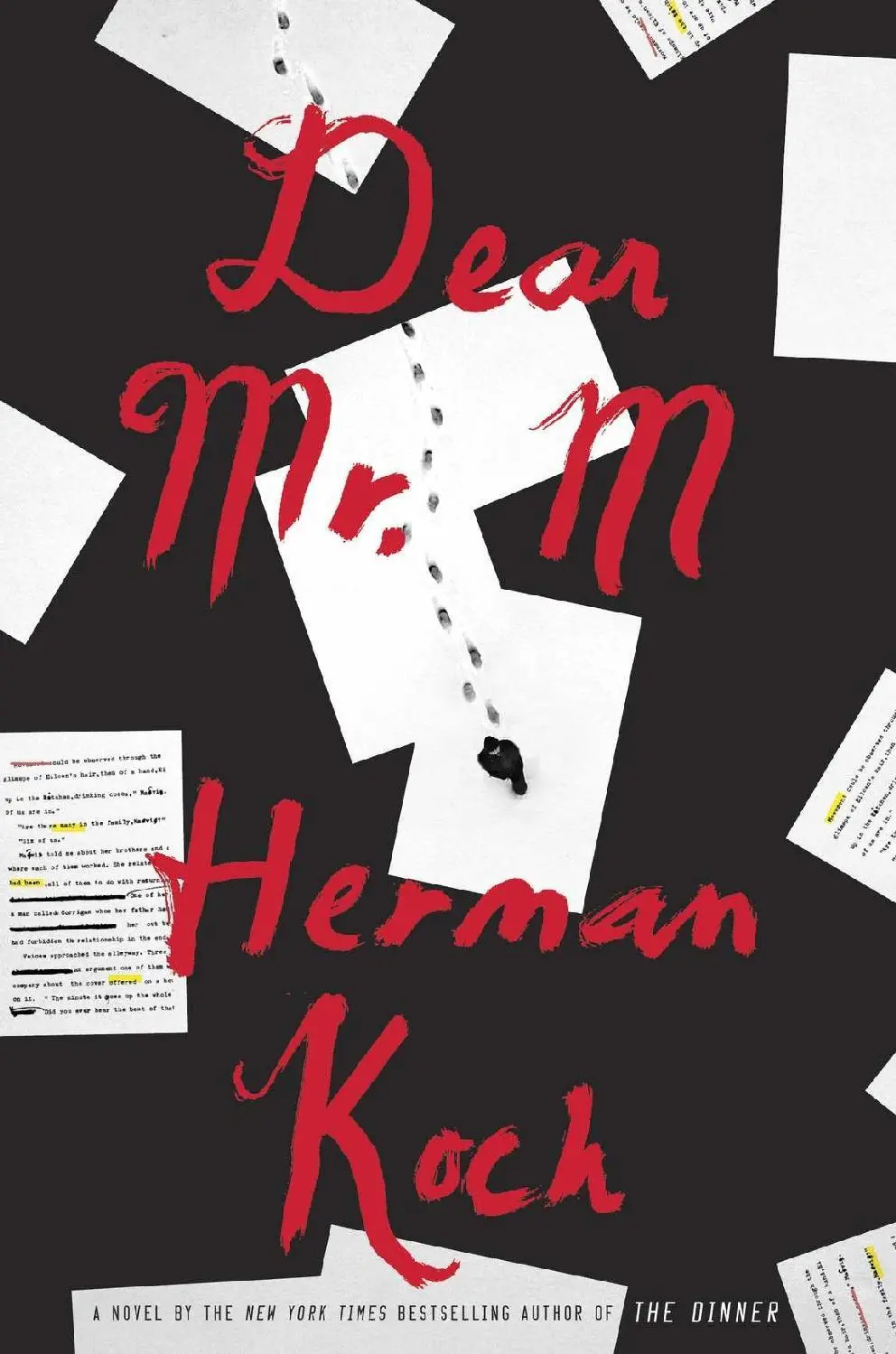
- Название:Dear Mr. M
- Автор:
- Издательство:Hogarth
- Жанр:
- Год:2016
- ISBN:нет данных
- Рейтинг книги:5 / 5. Голосов: 1
-
Избранное:Добавить в избранное
- Отзывы:
-
Ваша оценка:
Dear Mr. M: краткое содержание, описание и аннотация
Предлагаем к чтению аннотацию, описание, краткое содержание или предисловие (зависит от того, что написал сам автор книги «Dear Mr. M»). Если вы не нашли необходимую информацию о книге — напишите в комментариях, мы постараемся отыскать её.
bestselling author of
and Once a celebrated writer, M's greatest success came with a suspense novel based on a real-life disappearance. The book was called
, and it told the story of Jan Landzaat, a history teacher who went missing one winter after his brief affair with Laura, his stunning pupil. Jan was last seen at the holiday cottage where Laura was staying with her new boyfriend. Upon publication, M.'s novel was a bestseller, one that marked his international breakthrough.
That was years ago, and now M.'s career is almost over as he fades increasingly into obscurity. But not when it comes to his bizarre, seemingly timid neighbor who keeps a close eye on him. Why?
From various perspectives, Herman Koch tells the dark tale of a writer in decline, a teenage couple in love, a missing teacher, and a single book that entwines all of their fates. Thanks to
, supposedly a work of fiction, everyone seems to be linked forever, until something unexpected spins the "story" off its rails.
With racing tension, sardonic wit, and a world-renowned sharp eye for human failings, Herman Koch once again spares nothing and no one in his gripping new novel, a barbed tour de force suspending readers in the mysterious literary gray space between fact and fiction, promising to keep them awake at night, and justly paranoid in the merciless morning.
Dear Mr. M — читать онлайн бесплатно полную книгу (весь текст) целиком
Ниже представлен текст книги, разбитый по страницам. Система сохранения места последней прочитанной страницы, позволяет с удобством читать онлайн бесплатно книгу «Dear Mr. M», без необходимости каждый раз заново искать на чём Вы остановились. Поставьте закладку, и сможете в любой момент перейти на страницу, на которой закончили чтение.
Интервал:
Закладка:
The man and woman at the table didn’t look at each other, they used their knives and forks to cut the food on the plates in front of them. In the foreground was a third plate. That plate was empty.
At a snail’s pace, the camera moved closer. Michael began to play, a simple, rather sad melody line that seemed vaguely familiar to Laura, but she didn’t know why — something from a movie, she thought.
The camera angle lowered, the cameraman had taken a seat on the remaining chair, now he zoomed in on the empty plate, then panned up to the man, to Herman’s father.
For a moment the man kept chewing, then he raised his napkin to his lips, wiped them and looked to the right, into the camera. There was something in the way he looked, Laura saw, as though he was doing his best to look amused, but his eyes were empty and dull. The corners of his mouth curled up in a failed attempt at a smile. Still looking into the lens, he said something, there was no sound, they couldn’t hear anything, but the lips moved as they spoke a short sentence. Panning quickly, the camera moved to the far side of the table and the woman was on screen. Herman’s mother. She too looked straight into the lens. She was wearing glasses with black frames that curled up slightly on top, which gave her a catlike look. She too smiled at her son — a dejected smile it was, sad, but it was real. Then you saw a hand holding a wineglass. Herman’s mother took a sip, then quickly another, now she was no longer looking into the lens but straight ahead, at the spot across the table where Herman’s father was seated. It wasn’t really a look, more a sort of gaze, the way you gaze at a fire that is slowly going out. The camera started moving again, apparently the cameraman had stood up and was backing off slowly, until the dinner table with the two parents eating at it once again filled the entire frame.
“I recognize it,” Lodewijk said, once Herman had turned off the projector and Michael had stopped playing. “That music.”
“Why’s it called Life Before Death ?” Ron asked.
“You tell me, Lodewijk,” Herman said.
“It’s what they play at military funerals,” Lodewijk went on. “In America. At Arlington! Now I remember, one of those military cemeteries, outside Washington, DC, I think, with all those rows of white crosses. I saw it on TV a while ago, some documentary about Vietnam. A coffin with an American flag draped over it, and then a soldier with a trumpet. Damn, it was a trumpet, not a saxophone! But that was good, Michael. If I’d known you were so good, I would have asked you to play that at my mom’s funeral.”
They were quiet for a moment, probably all thinking about Lodewijk’s mother’s funeral a few months back, Laura supposed. It had been at a hilly cemetery somewhere close to the dunes. And because his father wasn’t around anymore either, Lodewijk, as the only child, had organized the whole thing himself: from the color of the mourning cards (a purple border instead of the customary black) to the music (two French chansons, his mother’s favorite music: “Les Feuilles Mort” sung by Yves Montand, and “Sous le Ciel de Paris” by Juliette Greco). Lodewijk had followed his mother’s wishes to a tee. Just before the summer vacation, a few weeks before she died, a sound had woken him in the middle of the night. He went to see what it was and found his mother in the big recliner in the parlor, in front of the window; by then she could barely move on her own, it was little less than a miracle that she’d been able to get from her hospital bed to the chair. The bed was a real hospital bed, as Lodewijk had explained to his friends, one of those with a motor-driven head and foot end and metal rails along the sides. It had a metal bar with a cord and a handle, so she could pull herself up, and an alarm button that sounded a buzzer you could hear in the parlor of their own house and in the house of the helpful neighbor lady.
On that particular night his mother was sitting at the window in her white peignoir, a notepad on her lap, the curtains open; she hadn’t turned on the lamp, she was writing by the faint light that came from outside.
“Oh, Lodewijk,” his mother said when she saw her son in the doorway; she had trouble breathing, Lodewijk could see her chest move up and down in the semidarkness. “Oh, my sweet boy.”
On the notepad she had jotted down the last instructions for her funeral, and the names of those who were to be invited. It wasn’t all that much: the way her name should be noted on the mourning card, that she wanted to be cremated, and that the coffin was to be closed.
“Sometimes they make a little window in the coffin,” Lodewijk told his friends. “So you can catch a last glimpse of the person’s face. She didn’t want that. During those final weeks her face had turned all yellow. And swollen. She didn’t want people to see her that way; those last few weeks before she died she stopped receiving visitors too, and she wanted people to remember her real face.”
That’s the way she’d written it down, it all fit on one page of the notepad. First her name: her first name, her husband’s surname, a hyphen, and then her maiden name; beneath that the word Cremation, and then below that the two words concerning the little window: Closed coffin.
The rest of the little page was filled with the names of those who could come to the funeral. All the way at the bottom she had written Lodewijk’s friends : he could decide that for himself, who and how many (or how few) of his friends he wanted to invite.
Lodewijk had pulled up a chair and sat beside her. At first they sat there in silence, but then his mother suddenly said that what she really regretted was that she wouldn’t get to see Lodewijk’s back.
She spoke very softly, Lodewijk had to lean over closer to her lips to make out the words.
“What did you say?” he asked. “What is it about my back?”
It must have taken a minute before his mother answered.
“That I won’t get to see you go out the door and into the world,” she said at last. “That I won’t be around anymore.”
They were already past the stage of lying to each other, the stage when his mother still regularly asked Lodewijk whether he thought she looked horrible, and when he replied each time that it really wasn’t that bad — because he still assumed that that was what she wanted to hear. One afternoon she’d asked him to fetch a mirror for her, the little mirror in her makeup bag, and Lodewijk had pretended to search long and hard in the bathroom (he had found the makeup bag right away, in a little drawer among the lipsticks and eyebrow pencils his mother had stopped using long ago), then came back to say that he couldn’t find it; fortunately, his mother had fallen asleep while he was gone. And when she woke up an hour later she had forgotten about the mirror, or at least she didn’t mention it anymore.
No, that phase was far behind them. Which is why Lodewijk didn’t say, What are you talking about? I’m going to graduate next year. You’ll be there for that, in any case. He didn’t say anything at all, just laid his hand on hers, clasped her thin wrist with his fingers.
“I’m actually very happy,” she said. “I’m pleased you have such nice friends. That makes me happy. That you have your friends to fall back on, later on.”
A few months earlier, before the summer vacation, when his mother could still walk, they had gone one Saturday afternoon to buy herring from the fish stand around the corner. She walked one step at a time, and had to stop every few steps to catch her breath. Lodewijk had had plans to go with his friends that afternoon to a rock concert in the Amsterdamse Bos, and he was just putting on his jacket to leave when his mother called him. “I suddenly feel so much like having a herring,” she’d said. Lodewijk offered to pop out and buy her one, but then he saw the look in his mother’s eyes. When they got to the herring stand she no longer had the strength to stay on her feet; from the back of his stall the fishmonger brought out a plastic chair for her. “It’s so nice to be able to do this,” she’d said. “To do this with you, while we still can.” It was the last time they went to the herring stand together.
Читать дальшеИнтервал:
Закладка:
Похожие книги на «Dear Mr. M»
Представляем Вашему вниманию похожие книги на «Dear Mr. M» списком для выбора. Мы отобрали схожую по названию и смыслу литературу в надежде предоставить читателям больше вариантов отыскать новые, интересные, ещё непрочитанные произведения.










Обсуждение, отзывы о книге «Dear Mr. M» и просто собственные мнения читателей. Оставьте ваши комментарии, напишите, что Вы думаете о произведении, его смысле или главных героях. Укажите что конкретно понравилось, а что нет, и почему Вы так считаете.