Herman Koch - Dear Mr. M
Здесь есть возможность читать онлайн «Herman Koch - Dear Mr. M» весь текст электронной книги совершенно бесплатно (целиком полную версию без сокращений). В некоторых случаях можно слушать аудио, скачать через торрент в формате fb2 и присутствует краткое содержание. Год выпуска: 2016, Издательство: Hogarth, Жанр: Современная проза, на английском языке. Описание произведения, (предисловие) а так же отзывы посетителей доступны на портале библиотеки ЛибКат.
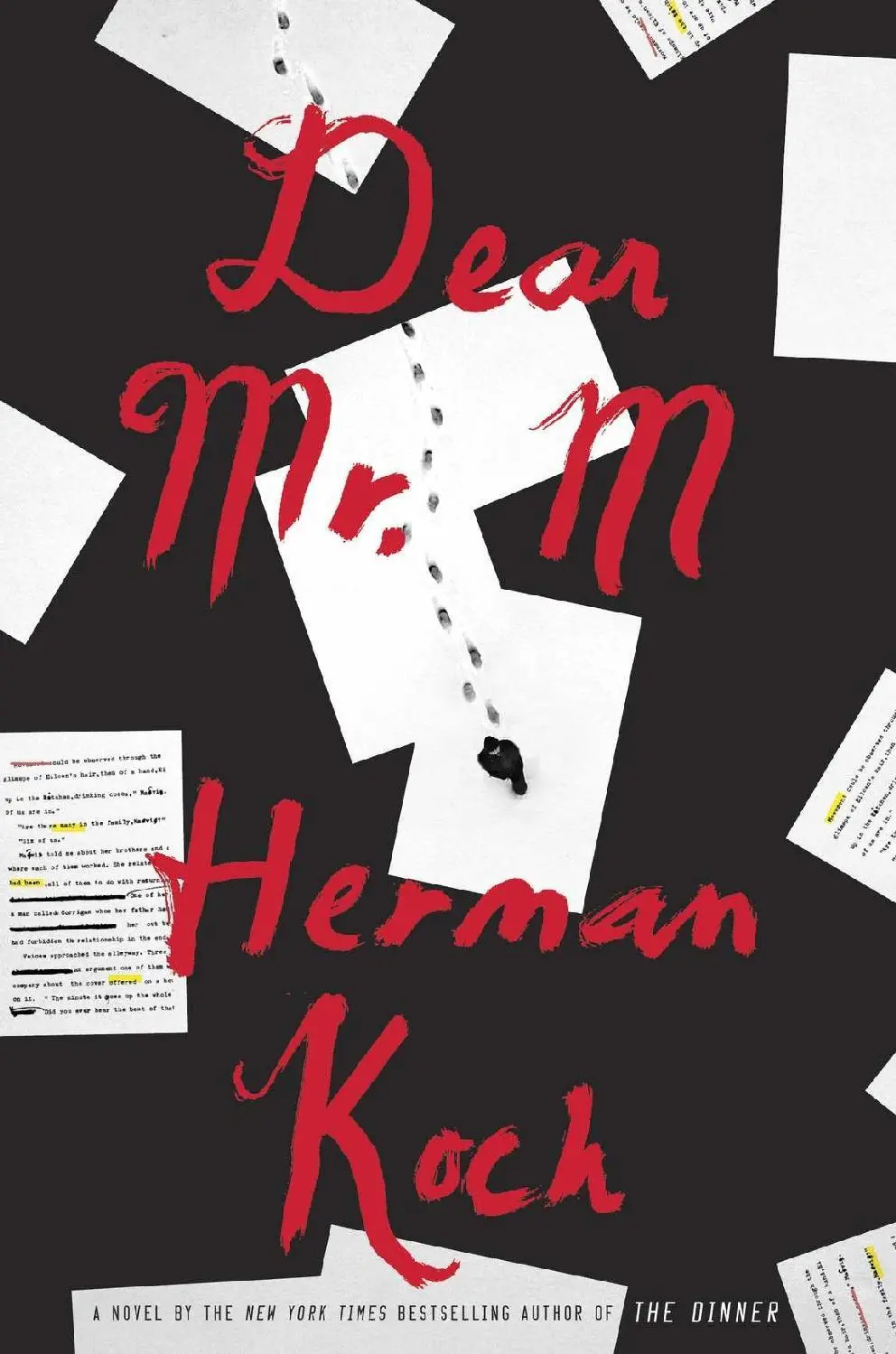
- Название:Dear Mr. M
- Автор:
- Издательство:Hogarth
- Жанр:
- Год:2016
- ISBN:нет данных
- Рейтинг книги:5 / 5. Голосов: 1
-
Избранное:Добавить в избранное
- Отзывы:
-
Ваша оценка:
Dear Mr. M: краткое содержание, описание и аннотация
Предлагаем к чтению аннотацию, описание, краткое содержание или предисловие (зависит от того, что написал сам автор книги «Dear Mr. M»). Если вы не нашли необходимую информацию о книге — напишите в комментариях, мы постараемся отыскать её.
bestselling author of
and Once a celebrated writer, M's greatest success came with a suspense novel based on a real-life disappearance. The book was called
, and it told the story of Jan Landzaat, a history teacher who went missing one winter after his brief affair with Laura, his stunning pupil. Jan was last seen at the holiday cottage where Laura was staying with her new boyfriend. Upon publication, M.'s novel was a bestseller, one that marked his international breakthrough.
That was years ago, and now M.'s career is almost over as he fades increasingly into obscurity. But not when it comes to his bizarre, seemingly timid neighbor who keeps a close eye on him. Why?
From various perspectives, Herman Koch tells the dark tale of a writer in decline, a teenage couple in love, a missing teacher, and a single book that entwines all of their fates. Thanks to
, supposedly a work of fiction, everyone seems to be linked forever, until something unexpected spins the "story" off its rails.
With racing tension, sardonic wit, and a world-renowned sharp eye for human failings, Herman Koch once again spares nothing and no one in his gripping new novel, a barbed tour de force suspending readers in the mysterious literary gray space between fact and fiction, promising to keep them awake at night, and justly paranoid in the merciless morning.
Dear Mr. M — читать онлайн бесплатно полную книгу (весь текст) целиком
Ниже представлен текст книги, разбитый по страницам. Система сохранения места последней прочитанной страницы, позволяет с удобством читать онлайн бесплатно книгу «Dear Mr. M», без необходимости каждый раз заново искать на чём Вы остановились. Поставьте закладку, и сможете в любой момент перейти на страницу, на которой закончили чтение.
Интервал:
Закладка:
The last couple of years she had started dreading it a week beforehand. Like a visit to the gynecologist. A hollow feeling between navel and abdomen. It started with wondering what to wear this year. A different dress each year. Bare shoulders. Bare arms. And most important of all, of course: the décolleté. How much to show off. In her experience, it was the women whose shelf life had expired long ago who also sported the deepest décolletés. The same went for women who were too fat, for women who smoked, for the redheads. The women with faces on which two packs of Gauloises and two bottles of red wine a day for twenty years had left their mark. Pits and craters and stretches of dead skin — a face like a polluted river in which the last fish had bobbed to the surface years ago. But with a deep décolleté they could draw attention away from that face. The skin there was none too young either, usually too red or too tanned, but the men’s gazes often remained hanging there. First they looked at the bared no-man’s-land, and only then at the face.
After that the program began. The male and female authors gathered in the big theater. They looked at each other, said hello with a nod of the head or waved to each other from a distance. What they paid particular attention to was the seating arrangement, to who sat where. A moment of suspense, each year anew. Not for her and her husband. They knew beforehand, of course, where they would be seated. That never changed. Second row from the front, in the middle. But most colleagues had no fixed place. They could end up somewhere else each year. Those who sat all the way at the top, up in the second balcony, didn’t even count. The same went for the side balconies. Writer L hadn’t put a word on paper for years; these days he sat behind a pillar where no one could see him. G had been at the top of the bestseller list for three months, hence her spot in the front row of the lower balcony. And then of course there were the old hands who never failed to show up. A couple more of them dead each year. The spots they vacated in the middle of the theater were assumed by other aged men and wrinkled women. The policy was to be accommodating toward literary widows. During their first two years of bereavement they were allowed to keep their regular seats. After that they were quietly banished to the second balcony, or simply not invited anymore.
Most publishers organized a dinner for their authors before the ball started. The lucky ones went to a real restaurant, but in recent years the buffet dinner had becoming increasingly popular. Her husband’s publisher (“subpar results,” “recession,” “sector-wide structural malaise”) had switched to the buffet last year. She remembered the long line waiting to be served by the college-aged temps, who ladled casserole and mashed potatoes onto their paper plates. The hot plates were silver, but the line of hungry faces reminded her of a soup kitchen. Of breadlines in a region struck by natural disaster.
Before the actual show began, a few speeches were given. No one was anxious to hear them. The speakers were always gray-haired men in suits, who said right at the start that they would “keep it short.” For the last decade or so the whole event had been sponsored by the Dutch Railways, and while the representative from that organization was giving his speech she wondered whether she was the only one thinking of delayed departures, frozen switches, and stranded passengers. After the show, which usually featured a hand-me-down nightclub performer or a singer-songwriter whose career was on the rocks, or — even worse, if that was possible — a writer who thought he was funnier than his colleagues, the big loitering began…the endless mingling in the catacombs of the theater.
Thermometer in hand, she went to her daughter’s room. Catherine had been mopey all day, complaining of a headache and nausea, but there was nothing wrong with her appetite; after finishing two pieces of toasted white bread, she had asked for a third.
“Drink your milk first,” Ana told her. “If you’re still hungry after that, you can have another one.”
That was when the prospect presented itself to her: an evening at home with her “sick” daughter, beneath a blanket on the couch, watching a DVD of some animated film she and Catherine had already seen a hundred times before. Anything was better than the theater corridors, the predictable conversations, the publishers, the journalists, the “nutty” decorations on the walls and ceilings, even in the restrooms. And last, but definitely not least, the writers themselves…
Put a hundred writers together in one space for a party and you get something very different — in any case, not a party. With M she usually stuck to one round of the corridors, a nod here, the briefest possible conversation there, a photographer asking them to look into the camera for just a moment, their heads a little closer together, yes, that’s it, now smile, you look so serious, it’s a party isn’t it? After that one round they settled down on the stairs to the right of the second-floor men’s room. Before long, the others would join them there. M’s colleagues, writers whose greatest similarity was that none of them had long to live. The oeuvre would soon be complete, the folio edition of collected works was ready to go, the obituaries had mostly all been written, the lucky ones (or unlucky ones, depending on how you looked at it) already had a biographer who had established a bond of trust with the prospective widow.
N always snapped at his girlfriend. Or ridiculed her to her face. She, too, was much younger than he was, but no more than twenty years or so — not nearly as big a difference as between M and herself. Unlike most writers’ wives, N’s girlfriend also did something herself, though Ana could never remember exactly what. Something with websites, she thought. Something that required no skills.
And then you had C, who was somewhere in his eighties too by now but tried to wear his seniority as boyishly as possible, like a pair of worn-out sneakers, ripped jeans, and safety pins; he liked to be seen in recalcitrant clothing: no sport coat, let alone a tuxedo; just a T-shirt with V-neck that revealed a landscape of sagging sinews, razor burns, and three or four snow-white chest hairs. Halfway through this landscape, which shifted from red to dark purple on its way down, C’s Adam’s apple looked as though it were trying to break out through the skin, like an oversized prey — a marmot, a rabbit — that has been gulped down by an overly rapacious python and become stuck in its gullet. Behind the lenses of his spectacles his dilated pupils floated in the whites of eyes that were no longer completely white, trashed as they were by any number of broken capillaries; they reminded her most of some raw dish, something on a half shell, an oyster, something you had to slurp down without looking.
And each and every one of the old writers looked at her, Ana, like children waiting for their favorite dessert at a birthday party. N literally licked his lips, he didn’t care that his girlfriend was standing beside him, when they said hello he first kissed her on each cheek, then let the third and final kiss land just a little too close to the corner of her lips, almost as though by accident. But it was no accident. Meanwhile he did something with his fingers, something right above her buttocks, his thick fingertips pressed softly against the spot where the zipper of her dress started, right over her tailbone, then slipped down a fraction of an inch.
“You’re looking lovely as always, Ana,” he said. Then he stepped back: before letting her go completely, his hand slid to the front, by way of her buttock and hip to her abdomen, before he pulled it back. “We should go for coffee sometime. Just the two of us. Sometime when M is traveling abroad.” This latter remark was always accompanied by a big wink, he wanted to be sure she saw it only as a compliment and not a serious come-on, but his eyes traveled downward right away, resting on her lips for a few moments before descending further, to her breasts. “No, really, if I didn’t have Liliane, I know what I’d be doing,” he said — and this time he didn’t wink.
Читать дальшеИнтервал:
Закладка:
Похожие книги на «Dear Mr. M»
Представляем Вашему вниманию похожие книги на «Dear Mr. M» списком для выбора. Мы отобрали схожую по названию и смыслу литературу в надежде предоставить читателям больше вариантов отыскать новые, интересные, ещё непрочитанные произведения.










Обсуждение, отзывы о книге «Dear Mr. M» и просто собственные мнения читателей. Оставьте ваши комментарии, напишите, что Вы думаете о произведении, его смысле или главных героях. Укажите что конкретно понравилось, а что нет, и почему Вы так считаете.