Herman Koch - Dear Mr. M
Здесь есть возможность читать онлайн «Herman Koch - Dear Mr. M» весь текст электронной книги совершенно бесплатно (целиком полную версию без сокращений). В некоторых случаях можно слушать аудио, скачать через торрент в формате fb2 и присутствует краткое содержание. Год выпуска: 2016, Издательство: Hogarth, Жанр: Современная проза, на английском языке. Описание произведения, (предисловие) а так же отзывы посетителей доступны на портале библиотеки ЛибКат.
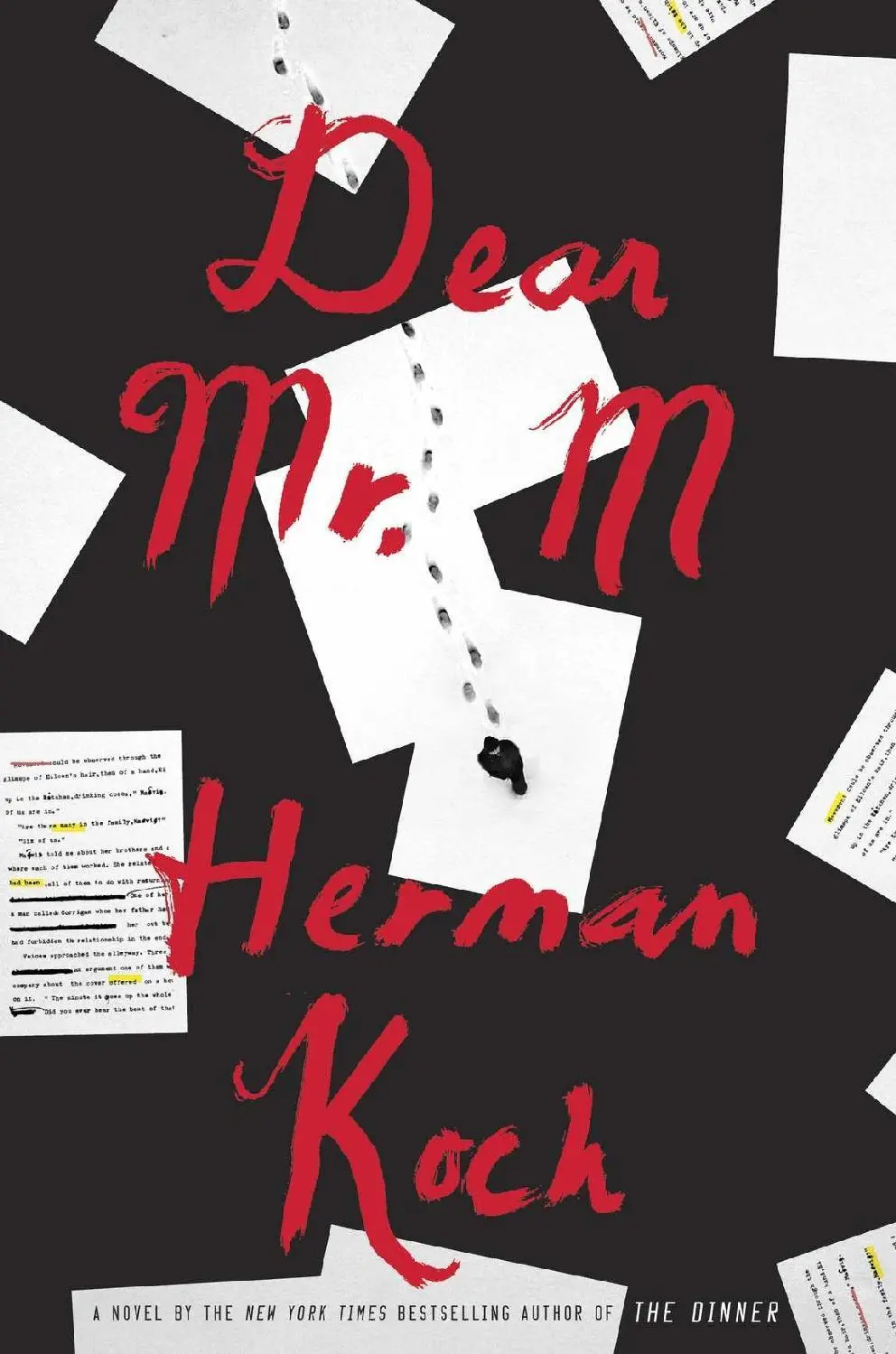
- Название:Dear Mr. M
- Автор:
- Издательство:Hogarth
- Жанр:
- Год:2016
- ISBN:нет данных
- Рейтинг книги:5 / 5. Голосов: 1
-
Избранное:Добавить в избранное
- Отзывы:
-
Ваша оценка:
Dear Mr. M: краткое содержание, описание и аннотация
Предлагаем к чтению аннотацию, описание, краткое содержание или предисловие (зависит от того, что написал сам автор книги «Dear Mr. M»). Если вы не нашли необходимую информацию о книге — напишите в комментариях, мы постараемся отыскать её.
bestselling author of
and Once a celebrated writer, M's greatest success came with a suspense novel based on a real-life disappearance. The book was called
, and it told the story of Jan Landzaat, a history teacher who went missing one winter after his brief affair with Laura, his stunning pupil. Jan was last seen at the holiday cottage where Laura was staying with her new boyfriend. Upon publication, M.'s novel was a bestseller, one that marked his international breakthrough.
That was years ago, and now M.'s career is almost over as he fades increasingly into obscurity. But not when it comes to his bizarre, seemingly timid neighbor who keeps a close eye on him. Why?
From various perspectives, Herman Koch tells the dark tale of a writer in decline, a teenage couple in love, a missing teacher, and a single book that entwines all of their fates. Thanks to
, supposedly a work of fiction, everyone seems to be linked forever, until something unexpected spins the "story" off its rails.
With racing tension, sardonic wit, and a world-renowned sharp eye for human failings, Herman Koch once again spares nothing and no one in his gripping new novel, a barbed tour de force suspending readers in the mysterious literary gray space between fact and fiction, promising to keep them awake at night, and justly paranoid in the merciless morning.
Dear Mr. M — читать онлайн бесплатно полную книгу (весь текст) целиком
Ниже представлен текст книги, разбитый по страницам. Система сохранения места последней прочитанной страницы, позволяет с удобством читать онлайн бесплатно книгу «Dear Mr. M», без необходимости каждый раз заново искать на чём Вы остановились. Поставьте закладку, и сможете в любой момент перейти на страницу, на которой закончили чтение.
Интервал:
Закладка:
He talks briefly with C, N, L, and W about the show, which N calls “a travesty” and C “a disgrace.” He puts in his own two cents by commenting that he would rather spend his time in the waiting room at the dental hygienist than at these horrible shows before the party itself is allowed to begin.
“You mean at the dentist’s?” N asks.
“The dental hygienist,” M says. “No need to make it worse than it is.”
“It goes with the territory,” C says.
“I’m thinking about skipping the whole show next year,” N says.
They glance at each other, they know that’s not going to happen: they remember all too well that N (or S, or Van der D, or C) said exactly the same thing last year.
A tall man in a tuxedo joins them. M recognizes him as N’s new publisher. First he embraces N, then shakes hands with the others.
“Excuse me, I really have to take this,” he says, still holding M’s hand and looking at the display on his cell phone. M hadn’t heard the phone ring. “Where are you? Where exactly ? Okay, I’ll be right there.”
He winks at M and puts the phone back in his pocket.
“How’s it coming along?” he asks.
“What?”
“ Liberation Year. How many copies? Second run? Third run?”
M is aware of the reputation of N’s new publisher. The rumors about the huge advances. They say he uses those advances to brazenly steal authors away from his colleagues, something that’s officially not done among publishers.
“Reasonably well,” M says. “I’m not dissatisfied.”
The tall publisher looks at him impertinently, mockingly.
“ ‘Not dissatisfied.’ That sounds a bit grim,” he says; he coughs and grins almost simultaneously. “I haven’t seen it in the Top 60 yet.”
M shrugs. “Well, you know,” he says as calmly as he can — but his face suddenly feels flushed—“I don’t really pay much attention to that. Not anymore,” he adds. “Not at my age.”
“The books in that Top 60 are all garbage anyway,” C says.
“So your colleague writes garbage,” the publisher says, with a little nod toward N. “That’s news to me.”
“Oh, but I didn’t know…,” C says. “That book’s been out for a year already! Is it still on the list?”
“One year to the day, next week,” the publisher says. “We’re going to raise a toast to that at the house. You men are all invited. And, if you’d like to talk sometime,” he says, turning to M again. “A cup of coffee, or a beer at the end of the afternoon.”
M says nothing, he glances at his empty champagne glass.
“No strings attached, of course,” the publisher goes on. “But I really think it’s a terrible pity. A book like Liberation Year deserves a much wider audience. Ask your colleague here, if you like. Ask N. He’ll tell you that I’m not nearly the bastard they think I am. The bastard they say I am. In any case, I haven’t heard N saying things like ‘not dissatisfied,’ not since he’s been with me.”
“We’ve talked about it before,” N says, turning to M. “It’s opened whole new worlds for me. Like after a cataract operation. Suddenly, you can see again.”
N actually underwent a cataract operation a few years ago, so he knows what he’s talking about. But that they had talked about this before was simply not true. M may have become a bit forgetful in the last few years, but he would definitely have remembered something like that.
“That reminds me, suddenly…,” the publisher says. “Did you have a special reason for that, M? For what you said about the Dutch resistance?”
M has no idea what he’s talking about; he looks at the publisher questioningly.
“Wait, I’ve got it right here,” the man says, and pulls out his cell phone again. “On News Hour, at the entrance, wait, I’ve almost got it…”
M realizes only too late that within the hour, through the miracle of technology, they will all see and hear their replies to the reporter; he only actually believes it, however, when he sees himself on the display of the cell phone the publisher is holding up for him.
“There…here it comes,” the publisher says.
C, L, N, and W all crowd around the phone. Van der D also comes up and joins them at that moment, carrying a little tray with glasses of red wine.
“Here we go, you were thirsty and I gave you a drink…,” he says.
“Ssh!” L says. “Man, now I missed it!”
“Wait, here it comes again,” the publisher says.
He does something with his fingertips on the display, and there it is again, tiny but razor-sharp, the image of M leaning over to the reporter’s microphone.
This time he doesn’t look at the screen himself, he looks at his colleagues’ faces.
His words are clearly audible.
A silence descends, insofar as one can speak of silence amid the hubbub around the stairs. C’s jaw has literally dropped. Remarkably enough, it doesn’t make him look older, but younger. More boyish, M corrects himself; at our age you’ve seen everything, but rarely something that truly amazes you —what he sees on C’s face, though, is not amazement but dismay.
N is the first to break the silence.
“Well, well,” is all he says.
“Yes,” the publisher says. “That’s what I thought, too, the first time around: Am I hearing this right?”
“What were you getting at?” C asks. “What were you trying to say, for Christ’s sake?”
M looks into the eyes of his slightly older colleague. Is he crying? It’s hard to say. As a matter of fact, C always looks like he’s crying. M shrugs. What he would really like is to see the film one more time — he’d like to be able to think, It’s not that terrible, is it? Would like to say that. To his colleagues. There’s nothing wrong with that, is there? It’s not that terrible?
He tries to do just that, but nothing comes out. He moistens his lips with the tip of his tongue.
“But that’s already passed the statute of limitations, hasn’t it?” Van der D says. “I mean, they won’t be breaking down your door tomorrow, will they?”
It was meant as a joke, but no one laughs.
“I don’t know what got into you,” N says. “To make it worse, the timing is miserable. Especially after that magazine interview. Maybe you should have kept your mouth shut for once.”
What interview? M wants to ask, but the next moment he realizes that it can be only one interview. That’s strange, isn’t it? Marie Claude Bruinzeel had promised to send him the text beforehand, but he never received it.
There’s also something else. He doesn’t like N’s tone at all. That’s not how colleagues talk to each other. And especially not with other colleagues around.
“We live in a free country,” he said. “We were once liberated, if I remember correctly. So that we could once again say whatever we like.”
“Well, if it had been up to your father that liberation never would have taken place,” N says. “Then all of us here”—he points around him at the colleagues, at the publisher—“would be in a concentration camp. And that’s only if we were lucky. Probably we would all have been taken out into the woods, shot, and dumped into a mass grave long ago.”
M stares at him. Where is this coming from, all of a sudden? N is an arrogant, completely self-important shithead, everyone knows that, but he can’t remember him ever using this tone with him before. With everyone standing around. The fact that M hasn’t read the magazine interview himself now puts him at a great disadvantage. He looks at the others. C lowers his eyes, W averts his gaze, L shrugs, Van der D acts as though there’s something floating in his wine, something that requires all his attention. The only one who isn’t avoiding his gaze is the publisher — the look in his eyes is no longer triumphant, it’s downright defiant, eyes in search of a row.
Читать дальшеИнтервал:
Закладка:
Похожие книги на «Dear Mr. M»
Представляем Вашему вниманию похожие книги на «Dear Mr. M» списком для выбора. Мы отобрали схожую по названию и смыслу литературу в надежде предоставить читателям больше вариантов отыскать новые, интересные, ещё непрочитанные произведения.







Обсуждение, отзывы о книге «Dear Mr. M» и просто собственные мнения читателей. Оставьте ваши комментарии, напишите, что Вы думаете о произведении, его смысле или главных героях. Укажите что конкретно понравилось, а что нет, и почему Вы так считаете.