Herman Koch - Dear Mr. M
Здесь есть возможность читать онлайн «Herman Koch - Dear Mr. M» весь текст электронной книги совершенно бесплатно (целиком полную версию без сокращений). В некоторых случаях можно слушать аудио, скачать через торрент в формате fb2 и присутствует краткое содержание. Год выпуска: 2016, Издательство: Hogarth, Жанр: Современная проза, на английском языке. Описание произведения, (предисловие) а так же отзывы посетителей доступны на портале библиотеки ЛибКат.
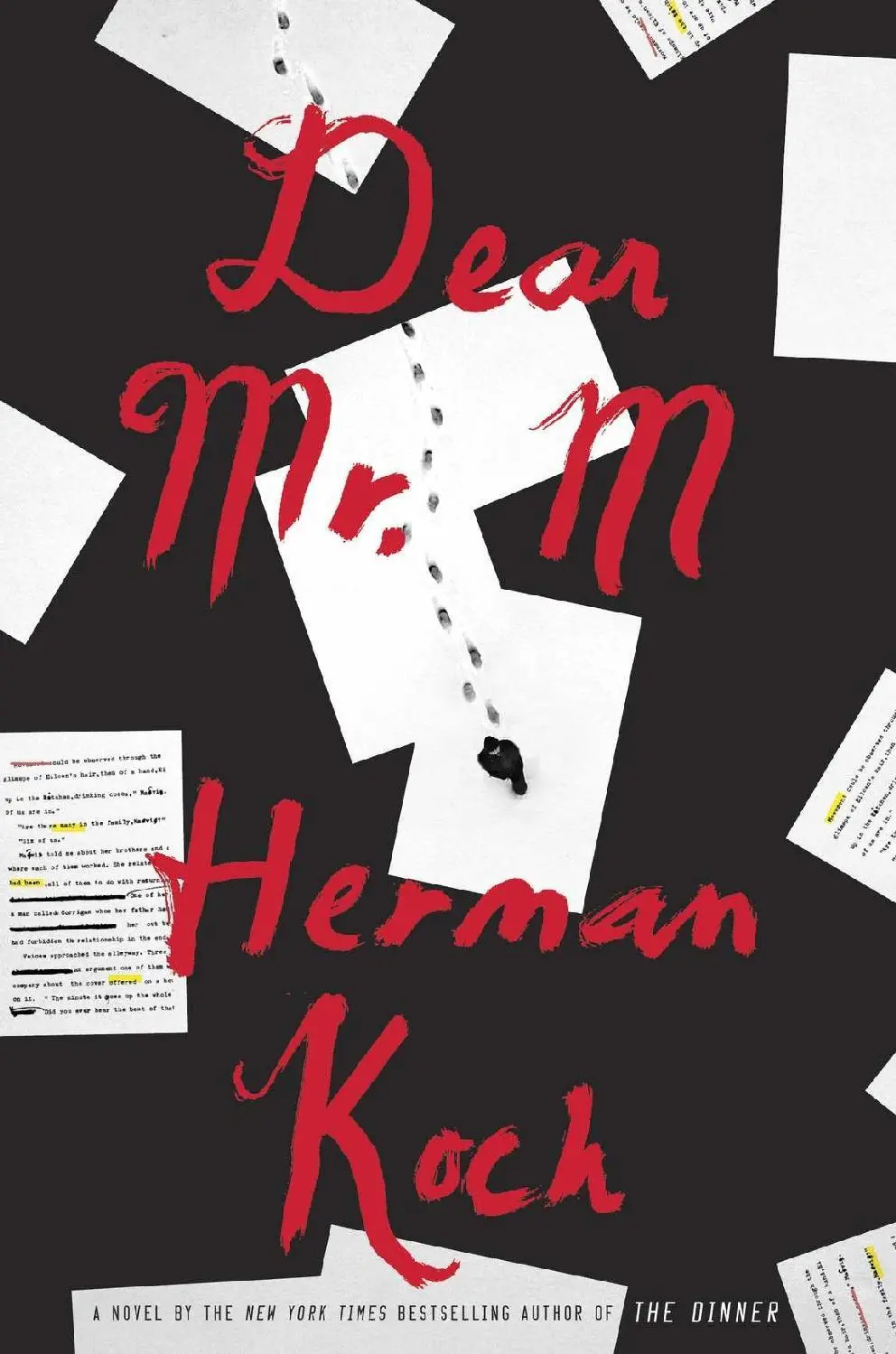
- Название:Dear Mr. M
- Автор:
- Издательство:Hogarth
- Жанр:
- Год:2016
- ISBN:нет данных
- Рейтинг книги:5 / 5. Голосов: 1
-
Избранное:Добавить в избранное
- Отзывы:
-
Ваша оценка:
Dear Mr. M: краткое содержание, описание и аннотация
Предлагаем к чтению аннотацию, описание, краткое содержание или предисловие (зависит от того, что написал сам автор книги «Dear Mr. M»). Если вы не нашли необходимую информацию о книге — напишите в комментариях, мы постараемся отыскать её.
bestselling author of
and Once a celebrated writer, M's greatest success came with a suspense novel based on a real-life disappearance. The book was called
, and it told the story of Jan Landzaat, a history teacher who went missing one winter after his brief affair with Laura, his stunning pupil. Jan was last seen at the holiday cottage where Laura was staying with her new boyfriend. Upon publication, M.'s novel was a bestseller, one that marked his international breakthrough.
That was years ago, and now M.'s career is almost over as he fades increasingly into obscurity. But not when it comes to his bizarre, seemingly timid neighbor who keeps a close eye on him. Why?
From various perspectives, Herman Koch tells the dark tale of a writer in decline, a teenage couple in love, a missing teacher, and a single book that entwines all of their fates. Thanks to
, supposedly a work of fiction, everyone seems to be linked forever, until something unexpected spins the "story" off its rails.
With racing tension, sardonic wit, and a world-renowned sharp eye for human failings, Herman Koch once again spares nothing and no one in his gripping new novel, a barbed tour de force suspending readers in the mysterious literary gray space between fact and fiction, promising to keep them awake at night, and justly paranoid in the merciless morning.
Dear Mr. M — читать онлайн бесплатно полную книгу (весь текст) целиком
Ниже представлен текст книги, разбитый по страницам. Система сохранения места последней прочитанной страницы, позволяет с удобством читать онлайн бесплатно книгу «Dear Mr. M», без необходимости каждый раз заново искать на чём Вы остановились. Поставьте закладку, и сможете в любой момент перейти на страницу, на которой закончили чтение.
Интервал:
Закладка:
Of his new face, he corrects himself right away. Last night, as he’d wolfed down his lonely, reheated Christmas dinner, he was still a loser. Someone for whom you could feel only pity. Self-pity — he was home alone after all, there was no one else around to feel anything for him. The magic moment, the turnaround, the insight, took place as he was unscrewing the top from the whiskey bottle. The discovery, in fact, that the bottle was only one-third full: not enough to drink himself into a senseless coma, in any case, not the way he had on the first three nights of the Christmas vacation. A buzzing coma, with no past or future, a test pattern with the volume turned off.
“Here’s what I’ll do,” he said out loud. “Tomorrow I’m going to drive past the house in Zeeland, but I’ll be a different person.”
The sound of his own voice in the otherwise silent room startled him. He hadn’t spoken since five that afternoon, it felt as though something first had to be dislodged at the back of his throat: dried spit and mucus, with a warm nicotine taste from the two packs of cigarettes he had smoked each day for the last couple of months — since the fall vacation.
He had taken the tray with his half-eaten Christmas dinner — a piece of turkey breast in a sauce of walnuts and dark chocolate — from his lap, put it on the couch, and stood up.
“I’ll drive to Paris,” he said, starting to pace the room. “I have friends there. I won’t be staying in Zeeland long, I have to move on. ‘It wasn’t that far out of my way,’ I’ll say. But after that I won’t bother her anymore. That’s how I’ll say it, too: ‘not bother you anymore.’ That way, I’m openly admitting that I did bother her in the past.”
It wasn’t a little ways out of his way, but a big ways, no plausible little detour in any case, but he counted on a boy and girl of seventeen accepting that lie. He had thought about himself at seventeen: how he and a friend had hitchhiked to Rome with no idea of the best route to take, by way of Austria or Switzerland or France; all that mattered was that, about four days later, they actually ended up in Rome.
The friends in Paris, that was something different. They definitely had to be believable, they had to at least sound believable, and so he had come up with two real names for them: Jean-Paul and Brigitte. A couple. A childless couple, he decided quickly enough — if he had to juggle even more names in his mind, he might slip up. To help him remember Jean-Paul and Brigitte he had devised last names for them as well: Jean-Paul Belmondo and Brigitte Bardot.
Maybe he wouldn’t have to mention the names at all, but because he knew them, they existed. “Back in college,” he now replied to the question that had not been posed, pacing back and forth across the room. “For my master’s thesis about Napoleon. I spent a year at the Sorbonne. We were all in line for the same movie, Jean-Paul asked me for a light. After the movie, Zazie dans le Métro ”—or did that one come out only much later? — “we went for a beer on Boulevard Saint-Michel. That’s how we got to be friends, and we’ve stayed in contact all these years.”
He felt like a cigarette, cigarettes helped him to think clearly, but his new face, the face of that other person he would be from now on, had stopped smoking — quit completely. He had reached the kitchen by now, where he used his paper napkin to wipe the remains of the turkey into the pedal bin. Then he unscrewed the top from the bottle of whiskey and held it above the sink. “No,” he said then, screwing the cap back on. “I’m not an alcoholic. A non-alcoholic doesn’t have to protect himself from himself. I can control myself. A bottle with a third still in it speaks of more self-control than an empty one.”
But what about the smoking? He looked at the clock on the wall above the kitchen door. A quarter past nine. He needed to think, to think about tomorrow. “At midnight on Christmas Day I quit smoking,” he said. “Forever,” he added after a brief pause.
Lighting up a cigarette, he went back to pacing. There wasn’t a lot of room in his new house: a living room with a sofa bed and a kitchen with a little balcony. Two hundred square feet, the landlord had said. A hundred and eighty, not counting the balcony. “But tomorrow I can take my pick of a hundred college students lined up to have it for this price,” he said, looking Landzaat over from head to toe with almost shameless sarcasm, as though he had long figured out exactly how things stood with this unshaven grown man, “so I’d advise you to decide today.”
He hadn’t shown his children these two hundred (a hundred and eighty) square feet, not yet. He would pick them up at the house, or else his wife brought them to a spot they’d arranged beforehand on the phone — like at the entrance to Artis Zoo this afternoon — and later she would come and pick them up again. This afternoon she hadn’t even stepped out of the car, she simply stayed in the driver’s seat with the engine running, she hadn’t even rolled down the window when he’d walked around to talk to her about what time she would pick them up. She had merely held her hand up to the glass, with all five fingers spread. Five o’clock, he saw her mime with her lips; she waved to their daughters, but didn’t look at him again.
That’s what I’ll do. Still pacing, he had arrived at the glass door in the kitchen, the door to the balcony. He saw his own reflection in the pane, not crystal clear, but just right. A grown man in jeans and a sweater. Unshaven — at the moment, still, but tomorrow not anymore.
—
He looked at his reflection in the kitchen door. “That’s how we’ll do it,” he said. “From now on, I’m above it all.”
The first thing he did on the morning of that day after Christmas was spend half an hour in the shower. He washed his hair three times. Then he lathered his face with shaving cream. His lonely Christmas dinner of the night before already seemed an eternity away, like something from a former lifetime. When he took the turkey breast out of the oven, he had been unable to hold back the tears. Tears of self-pity. He had seen himself as the lonely man he was, from a distance, as in a movie: a man prepares a gourmet meal for his sweetheart: he lights the candles and pours himself a little glass of wine beforehand, but the sweetheart doesn’t show and the audience starts reaching for their hankies — they know she has someone else.
For just a moment, a fraction of a second, as he conjured the first stretch of smoothly shaven skin from beneath the white lather, he felt his eyes start smarting again, but he pulled himself together. He thought about Laura. He thought about her as someone without whom life had a purpose as well. Stand above it, he told himself. That’s how you have to show up there. I just came to say hello and goodbye. I’m on my way to Paris. But we can still be friends, can’t we? No, that was no good, that sounded too much like begging, as though she would be doing him a favor by consenting to be just friends. Ask no questions, he said to himself. Avoid the interrogative completely. They’re expecting me in Paris this evening. We can still be friends. Now, without wanting to, without being able to stop himself, he thought of Herman — and at the same moment the razor slipped sideways across his cheek. It drew blood right away. Not much, just the way that goes with shaving cuts: as soon as the blood gets a whiff of the outside air, it keeps on flowing. “Fuck!” he said — more at the thought of Herman than the blood. What did she see in that skinny kid anyway? You could hardly call that a man, could you? He picked up a towel, carefully wiped away some of the foam, and dabbed at the cut.
Читать дальшеИнтервал:
Закладка:
Похожие книги на «Dear Mr. M»
Представляем Вашему вниманию похожие книги на «Dear Mr. M» списком для выбора. Мы отобрали схожую по названию и смыслу литературу в надежде предоставить читателям больше вариантов отыскать новые, интересные, ещё непрочитанные произведения.








Обсуждение, отзывы о книге «Dear Mr. M» и просто собственные мнения читателей. Оставьте ваши комментарии, напишите, что Вы думаете о произведении, его смысле или главных героях. Укажите что конкретно понравилось, а что нет, и почему Вы так считаете.