Herman Koch - Dear Mr. M
Здесь есть возможность читать онлайн «Herman Koch - Dear Mr. M» весь текст электронной книги совершенно бесплатно (целиком полную версию без сокращений). В некоторых случаях можно слушать аудио, скачать через торрент в формате fb2 и присутствует краткое содержание. Год выпуска: 2016, Издательство: Hogarth, Жанр: Современная проза, на английском языке. Описание произведения, (предисловие) а так же отзывы посетителей доступны на портале библиотеки ЛибКат.
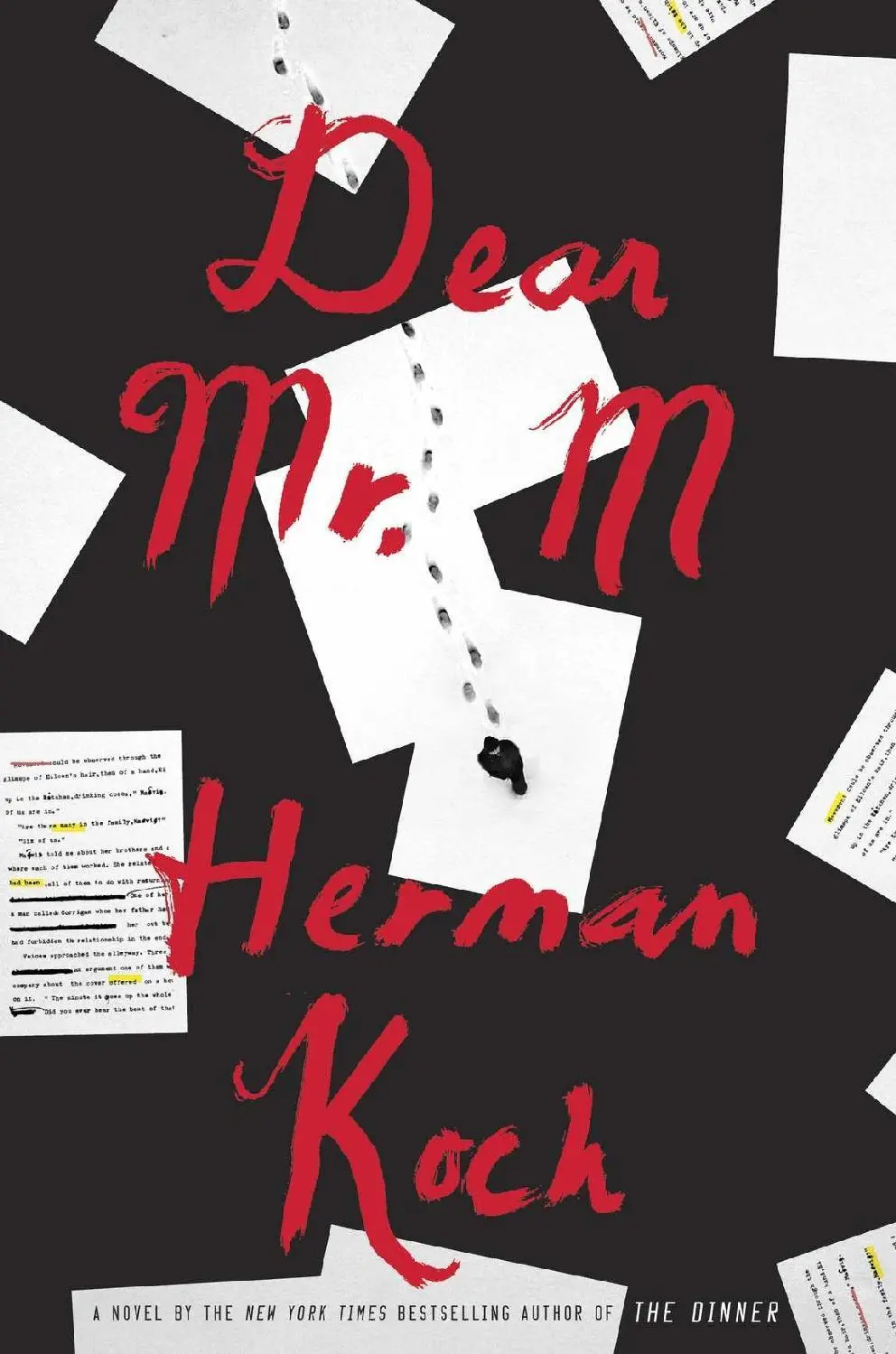
- Название:Dear Mr. M
- Автор:
- Издательство:Hogarth
- Жанр:
- Год:2016
- ISBN:нет данных
- Рейтинг книги:5 / 5. Голосов: 1
-
Избранное:Добавить в избранное
- Отзывы:
-
Ваша оценка:
Dear Mr. M: краткое содержание, описание и аннотация
Предлагаем к чтению аннотацию, описание, краткое содержание или предисловие (зависит от того, что написал сам автор книги «Dear Mr. M»). Если вы не нашли необходимую информацию о книге — напишите в комментариях, мы постараемся отыскать её.
bestselling author of
and Once a celebrated writer, M's greatest success came with a suspense novel based on a real-life disappearance. The book was called
, and it told the story of Jan Landzaat, a history teacher who went missing one winter after his brief affair with Laura, his stunning pupil. Jan was last seen at the holiday cottage where Laura was staying with her new boyfriend. Upon publication, M.'s novel was a bestseller, one that marked his international breakthrough.
That was years ago, and now M.'s career is almost over as he fades increasingly into obscurity. But not when it comes to his bizarre, seemingly timid neighbor who keeps a close eye on him. Why?
From various perspectives, Herman Koch tells the dark tale of a writer in decline, a teenage couple in love, a missing teacher, and a single book that entwines all of their fates. Thanks to
, supposedly a work of fiction, everyone seems to be linked forever, until something unexpected spins the "story" off its rails.
With racing tension, sardonic wit, and a world-renowned sharp eye for human failings, Herman Koch once again spares nothing and no one in his gripping new novel, a barbed tour de force suspending readers in the mysterious literary gray space between fact and fiction, promising to keep them awake at night, and justly paranoid in the merciless morning.
Dear Mr. M — читать онлайн бесплатно полную книгу (весь текст) целиком
Ниже представлен текст книги, разбитый по страницам. Система сохранения места последней прочитанной страницы, позволяет с удобством читать онлайн бесплатно книгу «Dear Mr. M», без необходимости каждый раз заново искать на чём Вы остановились. Поставьте закладку, и сможете в любой момент перейти на страницу, на которой закончили чтение.
Интервал:
Закладка:
He sought out a pair of jeans, his favorite plaid lumberjack shirt and his ankle-high hiking boots. Holding a pair of thick woolen socks and the hiking boots, he went back into the living room and sat down on the edge of the sofa bed.
He thought about Laura, then he tried not to think about her. “I can’t stay long,” he said out loud. “I need to be in Paris by dark.”
Suddenly he couldn’t help thinking of his little daughters. About yesterday at the zoo. The chickens and the geese and the pig at the children’s farm there, the parrots on their perches, the monkeys, the lions, and the crocodiles. All the way at the back of the zoo they had found the polar-bear habitat. Two polar bears were asleep amid the artificial rocks. Carrots and heads of lettuce floated in the water — it had snowed yesterday too, the pointed tips and ridges of the artificial rocks were covered in a thin layer of white. His first thought had been that the polar bears, in any case, would not suffer from the cold, that the difference in temperature must be less pronounced for them than for the monkeys, lions, and parrots. But they were a long way from home. And this habitat, with the dirty water in its cramped swimming hole, was above all claustrophobic. An exercise yard, no more than that. It reminded him of the room he had rented, and at the moment when those two images — his lonely room and the polar-bear habitat — were transposed, the self-pity came roaring up: like gall from a tainted meal it rose from his stomach, through his gullet to the back of his throat.
“What’s wrong, Daddy?” his eldest daughter asked. She took his hand. His younger daughter tossed the bears the last slice of stale brown bread they’d brought with them, but it ended up in the water amid the lettuce and the carrots.
“Nothing, sweetheart,” he said.
He didn’t dare to look at her, he didn’t want to cry when his daughters were around. The hangover from the night before (six cans of beer, two-thirds of a bottle of whiskey), which had till then remained sleeping in its basket like a big hairy dog, now stretched itself slowly, walked up to him and licked his hand.
“You said, ‘What a shitty rotten mess!’ Daddy.”
“Did I say that?”
His daughter didn’t respond.
“I feel sorry for the polar bears,” he said. “That they’re so far from home. That they have so much room to move around at home, but here they have to live on a little rocky shelf.”
“Are we going home now, Daddy?” His younger daughter shook the last of the crumbs from the plastic sandwich bag into the polar-bear habitat.
“How about if we go and get french fries first?” he said.
In the cafeteria, where he ordered three portions of fries with mayonnaise, two colas and two bottles of Heineken, he felt how the cold had crept into his clothing. He stood up, took off his coat first and then his sweater. He had already finished the first bottle of beer. He tried to warm up by swinging his arms back and forth. Much too late, he noticed the worried looks on his daughters’ faces, as though they no longer dared to look straight at him.
That evening his wife called.
“What did you do?” she said before he could speak.
“What?” He had just slid the turkey into the oven and was flipping through the TV guide in search of a suitable program to accompany his dinner.
“They’re all upset. Because you…I hope it’s not true, because they said you were crying, Jan! What were you thinking of, Jan?”
He couldn’t remember doing that, but he had a suspicion that it was probably true.
“It was cold. I had tears in my eyes because of the cold, I told them that too.”
“Please, Jan! I only wish you had the guts to admit it. That you could be honest with me. But no, of course not,” she added after a brief silence.
“Okay, okay…I felt badly. The polar bears…you should have seen those polar bears. It just got to be too much for me.”
He heard his ex-wife sigh — and the next moment he felt surprise at how easily he had admitted that word into his thoughts: “ex-wife.” She wasn’t his ex-wife, not yet, they were living apart for a while only after his ex-wife (wife!) had found an earring behind the toilet. I have no idea, he’d said. Are you sure it’s not one of yours? He was no good with earrings; he wouldn’t swear that he could recognize a pair of his own wife’s earrings if he saw another woman wearing them on the street.
“Don’t go thinking that I’ll start feeling sorry for you when you act like this,” she said to him now on the phone. “Or that you’ll get to see your daughters any more often. In fact, you’ll achieve just the opposite.”
—
A gentle snow starts to fall as he lays his bag on the backseat. In plain sight. That way they can see with their own eyes that he won’t be staying, that he’s only making a brief layover on his way to Paris.
“Don’t come on too strong,” he says out loud and starts the engine, which turns over only after a few tries. “You’ve just come by to say hello. You plant something, a little seed in her mind. Then you leave.”
He twists around in his seat and unzips the bag. The whiskey bottle is on top. He glances around furtively, but at this hour, on Boxing Day, the streets are empty. He unscrews the top and takes a big slug.
“You’ve got the drinking under control, so you can take a little now and then,” he says. “You won’t show up drunk, but you will be loose and easy.”
After the second slug he feels the heat crawling beneath his clothes, he looks at his face in the rearview mirror; he’s looking good, his cheeks are rosy, an open and warm look in his eyes. He screws the top back on the bottle, jams it down between the emergency brake and the seat, and drives slowly down the street and around the corner.
42
We’re sitting in your living room: an Italian designer sofa, a glass coffee table, a chaise longue from the 1960s. Your little daughter is already in bed. Your wife has brought out beer, wine, and nuts.
After I first tried to install the projector on a stool balanced on a pile of books (photo books, art books, books of above-average girth and size), your wife came up with the idea of using the little stepladder. I went with her to get it, from a closet beside the front door, a cupboard containing the electricity and gas meters and a few shelves for cleaning products and other household items.
“Are you sure the timing is okay?” I asked without looking at her — by then I was halfway into the cupboard; I moved aside a vacuum cleaner, a bicycle pump, and a red bucket with a mop in it, so I could lift out the stepladder. “I mean, he doesn’t seem completely himself at the moment.”
“He still complains about being nauseous and seeing flashes of light,” she replied. “And sometimes he goes completely under. It’s not that he falls asleep. No: he goes under. I called the family doctor today and he says those are normal symptoms of a serious concussion. He should just take it easy for a week, the doctor said. And keep waking him up, in any case, when he goes under like that. No TV, no newspapers, no reading for a week.”
No eight-millimeter movies, I almost said — but your wife said it for me.
“You’re right, at first I didn’t think it was such a good idea,” she said. “Maybe these aren’t the ideal circumstances. Are there a lot of them?”
“Two or three. I can also come back some other time.”
But your wife shook her head.
“He’s so excited,” she said. “There’s no talking him out of it now.”
—
You didn’t want to go to the emergency room. We picked up our coats from the checkroom, but it was only when we got outside, on the square in front of the theater, that I realized you were in much worse shape than I’d thought.
Читать дальшеИнтервал:
Закладка:
Похожие книги на «Dear Mr. M»
Представляем Вашему вниманию похожие книги на «Dear Mr. M» списком для выбора. Мы отобрали схожую по названию и смыслу литературу в надежде предоставить читателям больше вариантов отыскать новые, интересные, ещё непрочитанные произведения.








Обсуждение, отзывы о книге «Dear Mr. M» и просто собственные мнения читателей. Оставьте ваши комментарии, напишите, что Вы думаете о произведении, его смысле или главных героях. Укажите что конкретно понравилось, а что нет, и почему Вы так считаете.