Herman Koch - Dear Mr. M
Здесь есть возможность читать онлайн «Herman Koch - Dear Mr. M» весь текст электронной книги совершенно бесплатно (целиком полную версию без сокращений). В некоторых случаях можно слушать аудио, скачать через торрент в формате fb2 и присутствует краткое содержание. Год выпуска: 2016, Издательство: Hogarth, Жанр: Современная проза, на английском языке. Описание произведения, (предисловие) а так же отзывы посетителей доступны на портале библиотеки ЛибКат.
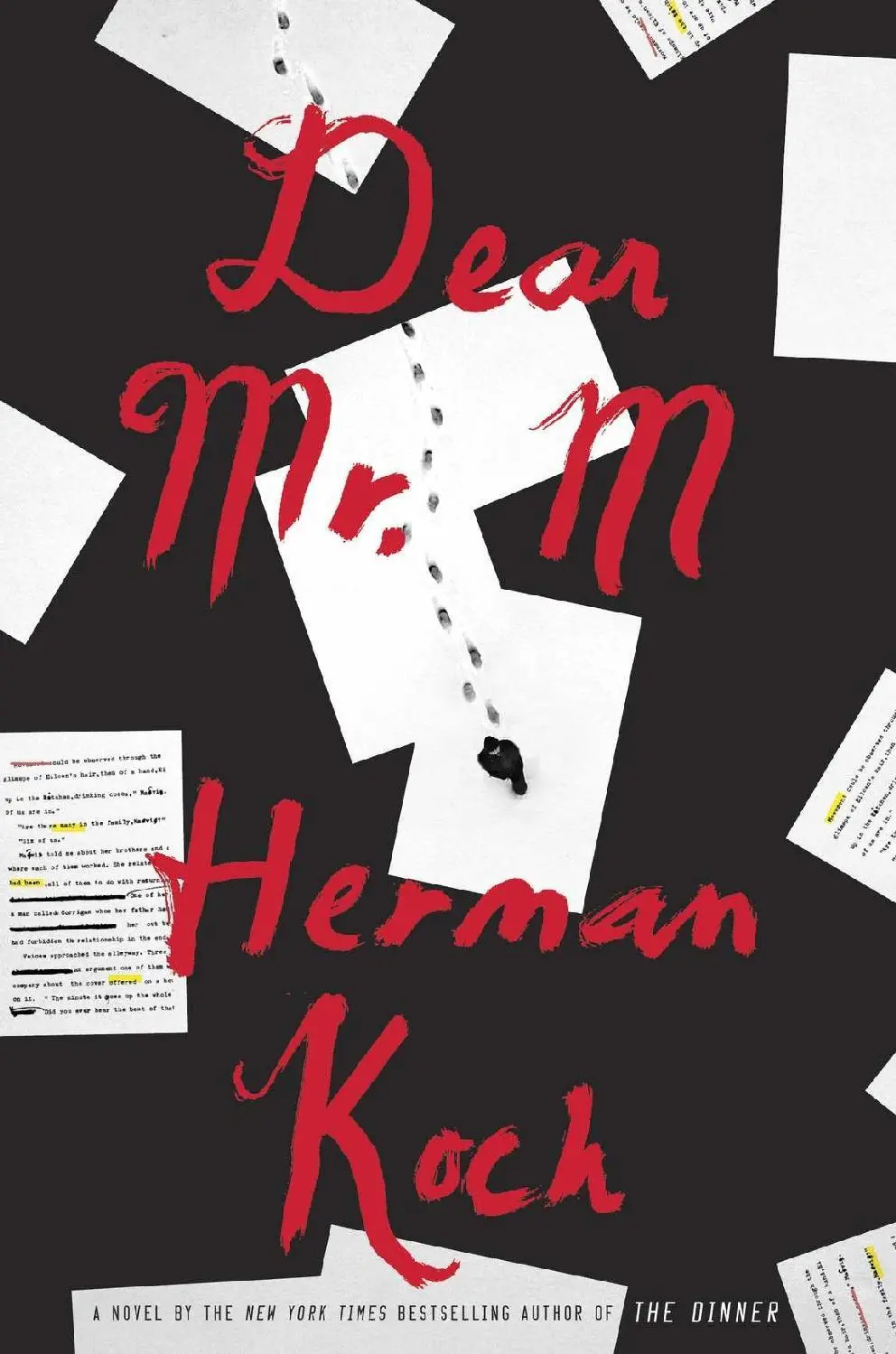
- Название:Dear Mr. M
- Автор:
- Издательство:Hogarth
- Жанр:
- Год:2016
- ISBN:нет данных
- Рейтинг книги:5 / 5. Голосов: 1
-
Избранное:Добавить в избранное
- Отзывы:
-
Ваша оценка:
Dear Mr. M: краткое содержание, описание и аннотация
Предлагаем к чтению аннотацию, описание, краткое содержание или предисловие (зависит от того, что написал сам автор книги «Dear Mr. M»). Если вы не нашли необходимую информацию о книге — напишите в комментариях, мы постараемся отыскать её.
bestselling author of
and Once a celebrated writer, M's greatest success came with a suspense novel based on a real-life disappearance. The book was called
, and it told the story of Jan Landzaat, a history teacher who went missing one winter after his brief affair with Laura, his stunning pupil. Jan was last seen at the holiday cottage where Laura was staying with her new boyfriend. Upon publication, M.'s novel was a bestseller, one that marked his international breakthrough.
That was years ago, and now M.'s career is almost over as he fades increasingly into obscurity. But not when it comes to his bizarre, seemingly timid neighbor who keeps a close eye on him. Why?
From various perspectives, Herman Koch tells the dark tale of a writer in decline, a teenage couple in love, a missing teacher, and a single book that entwines all of their fates. Thanks to
, supposedly a work of fiction, everyone seems to be linked forever, until something unexpected spins the "story" off its rails.
With racing tension, sardonic wit, and a world-renowned sharp eye for human failings, Herman Koch once again spares nothing and no one in his gripping new novel, a barbed tour de force suspending readers in the mysterious literary gray space between fact and fiction, promising to keep them awake at night, and justly paranoid in the merciless morning.
Dear Mr. M — читать онлайн бесплатно полную книгу (весь текст) целиком
Ниже представлен текст книги, разбитый по страницам. Система сохранения места последней прочитанной страницы, позволяет с удобством читать онлайн бесплатно книгу «Dear Mr. M», без необходимости каждый раз заново искать на чём Вы остановились. Поставьте закладку, и сможете в любой момент перейти на страницу, на которой закончили чтение.
Интервал:
Закладка:
I hear you laugh. I glance over again, but you don’t look back at me, your gaze remains fixed on the wall, on the flickering image. By then David and I are in an elevator, this elevator, the elevator here in our building, making faces in close-up into the camera.
“Fantastic!” you say. “I knew this existed, but of course I’ve never actually seen it.”
Now Miss Posthuma, our English teacher, appears. She is sitting at her desk in front of the chalkboard as David walks toward her. She looks up at him, it looks like he’s going to ask her something, but then he falls to the floor. David does more or less the same thing I did at the flower stand: spastic movements, fits, knocking his head repeatedly against the leg of the desk. Now we pan up slowly and see our teacher’s face, dumb with amazement. Even more than with the florist and his two customers, there is total bafflement here. The camera zooms in, David is spinning on the floor in a much smaller space, barely eighteen inches from her feet under the desk.
“Watch,” I say.
The camera zooms in further on Miss Posthuma’s face. Now she is no longer looking at David and his gyrations, but straight into the lens — at me.
She doesn’t look angry, more like sad, her lips move.
“What is she saying here?” you ask. “Do you remember?”
“No,” I say. “Something like: What do I think I’m doing. What it is I think I’m up to. Something like that.”
I remember it all too well, it has always stuck with me, even long after my visit later that year to her deathly silent apartment out by the bridge, to run through my reading list with her — and long after her death too.
She said something about me, something about which I asked myself in stunned surprise, right there and then, whether it was true. Whether this seemingly sexless woman had perhaps seen something for which I had neither the proper distance nor degree of insight. Later, at her apartment, I wondered whether she would come back to that, it was probably the main reason why I had turned down her offer to drink “something besides tea” with her.
“This got you into a lot of trouble later, didn’t it, Herman?” you ask.
“Yes,” I say.
“I remember,” you say. You pick up the glass of red wine from beside your chair and raise it to your lips — but don’t sip at it yet. “They thought these films were pretty crazy. I mean: that flower stand and the things you two do in the elevator here. In hindsight. That’s the crux of the matter. In hindsight, it takes on a different meaning. Especially this, with the teacher. No respect. That was the conclusion, wasn’t it? Someone with no respect for a teacher won’t find it very difficult to snuff another teacher. “
“Yes,” I say. My throat feels dry, I raise my bottle of beer to my lips, but it’s empty.
“And that film script, I think that was the last straw. About taking hostages at your own school. That you all get together and blow up the place. A ‘normal student’ wouldn’t do that either, would he? But that’s bullshit, of course. In hindsight, all you can say is that you were far ahead of your time.”
“Would you like another beer, Herman?” your wife asks.
I nod. “Love one.”
“All that jabbering after the fact,” you go on as your wife heads to the kitchen. “It’s like with a troubled childhood. Someone mows down fifty people at a high school or a shopping mall. During the investigation, their troubled childhood is always unearthed: divorced parents, an abusive father, an alcoholic mother who moonlighted as a prostitute, the ‘severely withdrawn’ killer who ‘always kept to himself and often acted erratically.’ But for the sake of convenience they forget the tens of thousands, perhaps hundreds of thousands of withdrawn loners who had a childhood at least as troubled as the killer’s but who never hurt a soul, let alone assaulted or murdered anyone.”
“But in Payback, you made that same connection.”
“Only because it was better for the book. Omens. Signs of things to come. Besides the film of the teacher and that screenplay, the main thing was probably that physics teacher. That you went on filming while he was lying dead in his classroom. Anyone who would do that is probably also indifferent toward life, toward the lives of other teachers, that was the way people reasoned back then. At first I went along with that line of reasoning. Once again: for the sake of the book. A book in which a couple of boys make funny movies at a flower stand, fool around with a teacher, and film another teacher who has died on the spot, but who commit no murder later on; who, on the contrary, go on to college, start a family, and end up as head accountant at an insurance company — that’s not interesting to read about. They blend seamlessly into the gray masses of those who perhaps do wild or crazy things when they’re young, but who grow tame as adults. A writer can’t do anything with that. By the way, did you bring that one, the one with the physics teacher?”
Your wife has taken a seat on the couch again; I raise my second bottle of beer to my lips. There is Laura. She is sitting at a table in the cafeteria of the Spinoza Lyceum, forty years ago, she sticks her finger down her throat, she gags, but after that nothing happens. She grimaces, then smiles at the camera and shakes her head.
“What a lovely girl,” your wife says. “What is she doing?”
“I suggested to her that she barf up a pink glacé cake, so she could say she was too ill to take the physics exam,” I say. “She gave it everything she had, but in the end she couldn’t do it.”
Meanwhile, Mr. Karstens’s gleaming black shoes and lower legs can be seen, but the screen is then quickly filled by the table, the rest of the body too is blocked from sight by the men — the hall monitor and two teachers — who are squatting beside him.
Then Laura is back, she is standing beside the door of the physics lab and looking around, then she waves to the camera and starts pushing her way through the crowd of students who have gathered outside the classroom. She looks into the camera, no, this time she looks just past the camera: at me. She says something, wags her finger, almost scoldingly: Don’t! But then we see her laugh. She laughs and shakes her head.
“People should really have looked at it the other way around,” you say. “Or no, not the other way around. Differently. What I mean is: Imagine you’re walking down the street and suddenly you hear something that isn’t quite normal, a plane flying much too low, or in any event something unusual, an unusual sound, a sound that stands out from the normal street noises around you. You look up and you actually do see a plane. A passenger plane. It’s flying right above the rooftops. This isn’t right, that’s your first thought, something’s wrong here, that plane is much too low. You happen to have a movie camera with you. A video camera. You point the camera up in the air, and less than ten seconds later you see that plane slam into the side of a skyscraper. A tower. A building more than a hundred stories tall. You film the plane as it bores its way into the tower. An explosion, a ball of fire, wreckage flying everywhere. Six months later you are charged with a murder. The police search your house and find the film with the passenger plane drilling its way into the tower. Are the detectives allowed to assume that you have always had little respect for human life, because you filmed the deaths of hundreds, perhaps thousands of people? Simply because you happened to be there, on the spot?”
During the film of my parents eating at the table we are mostly silent. Me too, I don’t comment, I realize that it is too bare without music, without Michael’s saxophone. Maybe I shouldn’t have showed it, it occurs to me once it’s almost over.
Читать дальшеИнтервал:
Закладка:
Похожие книги на «Dear Mr. M»
Представляем Вашему вниманию похожие книги на «Dear Mr. M» списком для выбора. Мы отобрали схожую по названию и смыслу литературу в надежде предоставить читателям больше вариантов отыскать новые, интересные, ещё непрочитанные произведения.






Обсуждение, отзывы о книге «Dear Mr. M» и просто собственные мнения читателей. Оставьте ваши комментарии, напишите, что Вы думаете о произведении, его смысле или главных героях. Укажите что конкретно понравилось, а что нет, и почему Вы так считаете.