C Hribal - The Company Car
Здесь есть возможность читать онлайн «C Hribal - The Company Car» весь текст электронной книги совершенно бесплатно (целиком полную версию без сокращений). В некоторых случаях можно слушать аудио, скачать через торрент в формате fb2 и присутствует краткое содержание. Город: New York, Год выпуска: 2005, ISBN: 2005, Издательство: Random House, Жанр: Современная проза, на английском языке. Описание произведения, (предисловие) а так же отзывы посетителей доступны на портале библиотеки ЛибКат.
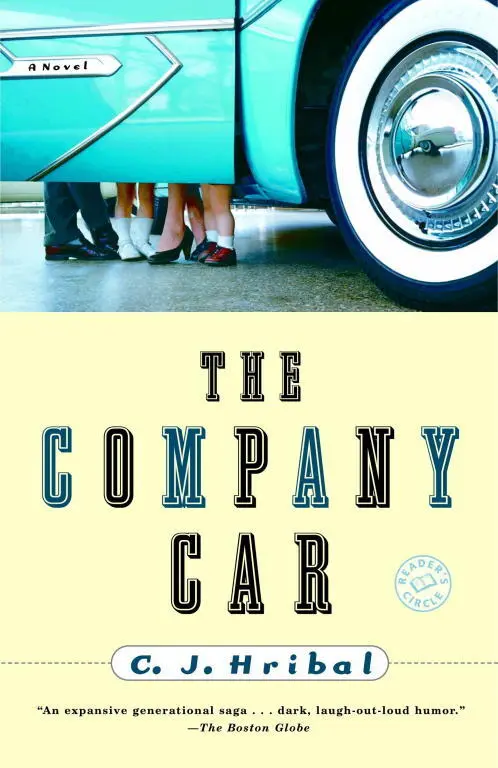
- Название:The Company Car
- Автор:
- Издательство:Random House
- Жанр:
- Год:2005
- Город:New York
- ISBN:1-58836-468-2
- Рейтинг книги:3 / 5. Голосов: 1
-
Избранное:Добавить в избранное
- Отзывы:
-
Ваша оценка:
The Company Car: краткое содержание, описание и аннотация
Предлагаем к чтению аннотацию, описание, краткое содержание или предисловие (зависит от того, что написал сам автор книги «The Company Car»). Если вы не нашли необходимую информацию о книге — напишите в комментариях, мы постараемся отыскать её.
“Are we there yet?” It’s the time-honored question of kids on a long family car trip—and Emil Czabek’s children are no exception. Yet Em asks himself the same thing as the family travels to celebrate his parents’ fiftieth wedding anniversary, and he wonders if he has escaped their wonderfully bad example.
The midwestern drive is Em’s occasion to recall the Czabek clan’s amazing odyssey, one that sprawls through the second half of the twentieth century. It begins with his parents’ wedding on the TV show It’s Your Marriage, and careens from a suburban house built sideways by a drunken contractor to a farm meant to shelter the Czabeks from a country coming apart. It is the story of Em’s father, Wally—diligent, distant, hard-drinking—and his attempts to please, protect, or simply placate his nervous, restless, and sensual wife, Susan, all in plain sight of the children they can’t seem to stop having.
As the tumultuous decades merge in his mind like the cars on the highway, Em must decide whether he should take away his parents’ autonomy and place them in the Heartland Home for the Elders. Beside him, his wife, Dorie, a woman who has run both a triathlon and for public office, makes him question what he’s inherited and whether he himself has become the responsible spouse of a drifting partner—especially since she’s packing a diaphragm and he’s had a vasectomy.
Wildly comic and wrenchingly poignant, The Company Car is a special achievement, a book that drives through territory John Irving and Jonathan Franzen have made popular to arrive at a stunning destination all its own.
The Company Car — читать онлайн бесплатно полную книгу (весь текст) целиком
Ниже представлен текст книги, разбитый по страницам. Система сохранения места последней прочитанной страницы, позволяет с удобством читать онлайн бесплатно книгу «The Company Car», без необходимости каждый раз заново искать на чём Вы остановились. Поставьте закладку, и сможете в любой момент перейти на страницу, на которой закончили чтение.
Интервал:
Закладка:
As with any of our father’s dreams, we had no idea what we were getting into. Nor did we have the first inkling of how to go about doing it. The actual time, money, and labor we’d invest in each of our father’s get-rich-quick schemes? We hadn’t a clue. Everything for us was a maiden voyage, and the ship of our dreams was invariably named Lusitania.
How, exactly, did we fuck up? Let us count the ways, starting with the cucumbers. First off, unbrined cukes are surprisingly easy to grow. Plant and wait. A little rain, a little heat, and poof! delicate, twin-bladed shoots appear, the world’s tiniest propellers. They grow slowly at first, then faster. The shoots become vines, the propeller-like leaves become thick, irregularly edged, their undersides and the vines, too, scratchy and rough with cilia. Then the buttery yellow blossoms appear, and behind them, the little buds of the cukes. You are now in business.
One of the things we knew nothing about: weeds. Weeds grow faster than whatever crop you plant. They choke out plants, steal nutrients from the soil. They must be stopped. So even as we enjoyed watching our little plants grow, we had to hoe and pluck weeds. Every day. Five acres. By hand. In a field that had grown nothing but weeds for the past, oh, twenty years or so. Hardy brutes, weeds. You can pull them, pluck them, yank them, chop them, whack them, hack them, deliciously decapitate them and spread their stalks and their veiny little leaves out under a hot, hot sun to sear them a pale white green, but unless you get the roots, they are back at their posts the very next day, tender shoots of evil. Our hands were blistered, our fingers cramped and green from pinching and pulling, and every day there would be more.
Which would not have been so bad if the crop itself were more cooperative. Oh, it was plenty cooperative in growing, and growing quickly, but Randolph Muncie down at the Randolph did not tell us what a god-awful thing it is to pick cucumbers. He did not tell us that cuke vines grow close to the ground, that the little cukes seem to grow closest to the main stem, and that you’d scratch your arms reaching for them. Nor did he tell us that daddy longlegs and wolf spiders like to hide among the vines, or that slugs gather on the wet soil after a rain, and while you were picking you were likely to discover all of them. He did not tell us that those bumps you see on pickles, the smooth bumps on the cukes you buy in the produce department, are what are left from the translucent green thorns that exist on baby cukes when you pick them. They are not on the cukes later because they break off in the pickers’ fingers, and it is not too long before your fingers are bleeding, sore and stiff, caked with dirt and cucumber juice and blood, and your fingers pads wear brown- and red- and brine-colored helmets. And every day you do this for three hours in the morning and three hours in the afternoon because cukes grow that fast, and if you want to make any money you pick twice a day.
He did not tell us any of the obvious things, either, such as it rains quite a bit in the summer, particularly when you don’t want it to, and mud is not a nice thing to be kneeling in for six hours a day, and that we would come to loathe the pickles and our five acres, and that after a while we would actually pray for rain to inundate the field, to make it so god-awful gloppy that our mother would give us a reprieve, and that when we returned to the field what we wanted was for the cukes to have exploded with heat and moisture into bulbous yellow gourdlike tubers, unfit for human consumption and therefore not worth picking, and for their rapid growth to have exhausted the vines’ ability to put out any more flowers.
But those feelings would come later. At first there was the happiness of seeing the seeds sprout. Our fingers in the warm soil, the early joy of seeing the propellers turn into leaves, the stems into vines, then the thick canopy of leaves close to the ground. We never grew tired, at least, of watching this miracle. The growth, day by day, which seemed to occur only when you weren’t looking right at it, as though there were elves in the field, cucumber fairies, who touched the vines with magic wands to make the buds appear, and touched them again to make the little cukes grow behind them, cukes no bigger than a fingernail at first, then no bigger than your little finger, so vulnerable until you tried to pick them.
Then pick them we did, day after day, until we were praying for rain and an early frost to put us out of our misery. When our father had local calls, he would take us in the evening with our haul to the Randolph, and we would dump our bushel baskets on Randolph Muncie’s sorting machine, and the cukes dropped, some right away, too many farther down the way to our liking, and Randolph and his son weighed our gleanings, and Randolph consulted his chart, did a little math, hitched up his pants, sniffed, rubbed a finger under his nose, and announced our pathetic total in a drawl that seemed stuck up his nose. It would accumulate, of course, so by week’s end it might actually amount to something like a hundred and thirty dollars. Good weeks he might cut us a check for one hundred and fifty-six or one hundred and eighty-five dollars. One hot week it was for two hundred and sixty-two, another week it was for three hundred and twelve. We whooped, we celebrated. “Now you’re cooking with grease,” said Randolph Muncie. Our father was elated. “See what you can do?” he kept saying over and over. “See what you can do? This’ll put hair between your toes, goddammit.” Then we went to the Dog ‘N Suds and gulped down enough root beer to make us forget the pain in our fingers and knees.
When our father wasn’t around, Tony Dederoff took us, or if he was too busy we dialed up Mikey Spillsbeth. Mikey Spillsbeth was sweet on Cinderella. Tall, gawky, and skinny, with black glasses and hair like an Airedale’s, he would do anything for anyone who gave him the time of day. And Cinderella, gangly herself, still ironing her hair straight and putting on too much eye shadow and mascara, was eager to try her newfound wiles on anybody who might prove susceptible. In a year she would be sixteen and have her license, so it was really for only this summer and fall that she would need Mikey Spillsbeth. She played him accordingly.
It was amazing to me what a little misapplied mascara, a touch of rose pink lipstick, and a finger twirling stick-straight hair can do. She actually had a crush on a guy named Guy, the tight end for the football team, but given that Guy didn’t know she was alive, any attention was welcome. Even from Mikey Spillsbeth, who most people agreed was a little weird. He had a high-pitched laugh, and when he chuckled it sounded like a girl’s giggle. His normal speaking voice wasn’t so hot, either. It seemed to buzz in his mouth, as though he were speaking through a microphone with too much reverb. Add to that a very long and skinny neck and you had the whisperings of… Well, let’s just say it was good for Mikey to be seen driving Cinderella around, even if she was just using him for his car.
It didn’t matter to us who was driving as long as those cukes were going to market. On good days with our father we might need two trips, and with Mikey’s old Rambler we might need four or five. It was greed that drove us, greed and our inability to tell our father we hated the work and didn’t think the money was worth it. Not that this would have mattered one iota to our father. Even when we did manage to tell him, along about August, he didn’t want to hear it.
“No guts, no glory,” he told us. And “In for a dime, in for a dollar.”
Finally he told us, “Look, you’re just getting started. It’s normal once the bloom is off the rose to have second thoughts. Just stick with it. Perseverance is all about persevering. If it’s still terrible next year, we’ll try something else.”
Читать дальшеИнтервал:
Закладка:
Похожие книги на «The Company Car»
Представляем Вашему вниманию похожие книги на «The Company Car» списком для выбора. Мы отобрали схожую по названию и смыслу литературу в надежде предоставить читателям больше вариантов отыскать новые, интересные, ещё непрочитанные произведения.











Обсуждение, отзывы о книге «The Company Car» и просто собственные мнения читателей. Оставьте ваши комментарии, напишите, что Вы думаете о произведении, его смысле или главных героях. Укажите что конкретно понравилось, а что нет, и почему Вы так считаете.