C Hribal - The Company Car
Здесь есть возможность читать онлайн «C Hribal - The Company Car» весь текст электронной книги совершенно бесплатно (целиком полную версию без сокращений). В некоторых случаях можно слушать аудио, скачать через торрент в формате fb2 и присутствует краткое содержание. Город: New York, Год выпуска: 2005, ISBN: 2005, Издательство: Random House, Жанр: Современная проза, на английском языке. Описание произведения, (предисловие) а так же отзывы посетителей доступны на портале библиотеки ЛибКат.
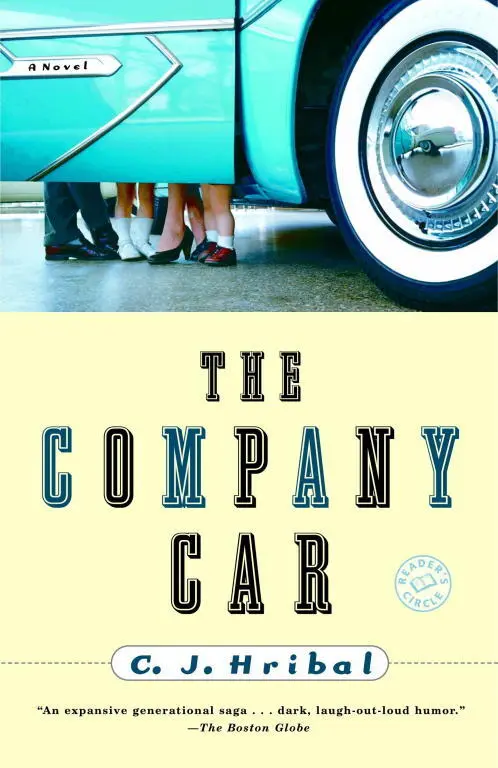
- Название:The Company Car
- Автор:
- Издательство:Random House
- Жанр:
- Год:2005
- Город:New York
- ISBN:1-58836-468-2
- Рейтинг книги:3 / 5. Голосов: 1
-
Избранное:Добавить в избранное
- Отзывы:
-
Ваша оценка:
The Company Car: краткое содержание, описание и аннотация
Предлагаем к чтению аннотацию, описание, краткое содержание или предисловие (зависит от того, что написал сам автор книги «The Company Car»). Если вы не нашли необходимую информацию о книге — напишите в комментариях, мы постараемся отыскать её.
“Are we there yet?” It’s the time-honored question of kids on a long family car trip—and Emil Czabek’s children are no exception. Yet Em asks himself the same thing as the family travels to celebrate his parents’ fiftieth wedding anniversary, and he wonders if he has escaped their wonderfully bad example.
The midwestern drive is Em’s occasion to recall the Czabek clan’s amazing odyssey, one that sprawls through the second half of the twentieth century. It begins with his parents’ wedding on the TV show It’s Your Marriage, and careens from a suburban house built sideways by a drunken contractor to a farm meant to shelter the Czabeks from a country coming apart. It is the story of Em’s father, Wally—diligent, distant, hard-drinking—and his attempts to please, protect, or simply placate his nervous, restless, and sensual wife, Susan, all in plain sight of the children they can’t seem to stop having.
As the tumultuous decades merge in his mind like the cars on the highway, Em must decide whether he should take away his parents’ autonomy and place them in the Heartland Home for the Elders. Beside him, his wife, Dorie, a woman who has run both a triathlon and for public office, makes him question what he’s inherited and whether he himself has become the responsible spouse of a drifting partner—especially since she’s packing a diaphragm and he’s had a vasectomy.
Wildly comic and wrenchingly poignant, The Company Car is a special achievement, a book that drives through territory John Irving and Jonathan Franzen have made popular to arrive at a stunning destination all its own.
The Company Car — читать онлайн бесплатно полную книгу (весь текст) целиком
Ниже представлен текст книги, разбитый по страницам. Система сохранения места последней прочитанной страницы, позволяет с удобством читать онлайн бесплатно книгу «The Company Car», без необходимости каждый раз заново искать на чём Вы остановились. Поставьте закладку, и сможете в любой момент перейти на страницу, на которой закончили чтение.
Интервал:
Закладка:
Perseverance is all about persevering. That was the lesson our father wanted to teach us. That there were easier ways of earning a pittance did not seem to matter to him. He’d already chosen this way. This was what made our father a good company man. He was willing to lower his head and plow along, and while he might grumble, he would finish what he started. Our father, had he been in the Charge of the Light Brigade, would have insisted on carrying the flag.
We caught a break the next spring, when it rained uncontrollably for weeks on end and washed the seeds we’d planted into the far corner of the field. When they finally erupted, it looked like Linus Van Pelt’s Great Pumpkin Patch. The concentration made it impossible to harvest, and the vines that did grow choked each other out. By the end of the summer we were hauling in all of seventy-one dollars a week, and our biggest week had been one hundred and thirty-six. Divide by the four of us picking, with two others toddling around and stepping on plants, and you weren’t getting much for all the muddy pain and effort. Our father said, All right, enough, he would come up with something else over the winter.
In addition to the family garden, we were each given a vegetable to raise on our own. The theory being that we would take a special pride in seeing what became of what we had planted. The littler kids got the nonfood vegetables—gourds, pumpkins, Indian corn. Ernie took to the Big Max—a pumpkin that, when mature, regularly weighed over a hundred pounds—in a big way. He wore OshKosh B’Gosh overalls and an engineer’s cap whenever he was working on “his garden.” And who could blame him? To encourage entrepreneurship, our father announced that whatever wasn’t consumed by us could be sold for profit, and the child responsible could keep his or her money. There was a logic to this, but it was the logic of a suburban man who doesn’t understand yet where he’s living. Our neighbors did not want our vegetables. They had their own. Though their plots were far more modest than ours, they had all the vegetables they needed, and once they found a family like ours, they would lie in wait after church and heap their unwanted zucchinis, peppers, tomatoes, and cucumbers on us as though we were one of those unfortunate families whose home has been borne away by a flood or tornado. We got big honking cukes thrust on us even though our fellow parishioners knew we were growing them for Randolph Muncie. “Well, we just thought,” they’d say and hand us another sack full of something we already had too much of ourselves. And because our parents were pioneers, the first little lapping wave of what, in twenty years, would become an exurban flood, there weren’t many people yet like our father, nostalgic for roadside stands staffed by semicherubic farm offspring, a neat little row of blond children in white T-shirts with manure on their pant legs. Oh, you’d get asparagus thieves, people who’d drive out from Appleton and feel quaintly rural hunting the ditches with a paring knife, but on a week-to-week basis we probably would have done better selling our blood.
“This is no way to make a living,” said our mother. “It’s not supposed to be a living for anybody but us,” said our father. “Whatever extra comes in is gravy. Pure gravy.”
It is hard to think of it as gravy when you are putting your finger through the mush of a rotten starter spud, or when you see that the row of weeds you had so energetically hoed the day before were actually pepper plants, and that where you had weeded correctly had reseeded itself in weeds so quickly you’d swear the weeds had mastered time-lapse regeneration.
It was not a good time to be one of the older kids. Robert Aaron’s corn got blight, which grew like tumors on the stalks and ears, Cinderella’s cantaloupes and watermelons put out nice vines but miniature fruit, and my potatoes did too well. I had to keep asking everyone to help me stay ahead of the weeds, and I had to keep mounding the potato hills so the potatoes wouldn’t see the sun and turn green, and my requests, except when our mother ordered everyone to help, were frequently met with jeers of “You volunteered, sucker!”
It was a wet summer, though, so by July the more waterlogged vegetables never flowered. But the zucchini went wild. We took a special joy in pelting each other with overripe zucchinis and cucumbers. They burst open on your back, a mushy spray of seed and goop. When we got tired of that, we threw them against fence and telephone posts, enjoying the splatter. We shot skeets with them, too, and stabbed them with pitchforks or halved them with shovels, or heaved them into the field and listened for the plunk, thunk, splat of their landing.
It didn’t matter, though. There were always more vegetables. In just a few short months we had gone from shivering with delight at being able to grow our own food to being hardened vegetable murderers, eager to find a Final Solution to the Vegetable Problem.
The littler kids did not share our bend of mind. Not raising anything you’d want to eat, or needed to pick, they could watch their stuff grow all summer long. Pumpkins, ornamental squash, Indian corn—you left that stuff alone. The only work they had was with Ernie’s pumpkins, which at a certain point needed to be thinned, and as the summer wore on, turned occasionally so they got orange all over. Ernie, Wally Jr., and Peg Leg Meg were just waiting for the fall. With little kid certainty, they knew they were going to make a killing. And they did, at least compared to the rest of us. The three of them wound up covered in gravy.
Ike ended up doing fine, too, with his Indian corn, but he didn’t seem that interested in the money. He was fascinated with the idea that this multicolored corn, these red and orange ears, these starburst purple and white kernels, connected him back to an ancient culture that used to roam our land, fishing it and harvesting it and hunting it, long before white settlers came this way, long before, even, Columbus “discovered” this country. When we field-picked rocks, Ike walked with an eye toward finding arrowheads and spear points, and what he found fueled a lifelong love affair with Indians. When Tony Dederoff told us (after Ike had shown him the arrowheads) that there were burial mounds in our woods, we believed him. We felt special, to be living on holy ground. The whole farm was holy. And when we went running in the woods, or worked our way through the trees playing army, we could feel the spirits of the Indian warriors who had trod this ground before us. Ike felt it more than we did, though, and he kept feeling it long after we found out the burial mounds were actually dredge mounds from when they’d cleared the creek bed thirty years previous.
In the fall our father took some of Ernie’s pumpkins to county fair weigh-ins, and the size of these pumpkins—one weighed in at one hundred and eighty pounds and took two men to lift—plus the photos our father took of Ernie sitting inside one of his hollowed-out pumpkins, drummed up a lot of business for the little kids. Ike seemed not that interested in selling his corn, but Wally Jr., Peg Leg Meg, and Ernie basked in the glow of their successes.
So did our father. For the next spring he planned a scaled down vegetable garden and a huge field of pumpkins, half in Big Max, half regular. Lots of ornamental gourds and Indian corn, too. The cucumbers again, of course. “We had one bad year with them,” said our father. “It can happen to anybody.” As a concession to our mother, he didn’t protest when she announced she was putting in flower beds, both around the house and in parts of the vegetable garden. “The kohlrabi and Brussels sprouts,” she announced, “are not long for this world.”
“I grant you permission to deviate from the master plan,” said our father. He was grinning but only half-joking.
Читать дальшеИнтервал:
Закладка:
Похожие книги на «The Company Car»
Представляем Вашему вниманию похожие книги на «The Company Car» списком для выбора. Мы отобрали схожую по названию и смыслу литературу в надежде предоставить читателям больше вариантов отыскать новые, интересные, ещё непрочитанные произведения.









Обсуждение, отзывы о книге «The Company Car» и просто собственные мнения читателей. Оставьте ваши комментарии, напишите, что Вы думаете о произведении, его смысле или главных героях. Укажите что конкретно понравилось, а что нет, и почему Вы так считаете.