C Hribal - The Company Car
Здесь есть возможность читать онлайн «C Hribal - The Company Car» весь текст электронной книги совершенно бесплатно (целиком полную версию без сокращений). В некоторых случаях можно слушать аудио, скачать через торрент в формате fb2 и присутствует краткое содержание. Город: New York, Год выпуска: 2005, ISBN: 2005, Издательство: Random House, Жанр: Современная проза, на английском языке. Описание произведения, (предисловие) а так же отзывы посетителей доступны на портале библиотеки ЛибКат.
- Название:The Company Car
- Автор:
- Издательство:Random House
- Жанр:
- Год:2005
- Город:New York
- ISBN:1-58836-468-2
- Рейтинг книги:3 / 5. Голосов: 1
-
Избранное:Добавить в избранное
- Отзывы:
-
Ваша оценка:
The Company Car: краткое содержание, описание и аннотация
Предлагаем к чтению аннотацию, описание, краткое содержание или предисловие (зависит от того, что написал сам автор книги «The Company Car»). Если вы не нашли необходимую информацию о книге — напишите в комментариях, мы постараемся отыскать её.
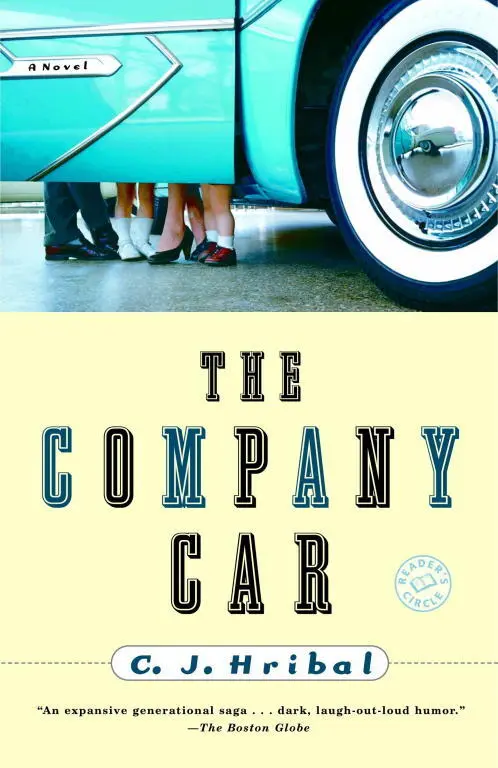
“Are we there yet?” It’s the time-honored question of kids on a long family car trip—and Emil Czabek’s children are no exception. Yet Em asks himself the same thing as the family travels to celebrate his parents’ fiftieth wedding anniversary, and he wonders if he has escaped their wonderfully bad example.
The midwestern drive is Em’s occasion to recall the Czabek clan’s amazing odyssey, one that sprawls through the second half of the twentieth century. It begins with his parents’ wedding on the TV show It’s Your Marriage, and careens from a suburban house built sideways by a drunken contractor to a farm meant to shelter the Czabeks from a country coming apart. It is the story of Em’s father, Wally—diligent, distant, hard-drinking—and his attempts to please, protect, or simply placate his nervous, restless, and sensual wife, Susan, all in plain sight of the children they can’t seem to stop having.
As the tumultuous decades merge in his mind like the cars on the highway, Em must decide whether he should take away his parents’ autonomy and place them in the Heartland Home for the Elders. Beside him, his wife, Dorie, a woman who has run both a triathlon and for public office, makes him question what he’s inherited and whether he himself has become the responsible spouse of a drifting partner—especially since she’s packing a diaphragm and he’s had a vasectomy.
Wildly comic and wrenchingly poignant, The Company Car is a special achievement, a book that drives through territory John Irving and Jonathan Franzen have made popular to arrive at a stunning destination all its own.
The Company Car — читать онлайн бесплатно полную книгу (весь текст) целиком
Ниже представлен текст книги, разбитый по страницам. Система сохранения места последней прочитанной страницы, позволяет с удобством читать онлайн бесплатно книгу «The Company Car», без необходимости каждый раз заново искать на чём Вы остановились. Поставьте закладку, и сможете в любой момент перейти на страницу, на которой закончили чтение.
Интервал:
Закладка:
We waited to see how this was going to turn out. Our mother quivering, our father quavering. The seven of us lined up like cheerleaders: Quiver, quaver! Quiver, quaver! Kiss him, Mom, do us all a favor!
She did, the union was saved, and as soon as they fell into each other’s arms we went back to throwing hail at each other like it was confetti, like it was rice.
___
It was not the rain that did in our pumpkins, no. And it wasn’t the hail, chopping like a butcher’s knife. A surprising amount of stuff cut to ribbons in that storm came back, at least partially. Three or four plants in a row here, half a row there. Because of the hail we didn’t have the two or three gargantuan pumpkins that would make people’s eyes pop with disbelief, but we had several one hundred and fifty pounders, and really, when you’re dealing with one-hundred-and-fifty-pound pumpkins, how many do you need?
We got an early frost that year, and a pumpkin field after an early frost looks both trampled and beautiful. The vines have all gone limp, the pumpkins’ umbilical cords wither and dry, the leaves surrender to death and decay. But the pumpkins themselves look gorgeous. There is something about their orange, potbellied robustness in the midst of all that fragility that reminds one of the grandness of life and all its cycles in a way that the indiscriminately breeding pickles do not. When pickles have run their course and the last cukes on the vine have exploded into yellowy green tumors, all you want to do is smash them, stomp them with your boots, hurl them into fields, throw them against fence posts and barn walls. They are to plant growth what cancer is to cell growth. Pumpkins, on the other hand, perhaps because they are so few and so squatly ostentatious, seem like the fulfillment of something, a promise made and kept.
After the hailstorm that summer, our father said that pumpkins might indeed be a better cash crop than pickles. Next year we’d plant twenty, thirty acres of the beasts. And after we planted them, our work would consist of rolling them over in the sun.
We would, our father said, make a killing.
The tornado that came a week before Halloween made a prophet out of our father. We were at school that day, on the playground. It was a crisp fall day, one of those days that dawns bright and cold, the temperatures just below freezing, and then the air warms to a brisk forty-three or so. The sunshine so bright off the colored leaves and the air so clear it feels as though time itself has stopped, as though it could stay exactly that way forever and you wouldn’t mind at all. The clouds moved in that morning, heavy, scudding, a solid wall. The wind picked up. Little dust devils whirled away madly in doorways and across the playground, picking up leaves, swirling them off the ground and up. Then we got a blast of air, and something seemed odd. It was warm air. Very warm air. We were on the playground in zippered sweaters and corduroy coats, and the next thing we knew we were hot. Most kids took off their jackets. And then time did seem to stop. Balls rolled away from their owners, and conversation, the laughter and shouting, died away. We were enveloped by stillness. The sky, so gay and bright and inviting a moment before, took on that ominous old-bruise color. It was like a light had suddenly been switched off, plunging us into twilight. We knew what it meant. A second later the siren on top of the school started its high-pitched, crescendoing whine, and the teachers were herding us into the school’s boiler room even as the wind began its furious whip and howling.
Our mother, home with Peg Leg Meg, reported on what we could not see. She watched it from Robert Aaron’s room. From radio reports, the tornado formed southwest of town, and the funnel stayed off the ground until after it had passed over the town and past our school. It first touched down about a mile from our house, exploding our neighbor’s barn and killing thirty-four dairy cows that were trapped inside. It was tearing branches off trees, upending tractors and corn pickers, shattering corncribs, ripping off roofs, dropping power lines. Poultry, pigs, horses, sheep—if it was in the tornado’s path it became airborne, and everything in the air became a missile. Our mother could see it coming over the rise from our neighbor’s. It was on the ground now, not bouncing as it first had, and was making a beeline for our house. That was when our mother covered Peg’s body with her own, crouched on the floor, and began to pray.
The roaring, our mother reported afterward, was tremendous. She could hear windows shattering upstairs and the walls thump-thumping as debris pummeled the house. She could feel the suction of air on her body even though she was below grade and inside a house. She was quite certain that she was going to die, and she prayed that her children would be taken care of. Then the roaring stopped, and she realized she was still on the floor, protecting a child who was complaining, “Mommy, get up, you’re hurting me, I can’t breathe!”
Our mother and sister were saved because tornadoes rarely make a beeline for anything. They meander, they wobble, they zig, they zag. This particular tornado passed, as we could see from the wake of its destruction, about fifty yards west of our house. It took out our neighbor’s trees and our toolshed. It picked up one of our cats and heaved it into the house. Curiously, although the toolshed was gone, its walls distributed among the trees along our creek bottom, the tools themselves were still on the benches, the lawn mower still on the floor. Coming home from school on the bus, we passed one scene of destruction after another—cornfields flattened, trees split in two or completely uprooted, barns missing their centers, houses with their roofs peeled back, lumber and barn siding and bark stripped from trees littering the road and fields. A huge oak that stood near the corner of our property and our neighbor’s was not missing more than a branch or two, but sheets of green-and-gray metal roofing from the Myerses’ barn were embedded deep into the trunk and into the crotch of branches that formed the crown. When we got home we found a lot more of the Myerses’ barn roof, sheet by sheet, littering our ravine, wrapped around trees as though corrugated sheet metal were nothing more than wet toilet paper. Standing on the rise behind our house, you could see a couple of exploded areas in our creek bottom where the tornado had touched down, and then it must have skipped over our hill and done its final damage to the farms on the other side. We heard about those in the coming days, once the power lines were up and phone service restored. Miraculously, no one was killed.
Given the severity of the storm, it was easy to overlook what was missing. We came home to find our mother crying with relief, a little dazed, still clutching Peg Leg Meg’s hand. “Mommy, you’re hurting me!” Peg kept squealing, and our mother said she was sorry. But she didn’t let go. It wasn’t until we’d walked around the house twice, looking at broken windows, the dead cat, torn up shingles, broken tree branches, the tools residing in bare air, that Ernie asked, “What about the pumpkins? What happened to the pumpkins?” He was standing in the field behind our house. The ground was bare. It was as though someone with a push broom had swept it clean. The wilted vines, the fat orange pumpkins—everything was gone.
Flying pumpkins. It seemed almost too comical to be believed.
“Where could they be?” Ernie wondered, and as we gazed down the field, looking for a flash of something orange, we wondered the same thing.
In the days that followed, we found out. Like everything else lifted by the storm, they had become missiles, fat orange bombs thrown like fastballs at the objects they ultimately hit. Cars were destroyed by them. Cows up to two miles away were killed by them. Pumpkins had wiped out chicken coops, flown through bedroom windows, taken out dining room tables. Barns had been aerated by them, tractor engines caved in, apple trees knocked down like bowling pins. We got calls every day for weeks as people found out who the projectiles belonged to. They couldn’t sue, of course, act of God and all that, but the callers asked our father to stop growing them. Avoid the near occasion of pumpkin sin seemed to be their message. “How often are there going to be flying pumpkins, for chrissakes?” our father asked them.
Читать дальшеИнтервал:
Закладка:
Похожие книги на «The Company Car»
Представляем Вашему вниманию похожие книги на «The Company Car» списком для выбора. Мы отобрали схожую по названию и смыслу литературу в надежде предоставить читателям больше вариантов отыскать новые, интересные, ещё непрочитанные произведения.






Обсуждение, отзывы о книге «The Company Car» и просто собственные мнения читателей. Оставьте ваши комментарии, напишите, что Вы думаете о произведении, его смысле или главных героях. Укажите что конкретно понравилось, а что нет, и почему Вы так считаете.