C Hribal - The Company Car
Здесь есть возможность читать онлайн «C Hribal - The Company Car» весь текст электронной книги совершенно бесплатно (целиком полную версию без сокращений). В некоторых случаях можно слушать аудио, скачать через торрент в формате fb2 и присутствует краткое содержание. Город: New York, Год выпуска: 2005, ISBN: 2005, Издательство: Random House, Жанр: Современная проза, на английском языке. Описание произведения, (предисловие) а так же отзывы посетителей доступны на портале библиотеки ЛибКат.
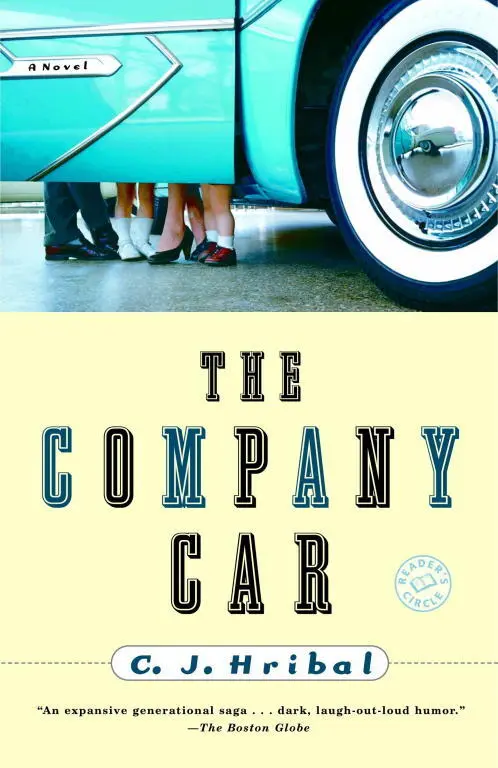
- Название:The Company Car
- Автор:
- Издательство:Random House
- Жанр:
- Год:2005
- Город:New York
- ISBN:1-58836-468-2
- Рейтинг книги:3 / 5. Голосов: 1
-
Избранное:Добавить в избранное
- Отзывы:
-
Ваша оценка:
The Company Car: краткое содержание, описание и аннотация
Предлагаем к чтению аннотацию, описание, краткое содержание или предисловие (зависит от того, что написал сам автор книги «The Company Car»). Если вы не нашли необходимую информацию о книге — напишите в комментариях, мы постараемся отыскать её.
“Are we there yet?” It’s the time-honored question of kids on a long family car trip—and Emil Czabek’s children are no exception. Yet Em asks himself the same thing as the family travels to celebrate his parents’ fiftieth wedding anniversary, and he wonders if he has escaped their wonderfully bad example.
The midwestern drive is Em’s occasion to recall the Czabek clan’s amazing odyssey, one that sprawls through the second half of the twentieth century. It begins with his parents’ wedding on the TV show It’s Your Marriage, and careens from a suburban house built sideways by a drunken contractor to a farm meant to shelter the Czabeks from a country coming apart. It is the story of Em’s father, Wally—diligent, distant, hard-drinking—and his attempts to please, protect, or simply placate his nervous, restless, and sensual wife, Susan, all in plain sight of the children they can’t seem to stop having.
As the tumultuous decades merge in his mind like the cars on the highway, Em must decide whether he should take away his parents’ autonomy and place them in the Heartland Home for the Elders. Beside him, his wife, Dorie, a woman who has run both a triathlon and for public office, makes him question what he’s inherited and whether he himself has become the responsible spouse of a drifting partner—especially since she’s packing a diaphragm and he’s had a vasectomy.
Wildly comic and wrenchingly poignant, The Company Car is a special achievement, a book that drives through territory John Irving and Jonathan Franzen have made popular to arrive at a stunning destination all its own.
The Company Car — читать онлайн бесплатно полную книгу (весь текст) целиком
Ниже представлен текст книги, разбитый по страницам. Система сохранения места последней прочитанной страницы, позволяет с удобством читать онлайн бесплатно книгу «The Company Car», без необходимости каждый раз заново искать на чём Вы остановились. Поставьте закладку, и сможете в любой момент перейти на страницу, на которой закончили чтение.
Интервал:
Закладка:
“Fuck you, I don’t need your permission,” said our mother. It was the first time we’d ever heard her say “Fuck.” She was joking, but there was an edge there, too. Our father dutifully sketched in the flower beds on his graph paper. Little rectangles at the ends of the huge squares that were his—and Ernie’s—pumpkin patches.
The weather, of course, was under no obligation to cooperate. The next year started wet, and things got bedraggled and moldy. A drought followed. We ran hoses, lugged water, gave each plant its own drink, and saved those plants that hadn’t gotten too yellow or white green. We felt pretty good about being the garden’s Red Cross. Then came the tornado warnings.
“It doesn’t rain but it pours,” said our father as we stood outside our house, looking to the southwest. The sky had gone from deep gray to deep slate to a yellowy purple green—the color of an old bruise. The wind had been blowing very hard, and then it had gotten quite still. Although it was a mid-July day, it suddenly felt chilly.
Our mother came out of the house hugging her arms. “Wally, I’m freezing.”
Our father said, “That’s because the temperature’s dropped twenty degrees in the last ten minutes.”
“Can it do that?”
Said our father, “It can do anything it wants. Feel that stillness?” He wet his finger and held it up, checking for a breeze. “And you can practically taste the electricity in the air.” I stuck my tongue out, expecting to feel the tang of metal. “We better get downstairs.”
The southwest corner of our house was Robert Aaron’s room. His windows faced the road. We packed in there, on the bed and floor. Because one of my chores was changing sheets every week, I knew about the Playboy s under his mattress. If things got really bad, I wondered, would it be a sin if you spent your final moments contemplating the parabolic breasts and the discreet pillow placement on a sable-haired, sapphire-eyed beauty from Greece?
Our father brought in the fifty-four-band overseas radio, the one that could receive Argentina, and, more important, Cubs games from Chicago. Our mother opened the windows an inch. She and our father went through the house, opening windows. The sky was a boiling darkness. When the wind started shrieking, our mother said, “Let us pray, children,” and we did, our heads down, our eyes closed. I pictured the sloe-eyed woman from Greece, whose pendulous breasts might be all I would remember of this life as we were carried into the next. I pictured Patty Duckwa, whom I recalled now only when I touched myself, and I pictured Dorie Braun—who favored cutoff jeans and T-shirts—wearing only the former. Dorie was just beginning to get breasts, pointy things under her T-shirts, and I’d noticed that some days she wore a bra—the straps were visible under her T-shirts—and some days she didn’t. While we waited for our house to be lifted up around us, and were praying to Jesus for our safety, I was getting a boner.
The house did not lift up around us. No twirling house in the sky, no witches going past on bicycles, not even Tillie Bunkas with her goiter. The winds became fierce, and rain lashed at the house, and then we heard the hollow stinging of hail, little tip-tippings on the window that sounded like someone quietly rapping, over and over. “Close the windows, close the windows!” yelled our mother, and she and our father left to shut what they’d just opened. We dared to look out. The hail was pea-size and bounced when it hit the ground. It almost looked like it landed and then jumped up again, for joy. Then there was a shift. It was not rain with some hail mixed in; it was hail with a little rain mixed in. And the hail was marble-size, and larger. It sounded like both a drummer and a jackhammer had gone to work on the south and west sides of the house. Furious poundings, hard brutal thockings, thousands of them, as hail met wood. Upstairs a window crashed and our mother shrieked. The sky had gotten so dark our crime light went on. Then the lightning struck, immediate and furious, a flash so bright it lit up everything before it knocked out the power. We shrieked, too, then were plunged into darkness.
Rain followed. Great buffeting gusts of it, and once the crime light came back on and we could count “one one thousand, two one thousand” between the lightning and the crash of thunder, we could make out in the gray half-light the shapes of trees bent double by the wind.
“Are they going to live?” asked Ernie, his eyes wide with wonder and fright.
“What?” I asked, wondering if he meant the trees, the crops, the animals, what?
Answered Ernie, “Everything.”
There is something about coming outside after a storm into gorgeous sunshine, the wall of slate receding behind you, the sun brilliant, the air crystalline and clear, the trees, the eaves still dripping, that makes you feel as though you have survived something. And you are glad. You count fingers and toes and walk around in a daze. We felt that way as we surveyed the damage with our father. Our mother, our father said, was “still putting herself together,” whatever that meant. We checked the house first. The siding on the west side, where our mother had spent so many hours getting the wood to drink up paint, was ruined. The wood looked like it had been sandblasted and beaten on with ball-peen hammers. We touched the indentations with our fingers. Our father whistled. Three windows had been cracked in the hail assault, one had shattered. While our father checked the roof for damage, we threw hail at each other and examined the trees. Branches were stripped of their leaves, and on the smaller trees the bark had been shredded. “Will they live?” Ernie kept asking. “Will they live?”
“I don’t know, honey, I don’t know,” said our mother. She’d come up behind us, and we were surprised to see the fingers of her left hand wrapped in gauze. There was a cut on her cheek as well, a fine line beaded with blood. “I was trying to close the window when it shattered,” she said. “It’s okay. They bled a lot, but they weren’t very deep.”
“Was that why you screamed?” asked Peg Leg Meg.
“We all screamed,” said Cinderella.
“I didn’t,” said Robert Aaron.
“Well, hooray for you,” said Cinderella.
Ike and Wally Jr. maintained they hadn’t screamed either.
“It doesn’t matter who screamed,” said our mother. “Has anyone checked the garden?”
We hadn’t. We’d been having too good a time playing with the hail. Cool lucent stones. You could see the layers that formed them once you split them open. We’d also been quietly celebrating the destruction of the pickle field. It was an almost total loss, leaves shredded, vines trampled. The hailstones still there, gleaming, almost phosphorescent. Oh, happy day.
It wasn’t until we heard our mother’s sharply inhaled “Oh! Oh, my!” that it dawned on us the damage would not be limited to what we wanted destroyed.
The garden was shredded, too. Poking up from the mud were fingers of stems, in some cases not even that. The petals of our mother’s flowers lay strewn about, driven into the mud by the rain’s fury. We did not even know their names, except for the common ones like the snapdragons and petunias. Our mother wept. Our father put his arm around her.
“It’ll come back,” said our father confidently, breezily. “A lot of this will come back. It looks bad now, sure, but give it time. You wait, a lot of this is going to come back.”
Our mother had one hand clapped over her mouth and another over her belly. “Oh, Wally” was all she could say to him.
“It’ll come back,” repeated our father, and you could tell he believed it. But his voice’s quaver told us he wasn’t sure she believed it. And he needed her to. Like it wasn’t just the flower beds he was talking about but something in their marriage, their own enterprise of being here together. It’s like in a relationship, when one party says, “I love you,” and the other replies, “I know,” rather than “I love you, too.” A sign that something is seriously wrong. When our father says, “It’ll come back,” our mother is not supposed to answer, “Oh, Wally.”
Читать дальшеИнтервал:
Закладка:
Похожие книги на «The Company Car»
Представляем Вашему вниманию похожие книги на «The Company Car» списком для выбора. Мы отобрали схожую по названию и смыслу литературу в надежде предоставить читателям больше вариантов отыскать новые, интересные, ещё непрочитанные произведения.









Обсуждение, отзывы о книге «The Company Car» и просто собственные мнения читателей. Оставьте ваши комментарии, напишите, что Вы думаете о произведении, его смысле или главных героях. Укажите что конкретно понравилось, а что нет, и почему Вы так считаете.