C Hribal - The Company Car
Здесь есть возможность читать онлайн «C Hribal - The Company Car» весь текст электронной книги совершенно бесплатно (целиком полную версию без сокращений). В некоторых случаях можно слушать аудио, скачать через торрент в формате fb2 и присутствует краткое содержание. Город: New York, Год выпуска: 2005, ISBN: 2005, Издательство: Random House, Жанр: Современная проза, на английском языке. Описание произведения, (предисловие) а так же отзывы посетителей доступны на портале библиотеки ЛибКат.
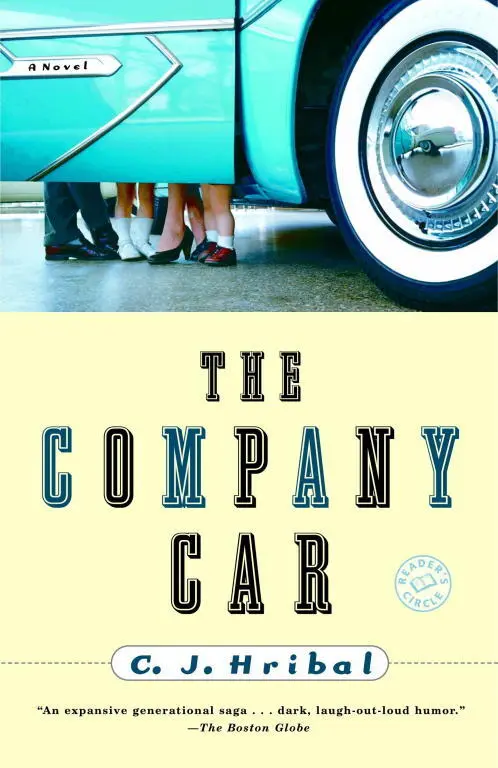
- Название:The Company Car
- Автор:
- Издательство:Random House
- Жанр:
- Год:2005
- Город:New York
- ISBN:1-58836-468-2
- Рейтинг книги:3 / 5. Голосов: 1
-
Избранное:Добавить в избранное
- Отзывы:
-
Ваша оценка:
The Company Car: краткое содержание, описание и аннотация
Предлагаем к чтению аннотацию, описание, краткое содержание или предисловие (зависит от того, что написал сам автор книги «The Company Car»). Если вы не нашли необходимую информацию о книге — напишите в комментариях, мы постараемся отыскать её.
“Are we there yet?” It’s the time-honored question of kids on a long family car trip—and Emil Czabek’s children are no exception. Yet Em asks himself the same thing as the family travels to celebrate his parents’ fiftieth wedding anniversary, and he wonders if he has escaped their wonderfully bad example.
The midwestern drive is Em’s occasion to recall the Czabek clan’s amazing odyssey, one that sprawls through the second half of the twentieth century. It begins with his parents’ wedding on the TV show It’s Your Marriage, and careens from a suburban house built sideways by a drunken contractor to a farm meant to shelter the Czabeks from a country coming apart. It is the story of Em’s father, Wally—diligent, distant, hard-drinking—and his attempts to please, protect, or simply placate his nervous, restless, and sensual wife, Susan, all in plain sight of the children they can’t seem to stop having.
As the tumultuous decades merge in his mind like the cars on the highway, Em must decide whether he should take away his parents’ autonomy and place them in the Heartland Home for the Elders. Beside him, his wife, Dorie, a woman who has run both a triathlon and for public office, makes him question what he’s inherited and whether he himself has become the responsible spouse of a drifting partner—especially since she’s packing a diaphragm and he’s had a vasectomy.
Wildly comic and wrenchingly poignant, The Company Car is a special achievement, a book that drives through territory John Irving and Jonathan Franzen have made popular to arrive at a stunning destination all its own.
The Company Car — читать онлайн бесплатно полную книгу (весь текст) целиком
Ниже представлен текст книги, разбитый по страницам. Система сохранения места последней прочитанной страницы, позволяет с удобством читать онлайн бесплатно книгу «The Company Car», без необходимости каждый раз заново искать на чём Вы остановились. Поставьте закладку, и сможете в любой момент перейти на страницу, на которой закончили чтение.
Интервал:
Закладка:
They were also predicated on the assumption that his dreams required only his foresight and our labor to succeed. His brains, our backs—a simple equation. Gone Sunday night to Friday night, driving seventy thousand miles a year, he had plenty of time to wear his thinking cap, particularly if he watered it regularly, which was more or less a point of honor with him.
He never mentioned these harebrained schemes when he first thought of them, or rather, when he first came home. We’d have recognized them for what they were if he had, if they’d been delivered to us still wet from stewing in his brain’s pickled juices. Perhaps he knew that. Perhaps that was part of his genius, that even stewed, his dreams knew when to lie low, and when the time was propitious to spring forward, newly hatched, clean and shiny and new.
Saturday mornings our father cooked and kidded his way through breakfast, and while we chowed down, he told us about his dreams. Only he never called them dreams. They were his “ideas,” and while he kidded us about how much or little we were eating—bacon by the panful, eggs cooked in the bacon grease—his conversation was threaded through with how he saw his idea working itself out to the benefit of us all.
“We’re a family,” he never tired of telling us. “And this is a family operation. We rise or fall together. What are we?” he’d ask, his voice rising in inflection at question’s end.
“We’re Czabeks!” we’d chorus, some more lustfully than others, our enthusiasm usually in direct opposition to our years. You can call out your identity with gusto only so many hundred times, particularly if your surname sounds like some sort of Central European cookie.
“Never forget that,” said our father, as though we could.
After breakfast our father would gather his ratty blue terry-cloth robe about him, sit at the kitchen table with a cup of coffee the size of Rhode Island, and go into detail about how this latest idea of his was going to make us money.
“Venture capitalism,” said our father, “is always about adventure.” This might have sounded better had our father not been dressed like a cowboy Buddha with three bellies and a walrus mustache (he’d grown one soon after we’d moved north), sitting with his robe open to his boxers, his feet shod in the rubber-soled cowboy boots he wore as protection against the cold cement floor of his downstairs office, to which he would retire in a little while to sketch out his grand ideas in more detail. Then he would call us downstairs and make the closing pitch: here was where we stood financially; here was where we were gonna be.
A veteran salesman, our father knew how to close. It was all about presentation, and toward this end he had visual aids, hooks: aerial photographs, charts, price lists, sketches on graph paper done with a mechanical drafting pencil, the lettering precise and sure.
He showed us where the outbuildings were, including the lumber piles we’d already burned and the barns that had already collapsed. We saw the woods and the creek and the ravine and the marsh, where he thought we could dig a pond—a swimming hole, stocked with fish, where deer would drink and geese would land and we could shoot at both. He pointed out where we’d already strung fence and where we still needed to. He sketched the outbuildings we were going to build. We were going to have horses, chickens, sheep, cattle. Tony Dederoff had already informed him that we had only half the acreage we’d need to make a go of it as dairy farmers, and besides, dairy required you to be around all the time. You never got a vacation.
“My advice,” said Tony, who did dairy himself in addition to his other two jobs, “is to go into veal. They’re cute little things, and then you kill them all, but they’re only with you three, four months. Then you get a couple weeks’ break before the next batch are ready.”
Our father was particularly taken with the idea of a cash crop. Uncle Louie’s chinchillas had given our father the idea that breeding itself got you things. He had gotten a labor force by breeding with our mother, after all, and the math was simple and progressive: 1 + 1 = 9. If you could do that with humans, imagine what you could do with sheep, cattle, chickens, or seed, none of which wore out like our mother.
Our father’s first notion in this regard was pickles. Cucumbers, actually, though nobody called them that. Cukes, maybe, but most everyone in the business called them by what they’d end up as: pickles. Our father discovered this rather arcane way of getting rich when he picked up some chives and leaf lettuce at the Randolph, a tiny family-run grocery in Augsbury given its rather formal name as a joke by its owner, Randolph Muncie. Randolph ran the grocery, but that wasn’t where the money was in their business. His wife, Naomi, ran a greenhouse attached to the end of the frame house, and they had a shed and another greenhouse behind that. Randolph also did a booming bait business, registered deer during hunting season, and dickered with local farmers for their produce, which was why his was a lot fresher than Buss’ Foods, the big grocery just down the street. And he had a pickle-sorting machine, which meant that anyone who wanted a pickle contract went through him.
That’s not quite accurate. Actually, Randolph, charming and disarming—he had an “aw, shucks” manner and a limp from breaking his leg on a cargo net at Normandy—sweet-talked people into taking on pickle contracts. I prefer sweet-talked to the more vulgar suckered. This was in March. Our father was restless for something to do. Randolph explained to him how it worked—you contracted with a pickle company through him. If you were just starting out, five acres was about right. You plowed and dragged the field, planted the cucumber seeds in long rows, hoed around them to keep the weeds down. The vines grew quickly, yellow flowers bloomed. The cukes grew behind that. Those little dots you see on the ends of cucumbers? That was where the flowers were. Now, here is where the work comes in. Pickle companies pay the most per hundredweight for the tiniest pickles—those little baby gherkins you see stuffed into jars. But cukes grow really, really fast. If you want baby gherkins, you gotta be out there every day, picking that whole field. You leave a cuke on the vine, and in two days it’s the size of a baking potato. The cukes you buy in the store for salad? Worth almost nothing. You can pick bushels and bushels and make three dollars. The point, Randolph was saying, is that anybody can leave a cuke on the vine. Every day, pick the littlest ones you can see. Pick ’em twice a day.
“Thirty-one fifty a bushel for the little suckers,” said our father. “It’s easy money.”
Why did we believe him? Well, for one thing, he was our father. For another, he still wore a scapular with its brown string and itchy plastic sheathing and a St. Christopher medal. He was marked by the signs of belief, as were we. And as were we, he was touched by greed. We could believe in the future, and what it would bring us. All we needed to do was block out all evidence to the contrary. Things like a man in boxer shorts, cowboy boots, and a ratty robe telling us about easy money. “We’ll plant them close together at first. We can always thin them later,” said our father. “Put straw between the rows once they’re up. That’ll keep down the weeds.”
We believed him about the pond in the marsh, too. And about the pumpkins, the sheep, the mushrooms, and the chickens. We believed him about the horses, about the beef cattle, and we believed him about the black walnut plantation. We did not believe him or his friend, Ben Keillor, about the crops grown into the shapes of liquor bottles that would appear as aerial photographs in magazine advertisements, but that was only because we were adults by then, and painful experience had taught us to be leery of just about anything our father cooked up.
Читать дальшеИнтервал:
Закладка:
Похожие книги на «The Company Car»
Представляем Вашему вниманию похожие книги на «The Company Car» списком для выбора. Мы отобрали схожую по названию и смыслу литературу в надежде предоставить читателям больше вариантов отыскать новые, интересные, ещё непрочитанные произведения.





Обсуждение, отзывы о книге «The Company Car» и просто собственные мнения читателей. Оставьте ваши комментарии, напишите, что Вы думаете о произведении, его смысле или главных героях. Укажите что конкретно понравилось, а что нет, и почему Вы так считаете.