C Hribal - The Company Car
Здесь есть возможность читать онлайн «C Hribal - The Company Car» весь текст электронной книги совершенно бесплатно (целиком полную версию без сокращений). В некоторых случаях можно слушать аудио, скачать через торрент в формате fb2 и присутствует краткое содержание. Город: New York, Год выпуска: 2005, ISBN: 2005, Издательство: Random House, Жанр: Современная проза, на английском языке. Описание произведения, (предисловие) а так же отзывы посетителей доступны на портале библиотеки ЛибКат.
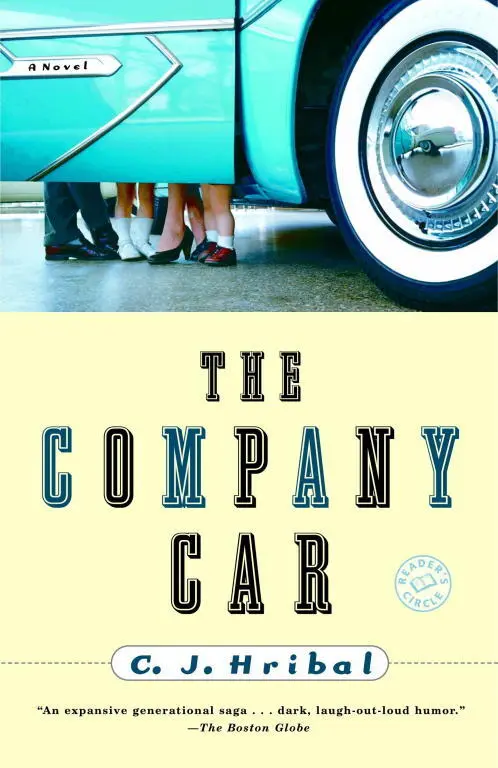
- Название:The Company Car
- Автор:
- Издательство:Random House
- Жанр:
- Год:2005
- Город:New York
- ISBN:1-58836-468-2
- Рейтинг книги:3 / 5. Голосов: 1
-
Избранное:Добавить в избранное
- Отзывы:
-
Ваша оценка:
The Company Car: краткое содержание, описание и аннотация
Предлагаем к чтению аннотацию, описание, краткое содержание или предисловие (зависит от того, что написал сам автор книги «The Company Car»). Если вы не нашли необходимую информацию о книге — напишите в комментариях, мы постараемся отыскать её.
“Are we there yet?” It’s the time-honored question of kids on a long family car trip—and Emil Czabek’s children are no exception. Yet Em asks himself the same thing as the family travels to celebrate his parents’ fiftieth wedding anniversary, and he wonders if he has escaped their wonderfully bad example.
The midwestern drive is Em’s occasion to recall the Czabek clan’s amazing odyssey, one that sprawls through the second half of the twentieth century. It begins with his parents’ wedding on the TV show It’s Your Marriage, and careens from a suburban house built sideways by a drunken contractor to a farm meant to shelter the Czabeks from a country coming apart. It is the story of Em’s father, Wally—diligent, distant, hard-drinking—and his attempts to please, protect, or simply placate his nervous, restless, and sensual wife, Susan, all in plain sight of the children they can’t seem to stop having.
As the tumultuous decades merge in his mind like the cars on the highway, Em must decide whether he should take away his parents’ autonomy and place them in the Heartland Home for the Elders. Beside him, his wife, Dorie, a woman who has run both a triathlon and for public office, makes him question what he’s inherited and whether he himself has become the responsible spouse of a drifting partner—especially since she’s packing a diaphragm and he’s had a vasectomy.
Wildly comic and wrenchingly poignant, The Company Car is a special achievement, a book that drives through territory John Irving and Jonathan Franzen have made popular to arrive at a stunning destination all its own.
The Company Car — читать онлайн бесплатно полную книгу (весь текст) целиком
Ниже представлен текст книги, разбитый по страницам. Система сохранения места последней прочитанной страницы, позволяет с удобством читать онлайн бесплатно книгу «The Company Car», без необходимости каждый раз заново искать на чём Вы остановились. Поставьте закладку, и сможете в любой момент перейти на страницу, на которой закончили чтение.
Интервал:
Закладка:
Our mother knew this, but she couldn’t help getting attached to the woman. Despite what she’d said the night Ernie Ott plowed into our field, our mother wanted to believe she’d found a friend. She found all sorts of reasons to go up the hill to visit. There were eggs and milk to get, and next year’s garden to plan, and what fared well in sandy soil—she wanted to tell Wally—and would Matty like to come over for tea, or would it be okay if our mother just sat for a spell, she got winded easily, this was such a pleasant kitchen to sit in, not like her own at all. The Hovelings had put in their own kitchen, and like most things the Hovelings had done, it was a botched job. A peninsula with cabinets over it cut the kitchen in half, the drawers didn’t fit, the doors didn’t match, the counters were small, you were always turning around for things that should be handier but weren’t, and when Wally-Bear got a nice commission they were going to put in a new kitchen—this was our mother’s fervent, constant hope—and frankly if I were Matty Keillor and this woman was talking my ear off, I’d keep her at some distance myself even if I did like her.
Like our father, our mother was a person of enthusiasms. Unlike our father’s, hers tended to leave her feeling scalded rather than renewed. When an idea or enthusiasm fizzled for our father, he just embraced a new one. Our mother was enveloped by the ashes of her defeat.
So it was with that fall’s Halloween party. Held just a few weeks after the bonfire of the rats, it was meant to wipe away the bizarreness of last year’s Halloween party and to introduce our parents to everyone who hadn’t gotten around to introducing themselves. And our mother was hoping to make new friends, maybe find people who wanted to make trips down to Chicago.
“Hon, are you sure a Halloween party is the way to go for this sort of thing?”
“Of course,” said our mother. “Everyone will be in costume—what better way to meet people? We’ll talk, discover common interests. And I’m sure there won’t be any excesses.”
And there weren’t. Excesses or interests. As we found out in later years, it wasn’t because these people didn’t know how to have fun. They just didn’t feel like having it with people they didn’t know well, people recently moved up from Chicago who could decamp just as quickly as they’d arrived. Although our mother’s invitations said “Costumes optional, but encouraged,” few people felt encouraged. Tony Dederoff and his wife, Marcie, had come as hayseed farmers off for their first trip to “the big city,” and Matty Keillor came as a scarecrow, but her husband, Ben, had come as himself, as had most everyone else. Our mother, dressed as a flapper even though her breasts were too big for the sleeveless sequined shift she wore, and our father, a gangster, complete with pin-striped suit, fedora, red carnation, black shirt, and violin case, were adrift in a sea of street clothes: plaid sport shirts and ironed jeans or slacks for the men, flowered dresses for the women. Our mother, with her feather boa, white feather headdress, and kohl-heavy eyes, looked like some exotic dancer from New York or L.A. delivering a candy-gram in the middle of Wisconsin. Not the right thing for what the neighbors thought of as a courtesy call, a perfunctory Saturday night neighborly get-together. The men talked about the weather, the Kafka Feed and Seed, and stock prices (pigs, heifers, steers, and Holsteins, not stocks, bonds, and Wall Street); the women talked about kids and child-rearing, knitting and gardening. Chicago did not come up except as a punch line in jokes. People came, were quiet and polite—our parents were given a wide berth—and excused themselves early. Our mother sat in the ruins of her get-together. It was not yet nine-thirty; there were cases of beer and soft drinks still in the hall, waiting to be squeezed into the refrigerator, and Jell-O salads and little sausages on toothpicks and cheese cubes and rafters of hard liquor opened and unpoured, and cracked ice melting back into solid blocks in buckets, and unused noisemakers, and all the detritus of a party that never once, not even for a moment, got off the ground. She had thrown everything she had into this party, and it had lasted all of an hour and twenty minutes.
She started cleaning up, then froze. “Kids,” she called down the stairs, “there’s plenty here to eat. Why don’t you come finish this off?” Then she went into her room and locked the door. She did not unlock it when our father knocked and said in a low voice, “Susan? Susan Marie, honey? Come on and open the door.” You could hear something stifled happening in there, maybe whimpering into pillows, but that was all. Our father turned around to face us.
We were lined up in the hall, arranged from biggest to smallest like an exercise in perspective. The crescent rolls and frankfurters we’d been eating were dry in our mouths. Solemn. That was how we felt. Like we were witnesses to something, some small but critical failure on the part of our parents. We didn’t even know what kind of failure, or what it meant, or why it mattered. We only knew we had witnessed something, and forever after our parents were going to be slightly diminished in our eyes. We knew that, and our father knew it. He took us in, a slow, sad sweep of his head, full of the grandeur of disappointment. Said our father, “You try being married sometime. I’d like to see you try,” and then he was outside and driving.
Her aspirations having collapsed like a cardboard box left out in the rain, our mother considered the alternatives, one of which was paralysis. I say this as though it were a conscious choice, but it wasn’t. Our mother had always been sickly as a child—rheumatic fever, double pneumonia—and having seven kids in a little over a decade had certainly debilitated her. Still, her health was reasonably good until our move to Wisconsin. Her body rebelled against this move even though she, consciously, did not. She got sick, developed allergies to dust, fur, pollen, mold, and grass. She discovered she couldn’t breathe. Her lungs would seize up on her, she’d try to take a full breath, and all she’d get was a closed-off uuuuhhHHHhhh that peaked in the middle before she realized she was making it worse by sucking in so hard.
Ironic that we moved to Wisconsin so the kids could breathe country air and it turned out our mother couldn’t. She developed asthma, hay fever, bronchitis, lung infections. Seeing her as an early candidate for emphysema, her physician that winter put her on huge doses of prednisone, among other things, which he neglected to tell her would suck all the calcium out of her bones and make her blow up like a puffer fish. Suddenly she didn’t even look like our mother.
The house went to pieces. She had never really unpacked the master bedroom. Our father, gone all the time, had left that chore to her, and the prospect of actually taking everything out of the boxes and truly starting a new life here proved too much for her. The bed and the dresser came away from the wall so we could paint behind them, but they never went back against the wall. The sheets we used as drop cloths stayed where they were, dangling half on, half off the furniture. And the Mayflower boxes stayed where they were, only they were unstacked so our mother could get at their contents. Nothing was put away. Washed and folded clothes were precariously stacked and balanced on the corners of the boxes, and whatever fell in fell in. Not that it mattered, since our mother, dazed on her medication, frequently forgot what box something was stacked on, or came to believe it was still in a box (entirely likely), though she couldn’t remember which one, and her mornings were spent rummaging and pillaging boxes, then leaving the mess as it was when she couldn’t breathe anymore.
Читать дальшеИнтервал:
Закладка:
Похожие книги на «The Company Car»
Представляем Вашему вниманию похожие книги на «The Company Car» списком для выбора. Мы отобрали схожую по названию и смыслу литературу в надежде предоставить читателям больше вариантов отыскать новые, интересные, ещё непрочитанные произведения.











Обсуждение, отзывы о книге «The Company Car» и просто собственные мнения читателей. Оставьте ваши комментарии, напишите, что Вы думаете о произведении, его смысле или главных героях. Укажите что конкретно понравилось, а что нет, и почему Вы так считаете.